
There is sound literature that older patients who board in the ED have higher rates of delirium, longer hospital stays, more complications and possibly higher mortality. Some institutions are starting to prioritize moving older patients upstairs ahead of others who may have been boarding longer in the ED. Hopefully some data will be out soon to see if this intuitive approach actually improves these outcomes.
Show References
This multicenter, retrospective study used the Pediatric Health Information System database to examine TXA (Tranexamic acid) use for post tonsillectomy hemorrhage (PTH) across US children's hospitals, analyzing 19,572 ED encounters for PTH in children <18 years from 2016–2024. The study did not differentiate TXA by route of administration or doses.
TXA use is rapidly increasing but remains highly variable. Median annual TXA use rose dramatically from 0.0% in 2016 to 30.6% in 2024, yet individual hospital-level use ranged from 1.0% to 67.1%, reflecting a lack of standardized protocols and significant practice variation across institutions.
TXA was associated with reduced reoperation but not hospital admission. At the encounter level, TXA administration was associated with 34% lower adjusted odds of reoperation (aOR 0.66, 95% CI 0.56–0.77). However, there was no significant association with hospital admission (aOR 0.93, 95% CI 0.83–1.04).
Show References
This South African study looked at 219 trauma patients who required damage control surgery and, not surprisingly, low GCS, low pH and elevated lactate all were independently associated with mortality.
Show References
The STARS (Special Needs Tracking and Response System) program was started in 2014 to bridge gaps in caring for children with special health care needs in the prehospital setting.
Since its inception, it has evolved into a hospital based, physician lead program with individualized EMS care plans stored on an electronic server and accessible to units responding to these patients.
In addition to the development of patient specific plans that are not within the local EMS protocol, this program has led to targeted EMS training and improved interdisciplinary care coordination. This program has also shown a decrease in EMS transports to the hospital.
The program started with 14 patients in one EMS jurisdiction and has now expanded to 2424 patients across 3 states. As the program expands, there is an aim to expand these care plans to include disaster preparedness, such as back up plans for patients dependent on electricity and plans to access critical medications during emergencies.
Show References
Acute Hypoxemic Respiratory Failure (AHRF) is very common in the ED/ICU. In this multicenter cohort of 21,714 patients in a Canadian ICU registry (iCORE) receiving oxygen or respiratory support, 50% met criteria for acute hypoxemic respiratory failure within 24 hours of ICU admission, and 76% of those patients required invasive mechanical ventilation.
- AHRF severity was categorized using the same Pao2/Fio2 thresholds as the Berlin definition for ARDS: mild (201–300), moderate (101–200), and severe (<100).
- When Pao2/Fio2 ratios were unavailable, severity was assigned using Spo2/Fio2 thresholds: mild (236–315), moderate (149–235), and severe (< 148). One-third of patients were actually classified this way.
PaO2/FiO2 remains the conventional standard and is important for ARDS severity/prognosis, but SpO2/FiO2 is noninvasive, continuous, inexpensive, and showed good agreement with PaO2/FiO2-based severity classification. According to these authors, SpO2/FiO2 can be a practical substitute for PaO2/FiO2 when an ABG is unavailable.
- Important limitations are the reduced accuracy of SpO2 at high saturations and potential pulse-oximetry bias, including overestimation of oxygenation in patients with darker skin tones.
Worsened hypoxemia strongly tracked with worse outcomes. ICU mortality increased from 17% in mild AHRF to 26% in moderate and 44% in severe AHRF; severe disease was also associated with fewer ventilator-free days and a lower probability of ICU discharge.
- AHRF patients were often treated using ARDS-style lung-protective ventilation. Median tidal volume was about 6.5 mL/kg predicted body weight, and most measured plateau/driving pressures were within protective ranges. However, plateau pressure was infrequently documented.
- Among patients with severe AHRF, 26% received neuromuscular blockade, 13% received prone positioning, 12% received iNO, and 12% received ECLS within the first 30 days of ICU admission..
Show References
Question
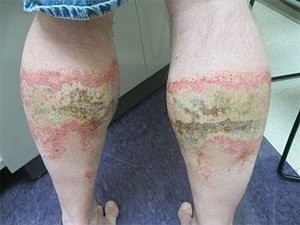
The construction worker presents to the ED with this rash. What is it and what is the treatment?
Show Answer
Show References
A new study evaluated the number of medication administrations (surrogate for nursing time) for patients with severe alcohol withdrawal and found that patients who were treated with phenobarbital required fewer repeat medication administrations within the first 3 and 6h of ED arrival. Patients were included if they received at least 100mg diazepam or 260mg phenobarbital and approximately 30% had documented alcohol withdrawal delirium in the ED. There were no differences in safety outcomes or intubations. Patients who received phenobarbital were also less likely to require ICU admission.
Phenobarbital's impact on nursing time is an important consideration as we continue to experience delays, overcrowding and boarding in the emergency department.
Show References
The 2025 American Headache Society guidelines give the greater occipital nerve (GON) block a level A recommendation for ED migraine treatment, boldly calling it a “must offer” therapy for migraine patients requiring parenteral treatment.
- Mechanism:
- The GON, a branch of the C2 spinal nerve, innervates the posterior scalp and converges with trigeminal afferents at the C2 dorsal horn. Blocking the GON dampens trigeminal signaling at this convergence point, reducing acute migraine pain. Since central sensitization drives migraine chronicity, benefits often outlast the local anesthetic, persisting for weeks to months.
- Efficacy:
- A meta-analysis of over 400 patients showed a mean reduction of 3.6 headache days/month and lower pain severity scores versus controls, with greater benefit from scheduled, recurring blocks. For acute migraine, one large study found 82% of patients reported moderate-to-significant relief.
- How to:
- Positioning:
- Seat the patient with the head flexed slightly forward. Avoid any lateral or rotational movement, which may distort landmarks.
- Landmark-based:
- Palpate the external occipital protuberance and mastoid process. The GON runs about one-third of the distance (2-4 cm) between them, just medial to the occipital artery (which is often palpable). Prep the skin, advance the needle while aspirating until you hit bone, withdraw slightly, then inject 1-3 mL of 1% lidocaine or 0.5% bupivacaine with a fanning technique.
- Ultrasound-guided (more precise):
- Place a linear probe with sterile cover transversely over the occipital protuberance, then slide down to the C2 spinous process, which has a characteristic bifid appearance. Moving laterally from here, identify the GON between the semispinalis capitis and obliquus capitis inferior fascial plane, medial to the occipital artery (consider color Doppler to confirm). Inject 1-3 mL of anesthetic into this fascial plane, avoiding injection into the nerve fascicles themselves.
- Adjuncts?
- Dexamethasone mixed with local anesthetic has evidence of benefit with cervicogenic headache and occipital neuralgia, but has no proven added benefit for migraine specifically.
- Positioning:
Bottom Line: Consider adding the GON block to your toolkit for migraine treatment in the ED.
Show References
Rarely do more than a few months go by without us posting yet another pearl about the dangers of hypoxemia or hyperoxemia. The data in general is strong that patients with significant exposure to either very high or very low oxygen levels do worse than patients with normoxia. But if the first step intervention is simple – if the SpO2/PaO2 is high, turn the oxygen support down, and if the SpO2/PaO2 is low, turn the oxygen support up - then in this day and age can we improve this with a closed-loop system? Click the Additional Information to find out!
Show Additional Information
…Which we knew already, but in case you need help convincing your patients, this meta-analysis came out just a few months ago and looked at 43 different studies in a systematic review (17 in a meta-analysis) totaling >300000 patients evaluated and showed that there is NO association between acetaminophen/paracetamol in pregnancy and autism/ADHD/intellectual disabilities.
Show References
These authors used a database of 323 hospitals to find over 20,000 firearm injured patients. They looked at positive cultures to assess for post injury infection. Infection rate was 5%. Most infections were in the immediate post injury period. Those with surgical procedures on head, neck, lower abdomen, and spine were most likely to develop infection. Infection did not appear to be associated with increased mortality. Current guidelines recommend antibiotics for the first 24 hours post injury only.
Show References
Bottom Line
This trial showed that the percentage of mechanically ventilated patient post arrest who received conservative oxygen therapy (SaO2 90-95%) with favorable neurological outcomes was not significantly different compared to the percentage of patients who received liberal oxygen therapy (minimum FiO2 of 0.3, SaO2 > 90%). While avoiding hypoxemia along with hypercapnia remains a hallmark of post arrest care, exact oxygenation goals above SaO2 of 90% remain unclear.
Show Additional Information
Show References
One-liner:
Point-of-care ultrasound was noninferior to radiographs for diagnosing distal forearm buckle fractures while improving patient experience.
Summary:
Background: Distal forearm buckle fractures are among the most common pediatric fractures and are often straightforward to diagnose.
Methods: Multicenter randomized trial comparing ultrasound-first evaluation with conventional radiography (n=270).
Results: Ultrasound accurately diagnosed buckle fractures with similar clinical outcomes. Families reported greater satisfaction, ED length of stay decreased, and radiation exposure was avoided.
Limitations: Requires physician ultrasound training. Results apply primarily to uncomplicated distal forearm injuries.
Clinical Relevance: Supports expanding POCUS use for selected pediatric orthopedic injuries and reducing unnecessary radiographs.
Take-home Points:
POCUS is an effective first-line imaging modality, ideal for experienced ultrasound users.
Shorter ED stays.
Eliminates radiation.
Show Additional Information
Show References
Looking at a national EMS database, these authors found advanced airway management (intubation, cricothyrotomy, rescue devices) occurred in 4/1000 trauma patients. Firearm related injury and motorcycle crashes had the highest use rate. Firearm related injury had the highest use rate of cricothyrotomy. This data should help drive prehospital education.
Show References
Bottom Line:
The most effective treatment for snake bite envenomation is prompt administration of antivenom which neutralizes venom toxins. Early administration has been shown to improve clinical outcomes by stopping progression of venom effects however it cannot reverse tissue injury that has already occurred making early treatment critical. The potential risk of causing an adverse reactions in non-envenomated patients must be weighed against the benefit of giving antivenom early in patients with significant envenomation.
Show Additional Information
Show References
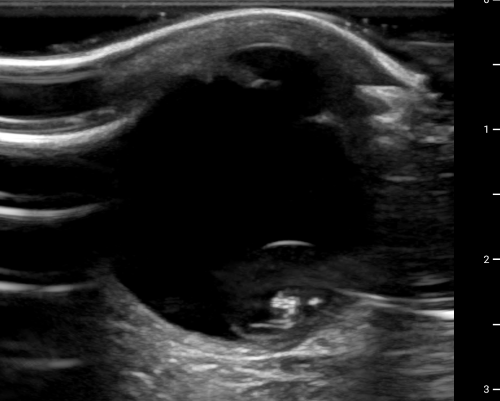


This single center study at an academic center compared pre and post provider in triage implementation radiology ordering rate. They found higher CT utilization and lower positive CT findings in the post implementation period. Further work is needed, however is provider in triage good medicine or good for metric numbers?
Show References
In 2023 there was a similar Canadian wildfire smoke pollution issue in the United States as there was in July 2026. The CDC found:
“Emergency department visits for asthma were 17% higher than expected during 19 days of wildfire smoke that occurred during April–August 2023.”
Show References
The US FDA has approved the first freeze dried plasma. It is stored at room temperature in plastic bags which makes it ideal for austere environments. It is easily reconstituted and is given to patients who require plasma, bypassing the need to thaw FFP.