
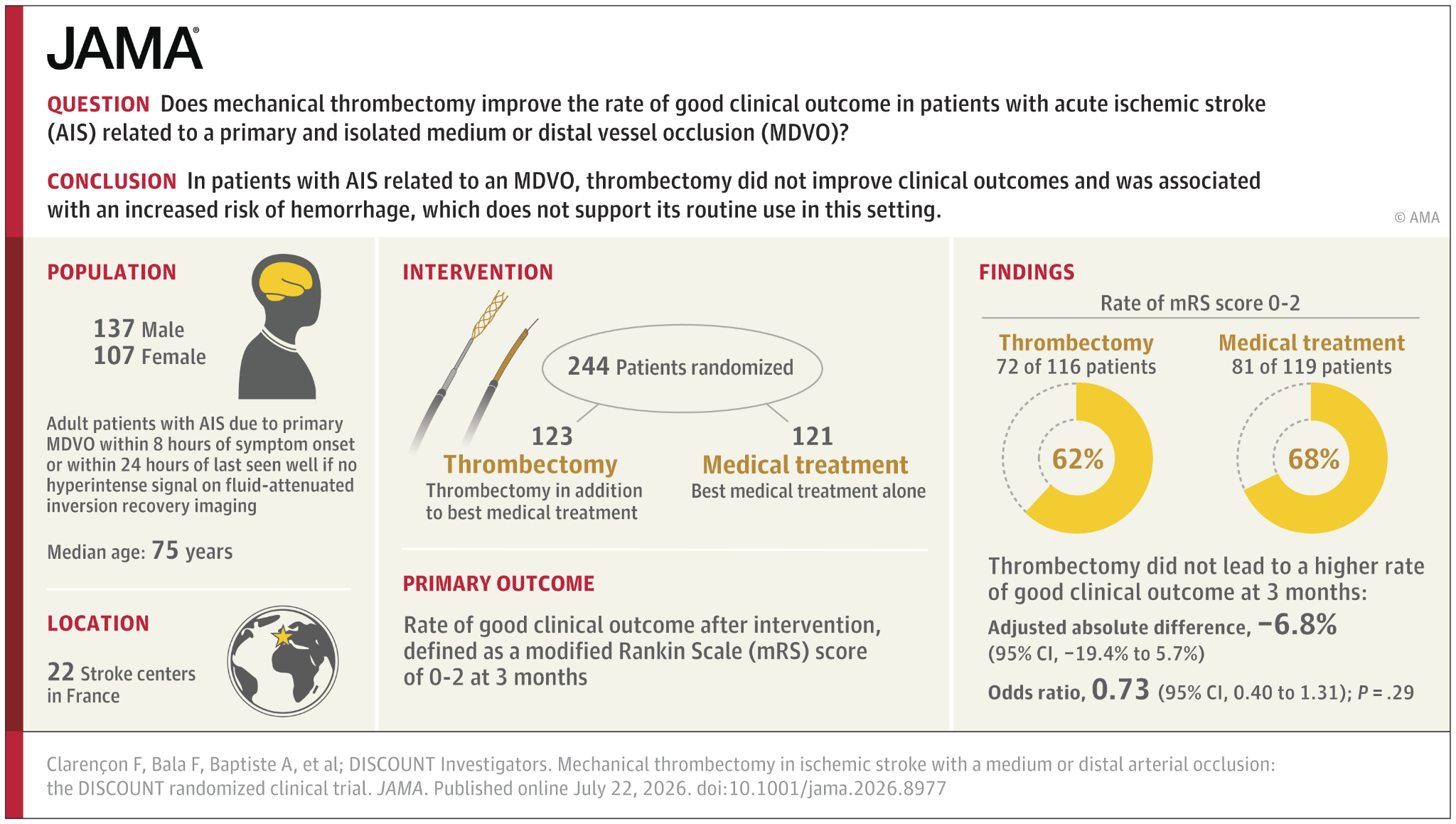
Bottom Line: In patients with acute ischemic stroke due to medium or distal vessel occlusion, mechanical thrombectomy did not improve functional outcomes at 3 months and was associated with an increased risk of symptomatic intracranial hemorrhage.
Show Additional Information
Show References
This single center study asked patients about barriers to health carrier after ED discharge (example transportation, lack of PCP, inability afford medications, trouble with ADLs) and then surveyed EM residents about those same patients' barriers. Resident physicians way under perceived barriers to care in their patients. ("20.4% of patients reported they had no primary care physician (PCP) and 9.8% of residents reported their patient had no PCP . Limited health literacy was identified in 59.0% of patients and reported by 37.6% of residents . Abnormal cognition was present in 53.6% of adults age ??65 and reported by 16.7% of residents .")
Another example of if you do not ask, you will not know. Be careful of assumptions.
Show References
This Canadian study looking at older patients presenting to EDs with suicidal ideation or attempt found most were female, arrived by ambulance from home, had poor social determinates of health, had a mental health history and attempts were by poisoning. Similar risk factors to other age groups. Mental health conditions donot tend to improve with age.
Show References
The common teaching that “the key to diagnosis is in the HPI” holds true for many of the patients we care for in the ED.
But, what if ChatGPT was tasked with obtaining the initial HPI rather than the provider? How accurate/reliable can a ChatGPT-driven history prove to the physician, or seem to the patient?
Researchers in the field of AI applications are beginning to tackle these questions as emergency departments pilot AI-driven history platforms to leverage time spent in the waiting room with a goal of improving efficiency and provider workload. What do you think?
Click the link to see a summary of some interesting findings in this pilot study conducted in a large urban pediatric ED waiting room.
Show Additional Information
Show References
A multicenter double-blind RCT published in 2025 found that adult patients hospitalized with acute chest syndrome (ACS) who received 7 days of prophylactic therapeutic anticoagulation had a shorter time to ACS resolution (by approx 1 day) and reduced opioid consumption when compared to those receiving standard VTE prophylaxis.
Show Additional Information
Show References
POCUS has moderate agreement with cardiology consultative echocardiography for RV strain in the setting of acute pulmonary embolism. Accuracy and agreement increase as the degree of RV dysfunction increases.
Show Additional Information
Show References
This study looked at rate of administration and time difference between male and female patients presenting with cardiac chest pain receiving morphine.
While initially they found no difference, several confounders painted a different picture:
significant differences in door-to-doc times, higher vs lower triage level and decision to admit all had women at a disadvantage and after adjusting for those, also found a gender based difference , with men receiving morphine more frequently.
Another example of unconscious bias and gender bias we should all be more mindful of
Show Additional Information
The PRoMPT BOLUS trial (Pragmatic Pediatric Trial of Balanced versus Normal Saline Fluid in Sepsis) is the largest randomized controlled trial to date comparing balanced crystalloids to 0.9% normal saline in children with septic shock. The primary outcome showed no significant difference in major adverse kidney events at 30 days between the two groups. The secondary outcome showed no significant difference in 30 or 90 day mortality.
Show Additional Information
Show References
By William Zhu, MD
Centered in the midwestern U.S. and in 30+ states across the country, over 3,000 people have experienced unusually persistent bouts of diarrhea from the parasite cyclospora, according to data collected from the CDC and various state health departments as of July 13th 2026.
Cyclospora cayetanesis is a coccidian protozoa whose hosts are humans. Transmission occurs when contaminated food or water is consumed usually in the form of raw produce. Incubation period is around 1-2 weeks making source identification difficult. When a outbreak is detected, there are more infected than reported.
Symptoms are watery, sometimes explosive diarrhea, fatigue and myalgias. These symptoms may persist for weeks with a waxing-waning course.
Diagnosis requires stool PCR as stool ova parasite tests yield a high false negative rate due intermittent fecal shedding. If in doubt consult infectious disease. Keep other causes of diarrhea like C. Diff, Campylobacter Jejuni and E. Coli on the differential.
Treatment is supportive with correction of fluid loss and electrolyte derangements. Isolation not required as freshly excreted oocytes and not infectious for over a week. In healthy individuals the infection is typically self limiting.
Preferred antimicrobial agent is trimethoprim-sulfamethoxazole at 160mg TMP+800mg SMX BID for 7-10 days with most individuals experiencing symptom improvement and resolution around 2 days on therapy. Consider prolonged therapy for individuals with immunocompromise. For patients with sulfa allergies ciprofloxacin 500mg BID for 7 days then 3 times a week for 2 weeks is acceptable.
Prevention is centered on washing fresh produce, but cooking all fruits and veggies is the only definitive way to avoid infection as the parasite is resistant to municipal chlorination and conventional washing. Washing produce with soap is not recommended.
Show References
This study by Peters et al. (2026), published in Prehospital Emergency Care, is the first nationwide analysis of cardiac arrest occurring during interfacility transport (IFT) by EMS, finding that critical care transport (CCT) was associated with more than double the odds of ROSC compared to ALS (aOR 2.21, 95% CI 1.42–3.48), while BLS care was associated with significantly worse outcomes.
Overall ROSC rate: 50.3% — broken down as 32.9% (BLS), 45.3% (ALS), and 59.5% (CCT)
Show Additional Information
Show References
A good reminder to consider careful prescribing to older patients at the time of ED discharge.
From this study: “Nearly 1 in 10 older adults filled a high-risk GEMS-Rx medication within 3?days of ED discharge between 2017 and 2022. Despite a decline in GEMS-Rx medication fills over time, younger cohorts of older adults and females were more likely to fill a high-risk medication upon ED discharge.”
Click for Gems-RX list
Show Additional Information
Show References
At tonight's quarterfinal, a player exhibits signs or symptoms of a possible concussion. How will they be evaluated on the pitch?
The Football-Specific Standardized On-Pitch Concussion Assessment Protocol (FOCUS) was published in July 2026 in JAMA Neurology.
It was developed through a FIFA-led international Delphi consensus process involving experts from all 6 football confederations.
The primary objective of FOCUS is not to diagnose concussion but to determine whether a player exhibits any signs or symptoms that raise suspicion and would require off pitch assessment.
Show Additional Information
Show References
Low Magnesium in Children has a generally similar approach to adults, however the etiology may be different.
Children can present with low magnesium levels due to many causes including but not limited to renal wasting (which may be drug related), malnutrition, malabsorption, refeeding syndrome, short gut syndrome, or genetic mutations
Hypomagnesemia is often coupled with hypocalcemia or hypokalemia which can be refractory until the magnesium is replaced.
Symptoms may be vague particularly in younger patients, with neuromuscular irritability, though in extreme cases (typically <1.0mg/100ml) seizure activity may occur with severely low levels, and long QTc may cause dysrhythmia
Oral replacement can be used for asymptomatic patients with levels greater than 1.0 mg/100mL
PO replacement:
Goal of 10-20mg/kg/dose (Max 2 g) elemental Magnesium
Magnesium oxide is the most common replacement but does come in pill form and is given up to four times daily
IV replacement with Magnesium Sulfate (given over 2 -4 hours*):
Neonate: 25–50 mg/kg/dose every 8–12 hours
Child: 25–50 mg/kg/dose every 4–6 hours (maximum 2 g/dose)
*In patients with life threatening hypomagnesemia such as those with seizures, a 50mg/kg dose given over 1-5 minutes is warranted.
Show References
Background: The 2020 ACLS algorithm for treatment of SVT recommends an initial adenosine dose of 6 mg, followed by 12 mg via rapid IV push if cardioversion is unsuccessful. Among more recent studies evaluating adenosine dosing, between 45% and 70% of patients required escalation to 12 mg to achieve successful cardioversion, suggesting that the standard 6 mg dose may not be effective for some patients. However, evidence evaluating the use of a 12 mg initial dose is limited.
Study design: Sert et al. conducted a prospective, single-center, observational study of 142 adult patients with SVT in a tertiary care emergency department in Turkey between February 2025 and January 2026. Patients received an initial dose of either 6 mg or 12 mg of adenosine (n=71 per group), selected at the discretion of the treating physician. Adenosine was administered using a proximal IV line using a T-connector or stopcock over 1-2 seconds. Patients with clinical signs of instability were excluded.
Results: More patients in the 12 mg group experienced first-dose conversion compared to the 6 mg group (83.1% vs. 52.1%, p <0.001). Results were consistent among a 1:1 propensity-matched cohort (n=104) adjusted for age, sex, and history of SVT (82.7% vs. 53.8%, p <0.001). Similar rates of adverse events such as chest tightness, flushing, and shortness of breath were observed between the two dosing groups.
Study limitations: Non-randomized design leaves potential for selection bias, results not adjusted for confounding factors such as quantified caffeine intake or absolute body weight, limited generalizability in settings where alternative methods of adenosine administration are used (i.e. single-syringe method), low sample size
Bottom line: This study adds to the growing body of evidence suggesting that an initial 12 mg dose of adenosine may be a safe and more effective alternative to the standard 6 mg dose.
Show References
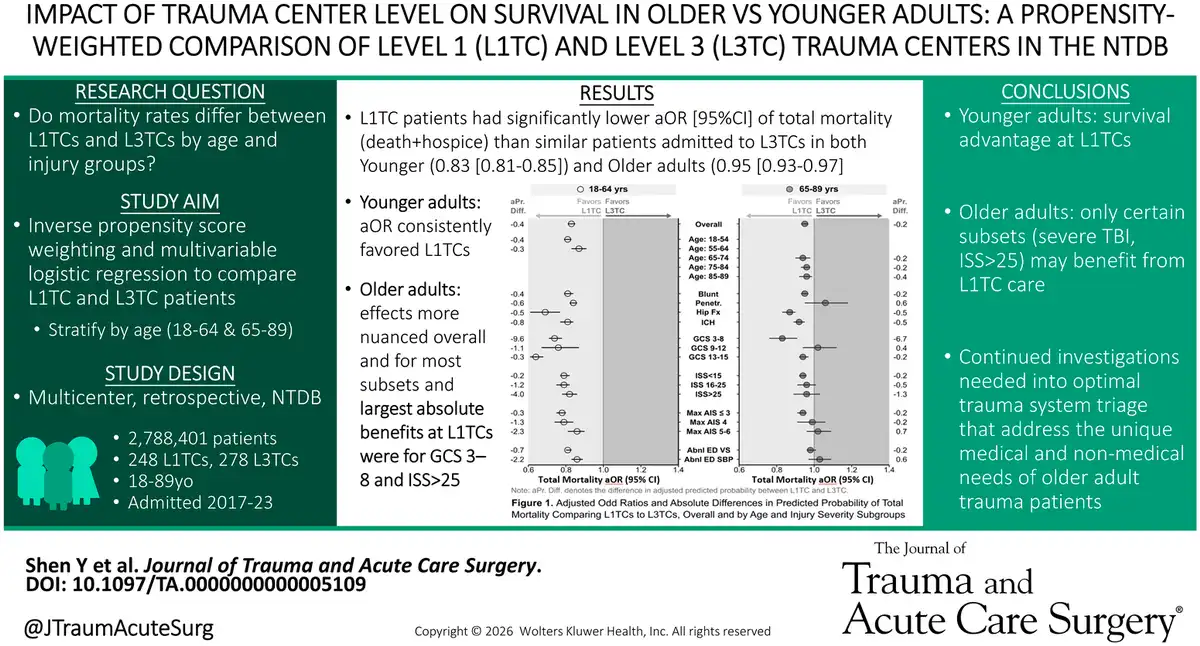
Intuitively, both younger and older patients would have better outcomes at level 1 vs level 3 centers. This was true in younger patients in this large trauma database study. It was only true for older patients with traumatic brain injury and a high injury severity score. Is this a function of care delivery being better at level 3 or less geriatric focus at level 1 trauma centers?
Show References

University of Maryland Medical Center is a referral center for patients with necrotizing fasciitis in the region, as we have a major hyperbaric chamber, and a specialized Soft Tissue Surgery team. Therefore, patients with soft tissue infection make up a group with frequent transferring to UMMC.
Some of the factors, from recent meta-analysis, suggest higher rate of mortality among this particular group of patients. When they display these factors, which are also consistent with our clinical observations, we should be more aggressive with their treatment:
Acute kidney injury OR 3.23 (2.76–5.04)
Bacteremia OR 3.89 (1.39–10.85)
Hypotension OR 1.97 (1.26–3.10)
Coagulopathy OR 2.81 (1.23–6.40)
Show References
Question
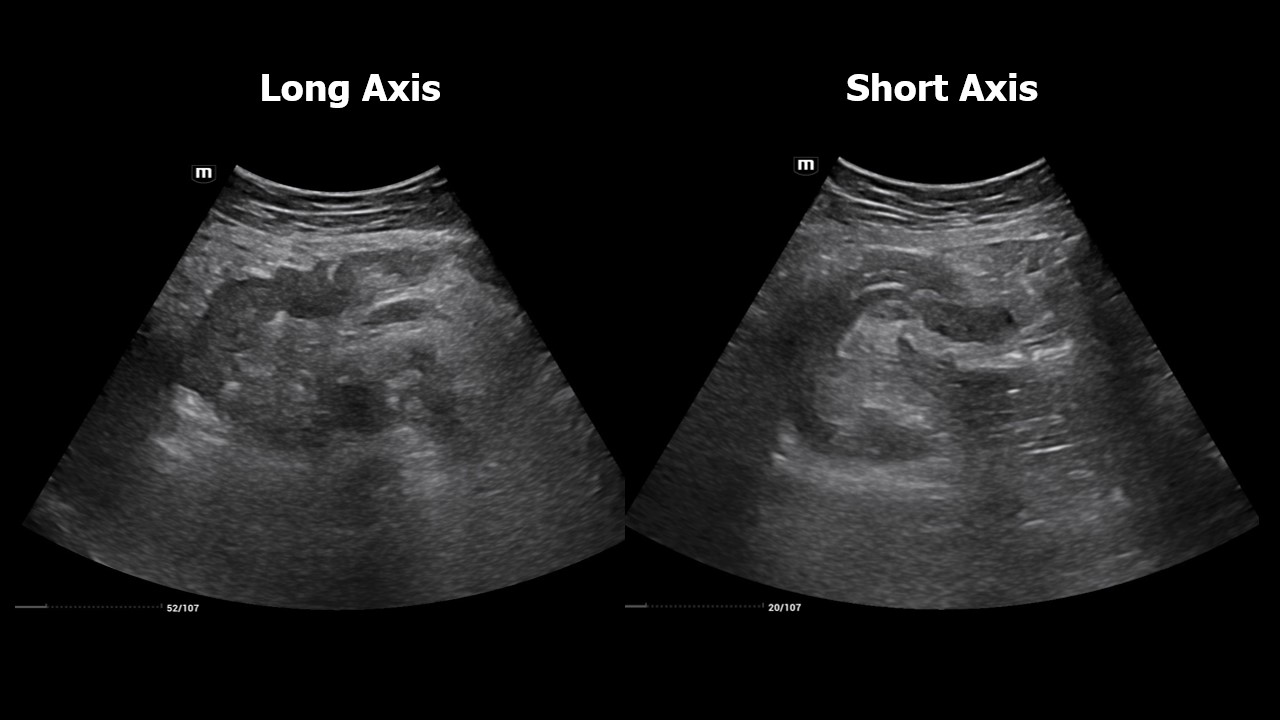
Pt with abdominal pain, nausea and vomiting. You ultrasound the intestines and find this:
Show Answer
Show References
This study looking at older patient contact with the health system within 30 days of ED discharge found an overall lower rate of follow up for those patients with dementia. Perhaps extra care at time of discharge in arranging follow up is warranted for older dementia patients.
Show References
This Canadian study found women, even when controlling for injury severity, socioeconomic conditions etc, were less likely to be admitted to a trauma center than their male counterparts. Further investigation into this bias is warranted.