
Search
Subscribe to daily UMEM Pearls (FREE!) via:
1-20 of 228 results with category "Trauma"
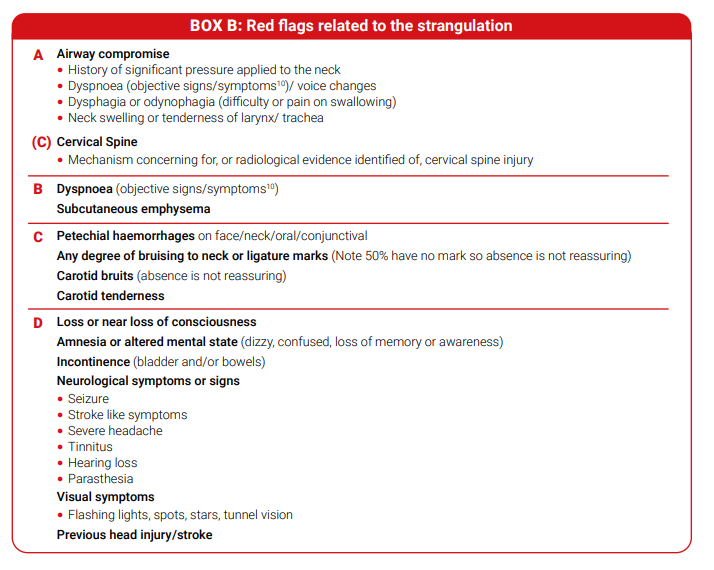
Evaluation of non-fatal strangulation patients with these signs is a CT angiogram of the neck.
Also note that this is a common finding in domestic violence and is a predictor of future injury and death from this partner.
Show References
This South African study looked at 194 hanging or strangulation injury patients and found that no clinical feature excluded blunt cerebral vascular injury (BCVI) in these patients. Nearly 5% of these patients had BCVI. The authors concluded the only safe way to exclude BCVI in post hanging/strangulation injury was CT angiography of the neck.
Show References
How well do the Denver and Memphis screening criteria identify blunt cerebral vascular injury?
From 2021:
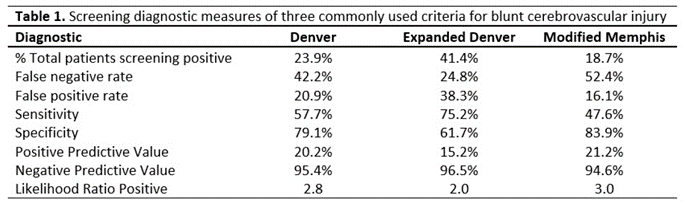
Not very well! Blunt injury to the head and neck may be enough to prompt you to order a CTA of the neck.
Click to see Memphis criteria which overlap Denver
Show Additional Information
Show References
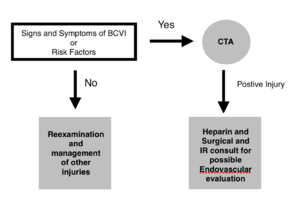
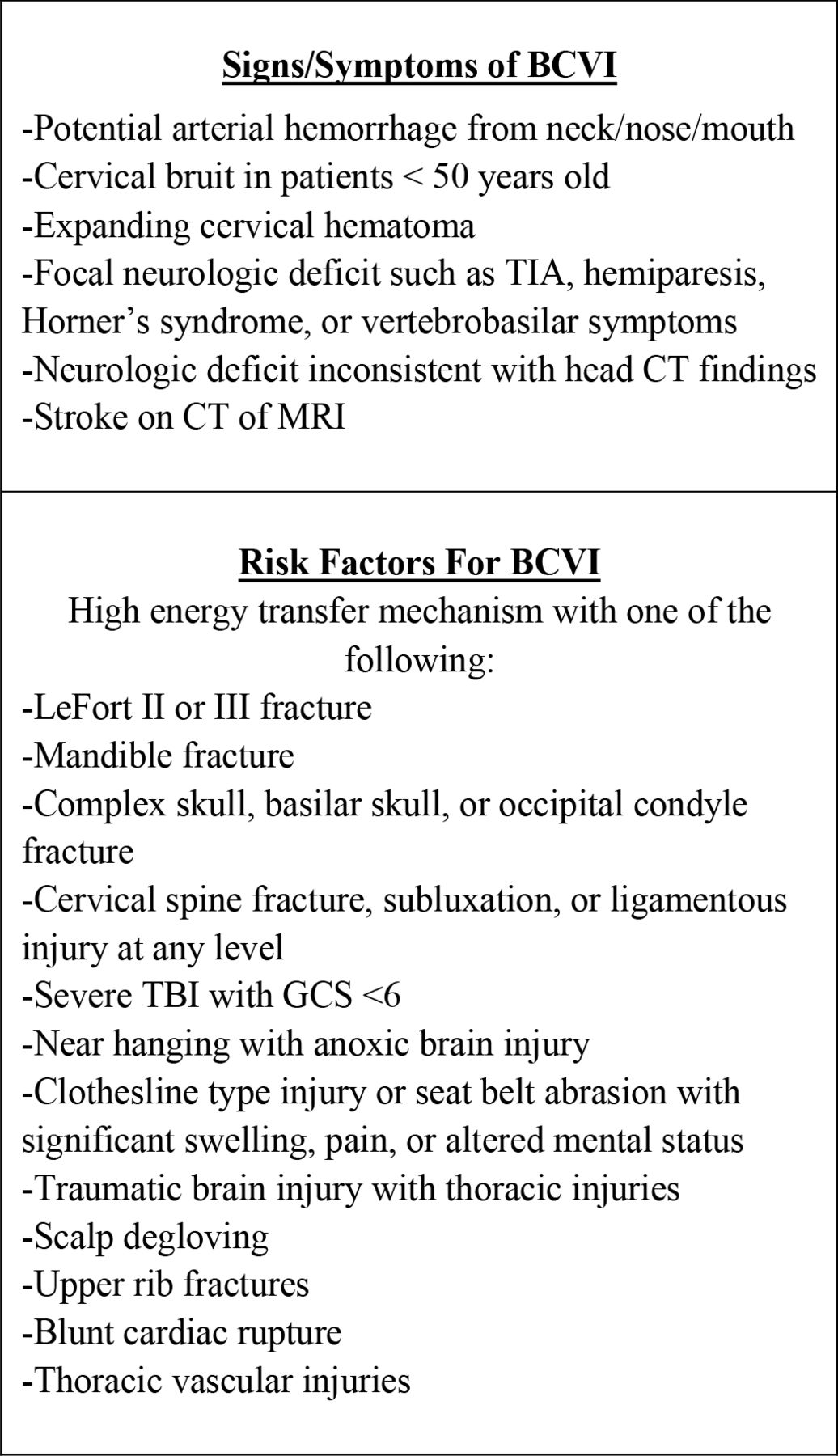
This institution implemented universal CTA of the neck to evaluate cerebral vascular injury in blunt trauma patients. In the 531 patients, 6% had cerebral vascular injury and 23% had incidental findings of which 22% required follow up. Another example of a test ordered has potential unanticipated downstream effect.
Show References
This case report describes a 2 week delayed hemorrhage from a lacerated profunda femoris artery after an intertrochanteric fracture that requires ORIF. The patient represented with anemia, pain and swelling in the surgically repaired hip. Pulses were still present. The authors conclude:
“The profunda femoris artery is the vessel most commonly involved in vascular complications associated with proximal femoral fractures because of its close anatomical relationship with the lesser trochanter. Delayed presentations may occur weeks after injury as repeated mechanical irritation from a displaced bone fragment leads to pseudoaneurysm formation and subsequent rupture.”
Show References
Bottom Line: Burn care is directed by the managing surgeons at regional burn centers. Where available, hyperbaric oxygen treatment can be a beneficial adjunct.
Studies and clinical experience of hyperbaric oxygen treatment in burns has shown modulation of burn shock, dampening of the inflammatory response, reduction of edema, reversal of the zone of stasis, reduction of ischemia and ischemic necrosis, prevention of progression of partial- to full-thickness injury, modulation of inflammation, effecting modulation of hyper-metabolic syndrome, lessening of the capillary leak, preservation of dermal elements, a reduced need for grafting, shortened hospital stay, reduced physiological post-discharge problems, and a reduction in cost of care.
Show References
This study conclusion states: “Prehospital epinephrine administration in patients with traumatic cardiac arrest was associated with increased survival to hospital discharge and prehospital ROSC.” When you investigate the methods, only 809 of the 22,105 patients in traumatic cardiac arrest actually received epinephrine. In the study country, EMS gets orders from base station physicians for epinephrine. Why did these 809 get the epinephrine and the other 97% did not? It is hard to know what to do with this data. It certainly doesn’t say epinephrine saves patients in traumatic cardiac arrest. More research is needed.
Show References
In a randomized pragmatic study of critically ill trauma patients, video laryngoscopy was successful in 88% of first pass attempts versus 68% in direct laryngoscopy.
Show References
This Japanese hospital has a CT scanner hybrid resuscitation room. They did a retrospective study comparing their blunt trauma patients to a Japanese trauma database. Their patients had a shorter time to operative or interventional procedure, slightly less PRBC use over 24 hours and similar 24 hour mortality.
Interesting concept. Not ready for adoption.
Show References
This South African study looked at 219 trauma patients who required damage control surgery and, not surprisingly, low GCS, low pH and elevated lactate all were independently associated with mortality.
Show References
Question
The construction worker presents to the ED with this rash. What is it and what is the treatment?
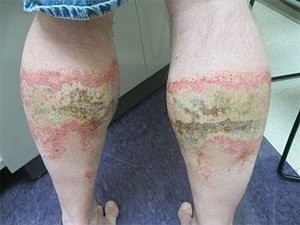
Show Answer
Show References
These authors used a database of 323 hospitals to find over 20,000 firearm injured patients. They looked at positive cultures to assess for post injury infection. Infection rate was 5%. Most infections were in the immediate post injury period. Those with surgical procedures on head, neck, lower abdomen, and spine were most likely to develop infection. Infection did not appear to be associated with increased mortality. Current guidelines recommend antibiotics for the first 24 hours post injury only.
Show References
Looking at a national EMS database, these authors found advanced airway management (intubation, cricothyrotomy, rescue devices) occurred in 4/1000 trauma patients. Firearm related injury and motorcycle crashes had the highest use rate. Firearm related injury had the highest use rate of cricothyrotomy. This data should help drive prehospital education.
Show References
The US FDA has approved the first freeze dried plasma. It is stored at room temperature in plastic bags which makes it ideal for austere environments. It is easily reconstituted and is given to patients who require plasma, bypassing the need to thaw FFP.
Show References
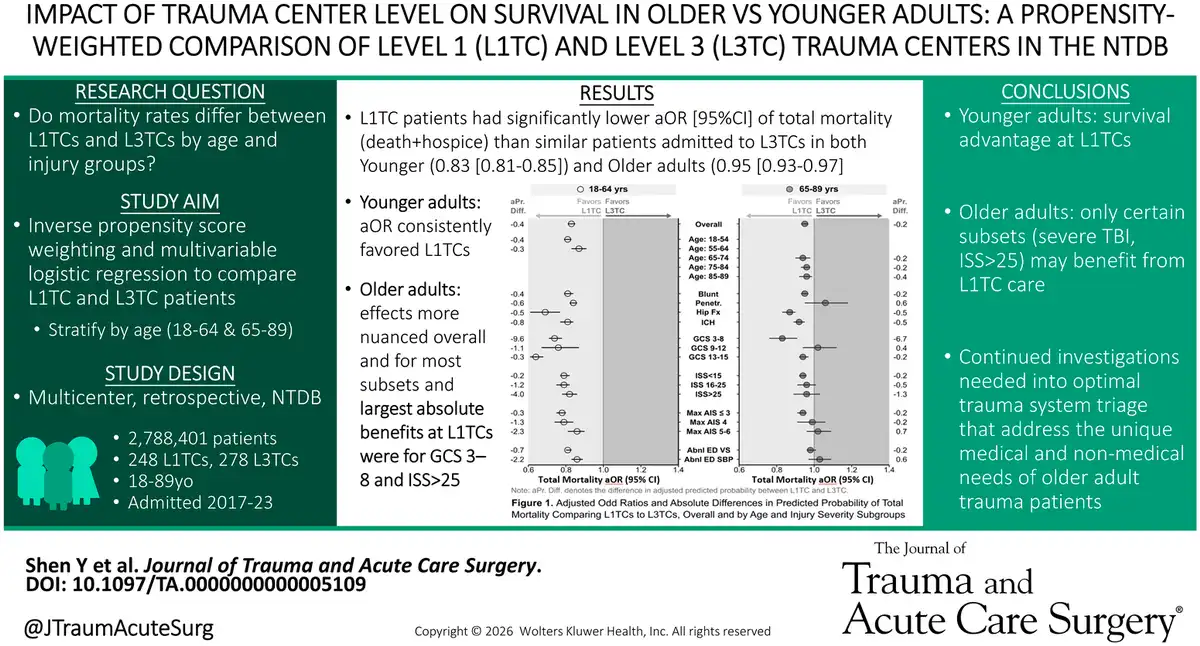
Intuitively, both younger and older patients would have better outcomes at level 1 vs level 3 centers. This was true in younger patients in this large trauma database study. It was only true for older patients with traumatic brain injury and a high injury severity score. Is this a function of care delivery being better at level 3 or less geriatric focus at level 1 trauma centers?
Show References

This Canadian study found women, even when controlling for injury severity, socioeconomic conditions etc, were less likely to be admitted to a trauma center than their male counterparts. Further investigation into this bias is warranted.
Show References
This review article in the Journal of Trauma and Acute Care Surgery states:
“In obtunded patients, an adequate and normal high-quality CT supports collar removal without the need for adjunctive imaging.”
Show References
In a randomized multicenter trial comparing direct vs video laryngoscopy in trauma patient intubation, video had a higher first pass success rate and equal complication to direct laryngoscopy.
Show References
This multicenter study looked at trauma patients with a hemothorax who underwent early tube thoracostomy vs. being observed. They found volume of over 300 ml predicted observation failure. Those observed had shorter hospital stays and less ICU admissions. Twenty two percent of observation patients required tube thoracostomy. The failed observation group had similar outcomes except longer hospital stays.