
Search
Subscribe to daily UMEM Pearls (FREE!) via:
1-20 of 889 results with category "Critical Care"
The BRIDGE-TNK trial in 2025 showed that Tenecteplase AND thrombectomy offered better functional outcome for patients with ischemic stroke from large vessel occlusion.
However, the ATTENTION LATE trial (published in September 2026) showed that for patients with basilar artery occlusion, routine administration of Tenecteplase before Thrombectomy did not improve functional outcome, when compared with thrombectomy alone, between 4.5-24 hour window, while rates of symptomatic intracranial hemorrhage were the same in both groups.
Show References
Attachments
In this retrospective study of 4635 patients, continuing oral beta blocker within 48 hours of presentation for patients with sepsis was associated with a reduced risk of all-cause mortality within 90 days of hospital admission (hazard ratio 0.77; 95% CI, 0.61–0.98; p = 0.03), and a shorter hospital stay (incidence rate ratio 0.39; 95% CI, 0.38–0.41; p < 0.001).
Therefore, it is reasonable to consider Beta-blocker if patients are adequately resuscitated.
Show References
Attachments
Background: The 2025 AHA guidelines changed their recommended initial IV atropine dose for unstable bradycardia from 0.5 mg to 1.0 mg, while the 2025 ERC guidelines continue to recommend an initial dose of 0.5 mg. A 2025 review found limited comparative studies and noted that using 0.5 mg as an initial dose seems “clinically reasonable" [1].
Now: One tertiary care center performed a retrospective propensity-score matched study [2] comparing the 2 groups of patients with unstable bradycardia who had received an initial dose of 0.5 mg versus 1 mg in their ED between 2020 and 2025.
- Primary outcome = First-Dose Success (reaching a heart rate >50 bpm within 3 minutes without additional therapy).
- Notably excluded were patients with noncardiac secondary bradycardia (hyperkalemia, drowning, trauma, etc.) and those with pacemaker failure, amongst others.
Results in the propensity score-matched cohort:
- First-dose success was significantly higher in the 1.0 mg vs the 0.5 mg group (45 vs 25%; p=0.007)
- NNT of 6 (95% CI, 3-18)
- The 1.0 mg group had lower rates of:
- Additional atropine requirement (26 vs 48%, p=0.003)
- Other rescue therapy requirement (51% vs 74%, p=0.002)
- ICU admission (53% vs 74%, p=0.005).
- No difference between groups in 30-day mortality or subsequent permanent pacemaker placement
Bottom Line: Acknowledging the small size & retrospective nature of the study, it appears that an initial dose of 1mg IV atropine helps us work smarter--not harder--in the stabilization of patients with unstable bradycardia.
Show References
Question
The following is an actual case.
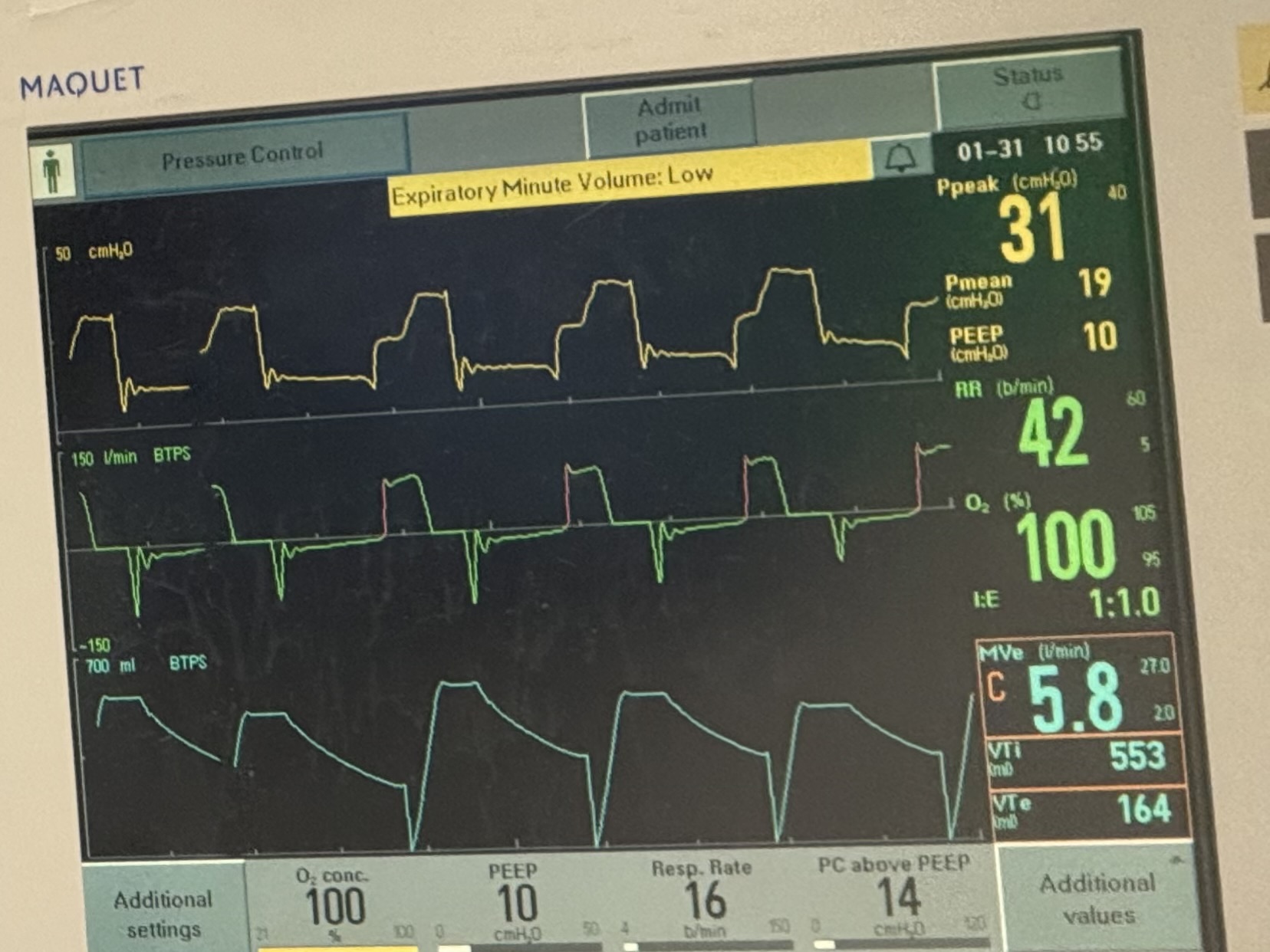
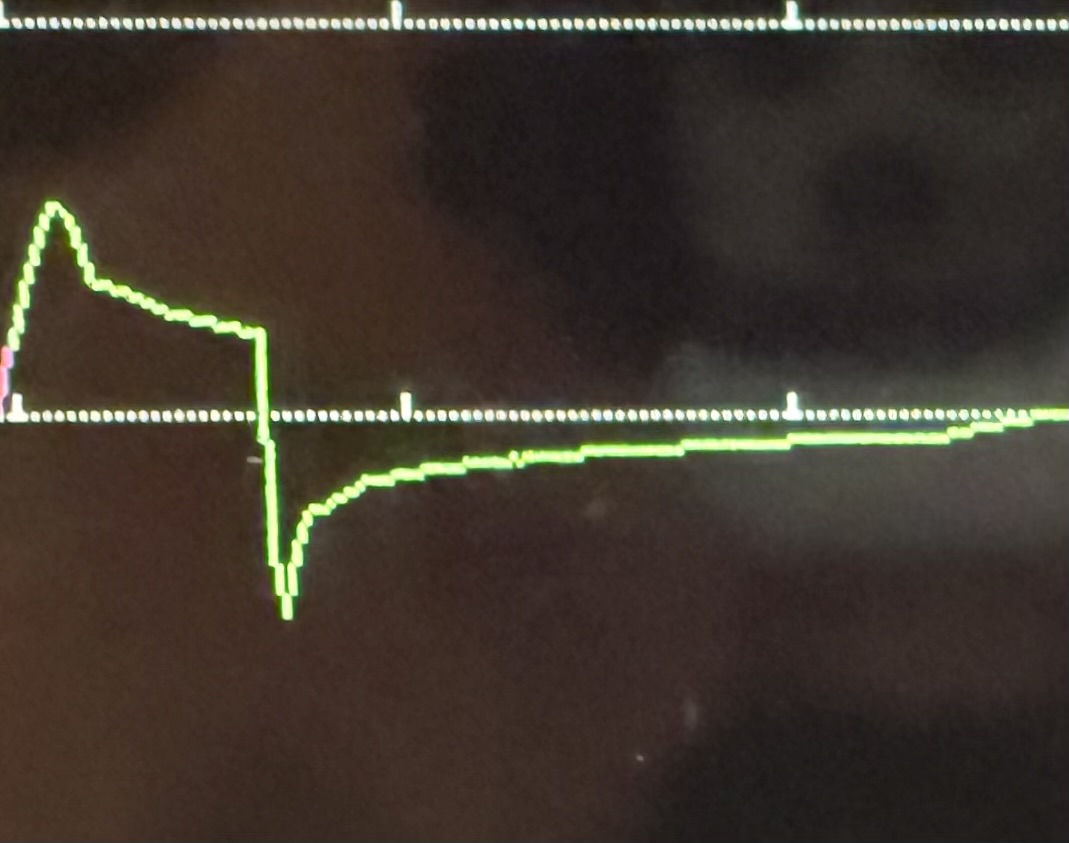
An ED patient without any history of asthma or COPD is intubated to facilitate an emergent MRI. After the MRI is completed (and without abnormalities). The patient is breathing synchronously and comfortably on minimal PS settings. Further sedation is weaned to facilitate extubation in the ED as the patient has no need for continued mechanical ventilation and no ICU requirements. All of a sudden, you are emergently called overhead to the patient's room because the patient is “blue” and hypoxic.
These are the ventilator waveforms.
The patient did not receive any contrast or bronchospastic medications. The ETT is clear and without obstruction.
What is going on?
Show Answer
Cardiogenic Shock = a cardiac disorder that results in both clinical and biochemical evidence of sustained tissue hypoperfusion (1).
Cardiogenic shock has high mortality (approx 35-40% in many studies). Mortality worsens at higher stages of cardiogenic shock severity (2,3). Early recognition of cardiogenic shock is critical in order to initiate treatment and transfer patients to an appropriate level of care in a timely manner.
As an ED physician, you need to SUSPECT cardiogenic shock so that you can ensure appropriate definitive management of your patient (4).
SUSPECT = Symptoms/Signs; Urine Output; Sustained Hypotension; Perfusion; EKG/Echo; Congestion; Triage
Take a look at the Additional Materials to break down this mnemonic in more detail and learn what might make you SUSPECT CS!
Show Additional Information

Show References
While many intubations in critically ill patients go smoothly, they are a high risk procedure that EM and ICU physicians seek to continuously improve upon. Blade size is one aspect of the procedure that has received attention over the past several years. We don’t have prospective trials addressing this question, but there are several retrospective analyses that have investigated it.
- For Direct Laryngoscopy:
- The 2022 MacSize-ICU study and a 2023 study by Landefeld and colleagues with the Pragmatic Critical Care Research Group suggested that when using Macintosh geometry blades for direct laryngoscopy there was improved first pass success with size 3 blade. Secondary outcomes for these studies point to a worse glottic view with a size 4 blade.
- For Video Laryngoscopy:
- This finding did not hold up in video laryngoscopy. A 2023 study by Park et al. and now a 2026 retrospective study again by Landefeld et al. that looked at blade size for video laryngoscopy with Macintosh geometry blades found no difference in first pass success with size 3 vs size 4 blades.
Bottom Line: Continue to use your best clinical judgment when selecting a blade size, especially when performing video laryngoscopy. When performing direct laryngoscopy, if you are on the fence, consider using size 3 blade.
*These studies do not address intubation with hyperangulated designs
Show References
Severe Community Acquired Pneumonia (SCAP) is broadly defined as CAP that requires ICU admission. Although MRSA pneumonia is overall quite rare (1), it is associated with a high mortality rate. Therefore, empiric MRSA coverage is commonly used for patients with SCAP. Common empiric agents include vancomycin and linezolid. Linezolid has both pharmacologic and clinical data that suggest it may be a preferred option for many patients.
When approaching a patient with SCAP, a key consideration is whether empiric MRSA coverage is needed. Risk factors for MRSA pneumonia include prior MRSA infection or colonization, recurrent skin infections, post-influenza pneumonia, recent hospitalization or antibiotic use (1).
If empiric MRSA coverage is determined to be needed, Linezolid offers several advantages for the treatment of SCAP. Highlights below:
- Linezolid has 100% oral bioavailability which can be especially useful for those patients with difficult IV access
- Linezolid has better lung epithelial lining penetration compared to vancomycin (6)
- In direct comparison between linezolid and vancomycin for confirmed MRSA pneumonia, linezolid was shown to have improved microbiologic cure rates without an improvement in mortality (2, 7)
- Linezolid was shown to have less nephrotoxicity than vancomycin (2, 7)
Side effects to consider with linezolid include:
- Serotonin syndrome, although extremely rare (5). May consider discussion with your pharmacist if taking additional serotonergic agents.
- Myelosuppression (typically thrombocytopenia), although usually with longer treatment courses. This study shows no significant difference in rates of thrombocytopenia compared to vancomycin (4).
If providing linezolid for treatment of SCAP:
- Dose: Linezolid 600mg IV or PO q12 hours
- Ideally should obtain blood cultures, sputum culture, MRSA nares prior to (or closely following) antibiotic administration
Show References
Acute Hypoxemic Respiratory Failure (AHRF) is very common in the ED/ICU. In this multicenter cohort of 21,714 patients in a Canadian ICU registry (iCORE) receiving oxygen or respiratory support, 50% met criteria for acute hypoxemic respiratory failure within 24 hours of ICU admission, and 76% of those patients required invasive mechanical ventilation.
- AHRF severity was categorized using the same Pao2/Fio2 thresholds as the Berlin definition for ARDS: mild (201–300), moderate (101–200), and severe (<100).
- When Pao2/Fio2 ratios were unavailable, severity was assigned using Spo2/Fio2 thresholds: mild (236–315), moderate (149–235), and severe (< 148). One-third of patients were actually classified this way.
PaO2/FiO2 remains the conventional standard and is important for ARDS severity/prognosis, but SpO2/FiO2 is noninvasive, continuous, inexpensive, and showed good agreement with PaO2/FiO2-based severity classification. According to these authors, SpO2/FiO2 can be a practical substitute for PaO2/FiO2 when an ABG is unavailable.
- Important limitations are the reduced accuracy of SpO2 at high saturations and potential pulse-oximetry bias, including overestimation of oxygenation in patients with darker skin tones.
Worsened hypoxemia strongly tracked with worse outcomes. ICU mortality increased from 17% in mild AHRF to 26% in moderate and 44% in severe AHRF; severe disease was also associated with fewer ventilator-free days and a lower probability of ICU discharge.
- AHRF patients were often treated using ARDS-style lung-protective ventilation. Median tidal volume was about 6.5 mL/kg predicted body weight, and most measured plateau/driving pressures were within protective ranges. However, plateau pressure was infrequently documented.
- Among patients with severe AHRF, 26% received neuromuscular blockade, 13% received prone positioning, 12% received iNO, and 12% received ECLS within the first 30 days of ICU admission..
Show References
Rarely do more than a few months go by without us posting yet another pearl about the dangers of hypoxemia or hyperoxemia. The data in general is strong that patients with significant exposure to either very high or very low oxygen levels do worse than patients with normoxia. But if the first step intervention is simple – if the SpO2/PaO2 is high, turn the oxygen support down, and if the SpO2/PaO2 is low, turn the oxygen support up - then in this day and age can we improve this with a closed-loop system? Click the Additional Information to find out!
Show Additional Information
Bottom Line
This trial showed that the percentage of mechanically ventilated patient post arrest who received conservative oxygen therapy (SaO2 90-95%) with favorable neurological outcomes was not significantly different compared to the percentage of patients who received liberal oxygen therapy (minimum FiO2 of 0.3, SaO2 > 90%). While avoiding hypoxemia along with hypercapnia remains a hallmark of post arrest care, exact oxygenation goals above SaO2 of 90% remain unclear.
Show Additional Information
Show References
A multicenter double-blind RCT published in 2025 found that adult patients hospitalized with acute chest syndrome (ACS) who received 7 days of prophylactic therapeutic anticoagulation had a shorter time to ACS resolution (by approx 1 day) and reduced opioid consumption when compared to those receiving standard VTE prophylaxis.
Show Additional Information
Show References
University of Maryland Medical Center is a referral center for patients with necrotizing fasciitis in the region, as we have a major hyperbaric chamber, and a specialized Soft Tissue Surgery team. Therefore, patients with soft tissue infection make up a group with frequent transferring to UMMC.
Some of the factors, from recent meta-analysis, suggest higher rate of mortality among this particular group of patients. When they display these factors, which are also consistent with our clinical observations, we should be more aggressive with their treatment:
Acute kidney injury OR 3.23 (2.76–5.04)
Bacteremia OR 3.89 (1.39–10.85)
Hypotension OR 1.97 (1.26–3.10)
Coagulopathy OR 2.81 (1.23–6.40)
Show References
Taking a slight detour into the trauma critical care realm today…
BLUF: Favor aggressive calcium supplementation following trauma, especially when patient requires transfusion. Recent evidence is pointing towards a signal for improved outcomes.
Hypocalcemia in trauma is common. Roughly half to two-thirds of trauma patients are hypocalcemic on arrival, driven by both shock physiology and citrate chelation from blood products. Some authors advocate for hypocalcemia to be added as the fourth element of a "lethal diamond" alongside coagulopathy, acidosis, and hypothermia. See reference 1&2 for good discussions of this physiology.
Time for a grain of salt: A recent article in JTACS advocates for favoring calcium chloride during whole-blood or massive transfusion and was associated with improved early survival. Calcium chloride at a threshold of at least 1 g per 2 units of low-titer O whole blood was independently associated with an 84% (!) reduction in 24-hour mortality, with the benefit strongest at this 1:2 ratio and weaker at less aggressive thresholds. (LOTS of caveats with this finding, but interesting nonetheless).
Current major civilian guidelines say only that hypocalcemia should be prevented, with limited specificity on timing or dose, and the Joint Trauma System recommends 1 g calcium after the first unit and after every fourth unit thereafter. The current CAVALIER trial is evaluating prehospital calcium specifically. Those results and other recent literature could push major trauma organizations to update their recommendations in the near future.
Show References
There were a handful of big name critical care studies published the last few weeks (LOGICAL, ARISE FLUIDS, SODa-BIC to name a few) but many of you probably already saw those so we're gonna stick with something a little more off the beaten path.
A retrospective observation trial was published recently by Gastanadui et al in Journal of Intensive Care looking at the mortality impact of corticosteroids in cardiogenic shock. They looked at 167,721 patients from the Vizient database admitted with cardiogenic shock (excluded patients with other indications for steroids). The unadjusted mortality was a whopping 48.8% in the steroid group and 29.6% in the non-steroid group. They did Inverse Probability Treatment Weighting (IPTW), which attempts (imperfectly, but best as you can retrospectively) to control for treatment selection bias, and still found a roughly 3% mortality increase in the steroid group.
Bottom Line: Corticosteroids were already controversial (at best) in cardiogenic shock, but this further adds to the reasons to avoid them in this condition. Of note, this trial excluded patients with classic hard-indications (e.g. adrenal insufficiency, COPD exacerbation, etc) and steroids should still be given to those groups, but in my opinion if you feel cardiogenic is the primary driver of the patient's shock and they do not have another indication, I would consider avoiding steroids solely for the shock.
Show Additional Information
Show References
Bottom Line: Lactate is a useful but imperfect marker of critical illness. Below are some key points to consider when interpreting lactate.
- Lactated ringers should generally not significantly increase your measured lactate unless there is poor clearance (liver injury).
- Many medications can cause an elevation in lactate through multiple mechanisms that do not improve with fluid resuscitation.
- Lactate should be interpreted within the company it keeps (history, exam, vitals, urine output, hemodynamics).
Show Additional Information
Show References
Sodium bicarbonate significantly reduced the need of renal replacement therapy (risk ratio [RR] 0.69; 95% CI, 0.61–0.78) but not mortality (RR, 0.84; 95% CI, 0.55–1.30). However, there was not enough sample size to support the outcome of mortality.
There was still significant heterogeneity between studies as the sources of metabolic acidosis were different between different studies in this meta-analysis study of randomized control trial. One study recruited patients with septic shock only, while other studies enrolled patients with different disease states.
There was also heterogeneity in the threshold for pH to enter the study.
Show References
Not all patients with an acute PE will be crashing and critically ill, but it seemed worthwhile to remind everyone that there are new guidelines and recommendations from AHA/ACC/ACCP/ACEP/CHEST/SCAI/SHM/SIR/SVM/SVN/XYZLMNOP about the management of patients with acute pulmonary embolism in the 2026 AHA/ACC Joint Committee statement. A few key takeaways, with highlights for the sicker PE patients:
- New Classifications A through E for acute PE (see images below)
- Get familiar with the clinical scores! Hestia, PE Severity Index (PESI), simplified PESI (sPESI)
- ED discharge recommended for Category A and supported for Category B
- LMWH recommended over unfractionated heparin when parenteral AC is needed, unless contraindicated
- DOACs recommended over warfarin unless contraindicated
Highlights for the sicker PE patients, i.e. Categories C+:
- Get a look at the RV! (POCUS, CT, formal echo)
- Further stratify Category C patients/identify Category D earlier
- Find out how close to decompensation the patient might be
- Inform your management if the patient decompensates
- For PE patients with e/o RV strain (C2+ per this document; for me, particularly those C3+ with respiratory complaints as a marker of poor pulmonary perfusion, or Category D+), consider use of inhaled vasodilators
- Be careful with any sedation even if normotensive – decreasing preload / blunting the body's compensatory adrenergic response can be disastrous, have hemodynamic support available
- If you have to intubate, choose induction meds wisely and have hemodynamic support ready
- For patients with Category D-E acute PE:
- Norepinephrine = initial vasopressor of choice for hypotension due to modest inotropic effects; max at 15mcg/min due to effects on pulmonary vascular resistance at higher doses, if second vasopressor needed, reach for vasopressin
- Dobutamine as additional inotropic support OR for normotensive shock
- Avoid fluid boluses unless patient is also hypovolemic, and then give small boluses (250mL) only
- Consider advanced therapies for Category D and particularly E
- PE Response Team (PERT) Consultation recommended – and depending on where you practice, can help get the patient transferred if advanced therapies are an option
For a great breakdown and further discussion of the new guidelines, I recommend checking out the Life in the Fast Lane blogpost here.


Show References
Should we give a dose of antibiotics after intubating to reduce risk of VAP down the line? A multicenter RCT conducted in 2024 - the PROPHY-VAP Trial - found that a single dose of 2g ceftriaxone administered within 12 hours of intubation reduced VAP within the first week of hospitalization for patients intubated for airway protection due to TBI, stroke or SAH, with a VAP rate of 14% in the CTX group vs 32% in the VAP group (HR 0.60; 95% CI 0.38-0.95).
Click the link below for details and additional discussion
Show Additional Information
Show References
PaO2 to FiO2 (P:F) ratios, are often considered the gold standard in critical care for assessing the degree of oxygen-refractory hypoxia in various pathologies, particularly ARDS. P:F does have some limitations, including not accounting for the PEEP, but probably the most limiting is that it requires collecting an ABG, which is invasive and not always feasible or a top priority when resuscitating a critically ill hypoxic patient. On the other hand, SpO2 (pulse ox saturation) is routinely available, and of course the FiO2 should be known, so many have suggested perhaps using an SpO2 to FiO2 (S:F) ratio instead. But how S:F maps to P:F and how well they correlate is not fully known. Chaudhuri et al recently conducted a meta-analysis, published in Critical Care Medicine this month, which reviewed the literature on this.
Bottom Line: Yes, S:F ratios correlate well with P:F ratios, especially when the SpO2 is less than 97%, but you can't just substitute the S:F for P:F, you have to use one of the accepted formulas. See additional info on the website for the actual formula to apply and how a given S:F translates to P:F.