
New Study Identifies Key Mechanism Driving HIV-Associated Immune Suppression
November 24, 2025 | Jennifer Gonzales
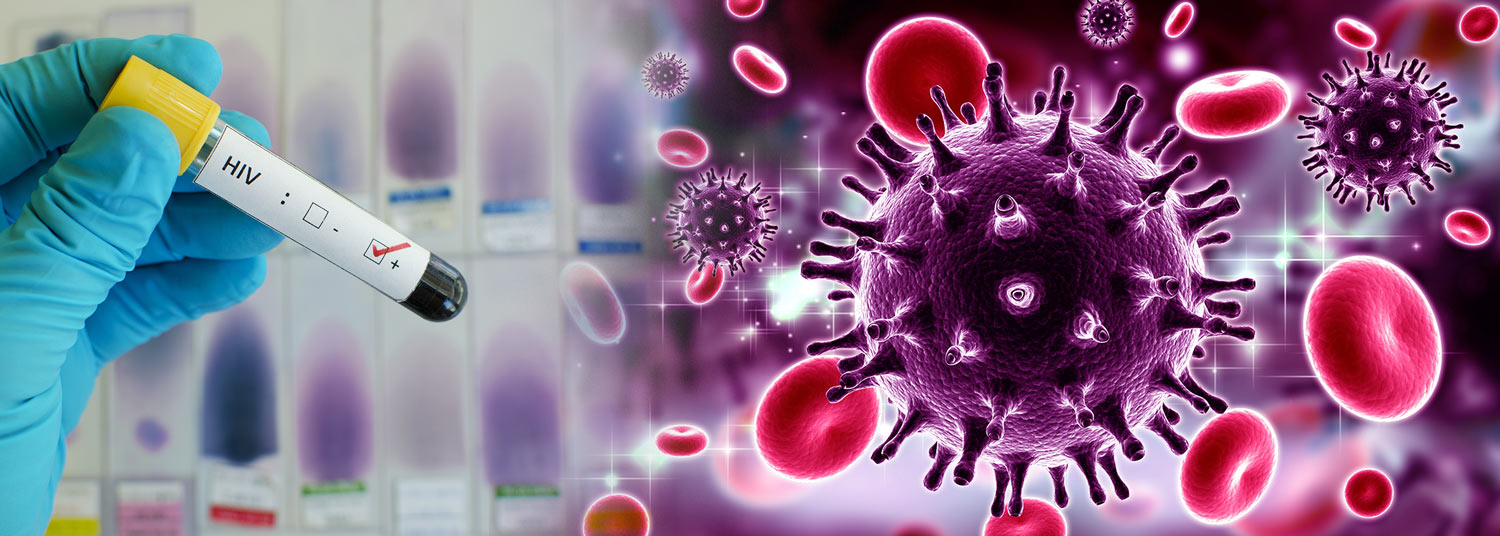
Researchers from the Institute of Human Virology (IHV) at the University of Maryland School of Medicine have discovered how a specific type of immune cell may contribute to the persistence of HIV infections. The finding offers new insight into why the virus remains difficult to cure even with effective antiretroviral therapy.
The study was published earlier this month in Science Translational Medicine. It was led by Guangming Li, PhD, and Lishan Su, PhD, Professor of Pharmacology at UMSOM and Director of the Division of Virology, Pathogenesis and Cancer, and Interim Director of the Division of Immunotherapy at IHV.
 The researchers focused on plasmacytoid dendritic cells (pDCs)—a rare immune cell type crucial in the body’s early defense against viruses. During chronic HIV infection, these cells become overactivated, driving continuous immune inflammation. This constant activation weakens virus-fighting T cells and allows HIV to persist in hidden reservoirs.
Using humanized mouse models and blood samples from people living with HIV, the team found that reducing overactive pDCs helped restore antiviral T cell function and shrink the viral reservoir. When this approach was combined with an immune checkpoint inhibitor—a therapy that reinvigorates exhausted immune cells—the immune response improved even further.
Why This Research Matters
The findings reveal that while the pDC-interferon pathway is essential for antiviral defense, its overactivation may weaken immune control of HIV. This helps explain why immune inflammation continues in people with HIV despite treatment and why a cure remains elusive.
 “This study represents our decade-long effort to understand the complex role of pDCs in HIV-associated diseases,” Dr. Su said. “Our research shows that the immune system’s continued effort to fight infection can sometimes work against itself. By rebalancing this system, we may be able to open new pathways for therapy.”
While most of the study was conducted in laboratory and animal models, key observations were confirmed in blood samples from people living with HIV.
“Future studies will determine whether temporarily adjusting these immune cells can safely improve immune balance and contribute to HIV cure strategies,” said Dr. Li.
This research builds on UMSOM and IHV’s longstanding commitment to advancing HIV biology and developing new therapeutic strategies.
Mr. Yaoxian Lou, PhD candidate of Microbiology & Immunology at UMSOM, Drs. Shyamasundaran Kottilil and Poonam Mathur at IHV/UMSOM are coauthors of the manuscript. Other co-authors on the study include researchers at the University of North Carolina at Chapel Hill and Weill Cornell Medicine. The study was supported by NIH grants (AI136990, CA298839), the National Cancer Institute Cancer Center Support Grant (P30CA134274), and a University of Maryland School of Medicine grant (1UL1TR003098).
Contact
Jennifer Gonzales
Jennifer.Gonzales@ihv.umaryland.edu
Related stories
Wednesday, March 20, 2024
New Study Reveals Insights into Lack of Durability in COVID Antibody Response to Infections & Vaccines
Researchers at the Institute of Human Virology (IHV) at the University of Maryland School of Medicine published a new study in the Journal of Infectious Diseases investigating the short-lived antibody response following SARS-CoV-2, the virus that causes COVID.
Friday, May 20, 2022
NIH Grant Awarded to Study HIV Drug-Resistant Genetic Mutations Across Africa
University of Maryland School of Medicine (UMSOM)’s Institute of Human Virology (IHV) researchers received funding from the National Institutes of Health’s National Institute of Allergy and Infectious Diseases (NIAID) for $2.7 million to study genetic changes in two genes from the HIV-1 virus that may make it resistant to antiretroviral therapy. The study, named INSPIRE, will analyze genetic variation in types of HIV circulating in a handful of African countries that will help to better understand the implications of these mutations and will improve clinical management of patients.

Tuesday, July 06, 2021
UM School of Medicine Researchers Receive NIH Avant-Garde Award for Out-Of-Box Concept to Cure HIV and Treat Co-Existing Addiction
Linda Chang, MD, MS, Professor of Diagnostic Radiology & Nuclear Medicine at the University of Maryland School of Medicine (UMSOM), received the National Institute on Drug Abuse (NIDA) 2021 Avant-Garde Award (DP1) for HIV/AIDS and Substance Use Disorder Research — a National Institutes of Health (NIH) Director’s Pioneer Award. This prestigious award supports researchers with exceptional creativity, who propose high-impact research with the potential to be transformative to the field.
Monday, June 24, 2019
UM School of Medicine's Institute of Human Virology Awarded $40 Million Grant to Conduct HIV Population Surveys
Man Charurat, MD, Professor of Medicine, Director, Center for International Health, Education, and Biosecurity (CIHEB), and Director, Division of Epidemiology and Prevention, Institute of Human Virology (IHV) at the University of Maryland School of Medicine (UMSOM), has been awarded a five-year grant from the U.S. Centers for Disease Control and Prevention (CDC) to conduct HIV population-based HIV impact assessments worldwide to measure the progress towards the control of the HIV epidemic
Wednesday, August 02, 2017
UM School of Medicine Receives $2 Million Grant for HIV Research in Malawi
The University of Maryland School of Medicine’s (UM SOM) Institute for Global Health (IGH) and the Institute of Human Virology (IHV) have been awarded a $2 million five-year grant from the Eunice Kennedy Shriver National Institute of Child Health and Human Development to study the impact exposure to HIV has on the immune systems of infants in utero and how those changes impact the ability of infants to fight off infections after birth.
Tuesday, October 25, 2016
"A Call to End HIV/AIDS in America" IHV Director Dr. Robert Gallo's Op-Ed in the Huffington Post
As the new Administration is presented with great challenges facing the United States, one will be a longtime foe, the U.S. HIV/AIDS epidemic. Since President Barack Obama was elected in 2008, I have publicly called on our country’s leaders to utilize the largest global health initiative in history - the President’s Emergency Plan for AIDS Relief (PEPFAR) - as a model to address the U.S. epidemic.