
July 24, 2025 | Karen Warmkessel

Orthopaedic Surgeons at University of Maryland Medical Center Suggest Strategy for Common Knee Surgery Could Be Applied to Other Surgical Procedures to Manage Pain
Preoperative counseling significantly reduced opioid use by patients undergoing anterior cruciate ligament (ACL) reconstruction, a common knee surgery, with no increase in pain following the procedure, according to new research by orthopaedic surgeons at the University of Maryland School of Medicine (UMSOM). The findings of the randomized clinical trial of 121 patients who had surgery at the University of Maryland Rehabilitation & Orthopaedic Institute (UM Rehab & Ortho) were published recently in the Journal of Bone and Joint Surgery.
 Patients in the counseling group were instructed to take oxycodone as a “last resort” if the pain became unbearable, with the goal of taking as little of the medication as possible. Patients in the control group were told to take the medication as needed for severe pain and to “stay ahead of the pain,” which is a standard pain management approach. Patients in both groups were told about potential adverse effects of opioids and were advised of alternative methods to control pain, including using over-the-counter medicines such as acetaminophen and ibuprofen.
“We found that patients who were told to take opioids only as a last resort took significantly less opioids and had fewer refills, with no observed differences in pain scores, sleep quality or satisfaction. Furthermore, they had fewer medication-related side effects,” said the senior author, R. Frank Henn III, MD, the James Lawrence Kernan Professor and Chair of the Department of Orthopaedics at UMSOM and Chief of Orthopaedics at the University of Maryland Medical Center (UMMC).
“Over a third of patients in the ‘last resort’ group took no opioids at all after surgery. In contrast, 9 of 10 patients in the standard-of-care group used opioids after surgery,” Dr. Henn said.
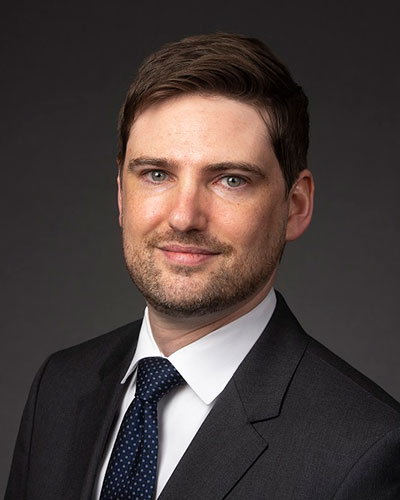 The use of opioids for pain management following orthopaedic surgery has decreased substantially in recent years as the dangers of opioid use and subsequent abuse have become better understood. But the study’s lead author, Jonathan D. Packer, MD, Associate Professor of Orthopaedics at UMSOM, said that prescribing opioids is still a common practice, and many surgeons believe it is necessary to adequately manage pain.
Dr. Packer said the research team decided to focus on a single type of surgery – ACL reconstruction, which has historically been associated with high use of postoperative opioids – in order to compare an opioid-sparing approach with the more traditional approach. The primary endpoint was the amount of oxycodone consumed in the three months after surgery in both randomly allocated patient groups.
“This study provides convincing evidence that we should abandon the practice of counseling patients to take opioids to ‘stay ahead of the pain’ and counsel them to take them as a ‘last resort’ to manage pain,” said Dr. Packer, who is also an orthopaedic surgeon and sports medicine specialist at UMMC. “Taking additional opioids following surgery does not improve postoperative pain and has no benefit to patients.”
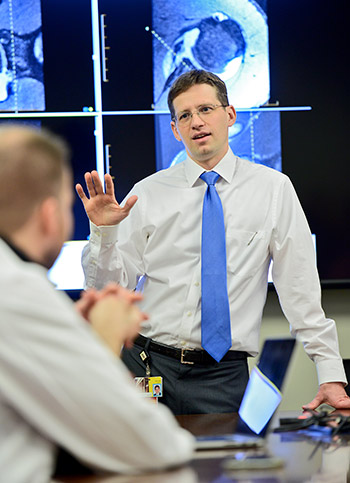 He added, “We believe that this approach is applicable to all surgeries, and we strongly recommend that clinicians consider adopting this simple strategy in their practice,” noting that he and his colleagues have already incorporated this counseling into their practice.
Preoperative counseling and other opioid-sparing protocols have previously been investigated in various orthopaedic surgical procedures and demonstrated decreased opioid consumption. This study produced consistent results with prior research but is the first to focus solely on when to take opioid medication after ACL reconstruction, Dr. Henn said.
This study builds on extensive previous research by Department of Orthopaedics investigators on perioperative opioid use and patient-reported outcomes. They are leading ongoing studies to measure and optimize the patient experience after orthopaedic injuries.
ACL reconstruction surgery is very common, especially among athletes and young adults, with an estimated 100,000 to 200,000 procedures performed in the United States each year. ACL injuries often occur in sports that involve sudden changes in direction, pivoting and jumping. More females than males tear their ACL – a ligament that helps to stabilize the knee.
The team of researchers enrolled 121 patients over the age of 14 who had ACL reconstruction at UM Rehab & Ortho, a member organization of the University of Maryland Medical System (UMMS), in the investigator-initiated trial between May 2021 through November 2022. The ages of trial participants ranged from 14 to 64 years old.
 Within three months of surgery, the median oxycodone consumption in the 60 patients assigned to receive preoperative counseling and education was 15 mg of oxycodone compared to 53 mg in the 61 patients in the control arm. Average scores on the Numeric Rating Scale, a widely used method for measuring pain intensity, was 2.5 for the counseling group and 2.4 for the control group 14 days after surgery. On the scale, zero represents no pain and 10 the worst pain imaginable.
Four patients in the counseling group and six patients in the control group refilled their oxycodone prescriptions within three months. Sleep quality and patient satisfaction, two other secondary endpoints, were similar between the groups.
Nine patients in the counseling group and 23 patients in the control group experienced adverse side effects of the medication – the most common being gastrointestinal upset in the counseling arm and nausea in the control group.
The research was funded in part by a grant from The James Lawrence Kernan Hospital Endowment Fund, Inc. (BL1941007WS) and by a career development award (IK2 BX004879) from the U.S. Department of Veterans Affairs Biomedical Laboratory, R&D Service.
Co-authors are Ali Aneizi, MD; Evan L. Honig, BS; Samir Kaveeshwar, MD; Matheus Schneider, MD: Natalie L. Leong, MD: Sean J. Meredith, MD; and Nathan N. O’Hara, PhD, MHA, all affiliated with the University of Maryland Department of Orthopaedics.
About the University of Maryland School of Medicine
Now in its third century, the University of Maryland School of Medicine was chartered in 1807 as the first public medical school in the United States. It continues today as one of the fastest growing, top-tier biomedical research enterprises in the world -- with 46 academic departments, centers, institutes, and programs, and a faculty of more than 3,000 physicians, scientists, and allied health professionals, including members of the National Academy of Medicine and the National Academy of Sciences, and a distinguished two-time winner of the Albert E. Lasker Award in Medical Research. With an operating budget of more than $1.2 billion, the School of Medicine works closely in partnership with the University of Maryland Medical Center and Medical System to provide research-intensive, academic and clinically based care for nearly 2 million patients each year. The School of Medicine has nearly $600 million in extramural funding, with most of its academic departments highly ranked among all medical schools in the nation in research funding. As one of the seven professional schools that make up the University of Maryland, Baltimore campus, the School of Medicine has a total population of nearly 9,000 faculty and staff, including 2,500 students, trainees, residents, and fellows. The combined School of Medicine and Medical System (“University of Maryland Medicine”) has an annual budget of over $6 billion and an economic impact of nearly $20 billion on the state and local community. The School of Medicine, which ranks as the 8th highest among public medical schools in research productivity (according to the Association of American Medical Colleges profile) is an innovator in translational medicine, with 606 active patents and 52 start-up companies. In the latest U.S. News & World Report ranking of the Best Medical Schools, published in 2023, the UM School of Medicine is ranked #10 among the 92 public medical schools in the U.S., and in the top 16 percent (#32) of all 192 public and private U.S. medical schools. The School of Medicine works locally, nationally, and globally, with research and treatment facilities in 36 countries around the world. Visit medschool.umaryland.edu.
About the University of Maryland Medical Center
The University of Maryland Medical Center (UMMC) is comprised of two hospital campuses in Baltimore: the 800-bed flagship institution of the 11-hospital University of Maryland Medical System (UMMS) and the 200-bed UMMC Midtown Campus. Both campuses are academic medical centers for training physicians and health professionals and for pursuing research and innovation to improve health. UMMC's downtown campus is a national and regional referral center for trauma, cancer care, neurosciences, advanced cardiovascular care, and women's and children's health, and has one of the largest solid organ transplant programs in the country. All physicians on staff at the downtown campus are clinical faculty physicians of the University of Maryland School of Medicine. The UMMC Midtown Campus medical staff is predominately faculty physicians specializing in a wide spectrum of medical and surgical subspecialties, primary care for adults and children and behavioral health. UMMC Midtown has been a teaching hospital for 140 years and is located one mile away from the downtown campus. For more information, visit www.umm.edu.
Contact
Karen Warmkessel
Media Relations Senior Manager
kwarmkessel@umm.edu
(410) 404-1532
Related stories
Friday, February 07, 2025
UM School of Medicine Surgeon-Scientist to Co-Lead Large International Clinical Trial to Determine Most Effective Treatment for Common Hip Fracture in Older Adults
Hip fractures in older adults can lead to serious complications, disability and even death. Traditionally, orthopaedic surgeons have repaired a common fracture of the upper part of the thigh bone, or femur, near the hip using screws and plates to piece together slightly separated pieces of bone. But many surgeons now treat these “minimally displaced” femoral neck fractures by replacing the hip joint with a metal implant.