The question “Would I be surprised if the patient died within the next year” has been validated as a tool to predict patients with a limited life expectancy. This study looked at trauma team members’ ability to use this question to predict one year mortality. Trauma team members over estimated mortality in this study.
Show References
Reducing musculoskeletal injury and concussion risk in schoolboy rugby players with a pre-activity movement control exercise programme: a cluster randomised controlled trial
Intro: Musculoskeletal injuries and concussion are prominent reasons for time loss from sport for adolescent rugby players.
Injury patterns in rugby differ from other team sports,
-Greater frequency of concussion, upper body and contact-related injuries
Increased concussion risk is associated with lower neck strength, highlighting this characteristic as a potentially modifiable risk factor.
Enhancing neck muscle strength may prevent concussion by improving the dissipation of impact forces transmitted to the brain.
The aim of study was to determine the efficacy of a movement control exercise program in reducing injuries in youth rugby players.
Methods: In a cluster-randomized controlled trial, 40 independent schools (118 teams, 3188 players aged 14-18 years) were allocated to receive either the intervention or a reference program, both of which were to be delivered by school coaches.
The intervention comprised balance training, whole-body resistance training, plyometric training, and controlled rehearsal of landing and cutting maneuvers. This also included a neck strengthening component.
Time-loss (>24 hours) injuries arising from school rugby matches were recorded by coaches and medical staff.
Results: When trial arm comparisons were limited to teams who had completed three or more weekly program sessions on average, clear reductions in overall match injury incidence (RR=0.28) and concussion incidence (RR=0.41) were noted in the intervention group.
- NMT inclusive of a neck strengthening component was associated with a 59% lower sport related concussion rate.
- Completing the intervention program 3 times per week led to substantial reductions of 72% in overall match injury incidence and 72% in contact-related injury incidence compared with the control program.
Conclusion:
- These findings provide encouraging evidence that a pre-activity preventive exercise program can substantially reduce injury risk in youth rugby, specifically a reduction in sport related concussion.
Show References
Hot of the press from the Society of Critical Care Medicine (But most of us would know it already)
Settings: This is a prospective observational population-based study design with non-contemporaneous, nonrandomized clinical trial direct (unadjusted) head- to-head evaluations
Propensity score–matched comparisons of non-shockable cardiac arrest (NS-OHCA) patient survivor using conventional CPR (C-CPR) vs. C-CPR plus Automated Head/thorax up positioning-CPR (AHUP-CPR).
Participants: patients with non-traumatic, non-shockable out of hospital cardiac arrest (NS-OHCA).
Outcome measurement: primary outcome = survival, secondary outcome = survival with good neurologic outcome (Cerebral Performance Category score of 1–2 or modified Rankin Score less than or equal to 3).
Study Results:
• There was a total of 380 AHUP-CPR vs. 1852 C-CPR patients. After 1:1 matching, there were 353 AHUP-CPR patients and 353 C-CPR patients.
• In unadjusted analysis
o AHUP-CPR was associated with higher odds of survival (Odds ratio 2.46, 95% CI 1.55-3.92) and higher odds of survival with good neurologic function (Odds ratio 3.09 (95% CI 1.64-5.81)
• In matched groups
o AHUP-CPR was associated with higher odds of survival (Odds ratio 2.84, 95% CI 1.35-5.96) and higher odds of survival with good neurologic function [Odds ratio 3.87 (95% CI 11.27-11.78]
Discussion:
• There was no difference in rates of ROSC between groups. The authors argued that there was “neuroprotective effects” for the AHUP-CPR group.
• Although randomized controlled trials are usually required before clinical interventions are adopted, the aurthors argued that it would be difficult to randomize OHCA patients, and that the risk vs benefits may facilitate early adoption of this strategy.
• AHUP-CPR should be used first by well-trained clinicians to ensure its benefits.
Conclusion:
OHCA patients with NS presentations will have a much higher likelihood of surviving with good neurologic function when chest compressions are augmented by expedient application of the noninvasive tools to elevated head and thorax used in this study.
Show References
The routine use of ultrasound guidance has decreased CVC-related complications, especially in patients at risk for bleeding. To this day, however, platelet transfusion threshold guidelines range widely from 20,000 - 50,000 platelets per cubic millimeter, and also lack good-quality evidence.
This multicenter, randomized, controlled, noninferiority trial randomly assigned patients with severe thrombocytopenia (platelet count 10,000 to 50,000 per cubic millimeter) to receive either one unit of prophylactic platelet transfusion or no platelet transfusion before ultrasound-guided CVC placement.
Author's Conclusions: Withholding prophylactic platelet transfusion before CVC placement in patients with a platelet count of 10,000 to 50,000 per cubic millimeter did NOT meet the predefined margin for noninferiority and resulted in more CVC-related bleeding events than prophylactic platelet transfusion.
BUT…taking a closer look at this study reveals many nuanced points. Many of the study patients were heme/onc patients possibly having bleeding issues outside of low platelets, bleeding complications trended with subclavian and femoral locations as well as lower initial platelet counts. All this suggests that additional studies need to be done to move towards more specific evidenced-based guidelines.
To read more details on the study, click the referenced link.
Show References
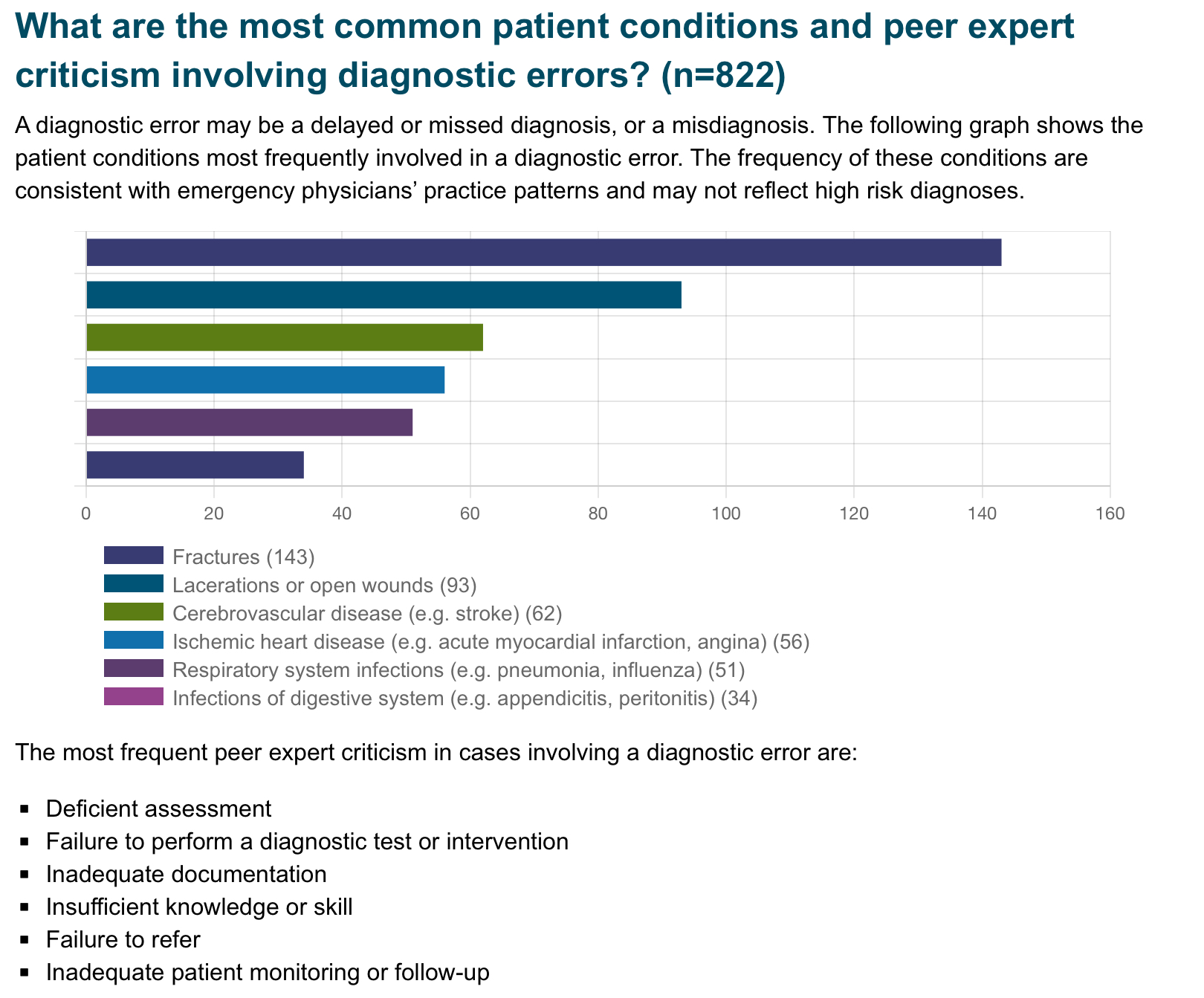
From the Canadian Medical Protective Association looking at 5 years of closed medical legal cases. This fits with previous risk management data and should give us pause when treating these conditions.
Show References
This study was a retrospective review of restraint use at a level 1 trauma center in the Midwest.
It found the following were factors in a patient encounter associated with an increased risk of restraint usage:
- drug or alcohol intoxication (highest OR)
- American Indian race
- male gender
- Medicaid or self pay insurance
- dx of bipolar disorder, psychosis
This study found a decreased OR of restraint use with Black or Hispanic race, which was in contrast to other studies
This was a single center, retrospective study, so it was already limited in what it could tell us. In addition, they didn't see the reason for the restraints being ordered in the first place. Nonetheless, it does show that people in certain marginalized groups have a higher likelihood of ending up in restraints. Please think twice when ordering restraints in the ED, especially for behavioral reasons
Show References
Revisits back to the ED within 3 days of the initial visit represent a standard quality measure. A critical ED revisit was defined as an ICU admission or death within 3 days of ED discharge. This study looked at 16.3 million children who were discharged from various EDs over a 4 year period and found that 0.1% (18,704 patients) had a critical revisit and 0.00001% (180 patients) died.
The most common diagnosis at the initial visit of those patients coming back with a critical revisit included: Upper respiratory infections, gastroenteritis/nausea/vomiting and asthma.
The most common critical revisit diagnosis were: asthma, pneumonia, cellulitis, bronchiolitis, upper respiratory infections, respiratory failure, seizure, gastroenteritis/nausea/vomiting, appendectomy and sickle cell crisis. Among the patients who died, 48.9% were younger than 4 years. Patients with complex medical problems and patients seen at a high volume center were more likely to have a critical ED visit.
Bottom line: These ED revisits may not have been related to missed diagnosis (with the exception of appendicitis), but rather due to the natural progression of certain disease processes. Patients with these diagnoses may benefit from careful reassessment, targeted patient education, more specific return precautions and closer outpatient follow up.
Show References
IVC POCUS is often misapplied in attempts to assess volume status and/or volume “responsiveness.” Here are some important concepts to understand when using IVC POCUS to guide management:
- IVC measurement is not a reliable predictor of fluid responsiveness
- Venodilation and obstructive pathology can decrease and increase (respectively) IVC size without any change in actual blood volume or “volume status”
- IVC size/variation is affected by multiple factors including spontaneous breathing vs. mechanical ventilation (AND actual ventilator settings), and degree of respiratory effort (in both spontaneous and mechanically ventilated patients) so there are no true “cut off” points that determine volume responsiveness
- Attempting to maximize cardiac output/oxygen delivery (macrocirculation) through IVF can actually cause venous congestion and worsen microcirculation and organ function
- Some patients with a plethoric IVC (tamponade or tension pneumothorax) may actually benefit from IVF in the acute setting
- Examine the entire IVC (cephalad and distal portion) and in the short and long axis (the IVC is actually elliptoid, rather than a true cylinder)
- Interpret IVC size in relation to RA/RV function (pts with chronically elevated RA pressures may have a chronically dilated IVC)
Show References
The 2nd most common reason for EMS activation is chest pain. In this study, paramedics were asked to complete the HEAR (history, EKG, age, risk factor) score, EDACS (ED Assessment of chest pain score), the Revised Geneva Score and the PERC (Pulmonary embolism rule-out criteria) for all patients older than 21 who presented with chest pain. The positive and negative likelihood ratios (LR) of the risk scores in relation to 30 day MACE and PE risk were calculated.
837 patients were included in this study with 687 patients having all 4 scores completed. The combination of HEAR/PERC had the best negative LR (0.25) for ruling our MACE and PE at 30 days. However, these scores, alone or in combination, were not sufficient to exclusively guide treatment or destination decisions. Adding biomarkers (ie troponin or Ddimer to the prehospital setting) could improve the usefulness of these scores.
Show References
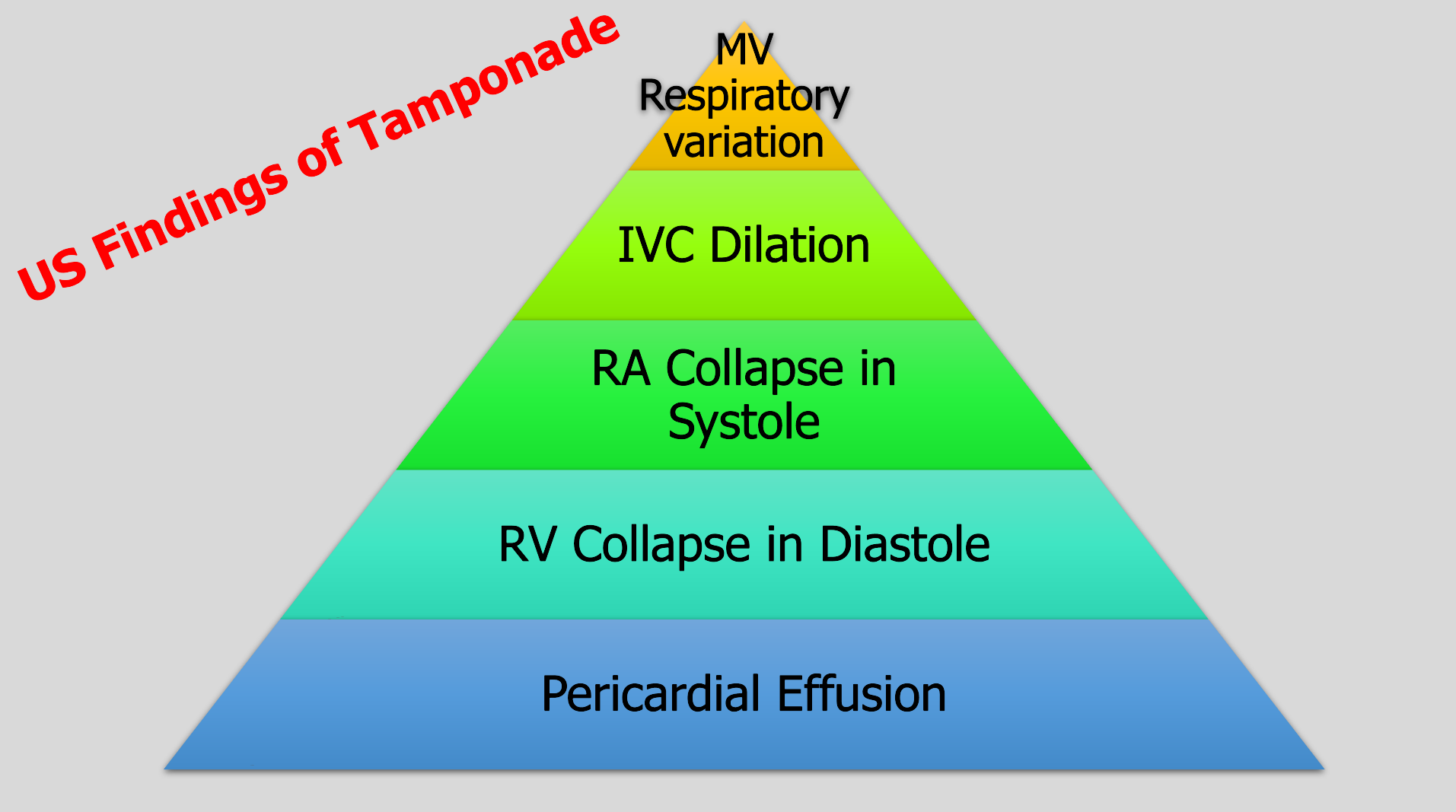
What are the signs of Cardiac Tamponade on ultrasound?
Think of them as a pyramid with clinical importance decreasing as you rise to the top of the pyramid.
-
To have tamponade you need a pericardial effusion.
-
The most specific sign of tamponade is RV collapse in diastole.
-
The earliest and most sensitive sign is RA collapse over 1/3 of the cardiac cycle from late diastole into systole, which is why we say RA collapse during systole.
-
IVC dilation also occurs but is not sensitive.
-
Placing the pulse wave Doppler over the mitral valve and evaluating the change with respirations is an advanced technique. It’s positive if you have 25% change.
Don’t know if you are in systole or diastole? Connect your telemetry leads to the ultrasound machine. Don't have leads? Then you can also cine scroll on a subxiphoid view or parasternal view to look at when the valves are open and closed, then compare to the cardiac wall positioning.
Show References
Imagine lying in a bed staring at the ceiling and these fuzzy faces looking down on you clearly saying something to you but you can't hear them while your hip and pelvis are hurting worse than anything you have ever felt. That's what many of our fall from standing elderly patients experience in emergency departments on a regular basis. Do not remove glasses or hearing aides from your elderly patients. Work with our EMS colleagues to make it a practice to bring glasses and hearing aides along from the scene. Speak slowly and get close to their ear to help if necessary. That confusion, delirium or dementia you assume this patient has is actually just hearing impairment and poor vision.
Wrist pain in golfers
70% of amateur golfers will experience a sport related injury in their lifetime.
The hand/wrist is the third most common body area injured by golfers after the back and elbow.
Studies fail to include multi trauma from golf cart accidents:)
Wrist injuries are 3x more frequent than hand injuries.
Wrist injury affects 13 to 20 percent of amateur golfers.
Injury is most likely to occur at the point of ball impact.
Injury most commonly affects the lead wrist rather than the trail wrist.
The lead wrist is left sided for right-handed players and right sided for lefties
Due to many differences in grip and wrist position there are several injury patterns.
Most causes of wrist pain in golfers are tendinopathies.
Due to impact stress and repetitive swinging movements
If pain is primarily radial, consider DeQuervain's tenosynovitis
Poor swing mechanics such as premature wrist uncocking in the early downswing places the wrist in ulnar deviation thereby stressing the first dorsal compartment.
Significant ulnar deviation of the lead wrist at time of ball impact may also stress the tendons of the first dorsal compartment.
If pain is primarily ulnar consider Extensor Carpi Ulnaris tendonitis & subluxation
A strong golf grip (more knuckle’s visible) is associated with greater ECU stress during the swing
The height of hand position can also stress the ECU tendon
Differential diagnosis:
TFCC injury
Hook of hamate fracture
Carpal Tunnel Syndrome
Ulnar Tunnel Syndrome
Nirmatrelvir-ritonavir (Paxlovid™) is a combination of two protease inhibitors used for the treatment of mild-moderate symptomatic COVID-19. Nirmatrelvir inhibits the SARS-CoV2 main protease, and ritonavir inhibits metabolism of nirmatrelvir, acting as a “booster” to increase nirmatrelvir concentrations.
The EPIC-HR trial, which included non-hospitalized adults with mild-moderate COVID-19 who were unvaccinated and at risk of progressing to severe disease, showed an 89% reduction in COVID-19-related hospitalization or 28-day all-cause mortality in patients treated with nirmatrelvir-ritonavir compared to placebo. The efficacy rates in this trial were similar to remdesivir (87% relative risk reduction), and greater than molnupiravir (31% relative risk reduction), two alternative agents used for treatment of mild-moderate COVID-19. However, these three agents have never been directly compared. Nirmatrelvir-ritonavir was initially approved by the FDA under Emergency Use Authorization (EUA), but is now fully FDA-approved as of May 2023.
Which patients benefit?
- Mild – moderate COVID-19 symptoms
- ED or outpatients
- Hospitalized patients who are admitted for reasons other than COVID-19
- Not requiring supplemental oxygen above baseline needs
- Presenting within 5-7 days of symptom onset
- Risk factor(s) for progression to severe disease
- Age > 65
- Comorbidities such as diabetes, chronic lung disease, asthma, malignancy, etc.
- Immunocompromise
Drug-Drug Interactions:
- Ritonavir strongly inhibits the CYP3A4 enzyme, which may significantly increase serum concentrations of medications metabolized by CYP3A4. Several common medications are metabolized by this enzyme and concomitant use may pose serious risk of toxicity.
- In many cases, drug-drug interactions can be managed safely with close monitoring or dose adjustments. Some may require use of alternative COVID-19 therapies such as remdesivir or molnupiravir.
Dosing:
- eGFR 60 mL/min or above: Nirmatrelvir 300 mg (2 tabs) + ritonavir 100 mg (1 tab) twice daily for 5 days
- eGFR >30 - <60 mL/min: Nirmatrelvir 150 mg (1 tab) + ritonavir 100 mg (1 tab) twice daily for 5 days
- eGFR <30 mL/min: Use is not recommended per the manufacturer, but retrospective studies have shown that reduced dosing is well-tolerated.
Common side effects:
- Diarrhea (3%)
- Altered sense of taste (5%)
Bottom Line: Paxlovid is appropriate for patients with symptomatic mild-moderate COVID-19 with risk factors for progression to severe disease. Ask your pharmacist for assistance evaluating drug-drug interactions!
Show References
This retrospective cohort study examined patients over a one year period to evaluate factors associated with unfavorable outcomes in acute abdominal pain.
Unfavorable outcomes were defined as any of the following: 1) shock requiring an invasive procedure such as central line insertion or mechanical ventilation 2) emergency surgery 3) post-operative complications OR 4) in-hospital cardiac arrest
951 patients were included in the study.
Physical exam and laboratory signs associated with the above unfavorable outcomes included:
-diastolic BP < 80 mmHG
-RR ? 24/min
-RLQ tenderness
-abd distension
-hypoactive bowel sounds
-presence of specific abdominal signs (ie Murphy's sign, psoas sign, etc).
-leukocytosis
-ANC >75%
Further, ED Length of Stay of > 4 hours was also associated with unfavorable outcomes.
Food for thought when considering serial abdominal exams when diagnosis is unclear…
Show References
Many of us in the endovascular resuscitation space were eagerly awaiting some clarity on REBOA from this trial. Unfortunately, this is not the definitive trial that either confirms or denies the utility of REBOA in trauma.
Unfortunately, even this well-designed trial suffered from major problems, most notably enrollment issues (ITT: of the 46 in the REBOA group, only 19 actually got REBOA!!) and matching issues (Brain AIS was significantly higher in the REBOA group versus standard practice [3 vs 0] & initial systolic pressure was lower in the REBOA group, both of which are known risk factors for poor outcome in REBOA).
This trial's failure to provide a definitive benefit or the nail-in-the-coffin is frustrating to say the least. Until that day, we will continue to be selective of the "right" patient and to put in femoral arterial lines early and often.
Zaf Qasim has an excellent talk on EMRAP about this study, as does St. Emlyn's.
Show References
BACKGROUND:
Critical care transport teams are tasked with extending specialized care to the bedside. Given the uptick in COVID and ARDS cases, there are increasing demands for the transport of patients proned for respiratory compromise. An air medical service in British Columbia (BC) published their experience with transporting intubated patients in the proned position. The BC service utilizes 2 trained flight paramedics and conducts transports via pressurized fixed wing and non pressurized rotor wing aircraft. The small, retrospective study of 10 patients demonstrated feasibility of this practice. No extubations were recorded in the study population. 6/10 patients experienced >6% increase in oxygen saturation and no medical lines were disconnected during transport.
BOTTOM LINE:
- Proning patients for air medical transport is possible but incorporates significant logistical and educational challenges
- Evidence base for proning in air medical transport is insufficient to inform comprehensive conclusions about risks and benefits
BALTIMORE, MD SPECIFIC PEARL:
- Currently, one local helicopter service will accomplish missions involving proned patients. Therefore, attention to optimizing vent settings prior to transport is imperative
BONUS AVIATION ENTHUSIASTC SPECIFIC PEARL:
- BC air medical services is the largest integrated provider of helicopter EMS in Canada. They operate four Sikorsky S-76 aircraft. The S-76 platform is a large twin engine helicopter capable of transporting 2 patients at a time.
http://www.bcehs.ca/our-services/programs-services/critical-care-program
Show References
Attachments
Approaching patients based on their frailty, not their age, leads to better medical decision making. A recent best practice guideline from the American College of Surgeons sums up frailty:
“It is well recognized that aging is associated with physiological decline, but this decline is not uniform across all individuals or even across one individual’s organ systems. Frailty is a geriatric syndrome, clinically distinct from age, comorbidity, and functional disability, characterized by age- associated depletion of physiological reserves that leads
to a state of augmented vulnerability to physical stressors and a diminished ability to recover from illnesses.” A trauma specific frailty index exists to identify these high risk patients.
Show References
Since 2014, Medicare has payed for inpatient services for Medicare patients who’s admitting physician noted that hospital stay required at least 48 hours (measured as 2 midnights) or required specialty care that could not be performed as an out patient. This rule now will apply to Medicare Advantage insurance patients as well. Physicians will need to document their reasoning why a patient’s stay will likely require two midnights.
Show References
As is well known, fluid resuscitation strategy ("liberal" vs “restrictive”) in sepsis is a controversial topic. An RCT in NEJM called CLOVERS that looked at this and found no difference was recently re-analyzed to answer the following question… should my choice of strategy change if the patient presents with an Acute Kidney Injury (AKI)?
For the most part, the answer is no. In the group with AKI, the restrictive group did slightly, but non-statistically-significantly, better. Interestingly, in the group without AKI, the relationship reversed, and in fact of the 4 groups (AKI vs no AKI, Restrictive vs Liberal), the no AKI but liberal strategy group did best (liberal vs restrictive in the no AKI group almost reached statistical significance in favor of the liberal strategy, but not quite).
Bottom Line: In septic patients presenting with an AKI, we don't know whether liberal or restrictive strategy is better, but either is probably reasonable. In patients presenting without an AKI, it may be more ok to lean more towards liberal fluid resuscitation than in non-AKI patients*.
*There are several important caveats here: 1) they didn't closely evaluate for potential side effects of over-resuscitation such as hypoxia or pulmonary edema (the primary outcome was need for renal replacement therapy), 2) as mentioned above, this trended towards but did not reach statistical significance, 3) this is one small study which did a subgroup secondary-analysis of a larger trial.
Show References
As the calendar flips to a new year, consider not setting goals or resolutions. Studies show unmet goals or having too many half finished projects leads to increased stress, anxiety and depression. Instead, consider approaching the new year looking for growth, introspection, and striving to achieve excellence. Understanding the why and what motivates you will lead to the correct what and how. Here are some questions to get you thinking about the why. May your New Year be filled with growth and excellence!