
Can acetaminophen concentrations < 100 mcg/mL obtained between 1-4 hours after acute ingestion accurately predict a nontoxic 4-hour concentration? NO!
Despite a high negative predictive value, a new study found there are still cases with toxic concentrations after 4 hours despite earlier levels < 100 mcg/mL.
The Rumack-Matthew nomogram is to be utilized starting at 4 hours after an acute acetaminophen ingestion. Unless the concentration is zero, a second level must be drawn at 4 hours if an earlier one is positive.
Show References
- Chikungunya Virus (CHIKV): transmitted by day-biting mosquito.
- Primarily seen in Asia, sub-Saharan Africa, France, Italy, but the first cases in the Western Hemisphere (the Caribbean) were reported this week.
Clinical Presentation:
- Similar to dengue: fever, headache, muscle pain, rash, joint pain, mild bleeding dyscrasia
- Prolonged, incapacitating joint pain often seen
Diagnosis
- Based off of clinical features, travel to affected area
- ELISA available through CDC
Treatment
- Supportive: fever reducers, fluids, avoid aspirin
Bottom line:
Chikungunya virus can cause symptoms similar to dengue fever but is not as deadly. This week the first cases of CHIKV were reported in the Caribbean. Consider this in travelers returning from endemic areas.
Distinguishing features:
- Pain is more intense and localized to joints and tendons in CHIKV
- Onset of fever is more acute and duration is shorter in CHIKV
- Shock or severe hemorrhage is rare in CHIKV
University of Maryland Section for Global Emergency Health
Author: Andi Tenner, MD, MPH, FACEP
Show References
The Concentrated Overview of Resuscitative Efforts (CORE) Scan
- Ultrasound has become an essential tool in the evaluation and management of the crashing patient.
- The CORE scan utilizes emergency bedside ultrasonography to systematically evaluate and resuscitate the rapidly deteriorating patient.
- Essentially steps in the CORE scan include:
- Endotracheal tube assessment
- Lung assessment
- Pneumothorax?
- Pleural effusion?
- Hemothorax?
- Cardiac assessment
- Pericardial effusion?
- Massive PE?
- Estimated ejection fraction?
- Aorta assessment
- Abdominal aortic aneurysm?
- Aortic dissection?
- IVC assessment
- Abdominal assessment
- Intraperitoneal fluid?
Show References
Question
37 year-old male presents with cough and a fever. What's the diagnosis and name three risk factors assiciated with disease?
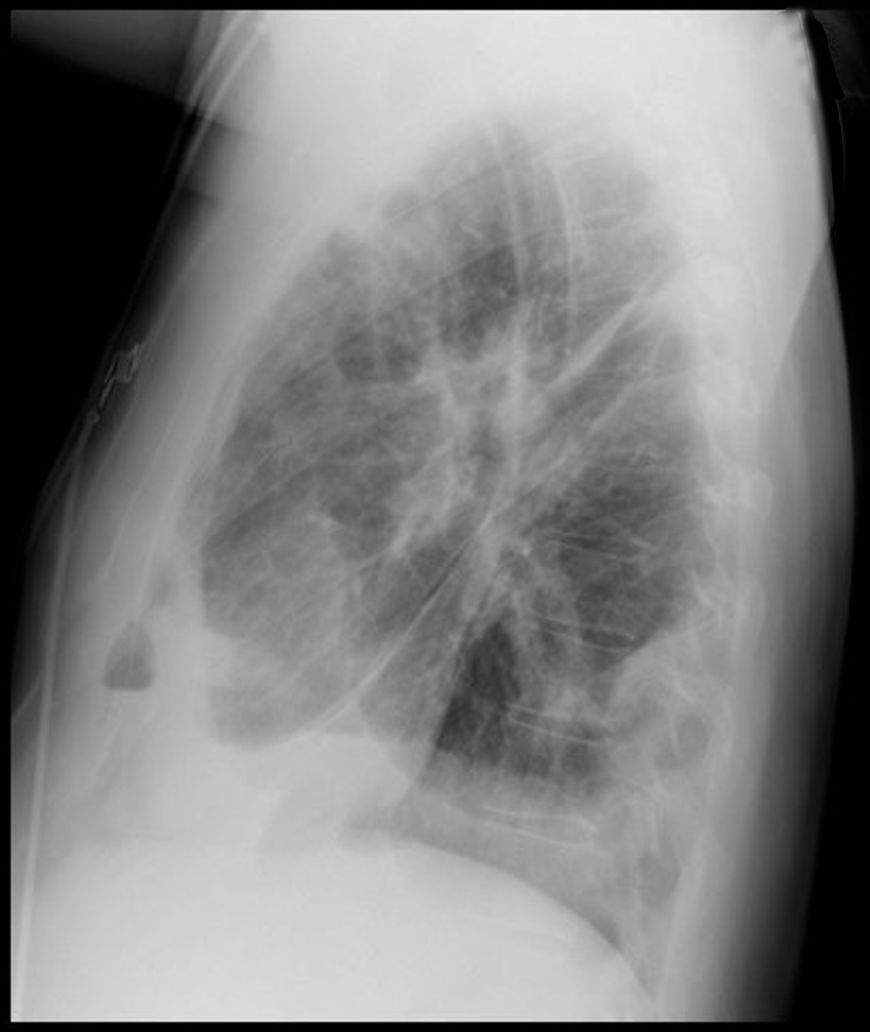
Show Answer
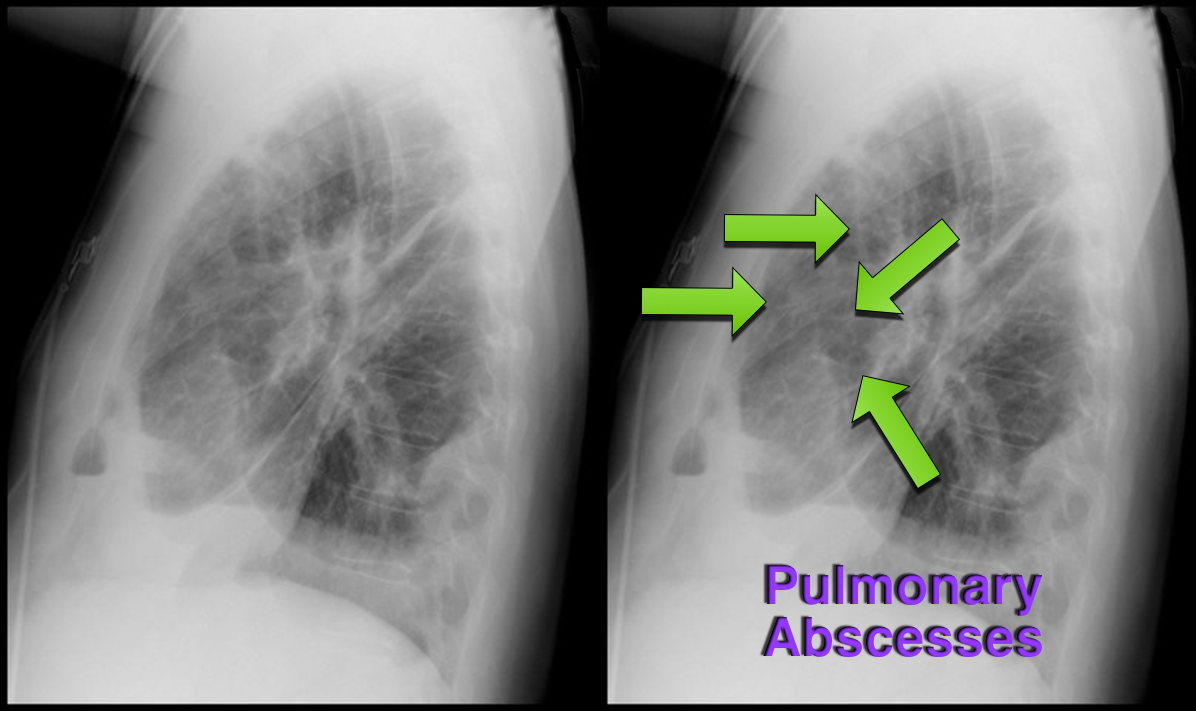
Show References
- 5 practical considerations (History, ECG, Age, Risk factors, & Troponin) are scored (0,1,or 2 points each) depending on the extent of the abnormality.
- A HEART score (0-10) can be quickly determined without complex calculations
- Low scores (0-3) exclude short term MACE with >98% certainty
- High scores (7-10) have high (>50%) MACE rates
- The HEART score performed significantly better than TIMI and GRACE scores
Bottom-line: The HEART score can help to objectively risk stratify ED patients with chest pain into low, intermediate, and high risk groups. Using the HEART score can also facilitate more efficient and effective communication with colleagues.
Want more emergency cardiology pearls? Follow me @alifarzadmd
Show References
Attachments
- 1312081410_International_Journal_of_Cardiology_2013_Backus.pdf (371 Kb)
- 1312081419_Neth_Heart_J_2008_Six.pdf (144 Kb)
In a potentially ground breaking study of healthcare-associated pneumonia (HCAP) patients, atypical pathogens were identified in 10% of cases!
Application to clinical practice: Add atypical coverage with a macrolide or respiratory fluoroquinolone for HCAP patients who have been in the community for any length of time.
The study also identified HCAP patients who may not require 3 'big gun' broad-spectrum antibiotics. This is a practice changing article for ED providers. For more analysis of the study, please note the bonus reading links below.
Bonus reading:
Dr. Emily Heil (@emilylheil) analyzes the full study in more depth at Academic Life in Emergency Medicine: http://academiclifeinem.com/new-treatment-strategy-not-so-sick-health-care-associated-pneumonia/
Dr. Ryan Radecki (@emlitofnote) critiques the study at Emergency Medicine Literature of Note: http://www.emlitofnote.com/2013/10/down-titrating-antibiotics-for-hcap.html
Show References
It has linear, predictable pharmacokinetics, achieves maximal concentration within 1-2 hours, is 50% renally excreted, and has a half life is 9-11 hours.
Edoxaban was evaluated in a recent trial comparing warfarin in patients with atrial fibrillation.
The primary end point or first stroke or systemic pulmonary embolic event occurred in 1.5% with warfarin, compared with 1.18% in the high dose edoxaban (HR 0.79; 97.5% CI 0.63-0.99, P<0.001). In the intention to treat there were trends favoring high dose edoxaban and unfavorable trends with the lower dose.
The principal safety end point of major bleeding occurred in 3.43% with warfarin versus 2.75% with high dose edoxaban (HR 0.86; 95% CI 0.71-0.91, P<0.001).
Bottom line: Both high dose (60 mg) and low dose (30 mg) edoxaban were non-inferior to warfarin with prevention of stroke or systemic emboli, and were associated with significantly lower rates of bleeding and death from cardiovascular causes.
Currently it is approved for use in Japan.
Show References
General Information:
- Separate outbreaks of meningococcal disease at two college campuses have the CDC warning clinicians to be alerted to possible disease outbreaks among contacts as college students start traveling home for the holidays.
- At Princeton University, eight cases of serogroup B meningococcal disease have been reported in the past 8 months. In addition, three undergraduate students at the University of California in Santa Barbara became ill with the disease in November. The outbreaks are caused by two distinct strains.
- CDC officials advise that meningococcal disease should be suspected when a fever and headache or rash develops in a person affiliated with one of those universities or in a person with close contact with someone from the universities.
- A serogroup B vaccine -- licensed for use abroad -- is being offered at Princeton. The currently approved U.S. meningococcal vaccine does not cover serogroup B.
Fever and headache or rash in those with close contacts from the affected universities should be considered for rapid, empiric meningococcal treatment.
Show References
Vent Management: Finding the AutoPEEP!
OK, so we all know not to, "...Fall asleep on Auto-PEEP" thanks to Dr. Mallemat's pearl that can be seen here. But now the question is, how do you know if your patient is air-trapping?
There are 3 ways you can look for evidence of Auto-PEEP on the ventilator:
- Do an end-expiratory hold: If the measured PEEP is more than the PEEP set on the vent after a 2-3 second hold, the difference is your Auto-PEEP.
- Look at the expiratory flow waveform: If the waveform does not return to baseline (still expiring when inspiratory ventilation occurs), there's Auto-PEEP!
- Compare the inspiratory vs. expiratory volumes. If the inspiratory volumes are much higher then the expiratory volumes, consider Auto-PEEP.
Show References
Question
Which view of the heart is this and can you name the structures from A-G?
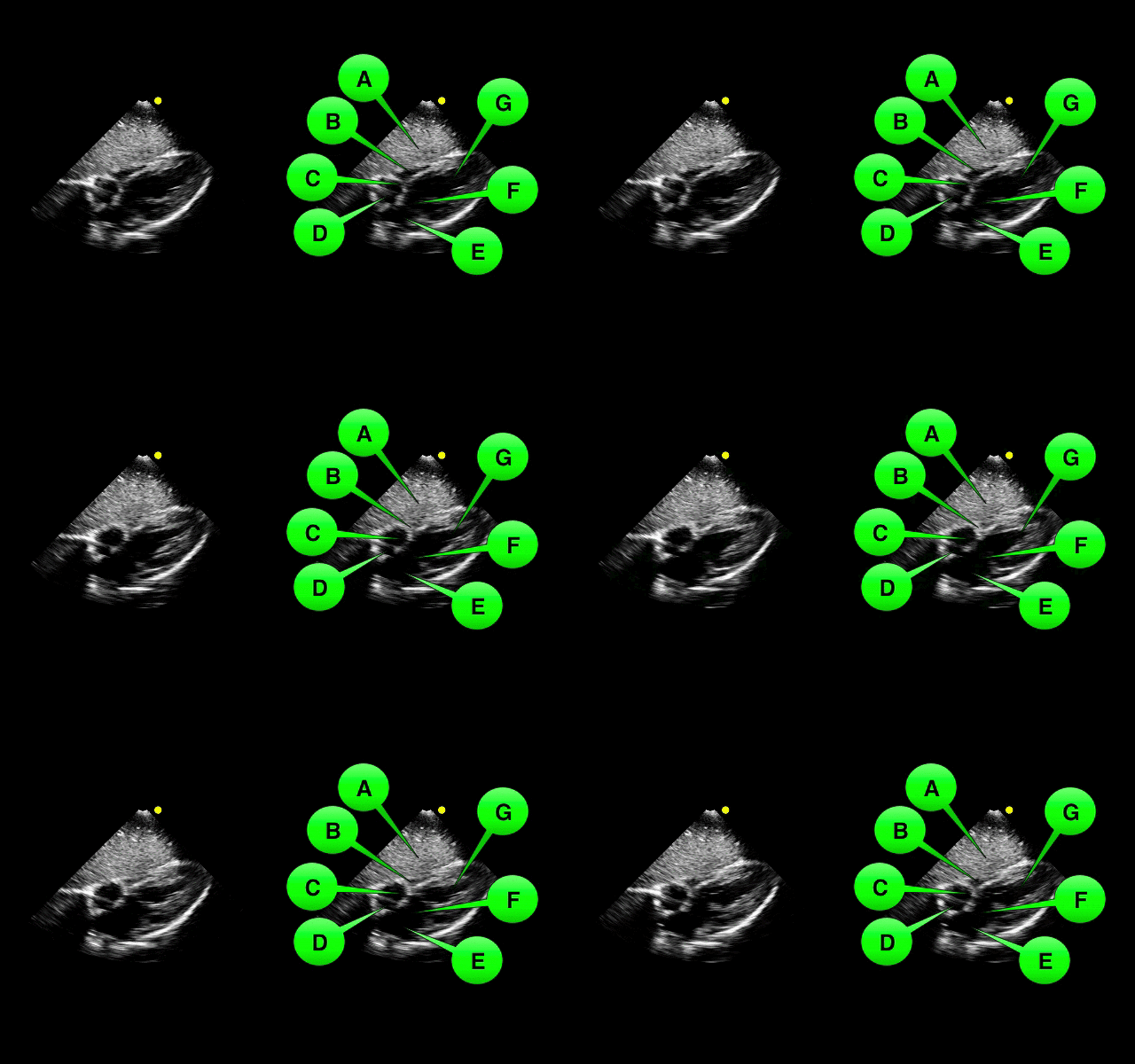
Show Answer
Show References
ECG Following Cardiac Transplant
- Suturing of donor atria to the corresponding structures of a recipient’s residual atria produces two sets of P-waves:
- A small native P-wave (often so small it may not been visualized)
- Followed by a donor P-wave of normal size associated w/ a QRS complex
- A complete or incomplete right bundle branch develops in >80% transplant recipients
- ~7–25% of recipients also demonstrate a left anterior fascicular block (LAFB)
- The transplanted heart contracts faster than the atrial remnant secondary to autonomic denervation frequently resulting in an increased resting heart rate
Show References
Attachments
Posterior Shoulder Dislocations
- A rare type of shoulder dislocation
- Accounts for 2-4% of all shoulder dislocations
- Classic mechanism of injury is a seizure or electrocution
- Reported to occur bilaterally in 15% of cases
- Often missed on the initial visit.
- Patient will complain of pain with movement of the shoulder and the arm is held in internal rotation.
- Can be missed on the AP, lateral and Y-views of the shoulder.
- Axillary or modified Axillary views are the best view to visualize a posterior shoulder dislocation. Shown below:
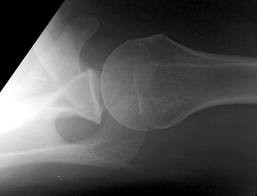
(A posterior shoulder dislocation will show the humeral head displayed superiorly in the image away from the clavicle which is the inferior most bone)
Some things to look for on the AP view that will suggest a posterior shoulder dislocation:
- Lightbulb sign – The head of the humerus in the same axis as the shaft producing a lightbulb shape
- The ‘rim sign’ – Widening of the glenohumeral space
- The vacant glenoid sign – the anterior glenoid fossa appears empty
Life in the Fast Lane as a great discussion of posterior shoulder dislocations at http://lifeinthefastlane.com/posterior-shoulder-dislocation/
Best way to make the diagnosis --- suspect it and get an axillary view.
- In children with abdominal trauma, the clinical picture does not always distinguish who can be managed conservatively versus aggressively.
- Also, unlike in adults, 30% of solid organ injury in children presents without free fluid on ultrasound. (In a 107-patient study, ultrasound had a sensitivity of 55% as compared to CT).
- A study of 497 stable peds patients found that the combination of FAST and LFT results were 88% sensitive and 98% specific (positive predictive value=93.7%, negative predictive value=96.1%) for intra-abdominal injury in pediatrics.
Bottom Line: In a stable pediatric abdominal trauma victim, combined FAST and LFT results are an effective screening tool to evaluate for intra-abdominal injury.
Show References
The management of alcohol withdrawal syndrome (AWS) includes supportive care focusing on the ABC’s and administration of benzodiazepines (BDZ).
While BDZ are effective in the treatment of AWS, some patients may require very high doses of BDZ to control symptoms (tachycardia, hypertension, diaphoresis, etc.); unfortunately, high-doses of BDZ may lead to suppression of the respiratory drive and endotracheal intubation.
Dexmedetomidine (DEX) is a sedative agent that is an intravenous alpha2-agonist (it's like clonidine); it reduces sympathetic outflow from the central nervous system and it may help treat withdrawal syndromes. The major benefit of DEX is that it does not suppress the respiratory drive, thus intubation is not required.
Smaller trials and case series have shown that patients with AWS who were treated with BDZ in addition to DEX had better symptom control, lower overall BDZ doses, and less respiratory depression/intubation.
Bottom-line: While more trials are needed, consider adding DEX for patients with AWS who require high-doses of BDZ.
Show References
Question
What view of the heart is this and can you name everything from A-G?
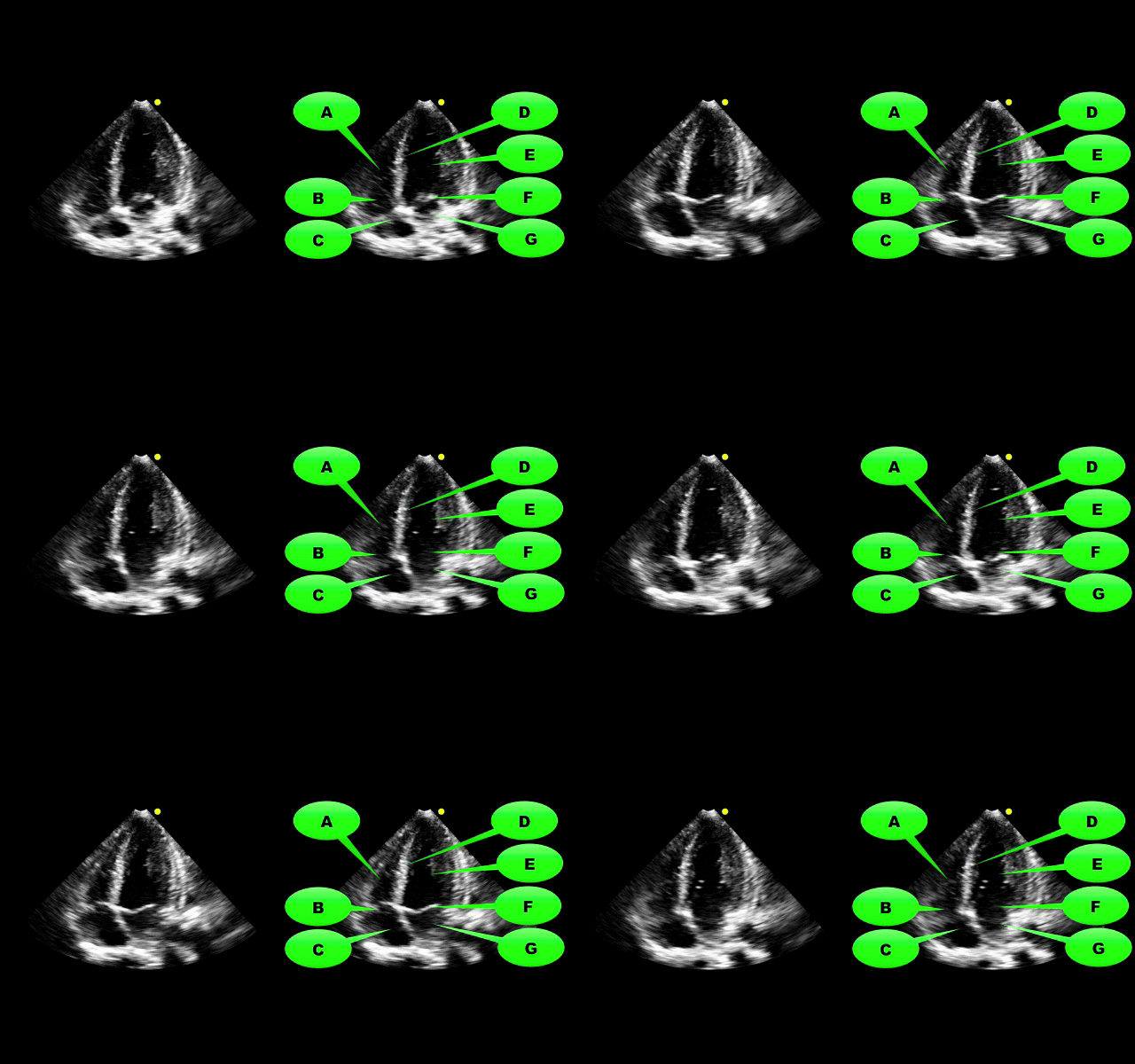
Show Answer
Show References
Want more emergency cardiology pearls? Follow me @alifarzadmd
Show References
Attachments
- 1311241245_N_Engl_J_Med_2013_Nielsen.pdf (497 Kb)
- 1311241245_N_Engl_J_Med_2013_Rittenberger.pdf (317 Kb)
- 1311241246_N_Engl_J_Med_2002_Hypothermia_after_Cardiac_Arrest_Study_Group.pdf (172 Kb)
- 1311241246_N_Engl_J_Med_2002_Bernard.pdf (102 Kb)
- 1311241246_Resuscitation_2013_Gebhardt.pdf (551 Kb)
Unexplained respiratory symptoms during exercise are often incorrectly considered secondary to exercise induced asthma/bronchospasm.
An important diagnosis on the differential should be exercise-induced laryngeal obstruction (EILO).
Of 91 athletes referred for asthma workup, 35% had EILO.
The presence of inspiratory symptoms did not differentiate athletes with and without EILO.
61% of athletes with EILO used regular asthma medication at referral.
Show References
A recent retrospective study examined predictors of survival for pediatric traumatic out-of-hospital cardiac arrest. Of the 362 patients included in the study, none had spontaneous circulation upon arrival in ED. BLS was initiated by EMS in the field with a mean response time of 5.4 minutes and mean transport time of 10.2 minutes. The study compared MAP, cardiac rhythm, urine output, skin color of face/trunk, initial GCS and body temperature.
In this study, 9% of kids made it to discharge, 11 of which had good neurologic outcome and 23 with poor neurologic outcome. Predictors of survival were:
- High or normal BP
- Normal heart rate after ROSC
- Sinus rhythm after ROSC
- Urine output >1 ml/kg/hr
- Noncyanotic skin color
- GCS >7 on arrival
Reference: Predictors of survival and neurologic outcomes in children with traumatic out-of-hospital cardiac arrest during the early postresuscitative period. Lin YR, Wu HP, Chen WL, et al. Journal Trauma Acute Care Surg. Sept 2013:75(3);439-447.
Reversal of the new anticoagulants rivaroxaban (Xarelto) and dabigatran (Pradaxa) has been challenging particularly in the ED setting with no definitive reversal agent. Intracerebral hemorrhage or critical GI bleed management becomes challenging and worsens mortality.
There is growing literature that states activated prothrombin complex concentrate or non-activated PCC may reverse these new anticoagulants. A volunteer study (1) showed its efficacy and concensus workgroups are now recommending aPCC as first line therapy(2). The search goes on for a reliable reversal agent for these new anticoagulants which were suppose to solve more problems instead of create new ones.
Show References
General Information:
Nisseria meningitidis is the common culprit in epidemic meningitis. Serogroup B is currently causing an outbreak on the Princeton campus. So what are the serogroups and why are they important?
Six main serogroups cause disease: A, B, C, Y, X, W-135.
- A: most common cause of meningitis in the Meningitis Belt in Sub-Saharan Africa, caused pandemics in the 1960s-1980s in Asia as well
- B, C, Y: Cause the large majority of cases in Europe and the Americas
- A, W-135: most common culprits in outbreaks of meningitis associated with the Hajj
- X: causes disease in some countries in Sub-Saharan Africa
Two quadrivalent vaccines are currently licensed in the US that cover Serogroups A, C, Y, and W-135.
Relevance to the EM Physician: The currently available vaccines in the US cover the majority of serogroups of meningococcus, however, Serogroup B (currently causing an outbreak at Princeton) is not covered, nor is Serogroup X (for travelers to Sub-Saharan Africa).
Bottom Line: Serogroups B and X are not covered by the currently available vaccines in the US and at risk populations (and physicians treating those patients) should be made aware of the gap in coverage. Investigations for a vaccine for Serogroup B (licensed in Europe and Australia, but not in the US) are currently underway.
University of Maryland Section of Global Emergency Health
Author: Andi Tenner, MD, MPH, FACEP