
Search
Subscribe to daily UMEM Pearls (FREE!) via:
Question
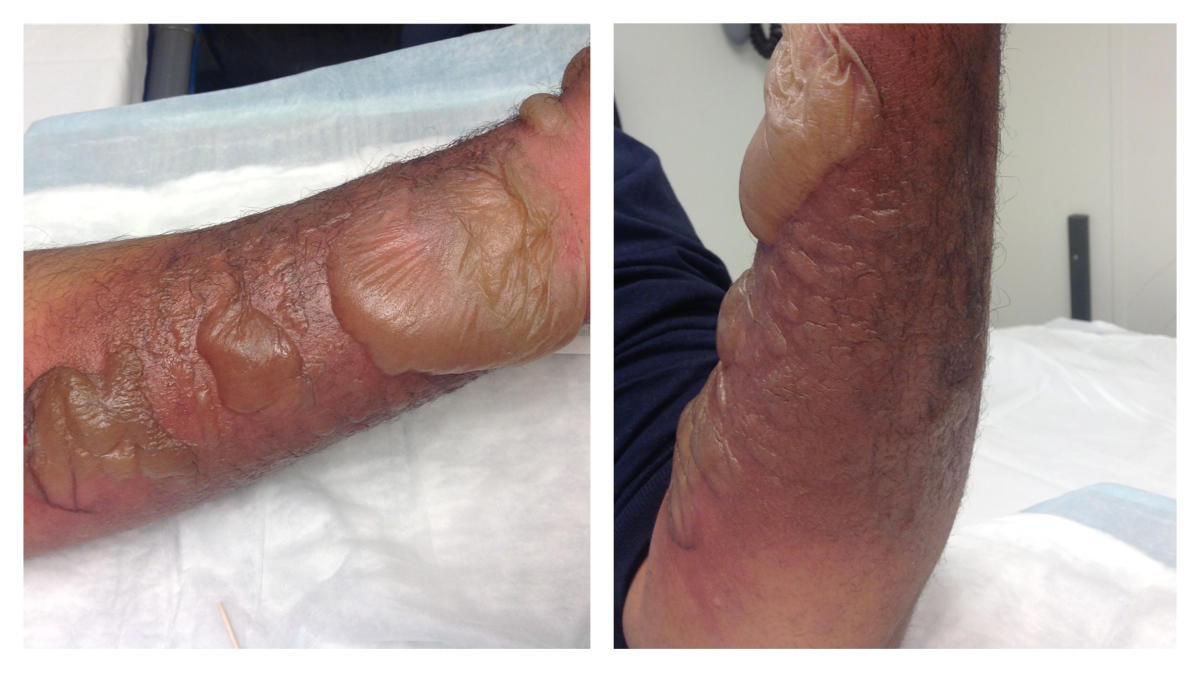
37 year-old male presents after sustaining a burn from a pot of boiling water. He states that his skin started to blister a few hours after and it’s quite painful. What type of burn does he likely have?
Answer
A non-circumferential, superficial partial-thickness burn; it was treated with Silvadene (silver sulfadiazine)
Burn Classification:
- The traditional 1st, 2nd, 3rd degree classification-system was replaced by:
- Superficial: skin is dry, red, and blanches with pressure; painful sensation (e.g. sunburn)
- Superficial partial-thickness: skin has blisters, red, moist, weeping, and blanches with pressure; painful sensation
- Deep partial-thickness: skin has blisters, wet/waxy dry, variable color (patchy to yellow-white to red), and does not blanch with pressure; pressure-like sensation
- Full-thickness: skin is waxy-white to leathery-gray to charred and black; dry, elastic, and does not blanch with pressure; deep-pressure sensation
- Fourth-degree: Burn extends into fascia, muscle, bone; deep-pressure sensation
- Always be concerned with extremity burns because they can become edematous, causing superficial/deep partial-thickness to convert to full-thickness burns
- Treat with:
- Extremity elevation
- Topical antibiotic creams/ointments
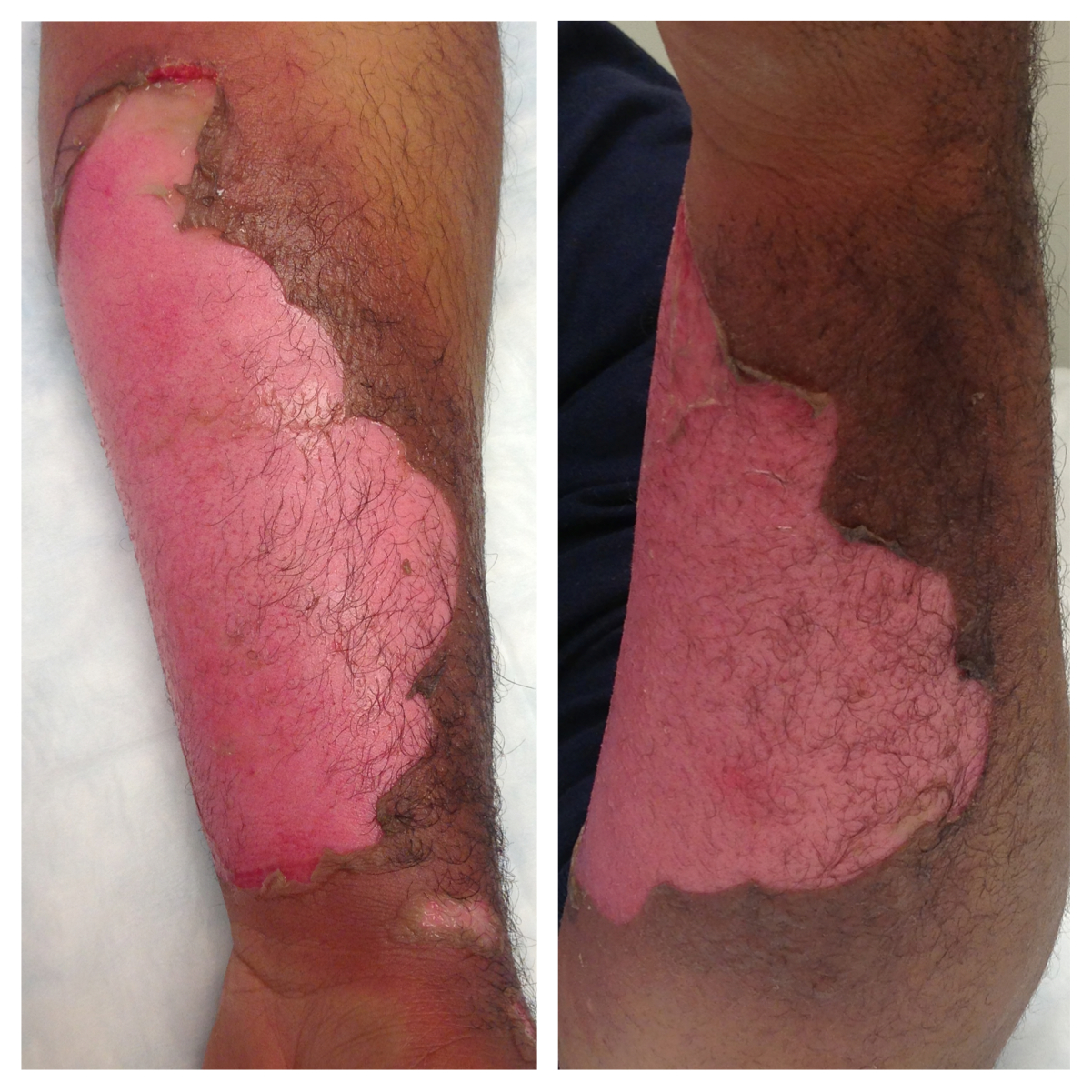
- Blister debridement is controversial
- Observation for compartment syndrome if circumferential
- Consult with burn center as necessary
- See image below demonstrating blisters after debridement
References
Follow me on Twitter (@criticalcarenow) or Google+ (+criticalcarenow)
Tintinalli, Judith E. (2010). Emergency Medicine: A Comprehensive Study Guide (Emergency Medicine). New York: McGraw-Hill Companies. pp. 1374–1386.