November 20, 2025 | Ramata Kaba
Students and Faculty Team Up with Ascension Saint Agnes and Coppin State University to Inspire Baltimore Middle Schoolers Through Hands-On Learning Program
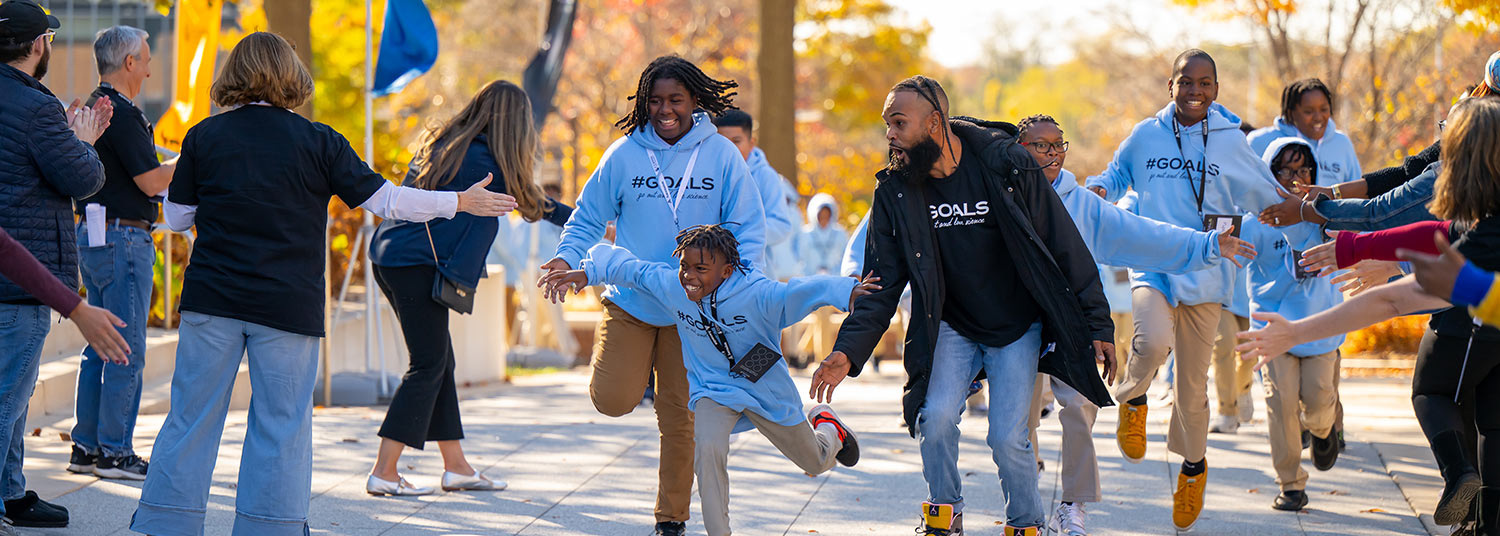
 More than 25 students from the University of Maryland School of Medicine (UMSOM) joined peers from other health-related graduate schools at the University of Maryland, Baltimore (UMB) and partner institutions to inspire 225 Baltimore City middle school students through interactive learning. The event, held earlier this month at Coppin State University, brought together students from the schools of medicine, nursing, pharmacy, and dentistry, along with UMB faculty and professionals from Ascension Saint Agnes, Coppin State, and Morgan State University. The daylong program aimed to spark curiosity and encourage pre-teens to envision themselves as the next generation of scientists and healthcare professionals.
This event marked Baltimore’s debut in the national #GOALS program, a one-day interactive educational experience for middle school students run by the national non-profits Ascension Foundation and Ascension Community Impact that is designed to “build a future healthcare workforce that includes all communities.”
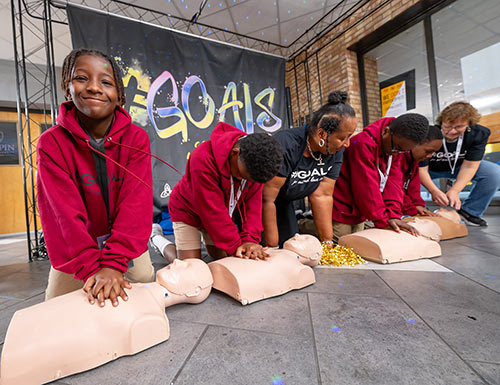
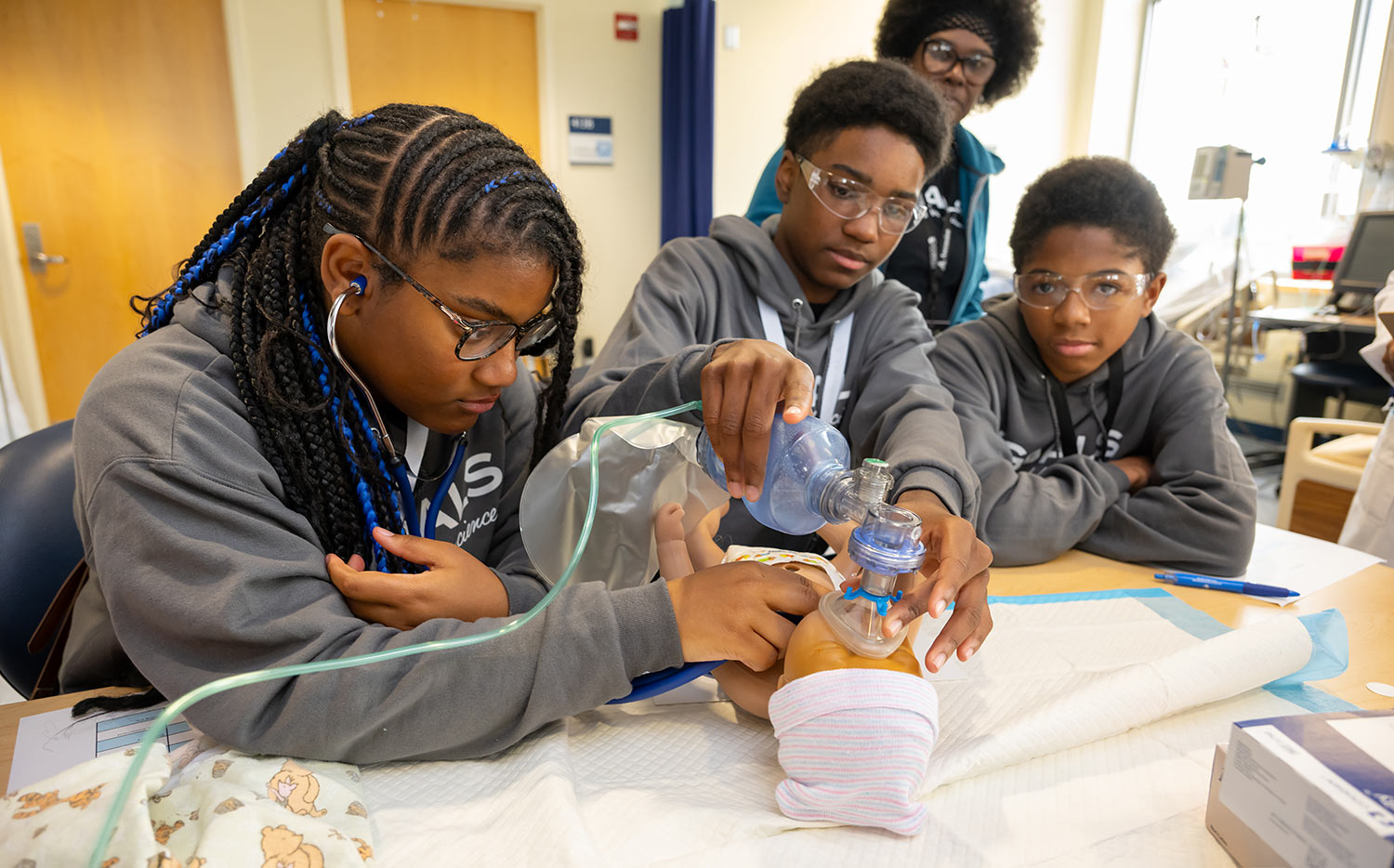
Throughout the day, middle schoolers practiced suturing techniques, mastered CPR skills, and engaged in interactive demonstrations designed to spark curiosity and inspire them to love learning about science to help guide their future career paths.
 “The students’ curiosity and enthusiasm showed how early exposure can spark a lasting interest in medicine and science,” said Daniel Mansour, PharmD, MS, AGSF, BCGP, FASCP, one of the UMB School of Pharmacy faculty volunteers. “Programs like #GOALS make healthcare feel accessible and highlight the empathy and collaboration at the heart of our healthcare professions.”
During the CPR activity, students learned life-saving techniques and practiced chest compressions to music, reinforcing proper rhythm and retention in a fun, memorable way. At the suturing station, students practiced stitching simulated wounds using real medical supplies under the guidance of medical students, gaining a tangible sense of clinical precision and teamwork.
“At first, the kids were a little nervous, but as soon as they realized they were about to do something that felt ‘doctor-level,’ their excitement skyrocketed,” said Alanna Liebman, a student volunteer and a third-year dental student at the University of Maryland, School of Dentistry. “One student was so eager to put in stitches that I invited him to help introduce the activity to his classmates. Watching his confidence grow and seeing all the students lean in, ask questions, and refuse to give up even when it got tricky was incredible.”
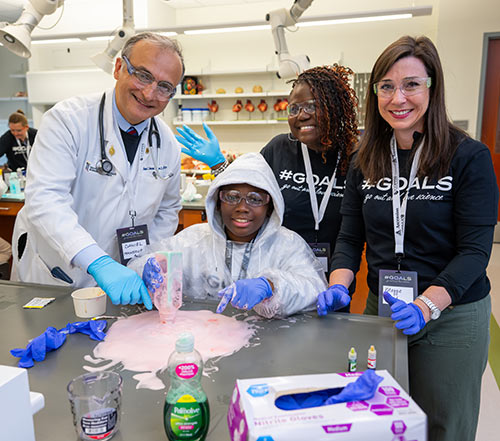
Another station featured the “Elephant Toothpaste” experiment, where students combined hydrogen peroxide, dish soap, food coloring, yeast, and warm water to create a foamy chemical reaction resembling giant toothpaste; it showcased a rapid chemical reaction in an exciting and hands-on way. Students also played “Game of Medi-Life”, featuring a giant board game where they navigated the educational and career steps toward becoming healthcare professionals. UMSOM student mentors helped explain each milestone, making the journey to medicine both visual and relatable.
Throughout the day, the medical students served as role models, engaging participants, fostering curiosity, and showing that careers in healthcare are both attainable and exciting. Students began to see themselves in future roles as doctors, nurses, and scientists, turning curiosity into confidence.
“Programs like #GOALS are essential because they help students see the real-world value of science early on,” said Sara Cane, a student volunteer and a second-year Ph.D. student in the Biochemistry and Molecular Biology GPILS program at UMSOM. “When I was younger, I thought science was boring because I didn’t understand how it applied to everyday life. When students realize that something as simple as yeast in bread relates to chemical reactions, or that the same principles apply to Alzheimer’s research, it changes their perspective. It’s about making science relevant and exciting, so they can one day envision themselves in these careers.”
GOALS Program Image Gallery >
Contact
Ramata Kaba
RKaba@som.umaryland.edu