
August 07, 2025 | Jon Kelvey

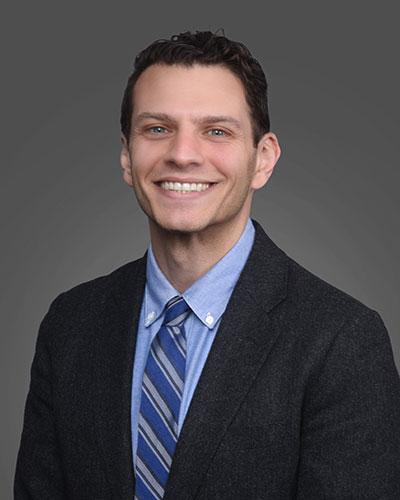 Peter Manza, PhD, joined the University of Maryland School of Medicine (UMSOM) as an Assistant Professor of Psychiatry in January 2025. He’s also a faculty member at the UMSOM Kahlert Institute for Addiction Medicine, which UMSOM Dean Mark T. Gladwin, MD, established in 2023 to pursue innovation in addiction treatments and research.
Dr. Manza spent eight years at the NIH researching the neurobiology of addiction with the National Institute on Alcohol Abuse and Alcoholism (NIAAA) and the National Institute on Drug Abuse (NIDA), including a recent study on the neurobiology underlying the effects of the stimulant medication Ritalin that he published in the Proceedings of the National Academy of Sciences (PNAS) journal after joining the faculty at UMSOM.
In an edited interview, Dr. Manza discussed his time at NIH, the types of research and collaboration he is most interested in, and what drew him to his new academic home at the Kahlert Institute.
Q: Can you tell us about your research during your time at NIH?
I was involved in multiple brain imaging studies involving different substances, such as studying the effects of chronic cannabis use on the brain, which is a controversial topic.
In another study, we used MRI and PET scans to study the brains of healthy people as they were given different drugs through different routes of administration. We’ve long known that the faster a drug gets into the brain, the more addictive it is. Cocaine taken orally is not as addictive as when injected intravenously, for example. So we used imaging to try and get at the essence of what makes a drug addictive.
Q: What drew you to the Kahlert Institute for Addiction Medicine?
What attracted me to UMSOM and the Kahlert Institute was the huge concentration of researchers doing addiction-related work here. People from different sub-disciplines all congregate in the same space with a common goal of addressing the addiction crisis in this country. No other university I know of is operating in this way. I think our institute can be something quite special in the research world and perhaps serve as a role model for others.
Another big piece is our strong community mission. We are located in Baltimore, an epicenter of the opioid crisis, and UMSOM clinicians and researchers are embedded in the community, treating people struggling with addiction. It’s very rewarding to contribute to both science and your community, and practically speaking, it makes running addiction-related clinical trials much more feasible. We already have an established partnership with people in the community and with treatment centers.
Q: Are there any particular lines of inquiry you’re planning to pursue as you get going at the Kahlert Institute?
Yes, there are three major projects I’m excited to pursue.
The first is a clinical trial to test a short-term ketamine treatment regimen for people with opioid addiction. Ketamine has long been used at high doses in the ER as an anesthetic. But at relatively low doses, it has potent, rapid-acting antidepressant properties, which we think might be particularly well-suited to help people with opioid addiction when they first enter treatment. Patients are most likely to drop out of treatment in the first few weeks as they struggle with symptoms of insomnia, drug cravings, pain hypersensitivity, and depressed mood from opioid withdrawal. We know ketamine can help with all four of those symptoms, particularly with depressed mood. And patients won’t have to wait weeks for the drug to take effect as they do with SSRI antidepressants like Prozac.
We're also developing low-intensity focused ultrasound as a non-invasive treatment for addiction. These waves pass through the skull to safely target specific brain structures with two-millimeter resolution. You can actually make the neurons fire in different patterns and potentially rewire dysfunctional brain circuits in people with addiction. There's preliminary evidence from other groups that you may need just one session to achieve effects that persist for months.
A third project I'm interested in is charting brain recovery in people with addiction. Patients always ask the question, ‘When am I going to feel normal again in treatment?’ And nobody has a good answer for that yet. We know a lot more about the brain circuits involved in the development of addiction than those involved in recovery.
One way we can start to answer that question is by scanning the brains of people many times over the course of their recovery. By scanning them on days when they’re experiencing intense cravings, and on days when they feel good and in control, we can, over time, start to map out what’s happening in the brain to cause this ebbing and flowing, and possibly develop new treatments.
Q: How important is collaboration to your research and addressing the challenge of addiction more broadly?
Collaboration is essential. We have so many unanswered questions in neuroscience and in addiction. No one investigator or team could take on even a fraction of what needs to be addressed if we’re to materially improve the lives of people with addiction. We have to work together.
At the Kahlert Institute, we’re going to have the addiction researchers doing clinical work and those doing preclinical work in the same physical space. That’s the type of collaboration I’m most excited about. When clinical and preclinical researchers work together, we can fill in the gaps for each other. There are so many great researchers here that I am excited to partner with in the future.
Watch the Video:
Contact
Office of Public Affairs
655 West Baltimore Street
Bressler Research Building 14-002
Baltimore, Maryland 21201-1559
Contact Media Relations
(410) 706-5260