
Popliteal artery entrapment syndrome (PAES)
CC: Exertional lower leg pain, however, compression of posterior neurovascular structures can lead to nonspecific vascular and neurogenic symptoms.
Challenging diagnosis to make because of close overlap with chronic exertional compartment syndrome (CECS).
Anatomic PAES has a prevalence of 0.62% to 3.5% in the general population. Patients are more likely to be older be older, male, and have lower levels of activity.
Functional popliteal artery entrapment (FPAE) however has no anatomic anomaly. Sx’s are thought to be because of bulky surrounding muscle crowding with repetitive dynamic injury. This is most commonly from the medial head of the gastrocnemius. Patients are younger and more likely to be involved in athletics. Most athletes were involved in sports that put high value on repetitive plantarflexion, such as track and field (45%), soccer (25%), water sports (8%), lacrosse (6%), basketball (6%),
Sx’s: bilateral (25-75% of cases) cramping in the region of the soleus and plantar paresthesias.
Common exacerbating mechanism: ascending stairs or climbing inclines because of leg/knee position of extension with plantarflexion
In one review, 31% of patients who underwent debulking surgery for FPAES had been previously treated and extensively worked up at outside institutions for CECS, and already undergone various compartment releases.
Patients in one study underwent a dynamic CTA protocol. A positive test demonstrated normal flow in neutral position and compression or complete occlusion of the popliteal artery by the medial head of the gastrocnemius muscle against the lateral femoral condyle with provocative foot plantarflexion. Images below.
https://images.journals.lww.com/acsm-csmr/Original.00149619-202210000-00008.F1.jpeg

Nearly three-fourths of athletes limited by FPAES demonstrated full return to prior competitive levels with four compartment fasciotomy AND surgical debulking of the anterolateral quadrant of the medial head of the gastrocnemius muscle.
Show References
- Anomalous left coronary artery from the pulmonary artery (ALCAPA) is a rare congenital defect in which there is an altered origin of the left coronary artery (also known as Bland-White-Garland syndrome)
- Generally asymptomatic at birth, but can present in late infancy, toddlerhood, or later with signs of congestive heart failure, a myocarditis picture, or sudden cardiac death
- Flow through the left coronary artery is normal at birth due to high pulmonary pressures, but as those pressures drop the blood flow drops as well and may become reversed due to the pressure gradient
- This can cause chronic myocardial ischemia, the severity of which, is dependent on collateral flow
- Most patients will also develop mitral regurgitation
- Cardiomegaly may be seen on CXR (and some patients will present with respiratory symptoms/wheezing)
- EKG findings include: findings consistent with ischemia (ST changes, q waves – specifically in the anterolateral leads), leftward axis (for age), abnormal R wave progression (loss of R wave amplitude in affected leads)
- Diagnosis can generally be made with echocardiogram (although not 100% sensitive) and the disease is generally treated with surgical repair
Show References
Optimal Timing of Source Control in Sepsis
- Sepsis is the most common critical illness encountered in the emergency department.
- Much of the resuscitation of patients with sepsis is focused on early and appropriate antibiotic administration, appropriate fluid resuscitation, vasopressor support, and continued hemodynamic monitoring.
- Another critical pillar in sepsis resuscitation is source control. To date, there is varying literature on the optimal timing of source control in sepsis.
- In a recent cohort study of approximately 5,000 patients with community-acquired sepsis, Reitz and colleagues report a 29% reduction in risk-adjusted odds of 90-day mortality for patients who had early source control (< 6 hours) compared to those with late source control (6-36 hours).
- The greatest reduction in risk-adjusted 90-day mortality with early source control occurred in patients with gastrointestinal/abdominal and soft-tissue sources of infection.
- Take Home Pearl: Early source control matters in sepsis resuscitation, especially in sicker patients with a GI or soft-tissue source of infection.
Show References
Piperacillin-tazobactam is one of the most commonly used antipseudomonal antibiotics in the empiric management of patients with septic shock. The package insert recommends dose reductions for renal impairment in other infectious etiologies, but the impact of dose reduction has not been previously studied in patients with septic shock.
A recent retrospective, observational cohort study compared outcomes of patients with septic shock who received ≥ 27 grams (at least 3.375 gm q6 hours x 48 h-“NORM”) versus those who received < 27 grams (“LOW”) over the initial 48 h of septic shock (defined as concomitant norepinephrine infusion).
Patients were excluded if they had death or hospice disposition within the 48h study period. The primary outcome was the number of norepinephrine free days (NFD) at day 28. Propensity matching was utilized to account for confounders.
Results: 351 in the LOW group, 928 in the NORM group with 608 pairs in the propensity matched assessment.
- Patients in the LOW group were
- Older (65 v 61, p < 0.001)
- More likely to have lower renal function (20% with CrCl < 20, 35% with CrCl 20-40) which corresponds to package insert dose reduction recommendations
- Received lower doses of piperacillin/tazobactam (20.3 g v 30.4 g, < 0.001)
- Norepinephrine free days were statistically significantly higher in the NORM dosing group when looking at all patients and the propensity score matched patients.
- In-hospital mortality/hospice disposition was also lower in the NORM group (25.9% v 35.5%, p=0.014
Bottom Line: Dose reductions of piperacillin-tazobactam appears to be harmful early in the management of patients with septic shock.
Show References
A fourteen center study enrolling 1623 trauma patients (53% penetrating) comparing cold-stored whole blood vs. blood component products found no difference in AKI, thromboembolism, or pulmonary complications. And more interestingly, patients receiving whole blood were 48% less likely to die than those receiving standard blood component products. Add this data point to a growing trend toward cold-stored whole blood for trauma patients.
Show References
Enter the WATERFALL trial into the present flood of fluid strategy trials, a multi-country (primarily Spain) open-label RCT of “Aggressive” versus “Moderate” fluid resuscitation with lactated ringers for early mild acute pancreatitis.
Population: 249 adults (1/3 of the planned enrollment) presenting to the ED within 24hrs hours of abdominal pain onset diagnosed with mild acute pancreatitis. Numerous exclusions for local pancreatic complications, acute or chronic organ dysfunction (including CHF and CKD), among many others. Average age of 57, 51% female, 61% due to gallstones, median Charleson index of 2, median BISAP of 1, and 52% clinically judged hypovolemic on enrollment.
Interventions: 1:1 randomization to two complex protocols, both with time points every 48 hours and same criteria for initiating oral diet.
- “Aggressive”: Immediate 20ml/kg bolus of LR hours with repeat 20ml/kg boluses for hypoperfusion followed by 3ml/kg/hr infusion for 12hrs, then 1.5-3ml/kg/hr for at least 36hrs
- “Moderate”: 10ml/kg bolus only if hypovolemic with repeat 10ml/kg boluses for hypoperfusion followed 1.5 ml/kg/hr infusion for 20hrs
Outcomes/Results: Primary outcome was development of moderate of severe pancreatitis with no difference found between the two strategies. Median fluid at 72 hours was 8.3L (IQR 7.1- 10.8) in the aggressive arm and 6.6L (IQR 4.1 - 8.0) in the moderate arm. Several point estimates favor the moderate group, but none statistically significant and there was not a difference in symptom or SIRS improvement at 72 hours. The trial was stopped after 1/3 enrollment when the monitoring board noted a significantly increased rate of fluid overload in the aggressive arm (20.5%) versus the moderate arm (6.6%).
Discussion:
-Aggressive fluids for mild acute pancreatitis didn’t show benefit over a moderate strategy and showed some harms in contrast to previous smaller studies and some guideline recommendations in mild disease
-Only reached 1/3 of target enrollment significantly limiting analysis
-This was by design not a trial of severe or critical disease
-The open label nature may have affected some endpoints, including safetly endpoints
-Another trial to shift our thinking a bit about how to use and safely limit fluid resuscitation
Show References
Finger thoracostomy is superior to needle decompression in the fifth mid-axiallary intercostal space which is superior to the traditionally taught needle decompression in the second mid-clavicular intercostal space for traumatic tension pneumothorax/trauamtic arrest.
Show References
Pes Anserinus pain syndrome (formerly pes anserine Bursitis)
Occurs at the bursa of the pes anserinus which overlies the attachment of the 1) Sartorius 2) gracilis and 3) semi-tendinosis tendons. Insertions resemble a Goose’s foot.
An inflammatory condition of the medial knee
Location is 2-3 inches below the knee joint on the medial side
1st layer of medial compartment

https://www.dramynrajani.com/wp-content/uploads/2018/05/pes-anserine-bursitis-clinical-test.jpg
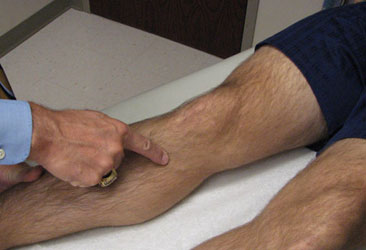
Patients complain of knee pain just below medial joint line (esp with stairs)
History may include sudden increase in running distance especially with hills (common)
Associated with obesity, tight hamstring muscles and with knee OA
PE: Tenderness to palpation of the bursa possibly with mild swelling
DDx: MCL tear, medial meniscus injury, medial (knee) compartment arthritis, tibial stress fracture
Treatment: Cessation/modification of offending activities, Icing and ice massage, NSAIDs, hamstring stretching and physical therapy. Failure of the above should prompt referral for bursal steroid injection.
Have you ever encountered an ESRD patient who missed dialysis because the patient "felt too sick to go to dialysis"? The patient then had hypotension from an infected catheter line? Do we give 30 ml/kg of balanced fluid now?
__________________________
Title: Outcomes of CMS-mandated ?uid administration among ?uid-overloaded patients with sepsis: A systematic review and meta-analysis.
Settings: This is a meta-analysis
Patients: Septic patients who have underlying fluid overload conditions (CHF or ESRD).
Intervention: intravenous fluid administration according to the mandate by the Center for Medicare/Medicaid as 30 ml per kilograms of bodyweight.
Comparison: fluid administration at less than 30 ml/kg of body weight.
Outcome: 30-day mortality, rates of vasopressor requirement, rates of invasive mechanical ventilation
Study Results:
- Random-effects meta-analysis of 5 studies, including 5804 patients. There were 5260 (91%) patients receiving non-aggressive IVF at < 30 ml/kg versus 544 (9%) patients received aggressive IVF at rates > 30 ml/kg.
- Patients who received aggressive IVF > 30 ml/kg were associated with 30-day all-cause mortality OR 1.42 (95% CI 0.88-2.3, P = 0.15, I2 =35%).
- The need for vasopressor during stay was similar: OR 0.69 (95%CI 0.42-1.15, P=0.21, I2 = 33%)
- The need for invasive mechanical ventilation during hospitalization was similar: OR 0.85 (95% CI 0.57-1.26, P = 0.42, I2 = 0)
- Both groups had similar ICU length of stay: Standard Difference in Means -0.002 (Very small magnitude), 95% CI -0.35 to 0.34, P= 0.99, I2 = 53)
- Similar hospital length of stay: Standard Difference in means -0.11 (small magnitude), 95% CI -0.62 to 0.38), P= 0.67, I2=77%
Discussion:
- All studies were retrospective studies, as it’s hard to do RCT when the treatment is required by guidelines. Although the studies were graded as high quality but there was still risk of bias.
- Until there is significant evidence to change the guidelines, please document thoroughly in your charts if you do not give sepsis patients who have fluid overload the required volume of IVF at 30 ml/kg.
- Consider early vasopressor.
Conclusion:
- Patients who have fluid overload and sepsis had similar outcomes when they were given IVF at rates < 30 ml/kg, compared to those given IVF > 30 ml/kg as required by CMS.
Show References
Manageing the airway of a trauma patient presents difficulties because of both anatomic and physiologic derangement.
The Bottom Line: Trauma patients requiring intubation are a challenge and should be managed by the most expereinced person in the room. No study shows superiority of direct vs.video laryngoscopy. Use the technique you are most facile with and develop more techniques through courses, mentoring, and expanding your repertoire in less ill patients first. Use induction agents with lower liklelihood of causing hypotension like Etomidate and ketamine (avoid propofol and benzodiazepenes). Avoid hypoxia, hypotension and hypocarbia by resucitating as much as possible prior to intubation (use blood products and pressors where appropriate). Have a plan, a back up plan, and know when to switch to a surgical airway approach. This ia a low frequency, high risk proceedure. Mentally visualize yourself doing this proceedure regualrly to create a comfort level when it is actually needed.
PEARLS:
1. Blood/Emesis A. Use a double suction set up with one suction placed into the airway near the esophagus and then moved to the left of the mouth with the second used by the intubator to clear their view.
B. If you can't visualize becaue of vomit/emesis it is very likely BVM and super glotic airways are not going to be possible and you will need to move to a surgical (front of neck) airway.
2. Limited Jaw Opening Cervical collars can impede jaw opening. Loosen/open the collar to allow more jaw opening. Studies show that there is limited movement of C-Spine when the intubator uses caution not to flex the neck during intubation meaning the collar does not have to be in place. No study shows diret or video laryngoscopy to be superior.
3. Blunt or penetrating neck injury Highest level of difficulty. Should be most expereienced intubator. Can use an awake intubation technique if you are adept at this method. Go with the airway approach that gives YOU the best first pass success chance. Another situation where BVM or suprglotic airway device may not work and requires surgical airway. May require low tracheostomy approach.
4. Hypoxia Avoiding hypoxia is a must especially in traumatic brain injured patients. Pre-oxygenate and use the airway technique that is going to give you the best first past chance of success.
5. Hypotension: A. Resuscitate with blood products as much as possible before intubation. B. Use induction agents that are the most hemodynamically neutral such as Etomidate or Ketamine (safe in head injury patients!)
6.. Hypocarbia: Congrats on getting the tube! Now slow down your bagging. Hypocarbia leads to increased injury in traumatic brain injured patients.
Show Additional Information
Show References
Show References
Point-of-care ultrasound compression of the carotid artery for pulse determination in cardiopulmonary resuscitation
Background:
Show References
Exericse as preventative medicine!
A recent cohort study of over 2,000 adults (mean age approx. 45) over approximately 11 years of follow-up investigated the association of step count with mortality.
This study found that those participants taking at least 7,000 steps per day compared to those taking fewer steps had a 50%-70% lower risk of mortality. They did not find an association with step intensity.
Another recent study investigated the dose-response association between daily step count and intensity and the incidence of all-cause dementia.
Uk based study of >78,000 adults aged 40 to 79 years with approximately 7 years of follow-up. Data from wrist accelerometer and registry-based dementia diagnoses.
Optimal step dose was 9826 steps. Minimal dose was 3826 steps (value at which the risk reduction was 50% of the observed max).
In this study, steps performed at higher intensity (112 steps/min) resulted in stronger associations.
Conclusions: A great exercise goal for middle aged and older adults is just under 10,000 steps per day to decrease risks of both overall mortality and dementia.
Show References
Take Home:
This is essentially a secondary analysis of a previous prospective observational cohort study with high quality methods. The authors have an excellent discussion of the previous studies on this topic (which for those with an interest I highly recommend you read). They conclude that this study supports previous literature which I would think would be seemingly obvious, which is that those who are more ill to begin with have less tolerance of propofol (in a dose-independent relationship) in this and previous studies. Their use of IPTW extends the analysis on this large international population by addressing confounders in a novel way.
Their overall conclusion is that propofol is bad for the critically ill, and especially bad for those with pre-existing risk factors for intubation complications. I agree: This study suggests in even stronger terms that propofol should be used carefully and probably only in unhealthy patients when other options are unavailable.
Study Background and Characteristics
- INTUBE study1 was a prospective cohort study conducted from October 1, 2018, to July 31, 2019
- Enrolled consecutive “critically ill” patients over 8 week period at 197 clinical sites from all over the world. Critically ill was defined as those with “an underlying life-threatening condition causing cardio–respiratory failure or neurologic impairment”.
- Outcome of “cardiovascular instability/collapse” as one or more of the following events within 30 minutes of intubation start: (1199 of 2760 enrolled patients; 43.4%)
- systolic arterial pressure <65 mm Hg recorded at least once (collapse criteria) – 12.8%
- cardiac arrest (collapse criteria) – 7.8%
- systolic arterial pressure <90 mm Hg for >30 minutes – 24%
- new requirement or increase of vasopressors – 87.8%
- fluid bolus >15 ml/kg to maintain the target blood pressure – 13.2%
- STROBE Compliant
Findings
- CV-instability group were significantly older, high SOFA scores, and higher rates of ischemic heart disase, NYHA 3/4 heart failure, poor oxygenation (SPO2/FIO2 ration), pressors, fluid bolus/total, systolic/diastolic BP, and more commonly respiratory failure and cardiovascular instability as the reason for intubation.
- CV-stability group was less likely to receive propofol and at lower doses and more likely receive ketamine.
- Notably, CV-instability patients were less likely to be intubated by emergency physicians versus anesthesiology.
- Anesthesiologists were more likely to use propofol and more emergency medicine physicians using ketamine.
- Higher incidence of CV-instability in ischemic heart disease and heart failure, noninvasive ventilation and apneic oxygenation, and in the 30–45° head-up position.
- ICU mortality associated with:
- vasopressors/fluids without hypotension (OR, 1.47; 95% CI, 1.21–1.79)
- systolic blood pressure <90 mm Hg for >30 min despite vasopressors (OR, 2.65; 95% CI, 1.87–3.75)
- systolic blood pressure <65 mm Hg (OR, 1.89; 95% CI, 1.31–2.71)
- cardiac arrest (OR, 8.79; 95% CI, 5.46–14.7)
- Inverse Probability Treatment Weighting2 (IPTW) analysis found that the only treatment effect with significance associate with the entire CV-instability group was propofol usage (OR, 1.23; 95% CI, 1.02–1.49).
- No treatment effect, including propofol use or dosage, was associated with those meeting cardiovascular collapse criteria.
Show References
Intraosseous (IO) administration uses bone marrow to deliver fluids and medications during cardiac resuscitation or other emergent situations where IV access cannot be established.
IV versus IO
- No statistically significant difference between the pharmacokinetics!
- Flow rates of IV cannula typically range from 20 to 200 mL/min versus IO ranging from 0.33 to >50 mL/min under pressure
- Maximum rate of administration through IO is comparable to a 21G peripheral cannula.
Considerations When Using IO Access
- Single line, ensure all drugs running through the IO are compatible with one another.
- For example: plasmalyte is not compatible with most medications
- If trying to quickly administer fluids utilize a pressure bag.
- If medication administration (i.e. vasopressors) pump should be used
- Contraindications to IO include:
- Placement in fractured bone with vascular injury
- Compartment syndrome
- Cellulitis/burns at the site
- Underlying bone disease
- Soft tissue infection
- Recent orthopedic surgery
- Once a bone has been punctured by an IO attempt, it should not be used again for at least 48 hours.
- Intraosseous aspiration of blood is usable for lab tests, though accuracy has varied in studies.
Show Additional Information
Show References
Traditionally, internal jugular and subclavian central line placement has required chest x-ray confirmation of correct placement (venous cavoatrial junction placement) as well as demonstrating lack of complication (no pneumothorax) prior to use of that central line. However, current evidence supports similar if not superior complication identification and placement confirmation with ultrasound,(1-7) allowing for a much quicker confirmation time than traditional chest x-ray, which can be vital in critically ill patients who need immediate medication administration.
Venous placement is confirmed with prompt visualization of microbubbles in the right atrium and ventricle with a rapid flush of 5-10 ml of agitated saline via the distal central line port. Additionally, if the opacification occurs <2 seconds after injection then the catheter tip is sufficiently distal in the central venous system to not require additional verification. Additional confirmation of lung sliding in both lung apices will rule out pneumothorax.
Some authors recommend checking the contralateral internal jugular vein to ensure that the central line catheter has not traveled up the internal jugular towards the head, however this may be redundant as long as the time from agitated saline injection to right atrial visualization of microbubbles is clearly less than 2 seconds.
Bottom Line: Utilization of ultrasound for central line placement confirmation is a relatively simple, rapid, safe, and accurate means of confirmation of venous catheter placement and catheter tip location, as well as ruling out pneumothorax complications.
Show Additional Information
Show References
Approximately 284,000 immigrants reside in Baltimore (10% of the total population). In April 2022, Governor Abbott of Texas began sending migrants from the US southern border to Washington, DC, with Arizona joining soon after. It is important for emergency providers to be aware of these changes and how new disparities may arise.
2. Assess acute vs non-acute needs: A study done in pediatric migrant populations suggests that the severity of the reasons for visiting the ED and the hospitalization rates were not higher in the pediatric migrant population than in the general pediatric population. Some common non-urgent diagnoses include scabies, anemia, oral and dental disorders.
3. Create a safe environment: In a study done in 2013, up to 12% of undocumented immigrants that presented to the ED expressed fear of discovery and consequent deportation. On further assessment there was the belief that medical staff are required to report these patients to immigration. It is important to proactively address inaccurate beliefs to promote a safe trusting environment.
Resources in Baltimore/Maryland:
-CASA
-Esperanza Center
-International Rescue Committee
- John's Hopkins Centro Sol
- National Immigration Law Center
National Resources (US):
-Rural Health Information Hub
-National Resource Center for Refugees, Immigrants, and Migrants
Show References
Limited data are available to guide recommendations re screen time after concussion.
A recent ED study looked at screen time effects on concussion recovery.
Population: 125 patients aged 12 to 25 years presenting to the ED <24h after injury. Mean age 17. Approximately 51% male.
Intervention: Patients were placed in a screen time allowed group and a screen time not allowed group for the first 48 hours. Total minutes reported after the study were 630 minutes vs 130 minutes.
Outcome: Time to symptom resolution. Patients took daily symptom scoring tests for 10 days.
Result: Screen time allowed group had a significantly longer time to recovery (8 days) vs screen time not allowed (3.5 days).
Strength: Good attempt at quantifying effects on early screen time exposure on symptom recovery in an ED population.
Weakness: This was a small study. Many patients (>25%) were lost to follow-up and it relies on symptom self-reporting.
Show References
Deep sedation in the ED has previously been associated with longer duration of mechanical ventilation, longer lengths of stay, and higher mortality.1 Current guidelines recommend light sedation, consistent with a goal RASS of -2 to 0, for most critically-ill patients in the ICU.2
The ED-SED3 multicenter, pragmatic, before-and-after feasibility study implemented an educational initiative (inservices, regular reminders, laminated sedation charts) to help target lighter sedation depths in newly-intubated adult patients without acute neurologic injury or need for prolonged neuromuscular blockade.
- 415 patients (196 pre-, 219 post-intervention), majority white (50%) and black (40%)
- Main reasons for intubation: sepsis, trauma, airway protection
- Majority of patients on fentanyl (85%) and propofol (76%), midazolam (20%)
After educational intervention:
- 21% fewer patients with deep sedation & 20% more patients achieving light sedation
- 10% decrease in comatose levels of sedation (RASS -4 to -5)
- Lower hospital mortality (20.4 vs 10%, p < 0.01)
- Similar rates of self-extubation and paralysis awareness
- More patients extubated in the ED, downgraded from ICU admission, and discharged from the ED
Even with the caveats of the confounding and bias that can exist in before-and-after studies, these results are consistent with prior sedation-related studies and offer more evidence to support for avoiding deep sedation in our ED patients. The study also demonstrates the importance of nurse-driven sedation in achieving sedation goals.
Bottom Line: Our initial care in the ED matters beyond initial stabilization and compliance with measures and bundles. Avoid oversedating intubated ED patients, aiming for a goal RASS of -2 to 0.
Show References
This was a multistate, prospective, observational cohort of children and teachers attending in person schools in kindergarden through 12th grade where the school districs had the ability to perform contact tracing and determine primary vs secondary infections. During the study period (6/21-12/21) 46 districts had universal masking policies and 6 districts had optional masking policies.
Districts that optionally masked had 3.6x the rate of secondary transmission compared to universally masked school districts. Optionally masked districts had 26.4 cases of secondary transmission per 100 community acquired cases compared to only 7.3 cases in universally masked districts.
Bottom line: Universial masking was associated with reduced secondary transmission of SARS-CoV2 compared with optional masking policies.