
- We often see seizure patients on phenytoin therapy who have subtherapeutic levels. Most patients do not require intravenous loading and can be adequately managed with oral treatment.
- To estimate what dose to prescribe, use the following equation: [0.7 x IBW x (15 - current level)]. For example if a 70 kg patient has a level of 8 mcg/mL (mg/L), we would need ~400 mg loading dose to achieve a level of 15.
- Phenytoin is known for its erratic absorption and propensity for causing GI upset with doses too high. The recommended strategy is to avoid administering more than 400 mg at one time and separate the doses by 2 hours. This would take three doses over 4 hours for a 1 gm load.
- In the ED, an effective strategy for a 1 gm oral load is 500 mg now and 500 mg in 2 hours at discharge. Patients tolerate it well, it cuts down on ED length of stay, and still achieves therapeutic levels. Remember that an oral suspension formulation is also available.
1) C-A-B for CPR. Now recommended to start compressions immediately instead of the conventional rescue breaths.
2) Capnography during CPR. Continuous capnography recommended during CPR to guide the resuscitation, especially the effectiveness of chest compressions.
a. If ETCo2 is less than 10 to 15 mm Hg consistently, focus your efforts on improving chest compressions.
3) Etomidate for RSI induction. Okay to use in infants and children, BUT not recommended for pediatric patients in septic shock. Etomidate was not addressed in 2005 guidelines.
4) Cuffed ET tubes. Acceptable to use in infants and children.
5) Limit FiO2 after resuscitation. Keep O2 sats ≥94%. Avoid hyperoxia.
6) Therapeutic hypothermia after cardiac arrest. Recommendation based off of adult data, no pediatric prospective RCT done on this. This is beneficial in adolescents with out-of-hospital VF arrest.
a. Consider therapeutic hypothermia for infants and children.
b. Cool to 32oC-34oC
Show References
o The FDA is now asking manufacturers to limit the amount of acetaminophen in combination products to 325 mg per dose.
o The higher dose formulations will be phased out by 2014.
o The FDA is also considering lowering the maximum total to 3 gm per day, and a maximum dose of 650 mg per dose
o This does not pertain to OTC, but this is likely to change in the near future; Johnson & Johnson (manufacturer of Tylenol) has already adopted these recommendations.
Show References
- There is a host of contraindications to using thrombolytic therapy to treat acute ischemic stroke (AIS), one of which is recent surgery.
- It is likely that the quantity of patients presenting with AIS following oral surgery will rise given the increasing use of implants and more frequent discontinuation of anti-coagulants prior to dental procedures.
- While there is not much data on the risk of bleeding after use of thrombolytics in patients who have recently undergone minor dental surgery, some case reports have shown there to be an association with substantial hemorrhage.
- TAKE HOME POINT: Remember to consider minor surgical procedures, such as dental, as a contraindication when screening acute stroke patients who are potential candidates for thrombolytic therapy; often, patients and their family members may not consider such procedures to be "surgery."
Show References
Pregnancy causes many physiologic changes, which may be challenging during trauma resuscitations. A few pearls on the ABC’s:
Airway
- Increased progesterone levels cause mucosal hyperemia and edema, increasing risk of bleeding and smaller (i.e., edematous) airway.
- PEARL: Have smaller tubes ready and let the most experienced person intubate.
Breathing
- The enlarging uterus pushes the diaphragms into the thorax, reducing the total lung capacity and the functional residual capacity.
- PEARL: During intubation, patients in late pregnancy may have less oxygenation reserve and apnea time, desaturating faster during RSI.
Circulation
- The late stage uterus can compress the IVC when supine, reducing venous return to the heart (i.e., the Supine-Hypotension syndrome) subsequently reducing cardiac output.
- PEARL: Have a 30-degree wedge placed under patient's right hip, moving the uterus off IVC and improving venous return.
- BONUS PEARL: During resuscitation, ask medical students to manually move the uterus midline, relieving the compressed IVC. They will appreciate that you got them clinically involved.
Show References
In a 1991 article published by Wrenn and Slovis, the ten commandments of emergency medicine are discussed. This is an awesome article and a must read for everyone in EM.
Michelle Lin recently mentioned these on her blog, Academic Life in Emergency Medicine....
The Ten Commandments of Emergency Medicine:
1. Secure the ABC's
2. Consider or give naloxone, glucose, and thiamine
3. Get a pregnancy test
4. Assume the worst
5. Do not send unstable patients to radiology
6. Look for common red flags
7. Trust no one, believe nothing (not even yourself)
8. Learn from your mistakes
9. Do unto others as you would do to your family (and that includes coworkers)
10. When in doubt, always err on the side of the patient
These are great teaching pearls for new interns and for the rest of us as well....
Show References
Wound Repair
A pearl last year addressed the irrigation of wound and the fact that the type of fluid (sterile versus tap water) does not affect infection rates but rather the volume of irrigation is most important.
Sterile versus unsterile gloves have also been studied, and it turns out that clean unsterile gloves have the same rate of infection as sterile gloves but come with a substantial cost savings.
When caring for a contaminated wound it is most important to remove any gross contamination, and then irrigate the wound as much as possible. A 20 mL syringe with an 18G angio-catheter provides the proper pressure to remove debris without causing tissue damage. The wound can then be closed wearing the gloves that are most comfortable or accessible to you.
Finally, from a medicolegal standpoint it is always best to inform the patient that you have tried to remove all of the contamination but there is still a chance that the wound can get infected.
Acute Poststreptococcal Glomerulonephritis (APSGN) is a sequela of group A beta-hemolytic streptococci (GAS) infection of the skin or pharynx with nephrogenic strains of GAS. Damage to the kidneys is due to deposition of antigen-antibody complexes in the glomeruli.
Presentation:
Testing:
Treatment:
Prognosis (favorable):
Reference:
Kit, Brian. Assess the volume status and electrolytes in children with poststreptococcal glomerulonephritis. Avoiding Common Pediatric Errors. 2008. p356-57.
The incidence of tendon rupture related to fluoroquinolone use is reported to be in the range of 1 in 6000.
The risk of tendon rupture associated with FQ use is increased in those older than 60 years of age, those taking steroids, and in patients who have received heart, renal, or pulmonary transplants.
There is no evidence that tendon rupture is more likely for patients taking levofloxacin compared to other FQs.
Show References
- Central Pontine Myelinolysis (CPM) is a largely irreversible, dreaded neurologic complication caused by osmotic demyelination, as a result of increasing sodium levels too rapidly. It is definitively diagnosed via Brain MRI.
- Symptoms may include dysphagia, dysarthria, paraparesis, quadriparesis, lethargy, seizure, or even coma, and usually begin within 2 to 6 days following sodium elevation (i.e. may not be apparent in the emergency department).
- If the hyponatremic patient is symptom-free, treat conservatively by restricting oral fluid intake to less than 1500 mL per day. Isotonic fluids (i.e. 0.9% normal saline) may be used, particularly if the patient is dehydrated.
- If the hyponatremic patient is symptomatic, hypertonic saline (i.e. 3%, start with 100 mL bolus) may be used.
- Increase sodium level by no more than 1.5 to 2 meq/L per hour for the first 3 to 4 hours until symptoms resolve. Increase by no more than 10 meq/L in the first 24 hours.
- Take Home Point: Prevent devastation of CPM by treating asymptomatic hyponatremia conservatively and by closely monitoring rate of sodium increase.
Blood Pressure in the Critically Ill Obese Patient
- Recall that incorrectly sized cuffs can significantly overestimate blood pressure, especially in obese patients.
- In fact, some studies show that false BP readings can occur in up to 75% of obese patients.
- By relying solely on noninvasive BP measurements, many of your critically ill obese patients may actually be hypotensive and under perfused.
- When you've got a sick obese patient, strongly consider early placement of an arterial line to assess and monitor blood pressure.
Show References
Question
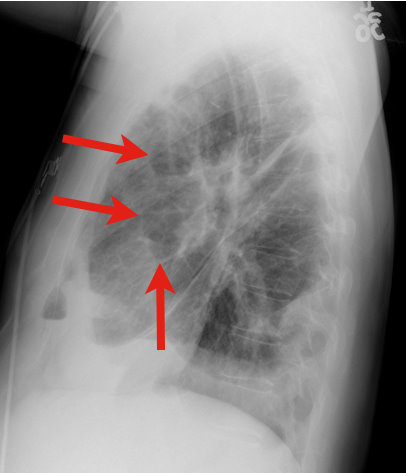
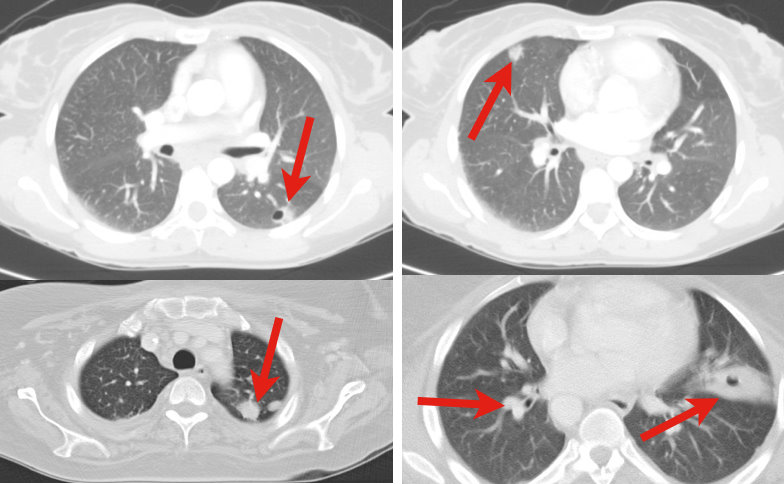
34 y.o. male with history of IVDA (intravenous drug abuse) complains of fever, chills and cough. Diagnosis?

Show Answer
Show References
Clues to RV infarction:
1. This almost always occurs in the presence of a concurrent inferior MI.
2. Clinical findings may include the triad of hypotension, JVD, and clear lungs.
3. ECG clues: in the presence of inferior lead ischemia or injury pattern, look for:
a. Combination of ST depression in lead V2 + ST elevation in lead V1; OR
b. Combination of ST depression in lead V2 + isoelectric ST segments in leads V1 and V3; OR
c. ST elevation in lead III markedly greater than the ST elevation in lead II; OR
d. ST elevation in right-sided leads (requires you to obtain right-sided leads)
Why is this diagnosis important?
1. It suggests a larger infarction and worse prognosis, so BE AGGRESSIVE in management.
2. Be very cautious with preload-reducing medications (e.g. nitrates) in the acute management of these patients, as they may induce significant reductions in blood pressure and extension of the infarction. Be aggressive with IVF, while maintaining close attention to the lung sounds.
Show References
Refractory Osteomyelitis is defined as a chronic osteomyelitis that persists or recurs after appropriate interventions have been performed or where acute osteomyelitis has not responded to surgery and antibiotics.
Case series, animal data and non-randomized prospective trials suggest that the addition of Hyperbaric Oxygen therapy to routine surgical and antibiotic management of previously refractory osteomyelitis is safe and improves the rate of infection resolution.
In patients with osteomyelitis involving spine, skull, sternum, HBOT is recommended prior to surgical intervention.
Typically patients require 20-40 daily dives for sustained therapeutic benefit.
How does HBOT work in osteomyelitis?
1. Restoration of normal to elevated O2 level in infected bone.
2. Leukocyte mediated killing of aerobic bacteria is restored when low O2 tension intrinsic to osteomyolitic bone is restored to physiologic or supra-physiologic levels.
3. HBOT is noted to exert direct suppressive effects on anaerobic infections.
4. HBOT augment the transport of certain abx (aminoglycosides and cephalosporins) across bacterial cell wall.
5. Enhance osteogenesis
6. Enhance angiogenesis
thank you to Dr. Sethuraman for this pearl
Show References
You're called to bedside to evaluate a "lethargic" infant. You wisely ask for a POCT glucose which returns at 35. How much dextrose do you give (since you know it's not just "an amp" of D50?
Here's a simple mnemonic:
Rule of 50-100 = multiply type of dextrose solution by ____ factor (ml/kg) to total 50-100
D10 (neonate) x 5-10 ml/kg = 50-100
D25 (infant) x 2-4 ml/kg = 50-100
D50 (child/adolescent) x 1-2 ml/kg = 50-100
There are increasing reports of bath salts which are crushed and then either injected, insufflated or taken orally. The actual substance has been found to be mephedrone as well as MDPV.(1) Both are amphetamine derivatives and the psychosis seen can appear like schizophrenia to the point that some of these patients have been admitted to the psychiatric wards. (2)(3) For those who have seen methamphetamine patients "tweaking" - where they use the drug for several days in a row without sleep - the presentation is quite similiar.
Synthetic drugs continue to present legal and regulatory problems since the compound is a "designer" synthesized drug that may not be on the DEA Schedule list. The product is labeled "Not for human consumption". Head shops and the internet remain primary sources of the drug. Bath salts present a serious and dangerous public health risk.
Show References
- Posterior Reversible Encephalopathy Syndrome (PRES) is a relatively newly-recognized condition characterized by headache, convulsions, confusion, and vision loss (i.e."CCCV," "Cephalgia,Convulsions, Confusion, Vision loss.")
- Risk factors include: severe hypertension, eclampsia, renal failure, and use of immunosuppressive medications such as tacrolimus and cyclosporine; low magnesium levels may exacerbate PRES.
- PRES may be under-recognized because its diagnosis is based on both clinical and radiographic findings. Brain MRI findings classically show bilateral hyperintense densities in the parieto-occipital regions on T2 weighted images (see attached image).
- Treatment of PRES consists of managing the underlying cause such as lowering blood pressure and discontinuing offending medications, which typically results in resolution of symptoms.
- Take Home Point: Consider PRES as the etiology of unexplained constellations of symptoms including headache, seizure, confusion, and vision loss in the setting of severe hypertension, particularly amongst patients with renal failure and on immunosuppressants.
Show References
Attachments
Heat stroke is hyperthermia (>41.6 Celsius / 106 Fahrenheit) plus neurologic findings (e.g., altered mental status, seizures, coma, etc.); it also causes systemic inflammation response syndrome (i.e., cytokine release), coagulation disorders (e.g., thrombosis in end organs) and tissue abnormalities (e.g., acute kidney injury and rhabdomyolysis)
Two classifications exist:
- Exertional heatstroke (young people engaged in strenuous physical activities in hot climates)
- Non-exertional heatstroke occurring in sedentary people (elderly, debilitated, or chronically-ill patients) who are unprotected from the elements (e.g., trapped in apartments during heat waves)
Treatment includes:
- Insertion of a continuous core thermometer
- Supporting ABC’s
- Cooling by at least to 0.2 degrees celsius per minute to 39 degrees (to avoid overshoot)
- Benzodiazepines for sedation, shivering, and seizures
- Antipyretics and phenytoin have not been shown beneficial
- Support and protect end-organs with particular attention to kidneys; increased risk of kidney injury from rhabdomyolysis, ischemia and systemic inflammation.
Despite the most aggressive therapy, up to 30% survivors may have permanent neurologic or multi-organ system dysfunction months to years after recovery
Show References
With recent national shortages of norepinephrine, our typical go-to drug in sepsis, it's become important for us all to familiarize ourselves with alternative pressors in this setting. Phenylephrine is a commonly chosen alternative.
Phenylephrine is a potent alpha-agonist associated with peripheral vasoconstriction. It has no beta effects so it is not associated with tachydysrhythmias. On the other hand, it is associated with reflex bradycardia which can be treated or prevented with atropine (although there are no specific recommendations to routinely administer atropine prophylactically). Phenylephrine may take 10 minutes to demonstrate an effect, and its duration is approximately 15 minutes. It should be used cautiously in patients with underlying cardiac disease because of the vasoconstrictive effect, and it should be avoided in patients with narrow-angle closure glaucoma.
Extravasation can cause tissue necrosis and should be treated with phentolamine.
C. Diff Colitis
The general treatment recommendations for C. Diff Colitis are to place the patient on PO metronidazole and if they fail this treatment PO vancomycin (125 mg 4x day). Vancomycin is generally reserved for resistant cases due to the fear that it could induce Vancomycin resistant enterococcus.
For severally ill patients it is recommended that you prescribe IV metronidazole and PO vancomycin when they are not actively vomiting. Remember there is no role for IV vancomycin as it does not get into the bowel lumen to eradicate the infection.
There is some great news though, the FDA recently approved a new drug, a macrolide antibiotic fidaxomicin (Dificid), for the treatment of C. Diff Colitis. Fidaxomicin was found to be as effective as vancomycin in preventing recurrence 3 weeks after treatment. Currently it is recommended that fidaxomicin be reserved for cases where patients are having recurrences after 3 weeks of vancomycin treatment.
The FDA news release can be found at http://www.fda.gov/NewsEvents/Newsroom/PressAnnouncements/ucm257024.htm