
New Study Uncovers Genetic Ancestry Surprises in Urban Peruvians
April 02, 2026 | Heide Aungst
Researchers from the University of Maryland School of Medicine Say the Study Could Lead to More Equitable Medical Research & Precision Treatments
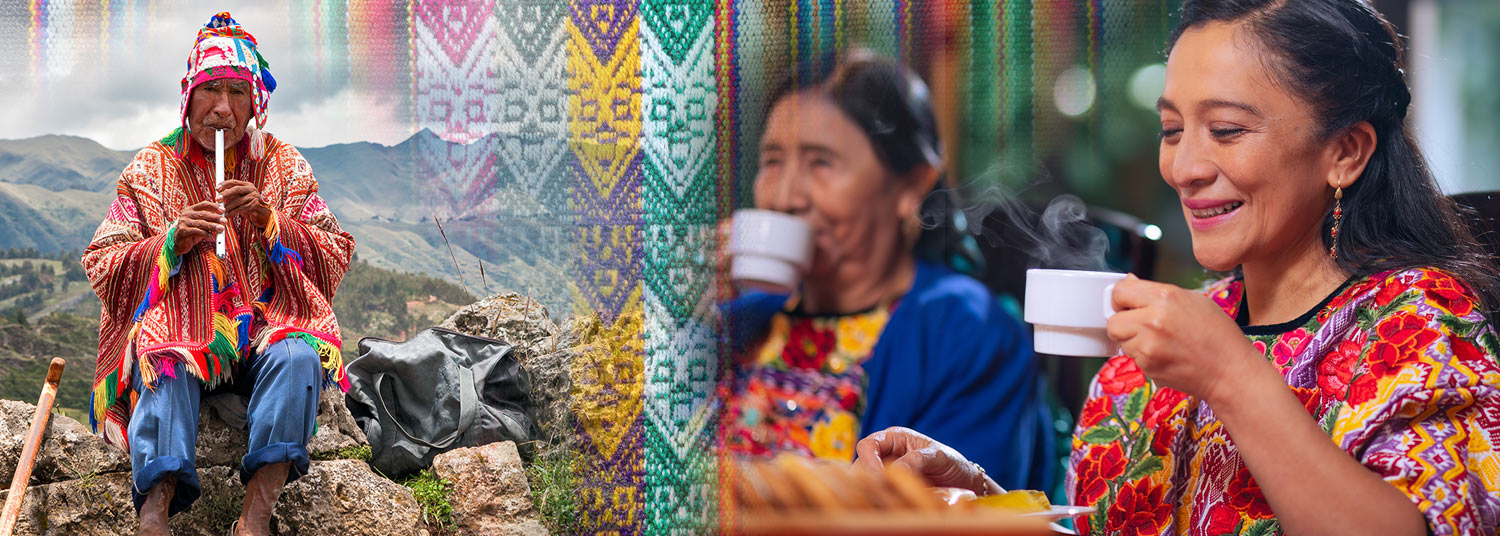
 Latin American people are represented in fewer than four percent of genetic epidemiological studies around the world. When they are included, they’re often lumped together as one group, despite the rich diversity among different Latin American populations. This lack of data has impeded genetic discoveries in Latin Americans and has stalled advances in the clinical use of precision medicine.
To better understand the fine-scale ancestry of one specific Latin American population—Peruvians—researchers from the University of Maryland School of Medicine (UMSOM), along with colleagues from the Peru Institute of National Health (Instituto Nacional de Salud), undertook the largest study to date to examine the genetic makeup of individuals from urban areas throughout Peru. They published their study in Communication Biology.
“We were surprised to discover that despite historical events—like the slave trade or Spanish colonization—over the past few centuries, urban Peruvians resemble more of ancient Indigenous populations from nearby regions, including the Andes and the Amazon, rather than a single melting-pot population,” said lead author Victor Borda, PhD, Research Associate at the Institute for Genome Sciences (IGS) at UMSOM and faculty at the University of Maryland Institute for Health Computing (IHC), who is also a native Peruvian.
The researchers collected blood from more than 400 volunteers in 13 regions across Peru and did genome-wide studies, examining more than two million genetic markers in each participant.
 The study also showed that women were more likely to transmit Indigenous ancestry, while men contributed more European ancestry. This reflects the uneven mixing between the sexes during colonial times, when European men frequently partnered with Indigenous women, often under coercive conditions. Because the X chromosome is transmitted twice as often through females, it preserves a stronger signal of maternal Indigenous ancestry.
“This pattern is consistent with colonial social hierarchies and power dynamics and can be distinguished genetically through differences in X chromosome and autosomal ancestry,” said Timothy O’Connor, PhD, a scientist at IGS, Associate Professor of Medicine at UMSOM, and corresponding author on the paper. “Our study shows that history can be written in the genome and isn’t erased just by moving to a city.”
Most importantly, however, is the study’s potential impact on health and disease for Latin Americans, the researchers say.
“The more we understand the finest details of genetic ancestry, the easier it will be to implement true precision medicine—getting the right medicine, to the right individual, at the right time,” Dr. O’Connor said. “This is where research, like this large study, remains critical, especially in populations that tend to be put into one uniform category, such as Latin Americans or Asians, when we know there is much diversity in their genetic ancestry.”
Contact
Heide Aungst
HAungst@som.umaryland.edu
216-970-5773 (cell)