
Climate Change Predicted to Drive Changes in Diarrheal Disease Prevalence in Several Countries in Africa
August 19, 2026 | Devin Fisher, Ph.D.
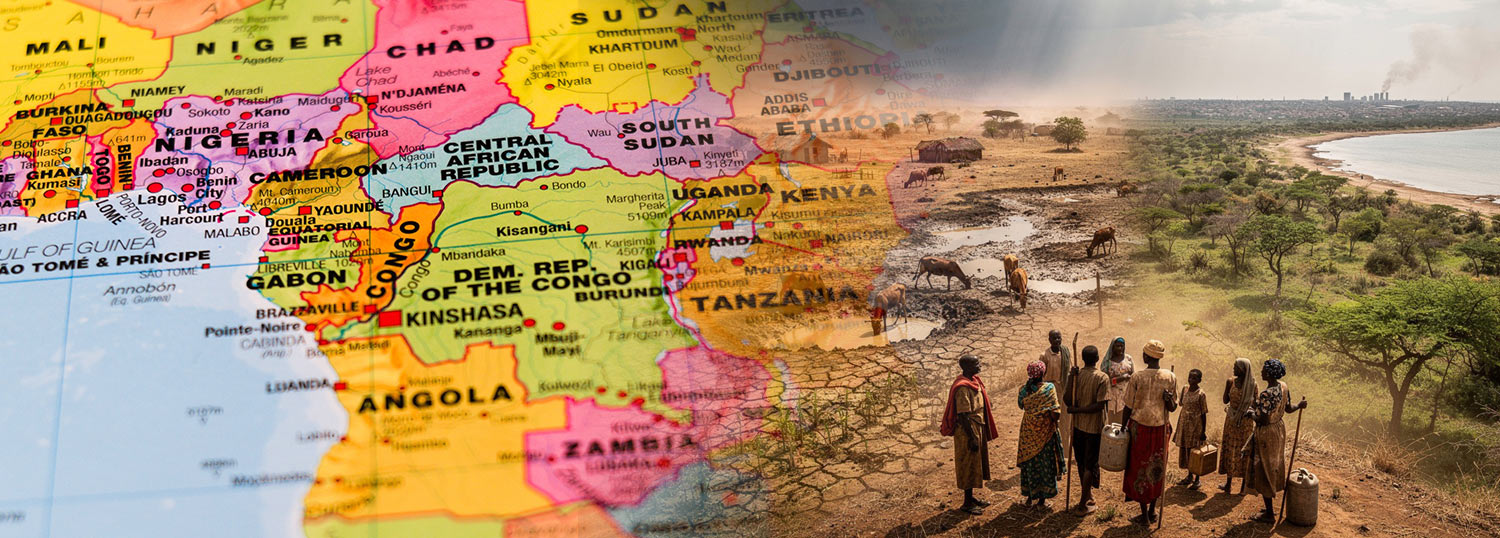
Researchers at the University of Maryland School of Medicine's Center for Vaccine Development and Global Health (CVD) have identified key social and environmental factors that influence how climate change affects childhood diarrheal diseases in sub-Saharan Africa. An August study published in Nature Communications found that while rising temperatures and changing rainfall patterns are likely to alter disease risks, factors such as vaccination, access to transportation, and other indicators of socioeconomic resilience can help reduce the impact of climate-related health threats. A second study that did an initial analysis of the data was published in the Journal of Infectious Diseases in June.
 Diarrheal diseases are the third leading cause of death in children under age five worldwide and are the leading cause of malnutrition, according to the WHO. Climate change has led to the spread of these diseases as the pathogens that cause them – viruses, bacteria, and parasites – thrive in warmer humid climates. It is estimated that climate change-driven diarrheal disease will lead to an additional 48,000 deaths in children in 2030 primarily in sub-Saharan Africa and south Asia.
Researchers analyzed more than 9,300 cases of moderate-to-severe diarrhea among children under five years of age in Mali, Kenya, and The Gambia, drawing on data from the landmark Global Enteric Multicenter Study (GEMS) and its follow-up, Vaccine Impact on Diarrhea in Africa (VIDA). They examined relationships between climate factors and four major diarrhea-causing pathogens: Cryptosporidium, Shigella, rotavirus, and enterotoxigenic Escherichia coli (ETEC).
Climate Drivers Vary by Locale
“Climate change does not affect all diarrheal diseases equally,” said Megan Kowalcyk, PhD, who led both studies and is a research associate at UMSOM and CVD. “Our findings show that disease risk depends not only on temperature and rainfall patterns but also on factors that influence a family's ability to adapt and respond to environmental stressors.”
 The researchers found that climate drivers varied substantially by pathogen and location. In Kenya, temperature was a key factor associated with the risk of Shigella, Cryptosporidium, and ETEC. However, rainfall-related variables were more influential for driving rotavirus, Cryptosporidium, and ETEC in Mali and The Gambia. Additionally, while temperature will rise drastically by 2055 the impact on precipitation and Cryptosporidium incidence is modest in all three study sites.
Importantly, the analyses demonstrated that adaptive capacity factors can modify climate-related disease risk. For example, children living in households with access to transportation, electricity, or television ownership generally experienced reduced climate-associated risks for certain pathogens compared with children lacking those resources. Similarly, if access to improved drinking water decreases it is projected that Cryptosporidium incidence will substantially increase under future climate scenarios in all sites. Likewise, increases in access to improved drinking water decreases Cryptosporidium incidence under future climate scenarios.
 Certain Populations More Vulnerable
"This research highlights the importance of looking beyond environmental exposures alone," said Stefan Kappe PhD, CVD Director. "Building resilience to climate change will require a combination of public health interventions, infrastructure improvements, economic development, and expanded access to lifesaving vaccines."
These findings add to earlier research showing that climate change could significantly affect rates of diarrheal disease in low-resource communities, especially in sub-Saharan Africa. As temperatures rise and rainfall become less predictable, it is increasingly important to understand how social and economic challenges affect the spread of disease so that children most at risk can be better protected.
"This kind of modeling analysis gives public health planners something they rarely have: a site-by-site, pathogen-by-pathogen picture of what actually drives risk," said UMSOM Dean Mark T. Gladwin, MD. "It's notable that something like access to transportation showed up as being as protective against climate change-driven disease. That tells us mobility and economic stability aren't peripheral to climate health strategy but may be essential to safeguard vulnerable populations while we address the root cause of climate change."
The GEMS and VIDA studies were funded by the Gates Foundation and led by Myron M. Levine, MD, Professor Emeritus at UMSOM, and Karen L. Kotloff, MD, Distinguished Professor of Pediatrics at UMSOM and CVD.
Contact
Devin Fisher, Ph.D.
devin.fisher@som.umaryland.edu