
Better Precision Diagnostics Needed to Enable Routine Use of Genetically Modified Pig Organs for Transplant, Researchers Contend
October 21, 2026 | Jon Kelvey
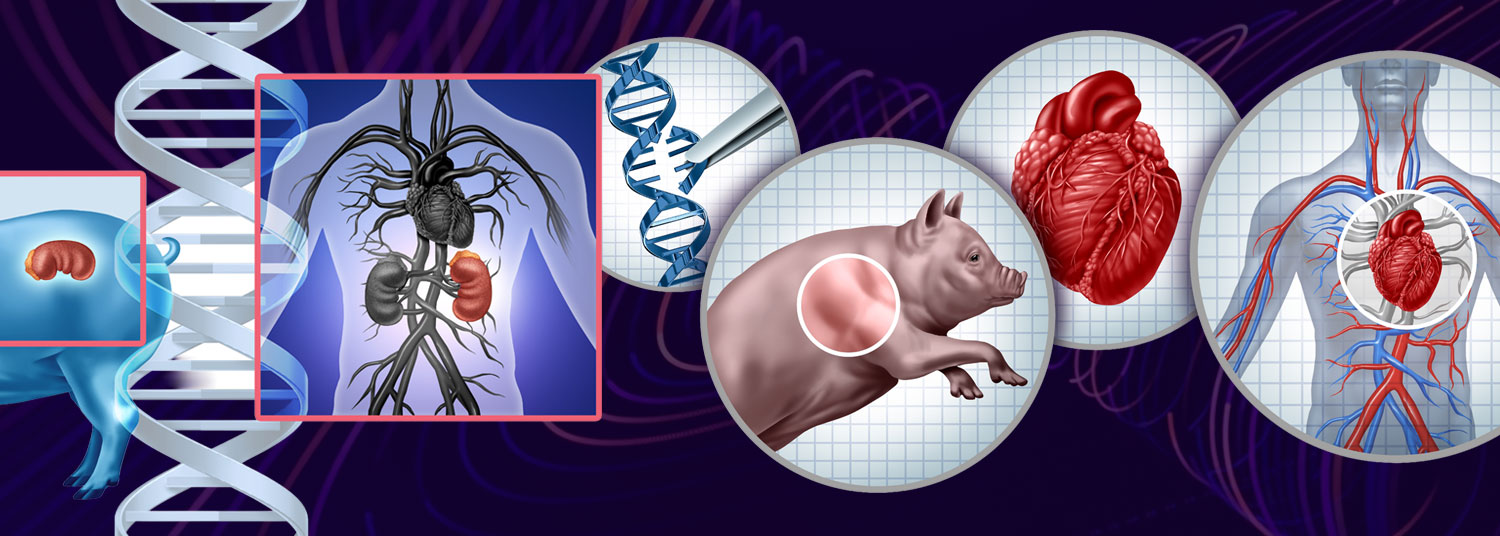
UMSOM Faculty Co-Author Pivotal Review Paper in Nature Outlining Framework to Develop Tools to Detect Immune Rejection in the Earliest Stages
In the nearly five years since the first genetically modified pig heart was transplanted into a living heart failure patient at the University of Maryland Medical Center, the field of xenotransplantation has made significant advances but remains in the research realm. The biggest challenge lies in detecting and reversing immune-driven injuries to the transplanted organ, including rejection and organ failure.
 In a new paper published today in the journal Nature, University of Maryland School of Medicine (UMSOM) researchers and their colleagues outlined a roadmap for developing state-of-the-art precision diagnostic tests that could help detect the earliest signs of injury and rejection when it potentially can be reversed.
“Evidence from early clinical cases shows that advanced diagnostic technologies can detect important biological signals that conventional monitoring methods often miss,” said study lead author Raphael Meier, MD, PhD, Associate Professor of Surgery at UMSOM and a transplant surgeon at UMMC. “By integrating multiple streams of information, we can identify problems earlier, personalize treatment, and ultimately improve long-term outcomes for patients."
Genetically modified pig organs—hearts, livers, kidneys, and lungs—have been transplanted into patients and deceased research donors (who no longer have brain function) in research settings over the past five years with varying degrees of success. The gene editing, used to knock out porcine molecules that triggered human immune reactions, has demonstrated success at preventing severe hyperacute rejection where the organ fails within hours or even minutes of transplant.
 But these clinical procedures, including the first ever successful pig-to-human heart transplant at University of Maryland Medical Center in 2022, revealed the next challenge after hyperacute rejection: subclinical but accumulating immune-mediated injury to the transplanted organ that is difficult to detect using traditional monitoring approaches. While the transplanted organs functioned for weeks or months, the procedures are not yet reliable enough to serve as a clinically viable alternative to organ transplants from human donors.
“Despite major progress in the field, we still don’t know the best combination of immunosuppressive drugs for xenotransplant patients. Stronger drugs carry real risks, so we need to protect the transplanted organ without endangering the patient. Treatment tailored to each patient and guided by real-time diagnostic testing may turn out to be essential to making these transplants safe,” said study coauthor Muhammad Mohiuddin, MD, Professor of Surgery at UMSOM and Director of the Cardiac Xenotransplantation Program at UMSOM. Dr. Mohiuddin spent more than 30 years researching novel immunosuppressive therapies for xenotransplantation in preclinical studies on animals before co-leading the surgery to transplant the first genetically modified pig heart into a human patient.
 In their review paper, the research team — which included Alexandre Loupy, MD, PhD, Director of the Paris Institute for Transplantation and Organ Regeneration (PITOR), and members from the University of Alberta, Edmonton, and NYU Langone Health — examined the recent 20 xenotransplantation cases using advanced multimodal diagnostics, integrating multiple sources of biological information to uncover molecular signatures of early antibody-mediated rejection, persistent innate immune activation and complement-mediated injury to transplanted organs. These injuries, the researchers note, were not detected through conventional laboratory pathology and clinical analyses.
To surmount the new, emergent clinical challenges of xenotransplantation, Dr. Meier and his colleagues proposed a precision medicine framework with four pillars, beginning with enhanced, multimodal tissue diagnostics to better understand early, subclinical injuries to transplanted organs. They also recommend continuous, non-invasive monitoring of xenotransplantation patients for signs of injury and the development of international xenotransplantation data repositories and advanced research platforms — including single-cell sequencing and AI-driven analytics resources — for interrogating that data.
“To move xenotransplantation from extraordinary cases to a reliable standard of care, we need precision diagnostics built into every trial, from shared data repositories and real-time monitoring to advanced tissue and molecular analysis,” said Mark T. Gladwin, MD, Dean of the University of Maryland School of Medicine and Vice President for Medical Affairs at the University of Maryland, Baltimore. “That integrated approach will help us understand, with much greater precision, how and why these organs are injured after transplantation.”
 Ultimately, making xenotransplantation clinically reliable and available outside a few elite medical centers may require tailored immunosuppression treatments for each patient. The diagnostic framework laid out in the paper could serve as an important roadmap for reaching that goal.
“Xenotransplantation holds extraordinary promise to transform the field of transplantation and address one of the most pressing challenges in modern medicine,” said Bert W. O’Malley, MD, UMMC President and Executive Vice President for the Academic Health Division of the University of Maryland Medical System. “While significant clinical hurdles remain, they can be overcome through continued innovation and collaboration across disciplines and institutions. We are proud of the extraordinary strides we’ve made toward a future where fewer lives are lost waiting for an organ, and we look forward to accelerating that progress.”
On January 7, 2022, Dr. Mohiuddin and Bartley Griffith, MD, the Thomas E. and Alice Marie Hales Distinguished Professor of Transplant Surgery at UMSOM, made history by implanting a genetically modified pig heart into David Bennett, a 57-year-old patient with terminal heart disease. It was the only currently available option for the patient who did not qualify for a human heart transplant. He lived for two months post-transplant. They performed a second transplant in 2023 on Lawrence Faucette, a 58-year-old patient who lived for nearly six weeks following the surgery. Dr. Mohiuddin serves as the Scientific/Program Director, and Dr. Griffith as the Clinical Director, of UMSOM's Program in Cardiac Xenotransplantation.
Dr. Meier and colleagues' new paper, titled "Multimodal precision diagnostics in clinical xenotransplantation," can be found online at: https://doi.org/10.1038/s41586-026-11096-0
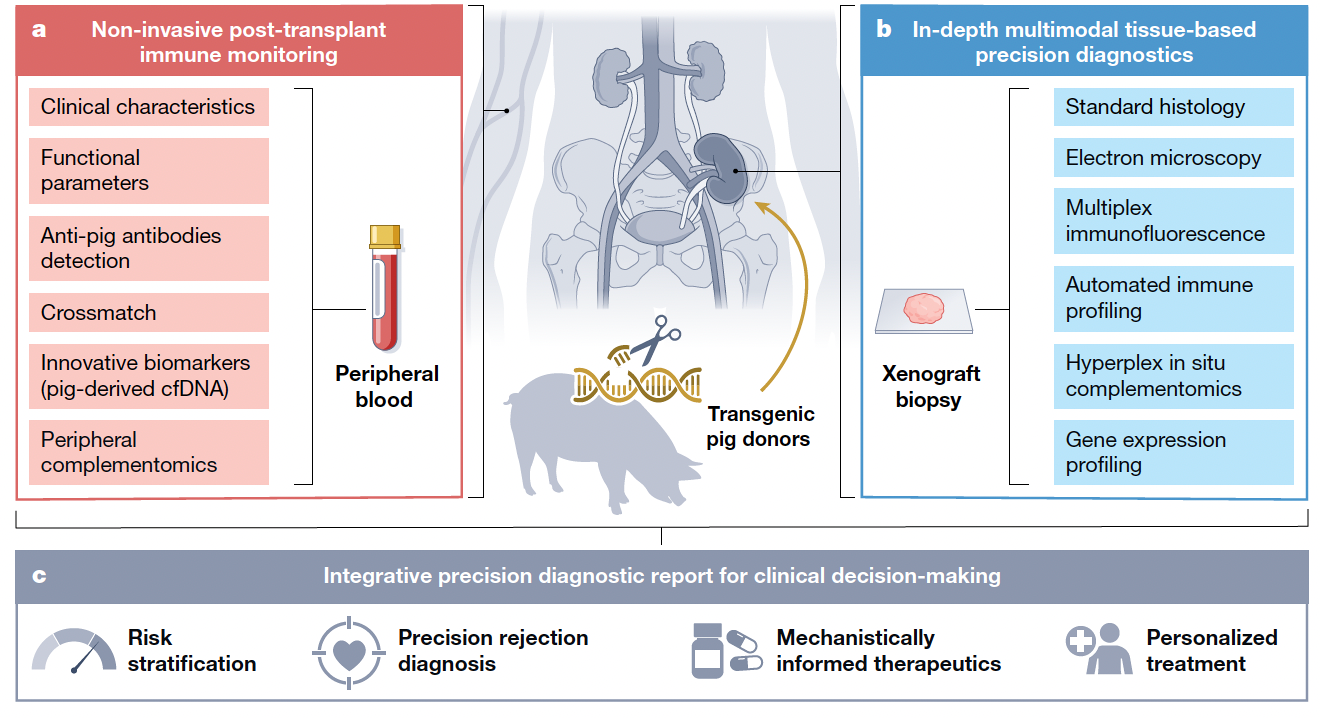
The graphic illustrates the new framework for monitoring xenotransplant health proposed by the study authors, incorporating advanced analysis and patient monitoring. Credit: Meier, Morgand et al., Nature (2026)
Contact
Jon Kelvey
jkelvey@som.umaryland.edu
Related stories
Wednesday, January 08, 2025
Presenting a Path Forward for Future Genetically-Modified Pig Heart Transplants: Lessons Learned from Second Patient
Continuing significant advancements in the field of xenotransplantation, surgeon-scientists from the University of Maryland School of Medicine provided an extensive analysis on the second patient in the world to receive a genetically-modified pig organ. Lawrence Faucette, 58, received a pig heart at the University of Maryland Medical Center in 2023 to treat his end-stage heart failure. He lived for 40 days before choosing to forgo additional treatment after the transplant began to fail due to rejection.
Wednesday, January 31, 2024
Renowned Surgeon Dr. Bartley Griffith Named Vice Chair for Innovation in UM School of Medicine’s Department of Surgery
University of Maryland School of Medicine (UMSOM) Department of Surgery Chair Christine Lau, MD, MBA, along with UMSOM Dean Mark T. Gladwin, MD, announced today the appointment of Bartley P. Griffith, MD, as the Department of Surgery’s first Vice Chair for Innovation. In this role, Dr. Griffith will nurture a culture of innovation, entrepreneurship, and collaboration in the Department, and expand the integration of related sciences into surgical practice. The appointment is effective on February 1.
Tuesday, October 31, 2023
In Memoriam: Lawrence Faucette
It is with great sadness that we announce the passing of Lawrence Faucette, the 58-year-old patient with terminal heart disease who received the world’s second genetically-modified pig heart transplant. Mr. Faucette received the transplant on September 20 and lived for nearly six weeks following the surgery.
Friday, September 22, 2023
UM Medicine Faculty-Scientists and Clinicians Perform Second Historic Transplant of Pig Heart into Patient with End-Stage Cardiovascular Disease
A 58-year-old patient with terminal heart disease became the second patient in the world to receive a historic transplant of a genetically-modified pig heart on September 20. He is recovering and communicating with his loved ones. This is only the second time in the world that a genetically modified pig heart has been transplanted into a living patient. Both historic surgeries were performed by University of Maryland School of Medicine (UMSOM) faculty at the University of Maryland Medical Center (UMMC).
Friday, June 30, 2023
Lessons Learned from World’s First Successful Transplant of Genetically-Modified Pig Heart into Human Patient
A new study published today in the Lancet has revealed the most extensive analysis to date on what led to the eventual heart failure in the world's first successful transplant of a genetically-modified pig heart into a human patient. This groundbreaking procedure was conducted by University of Maryland School of Medicine (UMSOM) physician-scientists back in January 2022 and marked an important milestone for medical science.

Friday, December 16, 2022
UM School of Medicine Surgeon-Scientist Named One of Nature’s 10 People Who Helped Shape the Science Stories of 2022
The world-renowned journal Nature, named Muhammad Mohiuddin, MD, DSc, Program and Scientific Director of the Cardiac Xenotransplantation Program at the University of Maryland School of Medicine (UMSOM), on its annual list of 10 people who helped shaped science in 2022. His pivotal work over the past three decades transplanting genetically-modified pig hearts into non-human primates led to the historic xenotransplant of a pig heart into a human patient this past January. The surgery was led by Bartley Griffith, MD, the Thomas E. and Alice Marie Hales Distinguished Professor of Transplant Surgery and Clinical Director of the Cardiac Xenotransplantation Program, who was also recognized by Nature for his ground-breaking efforts to move the field of transplantation into a new era.

Monday, November 14, 2022
Unexpected Electrical Changes Seen in First Successful Transplant of Genetically-Modified Pig Heart
Ten months after transplanting the first genetically-modified pig heart into a human patient, University of Maryland School of Medicine (UMSOM) researchers continue to report on new findings from the landmark transplant. Their latest study demonstrates for the first time that unexpected electrical changes occurred in the pig heart transplanted into the patient David Bennett. The findings were presented at the American Heart Association (AHA) meeting this past weekend.
Wednesday, June 22, 2022
University of Maryland School of Medicine Faculty Scientists and Clinicians Publish Findings of World’s First Successful Transplant of Genetically Modified Pig Heart into Human Patient
Six months ago, University of Maryland School of Medicine surgeon-scientists successfully implanted a genetically modified pig heart into a 57 year-old patient with terminal heart disease in a first-of-its-kind surgery. It was considered an early success because the patient lived for two months with a strong functioning heart showing no obvious signs of rejection, according to a new paper published today in the New England Journal of Medicine.