
Neonates are more prone to seizures than children of other ages. Ultimately, a cause of seizures is more likely to be identified in the newborn. Neonatal seizures are subtle and careful attention to repetitive motions of the face, arms or legs should be considered worrisome for seizure. Generalized tonic clonic seizures are rare in this patient population.
Common Causes:
Hypoxic ischemic encephalopathy (most common), infection, stroke, non-accidental trauma, intracranial hemorrhage (including from vitamin K deficiency), metabolic disorders, and structural abnormalities.
Guidelines for Treatment:
Phenobarbital should be used as first line, unless there is concern for channelopathy based on family history. Some literature does suggest possible benefits of a benzodiazepine in conjunction with phenobarbital for seizure cessation, but care should be given due to high risk for respiratory suppression in neonates.
For seizures that are unresponsive to first line treatment, consider phenytoin, levetiracetam, midazolam, or lidocaine.
A trial of pyridoxine can be attempted in patients who are unresponsive to initial measures
Evaluation:
Neonatal seizures require a full evaluation, including labs, head imaging (MRI preferred), low threshold for LP post imaging, concern for trauma
Disposition:
Neonates presenting with seizures require admission to the hospital for ongoing evaluation and monitoring.
Show References
In out of hospital cardiac arrest (OHCA), does it matter if you choose an intraosseous (IO) vs intravenous (IV) approach to getting access and giving meds?
No, according to a recent study by Couper et al, just published in NEJM. No significant difference in any clinically meaningful outcome including survival, neurologically intact discharge, etc. Technically the IV group had slightly higher rates of ROSC, which just met statistical significance, and to be fair that group did trend very slightly towards better outcomes in some categories, but really well within the range expected by statistical noise.
Interestingly, the median time from EMS arrival to access being established was the same in both groups (12 minutes), which I think raises some face validity questions. Furthermore, of course, previous trials have raised questions as to whether ACLS meds even work or impact outcomes anyways, so naturally if they don't, the method by which they are given isn't likely to matter either.
Bottom Line: This large, well conducted trial continues to support the notion that either an IV-focused, or IO-focused approach to access and medication delivery in OHCA is reasonable. You and your prehospital colleagues can likely continue to make this decision based on personal comfort, local protocols, and patient/case circumstances. At the very least, this continues to support the notion that if an IV is proving challenging, pursuing an IO instead is a very appropriate thing to do.
Show References
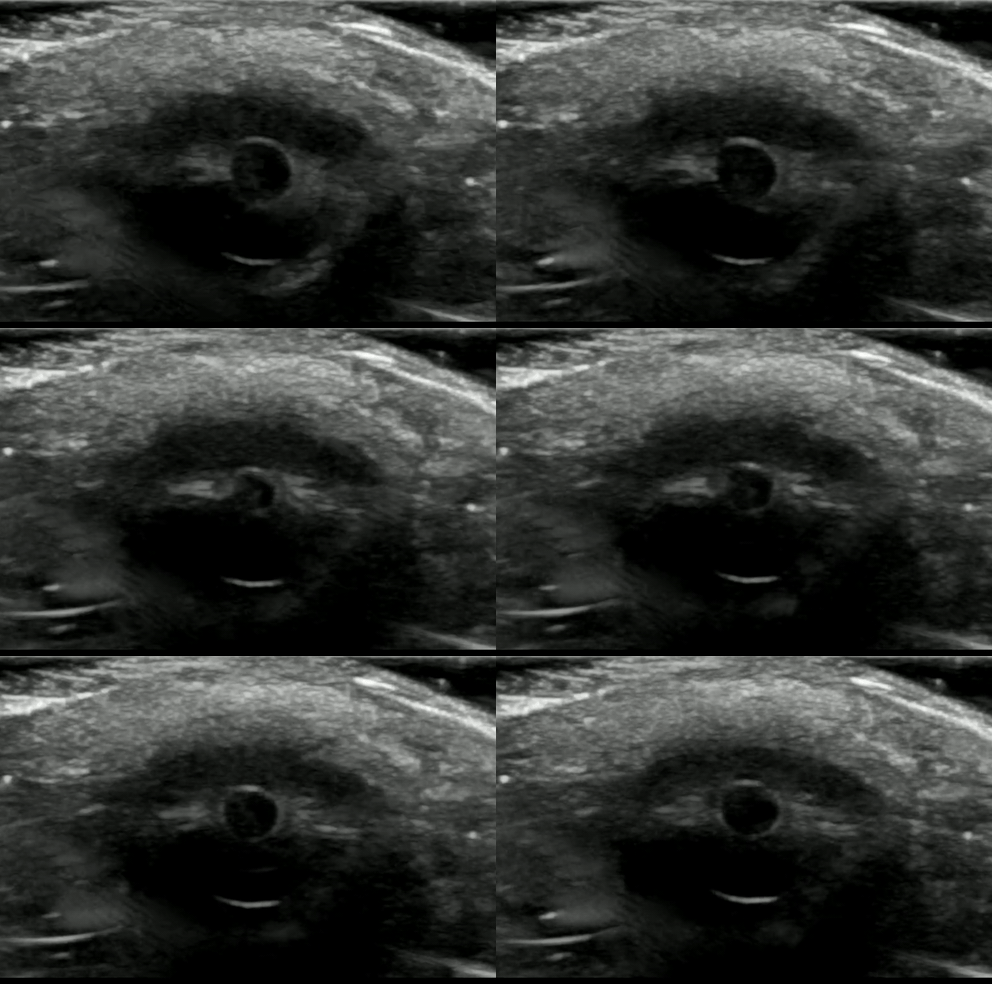
If significant orbital edema prevents visual assessment of the pupillary light reflex, ocular ultrasound can be a useful alternative.
- Set up for a standard ocular POCUS exam.
- Place the linear probe transversely over the lower portion of the eye and tilt it upward to visualize the iris and pupil.
- Shine a light over the affected eye to observe the direct light reflex.
- For consensual reflex, shine the light over the opposite eye.
Show References
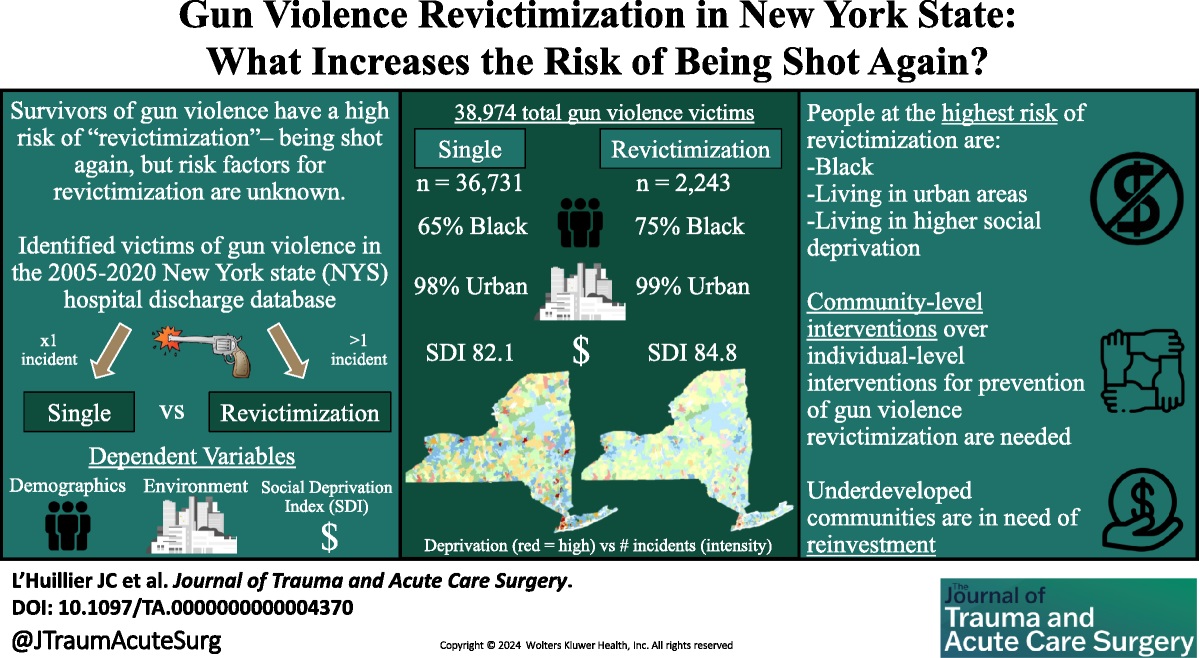
This study used the New York State hospital discharge database to look for factors associated with being the victim of repeat gun violence.
Unanswered questions include: is it similar in other areas, what interventions at the patient level could prevent this, what other patient level factors (substance use, etc) are involved, however, this is a good start in looking at this preventable disease.
Show References
Recent studies continue to highlight that Black, Native American, female, uninsured and Medicaid patients receive disproportionately more substance use screening when they are trauma patients. The authors of this paper point out that this inappropriate application of screening leads to missed opportunities.
“Screening patients for drug and alcohol use following injury is an evidence-based practice that can trigger wraparound care, such as brief substance use interventions, to prevent reinjury. Adolescents who consume alcohol but are not screened for alcohol use have 2- to 3- fold greater likelihood of reinjury compared with those who were screened and received a brief intervention.”
Show References
By Bobbi-Jo Lowie, MD
Assistant Professor
Emergency Medicine
University of Maryland School of Medicine
Since April of 2024 there have been 36 confirmed cases of avian influenza A across the United States. Avian influenza, primarily caused by influenza viruses that infect birds, can pose significant health risks to both animals and humans. The most notable strains include H5N1 and H7N9, with H5N1 being particularly alarming due to its high mortality rate among infected humans. The virus primarily spreads from birds to humans through direct contact with infected birds, their droppings, or contaminated environments. Although there have been recorded cases of human-to-human transmission, this usually occurs only in close-contact situations.
In humans, avian influenza can present with symptoms ranging from mild respiratory illness to severe pneumonia. Patients may experience fever, cough, sore throat, muscle aches, and in severe cases, gastrointestinal symptoms. Those that have more moderate or severe illness may develop shortness of breath, altered mental status, or seizures. Complications include acute respiratory failure, pulmonary hemorrhage among others, with respiratory failure being the most common cause of death in this patient population.
Diagnosing avian influenza involves a combination of clinical presentation, travel history, and exposure to birds and confirmation through PCR testing of upper respiratory tract samples like a nasopharyngeal swab.
Treatment for avian influenza focuses on antiviral medications such as oseltamivir which is most effective when administered early in the course of the illness but still administered after 48 hours of illness. Supportive care is essential for managing severe cases, especially those that progress to acute respiratory distress syndrome.
Hypertension in the ED comes in two varieties: emergency and asymptomatic (not urgency!). From this position statement: “Hypertensive emergency involves acute target-organ damage and should be treated swiftly, usually with intravenous antihypertensive medications, in a closely monitored setting.”
Conversely, asymptomatic does not require urgent, aggressive management. “Recent observational studies have suggested potential harms associated with treating asymptomatic elevated inpatient BP, which brings current practice into question.”
Without target organ involvement, we do not need to be initiating IV medications or trying to treat the numbers
Show References
Cardiovascular disease (CVD) and cancer are leading global causes of illness and death, and evidence increasingly shows they are interconnected. There is strong epidemiological data that the two disease entities share modifiable risk factors such as hypertension, hyperlipidemia, diabetes, obesity, smoking, diet, physical activity, and social determinants of health.
Shared mechanisms underlying both CVD and cancer include:
- chronic inflammation
- oxidative stress
- metabolic dysregulation
- clonal hematopoiesis of indeterminate potential (aka CHIP- mutations in hematopoietic cells that occur during aging)
- microbial dysbiosis (imbalance of the patient's microbiome)
- hormonal effects
- cell senescence
Take home points:
- Controlling CVD risk factors can help reduce the risk of cancer
- History of cancer assumes the presence of the overlapping risk factors between CVD and cancer- consider it a CV risk factor as you risk stratify patients for ACS
- Cancer therapies have their own cardiotoxities to consider- adding insult to injury!
Keep all this in mind especially when seeing cancer and CVD patients in your ED!
Show References
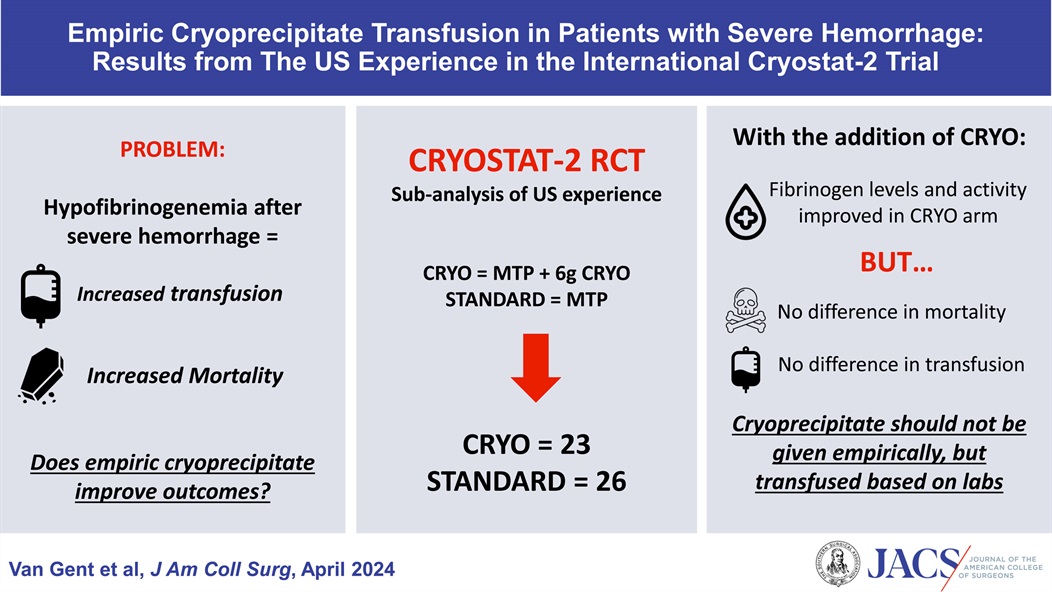
There is uncertainty if adding cryopercipitate empirically to all mass hemorrhage protocols has any benefit to mortality, need for transfusion, or any other meaningful outcome. This small study suggests it does not and that we should save the addition of cryopercipitate to those with lab proven low fibrinogen levels.
Show References
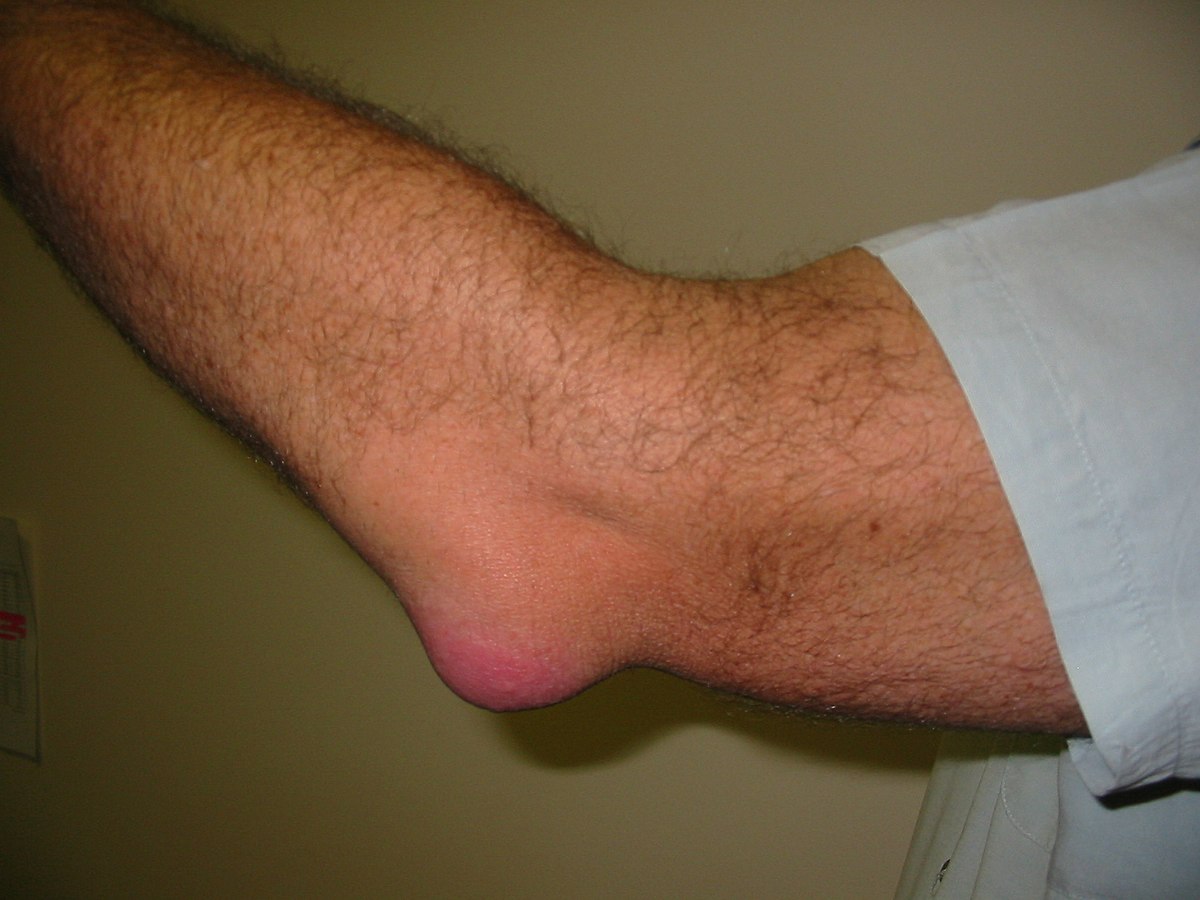
Olecranon bursitis
Superficial synovial membrane located overlying the proximal ulna/olecranon allows for easy irritation and inflammation
Swelling does not involve the joint
Most common bursitis (approx. 4x more common than prepatellar)
Male>>Female
Prone to trauma, inflammation or infection
-RA, gout, overlying break in skin
Chronic inflammation results from excessive leaning on the elbow such as with certain occupations (plumber, military recruit)
Inflammation may be septic or aseptic
Usual cause is traumatic
Approximately 20% of acute cases may have a septic origin
Classically appears as a “goose egg” area on posterior elbow
Well-demarcated and fluctuant
Small amount of swelling and/or those with minimal symptoms should be left alone and treated with activity modification, NSAIDS, ice. Suggest an elbow pad for protection.
If this does not resolve symptoms after approximately 4 weeks, consider referral for aspiration and steroid injection
If aspiration is ED performed for evaluation of possible septic bursitis, recommend a compressive elbow sleeve to help prevent reaccumulating
If a recurrent issue for patient and aspirated, consider a posterior elbow splint for approx. 10 days and refer to orthopedics.
For penetrating neck trauma:
-
Does it violate the platysma if no, close wound and discharge
-
If yes, are there any hard signs of injury like enlarging hematoma, air from the wound, difficulty swallowing, blood in the airway, respiratory distress then to the OR
-
If no, Ct angio of the neck. If negative and no other findings admit for observation or discharge. If positive, to the OR. If equivocal, endoscopy and broncoscopy.
No longer think about the zones of the neck. Treat them all the same.

Does physician altruism influence quality metrics? This study suggests yes.
45 physicians were defined as “altruistic” based on their willingness to share a $250 cash prize with a stranger in an on-line version of the dictator game, something you might have played in an economics class.
Of 250 physicians drawn from primary care and cardiology, 45 met the definition of altruistic and 205 did not.
Overall, patients of altruistic physicians:
- Were less likely to experience ambulatory care sensitive admissions (absolute decrease of 1%, relative decrease of 38%, adjusted odds ratio 0.6 (0.38-0.97))
- Were less likely to experience ambulatory care sensitive emergency department visits (absolute decrease of 1.5%, relative decrease of 41%, adjusted odds ratio 0.64 (0.43-0.94)
- Had lower total spending (adjusted decrease of $800, relative change of -9.3% (16.2-2.3). [Note: the unadjusted results run in the other direction.]
The authors suggest that this difference may be on account of altruistic physicians being more willing to consider the appropriateness of tests or treatment or “devote more time and energy to their patients.”
They also note that while most physicians were categorized as not altruistic, at 18% this group of physicians exceeds the 5% of the general US population that would meet this definition.
Perhaps there is something quantitatively demonstrable to being a “good” doctor.
See https://jamanetwork.com/journals/jama-health-forum/fullarticle/2824419
Show References
Intravascular Volume and the IVC
- Point-of-care ultrasound (POCUS) assessments of the inferior vena cava (IVC) are frequently used in the fluid resuscitation strategy for critically ill patients.
- Numerous factors determine the appearance of the IVC, including intraabdominal pressure, mean systemic filling pressure, central venous pressure, intrathoracic pressure, and right heart function.
- Given these multitude of factors, it is not surprising that literature has demonstrated that the IVC is not a reliable marker of fluid responsiveness.
- Rather, focus on the use of the IVC has shifted towards assessing fluid tolerance, venous congestion, and its use as a marker on when to stop fluid administration.
- POCUS assessment of the IVC is commonly performed in the long axis a few centimeters distal to the diaphragm.
- Rola, et al. highlight that this location may be misleading and recommend that a more appropriate assessment be a short axis scan through the entire intrahepatic segment of the IVC, while taking into account the intrapleural and intraabdominal pressures.
Show References
Recent guidelines from anesthesia societies and recent literature emphasize the use of gastric POCUS for aspiration risk assessment. While the role of gastric POCUS in the emergency department is still being explored, one recent article highlighted its use in assessing patients with upper gastrointestinal bleeding (UGIB).
Performing Gastric POCUS:
Patient Position: Place the patient in the right lateral decubitus position, if unable can perform in supine position.
Probe Selection & Placement: Use a curvilinear probe in the sagittal position at the level of the subxiphoid process, similar to the longitudinal view of the proximal abdominal aorta.
Scanning Technique: Fan the probe left to right to assess the gastric antrum.
Interpretation of Gastric Antrum:
Empty Antrum: Appears as a "bull's eye" or flat, with no visible liquid inside.

Full Stomach: Distended antrum with floating contents.

Intermediate: Shows a small amount of anechoic fluid without floating contents.
Quantitative Evaluation:
It is also possible to perform a quantitative evaluation of the gastric antrum to further assess stomach contents, this may be more useful in patients with intermediate gastric antrum.
For more details, refer to the articles and videos cited.
Show References
This article serves as a reminder that trauma can and will precipitate adrenal insufficiency and crisis in those trauma patients who are on steroids pre-injury. Look for prednisone or hydrocortisone as well as autoimmune or rheumatologic diseases on pre-injury medication list and history. Consider the diagnosis in trauma patients with refractory hypotension not responsive to vasopressors. Replacement therapy with hydrocortisone is the therapy.
Show References
CHECK-CALL-COMPRESS is the recommended algorithm by the International Liaison Committee on Resuscitation to teach school age children. Several studies show that school aged children are highly motivated to learn and perform CPR. They also serve as CPR multipliers meaning they go home, talk about what they have learned and inspire others to learn.
By age 4, children are able to assess the first step in the chain of survival - CHECK - assessing for responsiveness and breathing. By age 6, children can dial the emergency number and give the correct information for the location of the call. By age 10-12 children are able to get correct chest compression depths and ventilation volumes in CPR manikins. Hands-on training is more beneficial compared to verbal only instruction.
Areas where CPR is taught to school age children as a part of the school curriculum have higher rates of bystander CPR.
Bottom line: CPR should be introduced to elementary school children.
Show References
Rectal injuries are rare and are usually associated with penetrating trauma or significant pelvic fracture from blunt injury. Diagnosis starts with physical exam including inspection for signs of trauma as well as a digital rectal exam looking for blood, bony protuberance and abnormal sphincter tone. Normal digital rectal exam does not exclude injury.
Imagining is important in making the diagnosis.
“Findings on CT associated with rectal injury include a wound tract extending to the rectum, a full-thickness wall defect, perirectal fat stranding, extraluminal free air, intraperitoneal free fluid, and hemorrhage within the bowel wall….A CT with any suggestion of rectal injury should therefore be followed up with rigid proctoscopy to confirm the diagnosis and location of injury, as a combination of CT and endoscopy has a sensitivity of 97% in the diagnosis of rectal injury.”
Show References
Question
EMS may call the hospital to obtain online medical direction when a patient does not wish to come to the hospital. One difficult task faced by the physician at the hospital is determining the decision making capacity of the patient. There is currently no nationally recognized standard protocol for physicians providing EMS oversight in this situation.
The four components involved in the determination of capacity are: understanding, appreciation, reasoning and expression of choice. This study used a modified Delphi approach with 19 physician experts to develop standardized steps to guide best practices for physicians who are called in real time about a patient refusing EMS transport. Consensus was defined as 80% agreement.
The example worksheet with the compilation of recommendations is attached.
Show Answer
Show References
Attachments
Getting reliable venous and arterial access is crucial when resuscitating critically ill patients. These lines can be difficult due to patient and situation specific variables.
Micropuncture kits contain a 21-gauge echogenic needle, a stainless-steel hard shaft/soft-tip wire, and a 4 Fr or 5 Fr sheath and introducer. The micropuncture kit offers several advantages that can help overcome difficult situations:
- Small, Sharp Needle: Easier puncture of compressible vessels.
- Echogenic Design: Improved visibility under ultrasound.
- Smooth Tissue Penetration: Moves through tissue more easily than a typical 18-gauge needle.
- Flexible Wire Tip: The 0.018-inch wire is soft, lacks a J-loop, and navigates tight corners and calcifications better than a standard J-tip wire. This is especially useful when entering at a steep angle or accessing small vessels.
To use a micropuncture kit, gain vessel access with the needle and wire, railroad the sheath and introducer into the vessel, remove the wire, then remove the introducer. Now you have a 4 Fr or 5 Fr sheath in the vessel. This is typically used to introduce a normal central line wire.
For arterial lines, you can place them directly over the wire without dilation. Keep in mind that the 4 Fr sheath (1.3 mm OD) and 5 Fr sheath (1.7 mm OD) are larger than a typical arterial line catheter (18g = 1.27 mm OD). If you dilate then you will cause hematoma.
Find out where your department stores micropuncture kits and get familiar with their components. While it adds an extra step to the procedure, it could make the difference between securing the line or not.
Show References
Rectal injuries are rare. The majority are secondary to penetrating injuries. Trauma care providers “should have a high clinical suspicion of rectal injury with any missile with a trajectory near the rectum; transpelvic gunshot wounds; stab injuries near the perineum, buttocks, groin, or proximal thighs; or open pelvic fractures. A digital rectal examination with a focus on sphincter tone, presence of blood, palpable defect, or bony protrusion should be carried out. Of note, a normal digital rectal examination does not exclude rectal injury.”
Ct scan with IV contrast (not PO or rectal) is used to identify rectal injuries but will be diagnostic in only 33% of injuries.
Rectal Injury Grading Scale
| Grade | Injury Type | Description of Injury |
|---|---|---|
| I | Hematoma laceration | Hematoma or hematoma without devascularization Partial-thickness laceration |
| II | Laceration | Laceration <50% of circumference |
| III | Laceration | Laceration ?50% of circumference |
| IV | Laceration | Full-thickness laceration with extension into perineum |
| V | Vascular | Devascularized segment |