
UMSOM Faculty Member Rozalina McCoy, MD, Chairs Committee Updating National Diabetes Guidelines
January 29, 2026
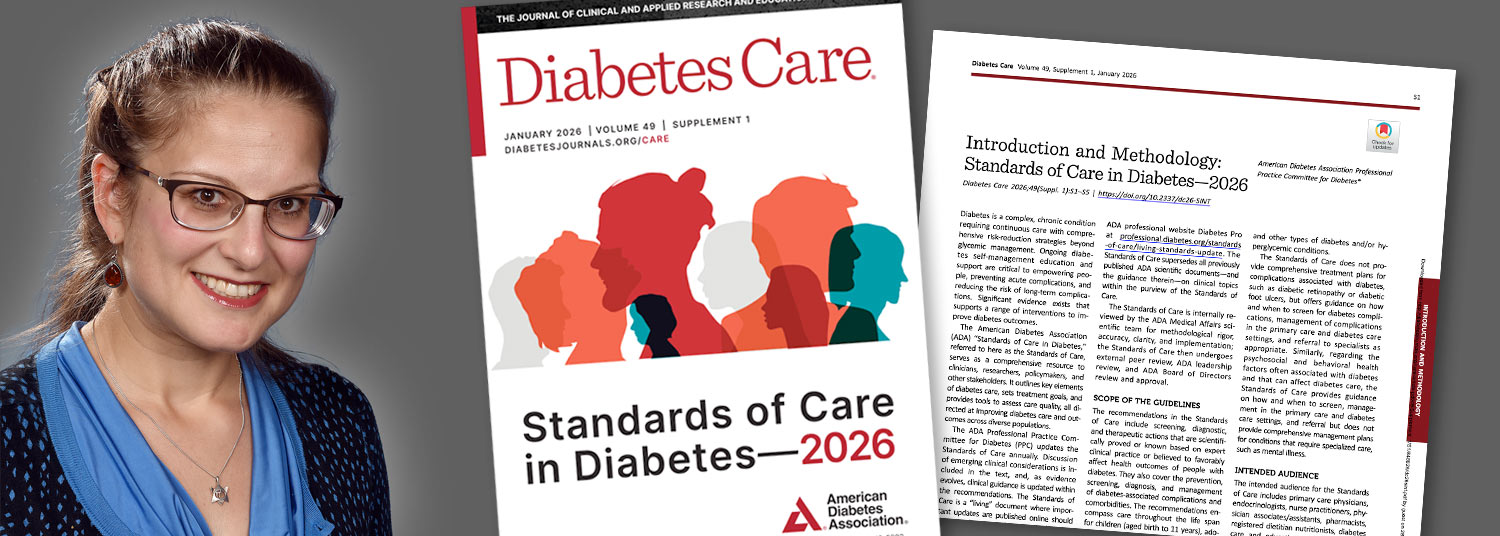
The American Diabetes Association recently released its 2026 Standards of Care in Diabetes, introducing major updates to improve diagnosis, treatment, and health outcomes for people living with and at risk for diabetes. Rozalina McCoy, MD, Associate Professor of Medicine at the University of Maryland School of Medicine (UMSOM) and endocrinologist at the University of Maryland Medical Center (UMMC), served as co-chair of the guideline committee. She is also Director of Precision Medicine and Population Health at the University of Maryland Institute for Health Computing.
Below, Dr. McCoy answers key questions about what’s new and why it matters.
Q: What is the biggest change in the new guidelines?
A: The guidelines emphasize team-based care as essential for managing diabetes; this places the person with diabetes at the center of the diabetes care team and involves not just the physician but an entire team of health care professionals including advanced practice providers, pharmacists, dietitians, diabetes educators, behavioral health professionals, social workers, community health workers, and others. They all partner with the person with diabetes, their families, and the physician to deal with complex medical, nutritional, and psychosocial needs that come with diabetes. The American Diabetes Association now explicitly recommends multidisciplinary teams to optimize outcomes and better support our patients, which is a model that we follow here at the University of Maryland Center for Diabetes and Endocrinology.
Q: Why are changes to diagnosis and classification so important?
A: Accurate classification of diabetes type is critical. Misclassification—such as confusing type 1 and type 2 diabetes—can delay appropriate therapy and worsen outcomes. Telling type 1 and type 2 diabetes apart is not always straightforward, particularly as both conditions can be diagnosed at any age, but these two conditions can require very different treatments. We may even be able to detect type 1 diabetes before it becomes symptomatic – we call this pre-symptomatic type 1 diabetes – giving us time to prepare and to monitor patients closely to make sure we start treatment on time. We can even explore treatment to delay progression to symptomatic type 1 diabetes in some people. The updated standards strengthen recommendations for early evaluation and referral to specialized centers such as UMCDE when autoimmune markers or atypical presentations are present.
Q: How do the guidelines address cancer patients?
A: Several chemotherapy drugs increase diabetes risk, and the presentation varies by agent. The new standards call for coordinated care between oncology and endocrinology teams, specifically recommending systematic glucose monitoring and individualized management strategies during cancer treatment to prevent severe diabetes complications such as diabetic ketoacidosis. Here at our institution, health care teams from the Center for Diabetes and Endocrinology and the UM Marlene and Stewart Greenebaum Comprehensive Care work closely together to deliver the highest quality care to all our patients.
Q: What's new in diabetes technology?
A: The role of continuous glucose monitoring (CGM) has continued to expand, with clinical trials showing benefit of CGM in most people with diabetes. The American Diabetes Association recommends that CGM be used for glucose monitoring by people with any type of diabetes (not only those with type 1 diabetes) and of any age, as well as by people with diabetes who take medications that can cause hypoglycemia (low blood glucose) and in any situation where CGM can help with diabetes management. Additionally, early adoption of automated insulin delivery systems (systems that connect CGM and insulin pump to work together, measuring blood glucose and dosing insulin based on the results) is encouraged, with the support of a diabetes team that is knowledgeable in the use of advanced diabetes technologies.
Q: Are there new recommendations for special populations?
A: Yes. The guidelines include:
- Recognition of osteoporosis as a diabetes complication.
- Guidance for safe fasting during Ramadan, Yom Kippur, and other prolonged fasts.
- Expanded recommendations for children and adolescents, including psychosocial screening and technology use.
- Enhanced guidance for preconception counseling and pregnancy management, including discontinuation of certain medications and CGM use during pregnancy.
- Important updates about how to properly manage glucose levels during times of acute illness with, for example, a respiratory infection or a bout of food poisoning. Those with diabetes often have a hard time properly managing their blood sugar levels as a result of hormonal changes, dietary disruptions, or stress from the illness, and this can be very dangerous. A review study I led that was recently published in Clinical Diabetes provides in depth guidance on this issue.
Q: What about medications?
A: The guidelines stress selecting drugs not only for glucose management but also for preventing complications of diabetes. Despite strong evidence, many people with diabetes—especially in underserved communities—don’t receive recommended therapies. Educating and empowering people with diabetes to self-advocate is essential, as well as ensuring that all people have access to high quality, person-centered diabetes care.
For more information on the diabetes care programs at the School of Medicine and its affiliated hospitals in the University of Maryland Medical System, visit: https://www.medschool.umaryland.edu/endocrinology/
Contact
Office of Public Affairs
655 West Baltimore Street
Bressler Research Building 14-002
Baltimore, Maryland 21201-1559
Contact Media Relations
(410) 706-5260