
Infectious Diarrhea:
Have your wondered what you should do with patients that you suspect have infectious diarrhea. Well the IDSA has updated their 2001 guidelines for the management of infectious diarrhea. The TAKE HOME Points are:
- Most patients with diarrhea do not need to be tested for an infectious cause. Stop ordering those cultures.
- Testing IS recommended in the folllowing populations:
- Patients younger than 5 years
- Elderly
- Patients that are immunocompromised
- Patients with bloody diarrhea
- Patients with severe abdominal pain or tenderness, or have signs of sepsis.
- Testing may be considered for C. difficile in people >2 years of age who have a history of diarrhea following antimicrobial use and in people with healthcare-associated diarrhea
- Some additional recommendations that are noteworthy:
- Fecal leukocyte examination and stool lactoferrin detection should NOT be used to establish the cause of acute infectious diarrhea
- A peripheral white blood cell count and differential and serologic assays should NOT be performed to establish an etiology of diarrhea
- Reduced osmolarity oral rehydration solution (ORS) is recommended as the first-line therapy of mild to moderate dehydration in infants, children, and adults with acute diarrhea from any cause
You can find all the recommendations at https://academic.oup.com/cid/article/doi/10.1093/cid/cix669/4557073/2017-Infectious-Diseases-Society-of-America
Show References
Within the first hour after administration, ondosterone, metoclopramide and bromopride were equally efficacious. At the 6 hour and 24 hour period after receiving the initial dose of medication, ondansetron was statistically superior to bromopride (not available in the US) and metoclopramide. There were no reported side effects in the ondansetron group (including diarrhea or sedation).
Show Additional Information
Show References
Agatha Christie is an English crime novelist who frequently used poisons in her books to murder the victims. In her book, Murder is Easy, Ms. Christie uses arsenic/arsenic trioxide to kill several characters.
Primary source of arsenic in general population is contaminated food, water and soil. Arsenic exists in several forms: elemental, gaseous (arsine), organic and inorganic (trivalent or pentavalent).
Arsenic trioxide has also been used to treat acute promyelocytic leukemia in China; it’s use in other leukemia, lymphoma, and other solid tumors are currently being investigated.
Arsenic primarily inhibits the pyruvate dehydrogenase complex and multiple other enzymes involved in the citric cycle/oxidative phosphorylation, resulting in mitochondrial dysfunction.
Acute toxicity of arsenic after ingestion
- GI symptoms (minutes to several hours) – nausea, vomiting, abdominal pain and cholera like diarrhea.
- Cardiovascular: QT prolongation/torsade de pointes, orthostatic hypotension, ventricular dysrhythmias, myocardial dysfunction and shock.
- CNS (days): encephalopathy, delirium, coma, and seizure due to cerebral edema and microhemorrhages.
- Respiratory: ARDS, respiratory failure,
- Others: AKI, leukemoid reaction, hemolytic anemia, and hepatitis.
Management
- Chelation: dimercaptrol (BAL) or succimer
- Whole bowel irrigation if radiopaque material is present (abdominal XR)
- Electrolyte and fluid management
- Cardiac monitoring and pressor support in hypotension
Improving CPR Performance
- High-quality CPR is the cornerstone of successfull resuscitation from cardiac arrest.
- In fact, high-quality CPR is considered the most important intervention for achieving ROSC and good neurologic recovery.
- Pearls for optimizing CPR performance include:
- Use a team-focused approach
- Avoid leaning and ensure complete recoil of the chest
- Target a chest compression fraction of at least 60%
- Use POCUS, but pay attention to the duration of hands-off time
- Target ETCO2 of > 20 mm Hg
Show References
Complete or incomplete separation of the articular cartilage and subchondral bone
-70% occur at the lateral aspect of the medial femoral condyle
-Also seen in the talar dome and capitellum
Repetitive overloading leads to fragmentation and separation from surrounding bone
Prognosis better in kids than in adults
http://www.eorif.com/KneeLeg/Images/OCD4w.jpg

CC: Vague difficult to localize activity related pain and swelling. Mechanical symptoms only if loose body is present
PE: Wilson’s test
Internal tibial rotation and knee extension impinges the tibia on the OCD lesion causing pain. Pain abates with external rotation and flexion.
https://www.youtube.com/watch?v=e7zrKo41Pos
Plan of care: Limit activity and trial period of non-weight bearing for 6 weeks.
50% resolve in 10 to 18 months with conservative care.
Detached, loose or unstable fragments or failure of non-operative care will need surgery
Show References
Cannabinoid hyperemesis is a syndrome (CHS) characterized by severe intractable nausea, cyclical vomiting, and abdominal pain associated with chronic marijuana abuse. It is often a underrecognized cause of cyclic vomiting syndrome. Despite well established anti-emetic properties of marijuana, paradoxical effects on the GI tract exist through cannabinoid receptors which exert their neuromodulatory properties in the central nervous system and the enteric plexus. Multiple theories of mechanism of CHS are in the literature. Diagnosis is based on the following clinical criteria:
- History of regular cannabis for any duration of time
- Refractory nausea and vomiting
- Gastrointestinal evaluations fail to identify other clear causes
- Compulsive bathing in hot water temporarily alleviates symptoms often done several times a day. A red flag symptom.
- Resolution of symptoms after cannabis is discontinued
Acute care goals are to treat dehydration and terminate nausea and vomiting. Administration of intravenous fluids, dopamine antagonists, topical capsaicin cream, and avoidance of narcotic medications are recommened treatment measures. Benzodiazepines followed by haloperidol and topical capsaicin are reported to be most effective. Capsaicin activates the transient receptor potential vanilloid 1 receptors (TRPV1) which impairs substance P signalling in the area postrema and nucleus tract solitarius similar to noxious stimuli, such as heat.
Show References
Traumatic brain injury (TBI) is associated with close to half of major trauma admissions in adults over age 65 in the U.K.
Falls accounted for 85% of all TBIs, while 45% of patients had subdural hematomas (SDH).
More than 3/4 of patients were treated conservatively, though outcomes were not significantly better than those who underwent neurosurgical intervention.
Higher age is associated with higher mortality and greater disability.
Bottom Line: Trauma in older adults is increasing and fall prevention is important in reducing significant injuries.
Show References
Molecular Adsorbent Recirculating System (MARS) is an artificial liver support system colloquially known in the medical field as "dialysis for the liver."
- Limited data, small studies
- Consistently shown to improve hemodynamics, toxin clearance, and hepatic homeostasis
- No consistent proven mortality benefit
- Only performed by limited number of US hospitals (including the University of Maryland)
- May depend on the acute liver failure subpopulation, but best use currently seems to be for severe acute liver failure due to a potentially reversible/recoverable cause (toxin ingestion, trauma, acute alcoholic hepatitis, etc) or as a bridge to transplant
Take-Home:
1. Consider MARS in your patient with severe acute liver failure due to potentially reversible/recoverable etiology
2. Know if and where MARS is offered near you

(http://findbesttreatment.com/images/healthnet_dialyse_schema.gif)
Show Additional Information
Show References
Fever occurs in 40% of patients with sepsis. Historically, there has been conflicting evidence of whether patient outcomes improve with antipyretic therapy.
A recent large meta-analysis assessed the effect of antipyretic therapy on mortality of critically ill septic patients. The analysis included 8 randomized studies (1,531 patients) and 8 observational studies (17,432 patients) that assessed mortality of septic patients with and without antipyretic therapy.
The authors found no difference in mortality at 28 days or during hospital admission. There was also no difference in shock reversal, heart rate, or minute ventilation.
As expected, they found a statistically significant reduction in posttreatment body temperature (-0.38°C, 95% IC -0.63 to -0.13) in patients who received antipyretic therapy. NSAIDs and cooling therapies were more effective than acetaminophen, however no agent or dosing information was provided and only one study included physical cooling therapies.
Bottom Line: Antipyretic therapies do not reduce mortality in patients with sepsis, but they may improve patient comfort by reducing body temperature.
Show References
Bronchiolitis season will soon be upon us. Here are some risk factors for children under 2 y/o with bronchiolitis, who may be more likely to suffer respiratory decompensation:
1. Age under 9 months
2. Black race
3. Hypoxia documented in the ED
4. Persisent accessory muscle use.
Bottom Line: Consider providing respiratory support sooner than later in bronchiolitic infants with risk factors for decompensation. For HFNC, start at 1.5 - 2.0 L/kg/min, and titrate to work of breathing and 02 saturations.
_______________________________________________________________________________
Pathophysiology: Bronchiolitis is a disease process that leads to inflammation of lower airways, causing bronchiolar edema, epithelial hyperplasia, mucus plugging, and air trapping or atelectasis. Common viral causes include RSV, Human Metapneumovirus, Rhinovirus, Influenza, and Parainfluenza.
Clinical Course: For most strains, the disease course is often 5-7 days with the worst days being 3-5. The disease process can last longer, especially in neonates. The predominant presenting symptoms are often rhinorrhea, low grade fevers, and cough, but apnea can be the primary symptom in younger infants. As a result of increased work of breathing, PO feeding tolerance decreases and leads to dehydration.
Treatment: Primarily supportive care with suctioning, hydration, supplemental oxygen via standard NC, HFNC, and in severe cases BiPAP, CPAP or intubation. Trial of bronchodilator is often used, but there is no role for repeated bronchodilator use if no benefit is seen in pre and posttreatment respiratory effort. Hypertonic saline is not recommended for routine use in the ED. Corticosteroids have no role for routine use in viral bronchiolitis, either.
Show Additional Information
Show References
Hunan hand syndrome is a painful contact dermatitis that frequently presents in cooks and chili pepper workers after preparing or handling chili peppers. Contact with other body parts gives rise to the terms: "Hunan nose" ''Hunan eye",and "Chili Willie". Capsaicin, found in the fruit of plants from the genus Capsicum such as red chili peppers, jalapeños, and habaneros, is a hydrophobic, colorless, odorless compound that binds with pain receptors causing the sensation of intense heat or burning. The "heat" or pungency of a peppers is measured in Scoville heat units (SHU), the number of times a chili extract must be diluted with water to lose heat. Habanero peppers generate 30,000 SHU. Even at low concentrations capsaicin is a skin irritant. It is the primary ingredient in pepper spray used in law enforcement and in personal defense sprays.
Treatment consists of decontamination with water irrigation for opthalmic exposure and milk or antacids for dermal or gastrointestinal exposure. Burning can be recurrent and of of long duration depending on tissue penetration. Topical anesthetic especially for the eye and cool compresses for the skin can relieve pain. Parodoxically capsaicin is used as a topical analgesic medication for local pain relief from muscle pain, itching, and painful neuropathies (diabetic, postherpetic). Capsaicin initially causes neuronal excitation followed by a long-lasting refractory period due to depletion of substance P, during which neurons are no longer responsive to a large range of stimuli and thus are desensitized.
Show References
Risk of Pneumocystis pneumonia (PCP) increases with degree of immunosuppression. If clinical suspicion exists (CD4 <200 with cough, pulmonary infiltrates, hypoxic respiratory failure), it is reasonable to initiate empiric therapy.
First line treatment is trimethoprim-sulfamethoxazole (TMP-SMX) orally or IV for 21 days. IV pentamidine has equivalent efficacy to IV TMP-SMX but greater toxicity and is generally reserved for patients with severe PCP who cannot tolerate or are unresponsive to TMP-SMX.
Importantly, adjunctive corticosteroids have been shown to significantly improve outcomes (mortality, need for ICU admission, need for mechanical ventilation) in HIV-infected patients with moderate to severe PCP (defined by pO2 <70 mmHg on Room Air).
· Ideally steroids should be started BEFORE (or at the same time as) Pneumocystis-specific treatment to prevent/mitigate the sharp deterioration in lung function that occurs in most patients after initiation of PCP treatment. This is thought to be secondary to the intense inflammatory response to lysis of Pneumocystis organisms, which can cause an ARDS-like picture.
· Recommended dosing schedule: 40mg prednisone twice daily for 5 days, then 40mg once daily for 5 days, followed by 20mg once daily for the remaining 11 days of treatment.
Bottom Line: In patients with moderate to severe PCP (pO2 <70 mmHg on RA), don’t forget to initiate adjunctive corticosteroids early (at the same time you initiate empiric therapy for PCP).
Show References
The current number of influenza cases in the Southern Hemisphere is substantially higher than normal. For example, in Australia the number of influenza cases this year are twice the next highest year. 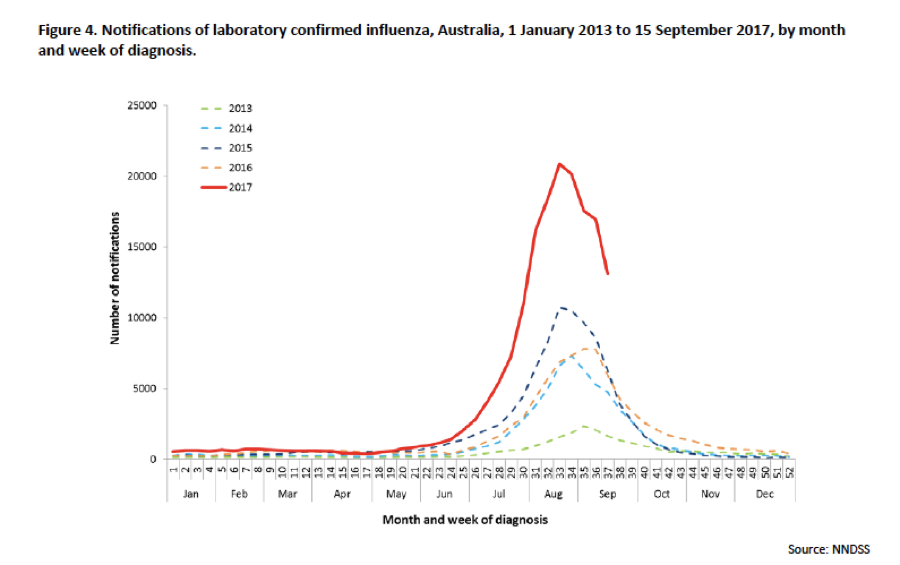
Have you gotten your flu shot yet?
Show References
Providing consistent, quality emergency care to the elderly is critically important. The Geriatric Emergency Department (GED) guidelines, developed collaboratively, provide a standardized set of guidelines to help improve care of the geriatric population in the emergency department.
Show Additional Information
Show References
Show References
Lever Sign/Lelli’s test
A new test for diagnosing ACL tears
Higher sensitivity (94 - 100%) than the Lachman test (highest sensitivity test to date)
With time and more study, this may become our new gold standard physical examination test
Very easy to learn and apply to bedside care
Can help with diagnosing partial tears
Area of manipulation is the femur and not the tibia (as in other tests)
Consider incorporating into your standard knee examination
https://www.youtube.com/watch?v=T9ujIYIctdw
Original study
https://www.ncbi.nlm.nih.gov/m/pubmed/25536951/
Validation
https://www.ncbi.nlm.nih.gov/pubmed/26753117
Thank you to Ari Kestler for sending
Show References
Since the first description of acute respiratory distress syndrome (ARDS), various consensus conferences (including American-European Consensus Conference (AECC) and the Berlin Conference) have produced definitions focused on adult lung injury but have limitations when applied to children.
This prompted the organization of the Pediatric Acute Lung Injury Consensus Conference (PALICC), comprised of 27 experts, representing 21 academic institutions and eight countries. The goals of the conference were 1) to define pediatric ARDS (PARDS); 2) to offer recommendations regarding therapeutic support; and 3) to identify priorities for future research in PARDS.
Although there were several recommendations from the group, some notable ones, in contrast to the Berlin definition focused on adults, include: 1) use the Oxygenation Index (or, if an arterial blood gas is not available, the Oxygenation Severity Index) rather than the P/F ratio; 2) elimination of the requirement for “bilateral” pulmonary infiltrates (may be unilateral or bilateral) 3) elimination of specific age criteria for PARDS.
Tune in next month for pearls on management for children with PARDS...