
Adenosine is an atrioventricular nodal blocking agent that is commonly used in the treatment of supraventricular tachycardia. It is dosed as 6 mg IV Push x 1, followed by dose escalation to 12 mg IV Push if the initial dose was unsuccessful. In patients with central access or prior orthotopic heart transplantation, the initial recommended dose is 3 mg.
Due to its short half-life (< 10 seconds) it is imperative to administer in the most proximal access and follow with a 20 mL bolus of saline. Traditionally this is done using a two-way stopcock.
A new study compared single syringe (adenosine 6mg + 18 mL saline) vs two syringes (adenosine 6mg in one, 20 mL saline in the other) in 53 patients with SVT. The single syringe arm converted to NSR 73.1% after one dose compared to 40.7% in the two-syringe arm (p=0.0176). After up to three doses, the single syringe arm had 100% conversion compared to 70.4% in the two-syringe arm (p=0.0043).
Single syringe adenosine has been recommended in FOAM for several years. Although small, this study is the first to compare the two methods. This method simplifies administration and may improve cardioversion rates.
Show References
After many years of national shortage and FDA’s black box warning in 2001 (QT prolongation) droperidol is slowing becoming available.
In 2015, a prospective observational study was published involving ED patients who received droperidol for agitation (acute behavioral disturbance).
Method
- Study period: August 2009 to April 2013 in 6 EDs in Australia
- Intervention: droperidol 10 – 20 mg IM or IV (if available)
- EKG performed within 2 hours of droperidol administration.
- QT was manually measured and plotted against the heart rate on the QT nomogram – if above “at-risk line” = abnormal
Results
- Droperidol was administered in 1,403 ED patients
- EKG available in 1,009 ED patients
- Median age: 34 years (IQR: 25-44)
- Men: 59.9%
Four leading reason for ED presentation
- Alcohol intoxication: 421
- Deliberate or threatened self-harm: 200
- Psychostimulant use: 130
- Mental illness/psychosis: 142
- Median droperidol dose: 10 mg (IQR: 10 to 17.5 mg)
- Abnormal QT interval: 13 (1.3%, 95% CI: 0.3% to 2.3%)
- 7 patient had other potential contributing factors: methadone, escitalopram, Amiodarone or preexisting condition.
- Median time to sedation: 20 min (IQR: 10 to 30 min)
Adverse events
- Desaturation (<90%): 22 (1.6%)
- Airway obstruction: 8 (0.6%)
- Hypotension: 28 (2.0%)
- Extrapyramidal symptoms: 7 (0.5%)
- Arrhythmia: 1 (0.1%)
- Hypoventilation (RR < 12 breaths/min): 4 (0.2%)
- Seizure: 1 (0.1%)
- No adverse events: 1,333 (95.0%)
Conclusion
- Droperidol is a safe sedating agent with no evidence of increased risk for QT prolongation with the doses used.
Show References
Interventions Shown to Reduce Mortality in RCTs
- Santacruz and colleagues recently performed a systematic review to determine which multicenter RCTs in critically ill patients have shown that an intervention was associated with a reduction in mortality.
- Approximately 13% of the 212 trials included in this review reported a statistically significant reduction in mortality. Unfortunately, many of the interventions were not associated with reduced mortality in subsequent studies.
- Interventions consistently shown to reduce mortality in multicenter RCTs in critically ill patients were limited tidal volume in patients with ARDS, noninvasive ventilation in acute hypercapnic respiratory failure, and noninvasive ventilation following extubation in complex cases.
- Corticosteroids in septic shock, selective digestive decontamination, and prone positioning in ARDS remain controversial.
Show References
Antibiotic stewardship has led various organizations such as the AAP, AAFP, and IDSA to introduce two different approaches to the treatment of acute otitis media (AOM):
- Immediate treatment with antibiotics versus
- initial observation for 48-72 hours without antibiotics.
Immediate treatment with antibiotics should always include the following patients:
- Children <6 months old
- Toxic appearing
- Severe signs/symptoms: otorhea, persistent pain, fever>39C, bilateral ear disease
The observation approach can be considered in the following very slect patient group:
- Otherwise healthy children >2 years of age
- Non-severe illness
- Unilateral ear disease
- Access to follow up within 48-72 hours
- Parental comfort / Shared decision making
Often the issue with pediatric AOM isn't necessarily the overprescribing of antibiotics, but the inaccurate/inappropriate over diagnosis of acute otitis media. An erythematous tympanic membrane does not equal AOM. Crying and fever can result in a red TM. Fluid seen behind the TM, is often just serous otitis media, which isn't AOM.
When antibiotics are warranted, first-line treatment is with high dose amoxicillin, 90 mg/kg per day divided into two doses; unless the child has received beta-lactam antibiotics in the previous 90 days and/or also has puruent conjunctivitis mandating amoxicillin-clavulanate instead. In the later case, prescribing the Augment ES, 600 mg/5mL formlation with a lower clavulanic concentration lessening GI upset and diarrhea is prefered.
Show References
- Up to 1/3 of status epilepticus do not respond to benzodiazepines.
- Fosphenytoin, valproate, and levetiracetam are 3 antiepileptic medications commonly used to treat benzodiazepine-resistant status epilepticus, though it is unclear which is more effective.
- Results from the long awaited Established Status Epilepticus Treatment Trial (ESETT) has just been released.
- Fosphenytoin, valproate, and levetiracetam each achieved seizure cessation within 1 hour in approximately 50% of patients.
- 80% of responders had seizure cessation within 20 minutes.
- Seizure recurrence was observed in 10% of each treatment group.
- It is important to note the dosages of antiepileptic medications used were:
- Fosphenytoin 20 mg PE/kg, max 1500 mg
- Valproate 40 mg/kg, max 3000 mg
- Levetiracetam 60 mg/kg, max 4500 mg
Bottom Line: Fosphenytoin, valproate, and levetiracetaim have similar efficacy in treatment of benzodiazepine-resistant status epilepticus.
Show References
Settings
- Patients: mechanical ventilation in the ICU. Randomization of 1000 patients.
- Intervention: conservative oxygen therapy, if spO2 reached 97%, then FiO2 was lowered to 0.21
- Comparison: no specific limits for FiO2 or SpO2.
- Outcome: number of ventilator-free days at 28 days after randomization.
Study Results:
- 484 conservative-oxygen group vs 481 to the usual oxygen group
- Comparing to the conservative-oxygen group had:
- more time at FiO2 21 (29 hours vs. 28 hours),
- less time with SpO2 > 97% (27 hours vs. 49 hours)
- Similar ventilator-free days: 21 days vs. 22 days.
Discussion:
This study’s results differed from previous single center study (Girardis JAMA 2016) or meta analysis (Chu DK, Lancer 2018), which showed mortality benefit in patients with conservative oxygen (Girardis & Chu) and more ventilator-free days (Girardis).
Conclusion: Conservative oxygen did not significantly affect the ventilator free days of mechanically ventilated patients.
Show References
Question
A ~55 year-old female with a history of ESRD and diabetes who presented to the ED with progressively worsening foot odor. An x-ray was performed. The picture below shows the right foot.
What is the diagnosis?
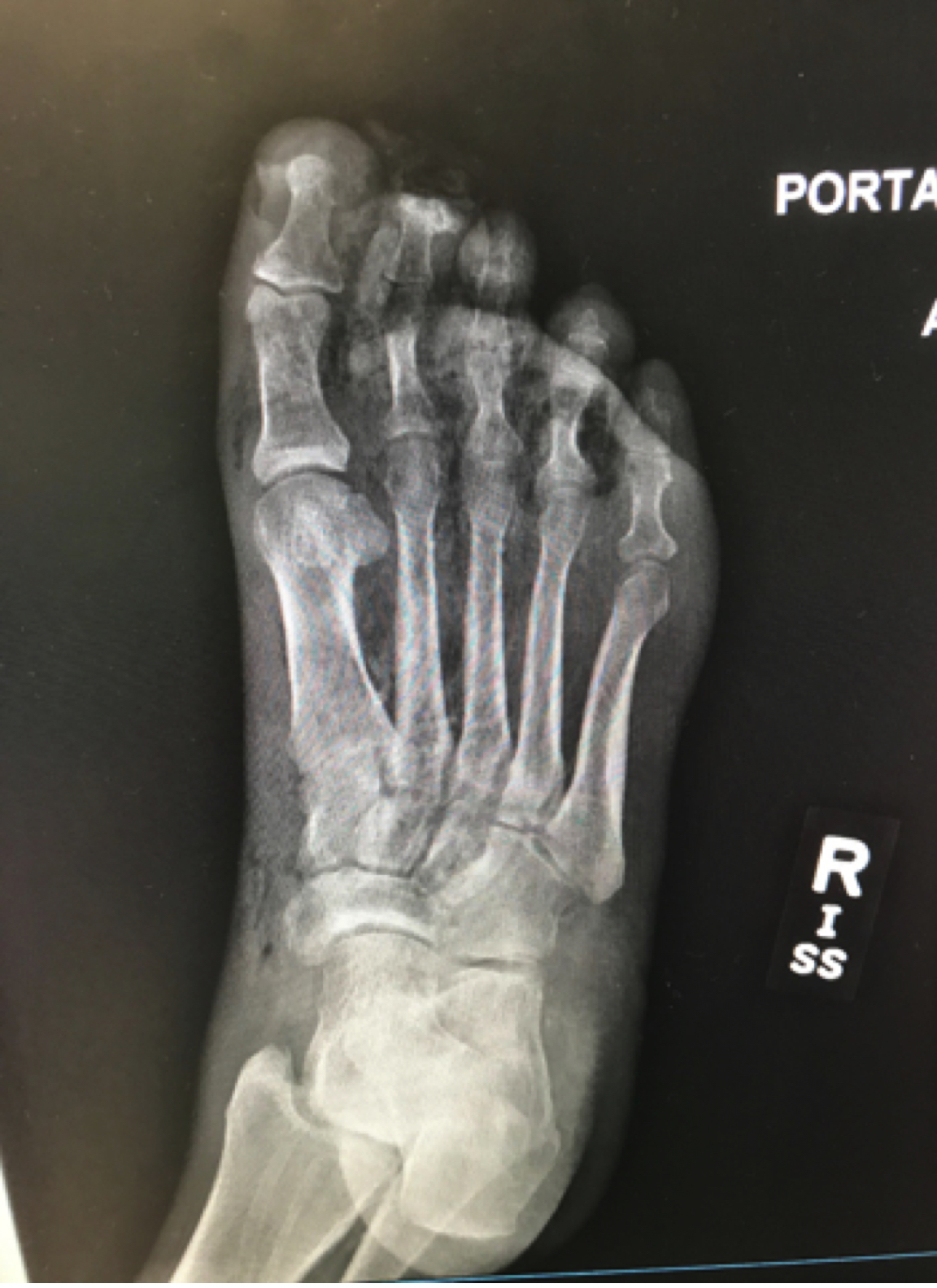
Show Answer
Show References
The role of skeletal muscle relaxants in the management of lower back pain in the ED
Patients with lower back pain (LBP) presenting to the ED are often treated with NSAIDs plus skeletal muscle relaxants.
A recent study in Annals of Emergency Medicine compared functional outcomes and pain in ED patients with acute non radicular LBP with 4 different treatment regimens.
- Ibuprofen plus placebo
- Ibuprofen plus baclofen
- Ibuprofen plus metaxalone
- Ibuprofen plus tizanidine
Conclusion: Adding a muscle relaxant to ibuprofen did not improve pain or improve function at 1 week following an ED visit for LBP.
Note: Prior studies have found no benefit to adding opioids or diazepam to NSAIDs for ED patients with acute non radicular LBP
Show References
As of November 20, 2019:
2290 cases of e-cigarette, or vaping, product use-associated lung injury (EVALI) from 49 states (except Alaska), District of Columbia and 2 U.S. territories.
- Largest number of cases (150-199) reported from CA, TX and IL
- 47 deaths
Analysis of 29 bronchoalveolar lavage (BAL) fluid samples from EVALI patients submitted to CDC from 10 states showed:
- Vitamin E acetate in all samples
- THC: 82%
- Nicotine: 62%
- No other chemicals of concern were identified (e.g. plant oil, mineral oil, terpenes, etc.)
*** Vitamin E acetate appears to be associated with EVALI but the investigation is continuing.***
- Oral ingestion of vitamin E acetate does not cause harm.
- High dose vitamin E supplementation (>2000 IU/day [2000 mg/day]) can cause GI symptoms: nausea, vomiting, diarrhea and abdominal pain.
Some research has suggested that oral vitamin E use has potential beneficial effects (i.e. anti-inflammatory/antioxidant) in the lung (e.g. asthma and allergic lung disease), cardiovascular disease and prostate cancer (Cook-Mills JM et al. 2013; Jiang Q et al. 2001)
Common uses of vitamin E
- Topical cosmetic skin products (skin cream) for antioxidant effect.
- Essential dietary vitamin (fat soluble) found in many food items and as dietary supplement.
- In vaping products: vitamin E is used as an additive/thickening agent in THC containing e-cigarette, or vaping products.
There is limited to no data on pulmonary effect of vitamin E from inhalation in the scientific literature.
Stay tuned for additional updates from CDC.
Show References
- Decreased hepatic function
- Decreased renal function
- Multiple comorbidities and polypharmacy that can affect pharmokinetics of pain medications.
Therefore, pain medications must be dosed carefully, which runs the risk of underdosing. Pain medications can also contribute to delerium, and decreased functional status.
Recommendations:
- Start with non-opioid medications in most cases. Consider combination acetaminophen and ibuprofen/naproxen.
- Consider regional nerve blocks where applicable due to the decreased risk of systemic side effects and excellent analgesic properties.
- If using opioids, start low and reassess and use the lowest dose possible. Remember half-lifes are often prolonged so patient may not need the standard dosing interview.
Streptococcal pharyngitis is common in the pediatric population however in children younger than 3 years, group A streptococcus (GAS) is a rare cause of sore throat and sequela including acute rheumatic fever are very rare. Inappropriate testing leads to increased healthcare and unnecessary exposure to antibiotics.
The national guidelines published by the Infectious Diseases Society of America do NOT recommend GAS testing in children less than the age of 3 years unless the patient meets clinical criteria and has a home contact with documented GAS.
Show References
Metformin is one of the most commonly prescribed oral hypoglycemic agents. Metformin associated lactic acidosis (MALA) is uncommon but potentially life-threatening complication of metformin overdose.
Lactic acidosis occurs due to inhibition of mitochondrial glycerophosphate dehydrogenase, resulting in decreased conversion of lactic acid to pyruvate.
A small retrospective study (using Illinois Poison Center data) attempted to characterize the development of MALA after an acute overdose.
MALA was defined as
- Lactate: > 5 mmol/L
- Acidemia: (HCO3< 20 mmol/L or pH < 7.35)
Results
40 cases of MALA identified between Jan. 2001 to Dec. 2014
- Meadian age: 41 year
- Female: 55%
- Acute on chronic ingestion: 62.5%
- Hypoglycemia: 3 (7.5%)
Time to development of MALA (n=30)
- <=6 hours: 18 (60%)
- 6-12 hours: 9 (30%)
- >12 hours: 3 (10%)
- Unknown: 10
Death: 1 (2.5%)
Conclusion
- The majority of MALA developed within 6 hours. However, delayed onset of MALA can occur, up to 12 hours post ingestion.
- Minimum of 12 hour of observation is recommended after an acute metformin overdose.
Show References
When managing cardiac arrest, it is important to differentiate PEA, the presence of organized electrical activity without a pulse, from "pseudo-PEA,"where there is no pulse but there IS cardiac activity visualized on ultrasound.
Why:
- Pseudo-PEA is essentially a profound, low-flow shock state that often has reversible causes, such as hypovolemia, massive PE, tension pneumothorax, etcetera.
- Compared to PEA, with appropriate care patients with pseudo-PEA have a higher rate of ROSC as well as overall survival.
How:
- POCUS during rhythm check in cardiac arrest. Be careful not to prolong the pause in compressions; acquire the US, if needed, for review once hands are back on the chest.
What:
- In addition to searching for & addressing reversible causes of the pseudo-PEA, manage the profound shock state with pressors and/or inotropic support.
- In EDs where TEE is utilized during cardiac arrest resuscitations, strongly consider synchronization of external compressions with intrinsic cardiac activity to potentially improve ventricular filling and therefore coronary perfusion pressure.
Bottom Line: Pseudo-PEA is different from PEA. Utilize POCUS during your cardiac arrests to identify it and to help diagnose reversible causes, and treat it as a profound shock state with the appropriate supportive measures, i.e. pressors or inotropy.
Show References
Lateral hip pain is a common presentation of hip pain.
Typically seen in runners and women over the age of 40 who start unaccustomed exercise.
Pain from OA of the hip which is typically medial (groin pain)
Lateral hip pain has traditionally been diagnosed at trochanteric bursitis.
Research suggests that lateral hip pain may be multifactorial and better termed Greater trochanteric pain syndrome.
Pain from the gluteal medius and/or minimus due to non-inflammatory tendonopathy is likely causative. This may cause a secondary bursitis.
Pain is insidious, gradual worsens and is variable based on activity type.
Also, can be seen after a fall resulting in tearing.
Pain is described as a deep ache or bruise. It can stay localized or radiate down lateral thigh towards knee.
Patients report night/early morning pain and when rolling over onto the outer hip on affected side.
Fatigue from prolonged sitting, walking and single leg loading activities such as walking up stairs.
Provoking activities and postures cause compressive forces on the involved tendons.
These generally occur when the hip is adducted across midline such as with
Side sleeping,
Place pillow between legs to align pelvis and keep knee and hip in line
Crossed leg sitting
Sit w/ knees at hip distance and feet on floor
Selfie poses - Standing w a hitched hip (pushing hip to the side).
Attempt to correct biomechanical issues before progressing directly to bursal steroid injection
May only be a temporary fix if underlying issue not addressed.
A helpful clinical guide
https://bjgp.org/content/bjgp/67/663/479/F1.large.jpg?download=true

Droperidol has recently become available again in select U.S. institutions. It has been used as an antiemetic and to treat agitation prior to the FDA’s black box warning (for QT prolongation) and national shortage.
Recently, a retrospective study was conducted (Melbourne, Australia) in the use of droperidol in the management of cannabinoid hyperemesis syndrome (CHS).
Results
689 medical records were identified from January 2006 to December 2016.
76 cases met diagnostic criteria of CHS (below)
- Long-term cannabis use
- Symptoms of recurrent vomiting
- Absence of illness that could otherwise explain symptoms.
Droperidol group (DG) = 37; no droperidol group (NDG)= 39
Median length of stay:
- DG: 6.7 hr vs. NDG: 13.9 hours (p=0.014)
Median time to discharge after final drug administration:
- DG: 137 min (IQR: 65, 203) vs. NDG: 185 min (IQR: 149, 403)
Frequency of droperidol (dose) used:
- 0.625 mg (n=25)
- 1.25 mg (n=20)
- 2.5 mg (n=17)
Metoclopramide and Ondansetron use in non-droperidol group was twice that of droperidol group
Conclusion
- Droperidol use to treat CHS associated nausea/vomiting resulted in decreased length of stay and lower use of antiemetics.
Rapid Assessment of the RV on Bedside Echo
There are several causes of acute RV dysfunction resulting in a patient presenting to the ER with unstable hemodynamics. Some of these include acute cor pulmonale, acute right sided myocardial infarction and acute submassive or massive pulmonary embolism. While bedside assessment of the LV function is often performed by the ED physician, simultaneous evaluation of the RV can provide crucial information that can help guide therapeutic decisions to prevent worsening of the patient’s clinical condition. A rough guideline to determine RV size and function is below using the apical 4 chamber view.
Normal RV size : <2/3 the size of the LV
Mildly enlarged RV : >2/3 the size of the LV, but not equal in size
Moderately enlarged RV: RV size = LV size
Severely enlarged RV: RV size > LV size
Patients who are found to have RV dilation should be given fluids in a judicious fashion as the RV is not tolerant of fluid overload. Early diagnosis of the cause of acute RV failure should be sought to guide definitive therapy, but early institution of inotropic support should be considered. Frequent reassessments of biventricular function during resuscitation should be performed.
Show References
Attachments
Phenytoin can be a complex medication. There are different levels than can be ordered, adjustments based on albumin, various pharmacokinetic equations, and multiple formulations. Below are the simplified answers to some of the most common questions (see in-depth section for explanations):
Which phenytoin level (free or total) do I order?
Total Phenytoin Level.
What do I do after the level results?
Undetectable Level: Load patient with 20 mg/kg of total body weight (max dose 1,500 mg).
Subtherapeutic Level (<10 mcg/mL): Calculate an approximate loading dose using this equation….Phenytoin Dose (mg)=(15-measured total level)*(0.7*patient weight).
Therapeutic Level (10-20 mcg/mL): Add an additional agent.
Supratherapetutic/Toxic Level (>20 mcg/mL): Contact Poison Center (1-800-222-1222).
What formulation do I order for loading?
IV: Use fosphenytoin.
PO: Any formulation will work. Give as a single loading dose or, if concerned for GI upset, give in 2-3 divided doses separated by 2 hours.
***Disclaimer: These answers are simplified for the initial management of most patients in the ED. More complex answers may be required in some situations.***
Show Additional Information
Show References
Ever been in an acute rescucitation and found yourself unable to remember all of those famous ACLS Hs and Ts? I know I have. A few years ago Littman et al published an alternative approach to critically ill, hypotensive medical patients with non shockable rhythms. Unfortunately, it seems like some of the enthusiasm for this approach has died down, but I still think it's something you're more likely to recall in a pinch than the Hs and Ts and is a better way of getting started with a hypotensive non-trauma patient. And it's so simple you may actually remember it!
1) Look at the monitor. Is the rhythm narrow or wide?
2a) Narrow - more likely a mechanical problem (tamponade, tension PTX, autoPEEP, or PE). Give IVF and search for one of these causes (and correct it!). Keep in mind that ultrasound can help you differentiate a lot of these.
2b) Wide - more likely a metabolic problem (hyperK, sodium channel blockade, etc*). Give empiric calcium, bicarb, and other therapies targeted for these problems (if desired) and get stat labs.
Take a minute and either go to this REBEL EM post:
https://rebelem.com/a-new-pulseless-electrical-activity-algorithm/
To review this, or look at the attached diagrams.
*Dr. Mattu would want me to remind you that hyperkalemia IS a sodium channel poisoned state, so there's no need to think of these two separately
Show References
Attachments
- 1910292200_Narrow-Complex-PEA-Management-765x456.jpg (96 Kb)
- 1910292201_Wide-Complex-PEA-Management-765x444.jpg (83 Kb)
A recent epidemiology study in Pediatrics looked at concussions in 20 high school sports during the 2013–2014 to 2017–2018 school years.
For every athlete, one practice or competition was counted as one exposure.
Overall, 9542 concussions were reported for an overall rate of 4.17 per 10 000 athletic exposures (AEs).
Football continues to have the highest incidence with a concussion rate of 10.40 per 10 000 AEs.
As in previous studies, rates in competition (33.19 to 39.07 per 10 000 AEs) are increasing and higher than rates in practice which are lower and decreasing over the study period (5.47 to 4.44 per 10 000 AEs).
This may reflect better reporting or increasing injury rate
In all 20 sports, recurrent concussion rates decreased from 0.47 to 0.28 per 10 000 AEs.
Confirming prior studies, among sex-comparable sports, concussion rates were higher in girls than in boys (3.35 vs 1.51 per 10 000 AEs).
Also, among sex-comparable sports, girls had larger proportions of concussions that were recurrent than boys (9.3% vs 6.4%).
This study may reflect effective implementation of strategies to reduce concussion incidence such as mandatory removal from play and more stringent requirements associated with return to play.
Show References
- Resuscitation with crystalloid fluid is a cornerstone of pediatric septic shock treatment.
- Recent publication from the adult literature have suggested that balance crystalloid solutions may be better than 0.9% normal saline (NS) for select conditions.
- Lactated Ringer's (LR) is a common balance crystalloid solution often used for fluid resuscitation and critically ill patients.
- However whether resuscitation with balance fluids is associated with improved outcomes compared to NS in pediatric sepsis is unclear.
- A matched retrospective cohort study of 12,529 pediatric patient with severe sepsis/septic shock at 382 US hospitals compared outcomes with versus without LR as a part of the initial resuscitation.
- Outcomes includesd: 30-day hospital mortality, acute kidney injury, new dialysis, and length of stay.
- After matching, mortality was not different between LR and NS groups. There were no differences in secondary outcomes except longer hospital length of stay in the LR groups.
- The PRoMPT BOLUS randomized control trial pilot was a feasibility study designed to study the comparative effectiveness of LR versus NS fluid resuscitation for pediatic septic shock. Completion of a more robust study may help provide answers to these ongoing questions.
Bottom line: Balance fluid resuscitation with LR was not associated with improved outcomes compared to NS and pediatric sepsis. Selective LR use necessitates a prospective trial to definitively determine comparative effects among crystalloids.