
Flexor Tenosynovitis
- This is a rapidly spreading infection of the finger and hand.
- Often starts as an infection in the finger that then spreads into the hand due to the flexor sheaths.
- The flexor tendon sheaths of the long, index, and ring finger extend from the distal phalanx to the superficial palmar arch, and some even extend to the wrist.
- Most patient will need to be admitted for IV antibiotics and a hand consult for probable operative I&D
- You can diagnosis flexor tenosynovitis by documenting the four Kanavel signs:
- Fusiform swelling of the finger
- Finger held in partial flexion (position of comfort)
- Percussion tenderness along the flexor tendon
- Increased pain with passive extension of the finger
You can follow this link, http://www.youtube.com/watch?v=qf9SW0ChsCU , to see the physical exam findings of flexor tenosynovitis
Never be the first or last person to use a drug
Vioxx was once touted to be the drug that would be the new standard for anti-inflammatories until it was found to increase your chance of MI by 33% and cause hypertension.
Dabigatran was recently pulled from Japan markets and now is dealing with an impressive meta-analysis by Uchino et al. It showed that dabigatran was significantly associated with higher risk of MI or ACS than other agents.
Control arms (included warfarin, enoxaparin or placebo): MI rate 83 per 10,514
Dabigatran arms: MI rate 237 per 20,000
OR 1.33; 95% CI, 1.03-1.71; p=0.03
The rush for what is perceived as a panaceae for all that is wrong with coumadin could actually cause an MI while it tries to prevent a stroke in nonvalvular a-fib.
Look at the study and decide for yourself and remember Vioxx:
http://archinte.ama-assn.org/cgi/content/full/archinternmed.2011.1666v1
Fungal endopthalmitis is an intraocular infection of the aqueous and/or vitreous humor secondary to fungal pathogens; Candida and Aspergillus species are the most common pathogens.
Risk factors: intravenous drug abuse (#1 risk factor), critical illness, systemic fungal infection, immunosuppression (from cancer or medications), diabetes, and alcoholism.
Have a high-index of suspicion for endopthalmitis when patients with systemic fungal disease have visual symptoms; endopthalmitis is present in up to 33% of patients with systemic fungal disease.
Symptoms include:
- Visual disturbances / visual loss
- Eye pain
- Photophobia
- Red eye
- “Floaters”
- Asymptomatic
Inspection of both the anterior and posterior chamber is essential to during evaluation; several small yellow-white circular or “fluffy” lesions with surrounding hemorrhage are demonstrated.
Definitive diagnosis made by vitreous biopsy, culture, or PCR; presumptive treatment is acceptable if systemic fungal disease has been demonstrated.
Treatment with Amphotericin B or Voriconazole may be used for broad-spectrum fungal coverage until specific culture and sensitivities return.
Show References
As many as 1/3 of patients with proven ACS have no chest pain at presentation. Among the more common alternative presentations (anginal equivalents) are dyspnea, diaphoresis, nausea/vomiting, and syncope/near-syncope.
Note also that the absence of pain does not confer a better prognosis. The overall in-hospital mortality rate for patients with painless presentations is 13% vs. 4.3% for patients with chest pain.
Show References
Approximately 48% of shoulder dislocations occur during sports and recreation.
These are usually first managed in the clinic and sideline setting.
In 6 reviewed studies, 5 used 20mL of 1% lidocaine and 1 used 4 mg/kg of 1% lidocaine.
Patients incurred significantly reduced cost compared to IV sedation
There were no infections, neurovascular damage or systemic effects of the lidocaine.
No significant differences were noted in pain control, success rate or ease of reduction between intra-articular lidocaine and systemic sedation.
The risk of chondrolysis increases with higher concentration and longer duration of exposure to local anesthetics.
There is scant research about the effects of a single exposure of cartilage to lidocaine.
Show References
-
Suboxone = buprenorphine and naloxone in a 4:1 ratio, respectively. Formulated in 2 mg or 8mg tablets and film.
-
Buprenorphine acts as a partial agonist on the mu receptor and an antagonist at the kappa receptor.
-
If > 2 mg are ingested or age < 2 years old, these patients should be evaluated in an ED as ALL children with > 4 mg ingestion had symptoms.
-
There is a ceiling effect with respiratory depression however no ceiling with analgesia. This gives buprenorphine a better safety profile compared to methadone.
-
Onset of symptoms is about an hour and onset of respiratory depression is about 2-3 hours.
-
Increased doses of naloxone starting at 0.1 mg/kg may be needed to overcome high receptor affinity of buprenorphine. Remember, most children are opioid-naive and will not experience withdrawal symptoms. Repeat doses of naloxone and even infusions may be needed.
-
In the ED, a minimum of 6 hours observation is necessary. If no clinical effects are noted at 6 hours the patient can safely be discharged, although one small case series recommended 24 hours observation.
-
Unintentional overdose is common in toddlers, so advise family to keep prescriptions including family pet prescriptions locked (buprenorphine in the IV form is used for veterinary pain control).
Show References
Hypertonic Saline for Intracranial Hypertension
- Mannitol is commonly used to treat acute increases in intracranial pressure in patients with TBI, ICH, tumor, and CVA.
- While there is currently no conclusive evidence of superiority, a growing body of literature suggests hypertonic saline (HTS) may be more favorable than mannitol for acute increases in ICP.
- HTS is believed to work by:
- osmotic effect
- increasing cardiac output and MAP, thereby increasing cerebral oxygen delivery
- improving microcirculatory flow
- anti-inflammatory effects
- When administering HTS, concentrations ranging from 1.5% - 23.4% can be used, titrating to a serum Na concentration of 145-155 and a serum osm > 350 mOsm/L.
Show References
Question
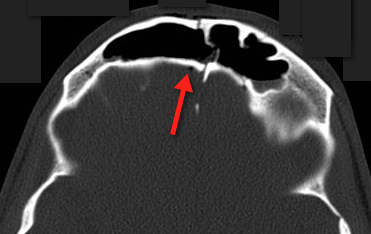
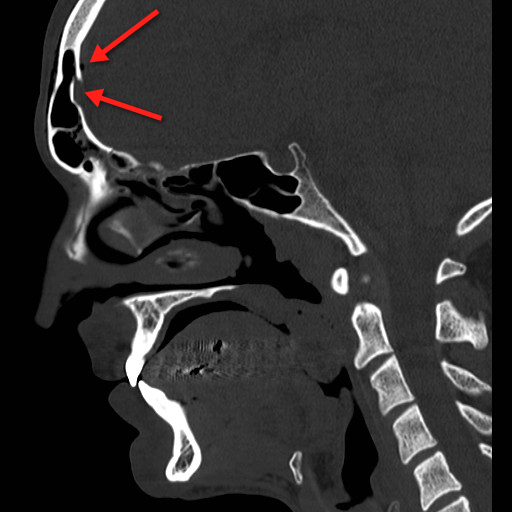
23 year-old male fell off porch while intoxicated. The head CT is shown below. Diagnosis?


Show Answer
Show References
We've noted studies in recent years indicating that cardiac risk factors are ineffective at predicting the likelihood of ACS in patients with acute chest pain (in other words, it's all about the HPI and EKG!). Now there's evidence also that cardiac risk factors are ineffective at predicting in-hospital mortality in patients that rule in for acute MI. [1] In fact, this study actually demonstrated that in-hospital mortality is inversely related to the number of cardiac risk factors!
The bottom line is simple: cardiac risk factors are useful at predicting long-term risk for development of coronary artery disease, but they are NOT useful at in the acute setting.
Show References
In 2011, updated treatment guidelines were published for acute uncomplicated cystitis and pyelonephritis in women. The recommendations differ from the previous iteration due to increased E. Coli resistance. The good news is we have been ahead of the curve in changing our prescribing habits.
Cystitis (recommendations in order of preference)
- Nitrofurantoin 100 mg BID X 5 days
- Bactrim DS 1 tab BID X 3 days (not recommended when resistance rate is > 20% - UMMC is 32%)
- Fosfomycin (not currently available at UMMC)
- Fluoroquinolones not recommended as first-line therapy due to “propensity for collateral damage”
- Beta-lactam agents, including amoxicillin-clavulanate, cefdinir, cefaclor, and cefpodoxime-proxetil, in 3–7-day regimens are appropriate choices for therapy when other recommended agents cannot be used. Other beta-lactams, such as cephalexin, are less well studied but may also be appropriate in certain settings.
Take home points:
- Be familiar with your institution’s antibiogram
- Use nitrofurantoin first-line for uncomplicated cystitis in women (it is contraindicated with CrCl < 60 mL/min)
- Consider beta-lactams such as Augmentin or Vantin (cefpodoxime) in patient’s with kidney injury
Show References
There are limited direct comparisons of (intravenous (IV) vs. intramuscular (IM) ketamine for pediatric procedural sedation in the emergency department. The only RCT comparing IV and IM ketamine was by Roback et al. and compared an IV dose of 1mg/kg vs. IM 4mg/kg. The study authors reported less procedural pain with IM administration compared with IV. However, vomiting occurred more frequently in the IM group, 26.3% compared to 11.9% in the IV group and recovery time was 49 minutes shorter with IV vs IM use.
Route Onset Duration Dose
IM 3-5 min 20-30min 3-5 mg/kg
IV 1 min 5-10 min 1-2 mg/kg
- Approved for CAP and Skin/Skin structure infections
- “Fifth generation” cephalosporin- implies activity against MRSA, although has broad spectrum
-
Resistance is expected to be limited, with the exception of VRE, and VSE (vanco resistant or sensitive enterococcus faecalis)
-
Renally excreted
-
Common side effects: diarrhea, nausea, headache
-
Serious side effects: anaphylaxis, renal failure, hepatitis, seizure
-
Low incidence of C. difficile
-
Dose : 600 mg IV (over 1 hour) q12 hours X 5-7 days
Carotid or vertebral artery injury following blunt trauma is a rare (%1 of blunt trauma), but a potentially serious injury potentially causing stroke and long-term disability.
Injury leads to an intimal tear becoming a nidus for platelet aggregation; thrombosis and/or distal emboli may subsequently develop.
Mechanisms of injury include:
- Blunt trauma to the neck
- Hyper-extension of neck with contralateral rotation of the head
- Intra-oral trauma
- Arterial laceration secondary to adjacent sphenoid or petrous bone fracture.
Symptoms of carotid injury may include contralateral sensorimotor deficits; Symptoms of vertebral injury may include ipsilateral facial pain and numbness, headache, ataxia, or dizziness.
Angiography is the diagnostic “gold standard” but these days a 16-slice CT angiography (or greater) is a reliable screening tool.
Anticoagulation with heparin is the treatment of choice for severe injury, if there are no contraindications (e.g., intracranial bleeding). Anti-platelet drugs may be acceptable in certain cases.
Show References
Patients with ACS are often treated early with clopidogrel. However, if the patient with ACS appears to be developing cardiogenic shock, its probably best to withhold the early clopidogrel. The literature indicates that patients with cardiogentic shock benefit most from emergent PCI, and many of these patients will need CABG. Generally it's best to avoid clopidogrel in patients heading for CABG.
The use of clopidogrel in patients with cardiogenic shock can be deferred to the cardiologists in the cath lab once they decide whether the patient will need CABG or not.
Show References
START Triage
START triage is a simple system to implement that does not require any special equipment in order to determine who needs immediate, delayed or non-urgent care during a mass causality.
START stands for Simple Triage And Rapid Treatment. Patients are triaged based on 4 factors:
- Ability to walk away from the scene
- Respiration > or < 30 respirations per minute
- Pulse (radial pulse present or not) or Capillary refill > or < 2 seconds
- Mental Status – ability to follow simple commands or not
The steps are:
- If a patient can leave the scene they are minor and do not need immediate help. Category GREEN
- If there are no respirations or respirations > 30 they require immediate care Category RED
- Otherwise check pulse. If pulse is absent or capillary refill > 2 seconds they require immediate care Category RED
- Otherwise check mental status. If they are not able to follow commands they need immediate care. Category RED
- If they can follow commands they are delayed treatment. Category YELLOW
So those that can leave are green, those that do not meet any of the START criteria are YELLOW, and those with any of the four factors are RED or DEAD.
- vasculitis of small vessels with neutrophilic infiltration of venules and arterioles
- classic triad: painful recurrent oral and genital ulcers with inflammatory eye disease
- key finding of recurrent buccal apthous ulcers (nearly 100% of patients)
- diagnosis is made when recurrence of oral ulceration occurs at least 3 times in 1 year plus 2 of the following: recurrent genital ulceration , eye lesions, skin lesions, or positive pathergy test.
- initial ED treatment is corticosteroids (oral or topical). Reserve colchicine and pentoxifylline for ulcerative maifestations.
Show References
Another great example of the generic drug name being so difficult to pronounce you have no choice but to say - Xarelto. The drug touts ease of use and no need for hematologic monitoring like Pradaxa. This drug has the same indication for stroke prevention in nonvalvular atrial fibrillation. It also is being used in DVT prophylaxis in hip and knee surgeries.
Differences:
- Selective Factor Xa inhibitor unlike Pradaxa which is a competetive direct thrombin inhibitor
- Once a day dosing instead of twice a day for Pradaxa
Same concerns:
- No real reversal but can use FFP in a pinch
- Recommend waiting 24 hrs DC med to perform surgical procedure - this includes LP. I am personally waiting for the first case report of LP performed in ED on a patient taking either Xarelto or Pradaxa with subsequent epidural hematoma. Someone is bound to miss this on the med list. Be careful.
Even if your hospital has not added it to its formulary, you will see patients on this drug in the ED.
- While the NIH Stroke Scale (NIHSS) may be relatively cumbersome and quite comprehensive, it is an extremely important tool that must not be ignored; it serves as a "common language" between emergency physicians and neurologists and often significantly shapes the management of acute ischemic stroke patients.
- Its prognostic usefulness (i.e. in cases wherein treatment is not initiated) has been validated and should be applied in emergent settings to determine optimal patient candidates for tPA treatment.
- For example, NIHSS > 20 in patients over 75 years old = 45% mortality; NIHSS >17 in patients with atrial fibrillation = positive predictive value for poor outcome of 96%; NIHSS of 6 or less = good spontaneous recovery.
- An abbreviated version of the NIHSS has been validated and assesses those components which are the best indicators of prognosis. Therefore, when unable to perform a full NIHSS, one should strongly consider using this tool rather than not performing a stroke scale assessment at all.
- This abbreviated version consists of only 5 categories which assess ability to see (1. best gaze; 2. best visual), walk (3. motor function of left leg; 4. motor function of right leg), and talk (5. best language). Can patient "see, walk, and talk?" This scale is scored from 0 to 16, with 16 representing the worst prognosis. (see attached abbreviated NIHSS).
Show References
Attachments
VBG to Assess Respiratory Function?
- Arterial blood gas (ABG) analysis is often used in to evaluate pulmonary function in critically ill ED patients.
- In recent years, venous blood gas (VBG) analysis has replaced ABG analysis for assessing acid-base status (pH, HCO3-) in conditions such as DKA.
- Some key points about the VBG for assessing pulmonary function:
- VBG does not replace an ABG in determining the exact PaO2
- The agreement between the VBG and ABG PCO2 is often poor and unpredictable
- There is emerging literature on the use of VBG PCO2 as a screen for hypercarbia but more data is needed
- Bottom line: With the possible exception of screening for hypercarbia, VBG has limited utility in the assessment of pulmonary function.