
How likely is coronary artery disease to occur in young patients?
An autopsy series in US communities evaluated young patients (avg age 36 years old) who died of "non-natural" causes revealed coronary atherosclerosis in > 80% of the autopsy sample, with 8% having significant obstructive disease.
The bottom line is simple....be wary of discounting the risk of ACS purely based on a patient's age. The HPI is the most important factor in predicting ACS.
Show References
Rashes that include palms/ soles
- Hand-Foot-Mouth Disease
- Kawasaki
- Erythema multiforme/ Stevens Johnson's Syndrome/ Toxic Epidermal Necrolysis
- Rocky Mountain Spotted Fever
- Scabies
- Syphillis
Rashes that have +Nikolsky's sign
- Scalded Skin Syndrome
- TEN
- Pemphigus Vulgaris
Rashes that desquamate
- Scalded Skin Syndrome
- Toxic Shock Syndrome
- Scarlet Fever
- Kawasaki
- TEN
Coumadin Wannabe's - have indication non-valvular atrial fibrillation
1) Dabigatran (Pradaxa)
2) Rivaroxaban (Xarelto)
Clopidogrel Wannabe's - both are antiplatelets
1) Ticagrelor (Brilinta)
2) Prasugrel (Effient)
If you were looking for the first case reports of lethal hemorrhage due to pradaxa that could not be reversed - look no further. One patient fall from standing dies from ICH and another death in a spine trauma patient on pradaxa. I am waiting for the first epidural hematoma due to pradaxa, xarelto, etc in ED. Watch out! :
1: Garber ST, Sivakumar W, Schmidt RH. Neurosurgical complications of direct thrombin inhibitors-catastrophic hemorrhage after mild traumatic brain injury in a patient receiving dabigatran. J Neurosurg. 2012 Mar 6. 2: Truumees E, Gaudu T, Dieterichs C, Geck M, Stokes J. Epidural Hematoma & Intra-operative Hemorrhage in a Spine Trauma Patient on Pradaxa® [Dabigatran]. Spine (Phila Pa 1976). 2012 Feb 16.
Pre-oxygenation prior to rapid sequence intubation (RSI) is performed to prevent hypoxemia during endotracheal intubation.
An appropriate period of pre-oxygenation will potentially increase the amount of apnea time during intubation, however patients with certain critical illnesses (e.g., severe pneumonia) may desaturate faster than expected.
Apnea time can be increased by maintaining high-flow oxygen by nasal cannula (e.g., 15L), during application of the bag-valve mask and during the time of attempted endotracheal tube placement; this concept is known as apneic oxygenation.
Apneic oxygenation is based on the principle that when patients are apneic, alveoli absorb oxygen into the blood stream at a rate of approximately 250 mL/minute, creating a diffusion gradient from the pharynx (containing a high-density of oxygen from the nasal cannula) to a lower concentration of oxygen in the alveoli.
Although a patient’s oxygenation can be maintained longer using apneic oxygenation, its application does not remove the continuous buildup of CO2 in the alveoli during apena. Therefore, respiratory acidosis can result after a prolonged period of apneic oxygenation.
The complete article describing the physiology and practical applications can be found here....it's free! http://www.annemergmed.com/article/S0196-0644(11)01667-2/fulltext
Show References
Question
14 year-old male presents with right-sided testicular pain. What's the diagnosis?

Show Answer

A recent study in JAMA has provided further evidence regarding some key issues in ACS/MI presentations which seem to be commonly taught but often forgotten in actual practice. Here's just a few of the key findings from this study:
1. Generally speaking, women were more likely to present without chest pain than men, and the difference between the sexes was most apparent in the < 45yo groups. Overall, 42% of women presented with painless MIs. [remember from a recent prior cardiology pearl that painless MIs have a higher mortality as well]
2. Women had a higher mortality than men within the same age groups, and the difference between the sexes was most apparent in younger ages.
3. Almost 1/5 of women < 45 yo with MI did not report chest pain. [We've always assumed it's just the older women that present with painless MIs....not true!]
A final point that should be re-stated: young women DO have MIs, they DO often present without pain, and they DO often die. Be wary.
Show References
The plantar fascia arises from the medial tuberosity of the calcaneous and extends to the proximal phalanges of the toes.
Pkantar Fasciitis is the most common cause of heel pain in adults.
Etiology is thought to be from a degenerative tear at the fascial origin followed by a tendinosis type reaction and .
Affects women 2x> men
More common in overweight patients.
Onset is insidious and not related to trauma.
Hx: Pain and tenderness directly over the medial calcaneal tuberosity and 1-2cm distally along the plantar fascia.
Pain is worse with prolonged standing/walking. Pain is most intense however when rising from a resting position such as first thing in the morning.
PE: Pain is increased with passive dorsiflexion of the toes. Tenderness to palaption over the medial calcaneal tuberosity and 1-2cm distally along the plantar fascia.(At times, one may have to apply increased pressure to approximate weight bearing type stress)
XR: Usually not necessary with a good history and exam. Heel spurs are seen in up to 50% with the disease (and in up to 20% without it!)
DDx: Tarsal tunnel syndrome. Calcaneal stress fracture. Fat pad atrophy. traumatic rupture of planter fascia.
- acute gastroenteritis is a self-limited illness
- however, damage to the brush border of the small intestine mucosa where lactase is present may lead to a secondary lactase deficiency and subsequent inability to digest lactose properly
- partially or minimally digested lactose moves into the colon where it is fermented by enteric bacteria resulting in hydrogen, carbon dioxide, and acids
- these byproducts result in symptoms reported for those with lactase deficiency: cramps, abominal pain and distension, and flatulence
- the increased solute load in the large intestine leads to increased osmotic pressure, causing watery diarrhea
- early refeeding following gastroenteritis is recommended, but many clinicians recommend dairy restricted diets acutely
Show References
Pressure immobilization involves wrapping the entire extremity with a bandage and then immobilizing the extremity with a splint. It is a technique routinely employed in the pre-hospital management of neurotoxic snakes in Australia.
A position statement was recently published by several international toxicology societies regarding the utility of pressure immobilization after North American Crotalinae snake envenomation (e.g., Copperheads, Timber rattlesnakes, Cottonmouths).
"Available evidence fails to establish the efficacy of pressure immobilization in humans, but indicates the possibility of serious adverse events arising from its use. The use of pressure immobilization for the pre-hospital treatment of North American Crotalinae envenomation is NOT recommended."
Show References
Preventing VAP in the Intubated ED Patient
- Ventilator-associated pneumonia (VAP) occurs in 9-27% of patients receiving mechanical ventilation (MV).
- VAP increases the duration of MV and increases the ICU length of stay.
- VAP is primarily caused by aspiration of oropharyngeal secretions either during intubation or while receiving MV.
- While there are many interventions that may potentially reduce the incidence of VAP (aspiration of subglottic secretions, selective digestive decontamination, monitoring endotracheal cuff pressure), a simple, no cost intervention is patient positioning.
- Placing intubated patients in the semirecumbent position is associated with a lower risk of VAP.
Show References
The seasonal influenza vaccine is produced in chicken eggs. Ovalbumin, an egg protein, is often listed as a component of the purified vaccine on most drug-package inserts. The concentration of ovalbumin indicates the potential egg-allergen content of a vaccine.
Earlier ACIP guidelines recommended against giving the influenza vaccine to people with egg allergy, including those with a history of mild symptoms. However, several studies showed that influenza vaccine containing inactivated, or killed, virus is safe to give to people with egg allergy, especially those with a history of mild allergic reactions.
Influenza vaccines are now made with much lower ovalbumin concentrations than in the past; therefore, the level of potential egg protein allergens in a single dose of vaccine is extremely low.
The following are ACIP recommendations for the 2011 to 2012 influenza season:
- Inactivated influenza vaccine (seasonal flu shot) is safe to give to people whose history of allergic reactions to egg has been limited to hives.
- People with more severe allergic reactions to egg may receive the seasonal flu shot, but the vaccine must be given by a healthcare professional familiar with the signs and symptoms of an allergic reaction to egg and who has the ability to treat a severe reaction if one occurs.
Show References
- Sulfonyurea overdose is associated with hypoglycemia, which may be delayed and prolonged.
- Treatment with dextrose results in hyperglycemia, which potentiates insulin release from the pancreas, resulting in recurrent hypoglycemia.
- Octreotide mimics somatostatin, which suppresses the secretion of glucagon and insulin, among others.
- Octreotide binds with somatostatin receptors, closing calcium channels, preventing the influx of calcium and subsequent insulin release.
- The dose is 100 mcg SUBCUTANEOUSLY, repeated every 8 hours as needed.
Show References
Ventricular assist devices (VAD) pump blood from the left, right or both ventricles for patients in severe ventricular failure.
VADs may be placed temporarily (as a bridge to transplant) or permanently in patients who are not transplant candidates (also known as Destination Therapy)
Certain types of VADs continuously pump blood in a non-pulsatile fashion. In these cases, a patient may be perfusing normally without a palpable pulse.
Familiarity with potential VAD complications is important as a patient with a VAD may be presenting to an ED near you. Complications include:
- Bleeding complications from anticoagulation; all VADs require some form of anticoagulation
- Infection; a portion of the VAD exits externally and this site can be a portal of entry for skin flora
- Embolic phenomenon from clots generated within the VAD
- Infection of the VAD itself, called VAD-itis; this can also lead to sepsis
Show References
Question
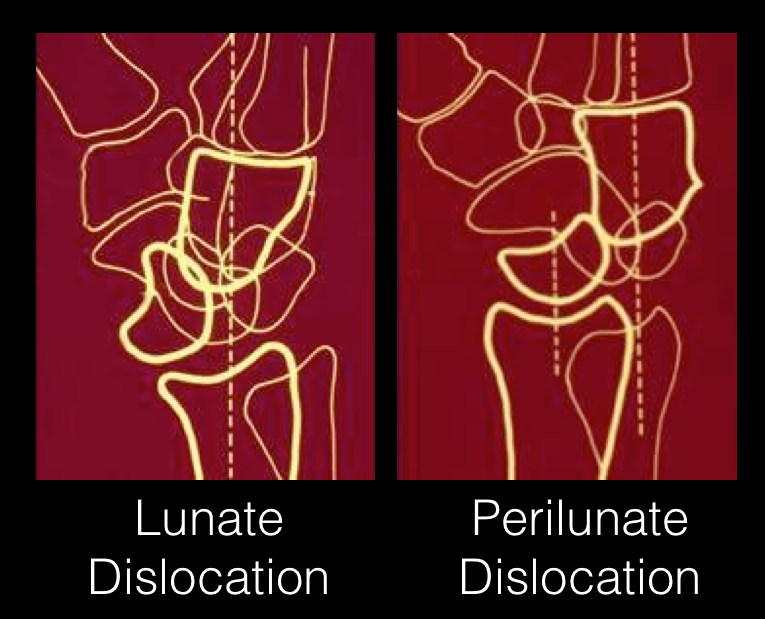
24 year-old male presents following fall from a scaffolding and complains of wrist pain. Diagnosis?

Show Answer
Quick pearls on cardiogenic shock
Post-MI cardiogenic shock is associated with a mortality of 50-70%. There are only a few interventions that have been demonstrated to improve outcomes: early use of intra-aortic balloon pump, stenting, and G2B3A inhibitors.
It is generally recommended to avoid clopidogrel since so many of these patients will require CABG.
Early use of mechanical ventilation decreases work of breathing and improves oxygenation.
Remember that age alone is not a contraindication to aggressive treatment.
Show References
Severs disease
- Perhaps the most common overuse injury
-Pain is due to inflammation of the calcaneal apophysis growth plate
- Caused by repetitive microtrauma from the pull of the Achilles tendon on the apophysis.
- Occurs in young athletes ages 7-14
Sx’s bilateral in >50%
Hx – Gradual onset of posterior heel pain, worse with activity, better with rest.
PE – Tenderness at the insertion of the Achilles tendon onto the calcaneous. Swelling is mild.
This is a self limited condition because as the adolescent ages, the physis closes
Tx – Rest (no running or jumping), ice, NSAIDs, heel lifts/arch supports. Outpatient physical therapy for stretching and strengthening exercises.
You have seen the study comparing diazepam to lorazepam IV for the cessation of seizures. Lorazepam one that one. Now, for prehospital status epilepticus midazolam IM went head to head with IV lorazepam to see which would stop seizure more quickly.
This study was more about the practicality of starting an IV than it was of the pharmacokinetics or onset of action of a particular benzodiazepine. It was a large enough study to warrant publication in New Engl J Med last month and is worth noting.
Subjects whose seizures ceased before ED arrival (median):
Time to active treatment: 1.2 min IM Midazolam group; 4.8 min IV Lorazepam group
Median times active treatment to cessation of SZ: 3.3 min IM Midazolam and 1.6 min IV Lorazepam
Safety was equal in both groups. This study validates EMS initiating therapy with IM midazolam for the cessation of seizures while intravenous access is being attempted.
Show References
Ice-Cold Crystalloid for Therapeutic Hypothermia
- Therapeutic hypothermia (TH) is a critical component in the care of patients with ROSC from out-of-hospital cardiac arrest.
- Despite recent guidelines, initiation of TH in the ED for appropriate patients remains less than optimal.
- Reported barriers to the induction of TH in the ED include lack of familiarity, lack of collaboration with the ICU, access to special equipment, and the logistics of cooling.
- A recent analysis of studies on the use of ice-cold crystalloids (ICC) found that an infusion of 40 C fluid is a safe, effective, inexpensive, and readily available method for inducing TH.
- Importantly, no study reported any significant hemodynamic complication (i.e. CHF) from the use of ICC.
- Lastly, once the target temperature has been reached, ICC alone cannot maintain TH. Additional methods, such as surface cooling blankets or ice packs, should be used.
Show References
Getting tired of the same old Power Point presentations? Getting bored with Apple's Keynote? Looking for something new to excite learners?
Well, you might want to consider using a newer presentation tool, a tool designed to eliminate those boring bullet points...
Say hello to Prezi...

This really cool presentation tool allows you place all of your content (words, pictures, video, etc) on one canvas and then manipulate the sequence you want to show it in.
Check out the website and give it a try: www.prezi.com
Simply click on some of the sample Prezi presentations on the site. It's very cool and quite addictive.