The pregnant patient normally has increased cardiac output and minute ventilation by the third trimester. Despite this increase, however, these patients have little cardiopulmonary reserve should they become critically-ill.
Remember the mnemonic T.O.L.D.D. for simple tips that should be done for the pregnant patient who presents critically-ill or with the potential for critical illness:
- Tilt: The supine-hypotension syndrome occurs after the 20th week of pregnancy as the gravid uterus compresses the IVC and aorta, reducing cardiac output by up to 30%. Placing a 30-degree right hip-wedge under the patient will relieve this obstruction.
- Oxygen: the growing uterus pushes up on the base of the lungs reducing the functional residual capacity meaning there is less oxygen reserve and rapid oxygen desaturations. Supplemental oxygen may increase the patient's reserve.
- Lines: The circulatory system reserve is reduced, so early and large bore venous access is important. Remember that lines should be placed above the diaphragm because the enlarging uterus compresses pelvic veins, reducing venous return to the heart.
- Dates: Rapidly determine the gestational age of the fetus as 24 weeks is a critical date to remember (e.g., increased risk of supine-hypotension syndrome, fetal viability, etc.)
- Delivery: Call labor and delivery early on, not only for the consultation, but also for the fetal monitoring that this service provides.
Show References
Question
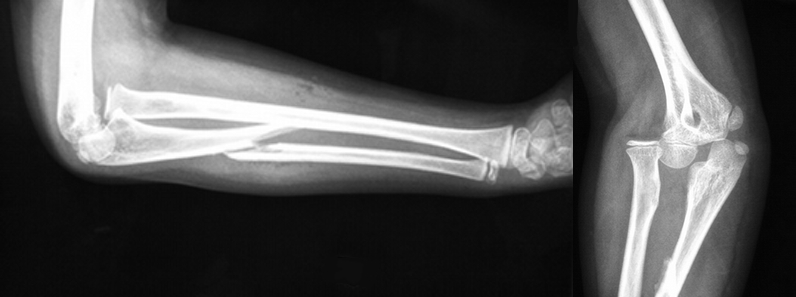
15 year-old right-hand dominant male received a direct blow to the right arm with a hockey stick. What’s the diagnosis?
Show Answer
Show References
First-degree atrioventricular (AV) block is defined as an abnormally prolonged PR-interval >200ms. Although traditionally considered to be a benign clinical entity, not all first degree AV blocks are treated the same.
Markedly prolonged PR-intervals (PR >300ms) can cause symptoms and hemodynamic compromise due to inadequate timing of atrial and ventricular contractions. Consider the following ECG from a 32 YOF with intermittent episodes of syncope and dizziness…
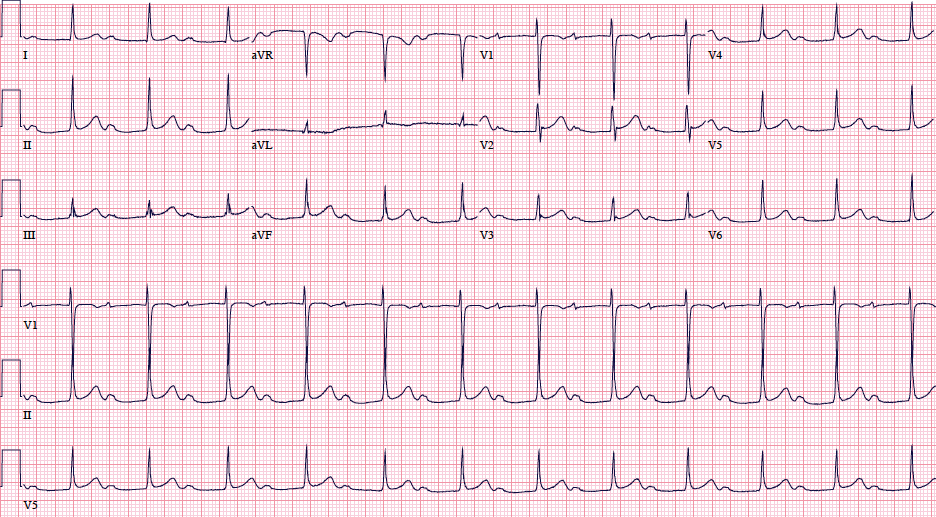
There is marked first degree AV block (PR=434 ms). When the PR-interval gets too long, AV dyssynchrony compromises ventricular filling and decreases cardiac output, similar to the so-called pacemaker syndrome.
Current ACC/AHA guidelines state that permanent pacemaker implantation is reasonable for marked first degree AV block with hemodynamic compromise or symptoms similar to those of pacemaker syndrome. (Class IIa, Level of Evidence B). The guidelines caution that pacemakers are not indicated in asymptomatic patients with isolated first degree AV block.
Want more emergency cardiology pearls? Follow me @alifarzadmd
Show References
Attachments
- 1310272020_ACC:AHA_Pacemaker_Guidelines.pdf (1,524 Kb)
- 1310272159_1st_Degree_AVB._Benign_or_Curable_Cardiac_Disease.pdf (247 Kb)
Lateral hip pain
Findings of weakness and/or pain while testing hip abduction may point to gluteus medius muscle dysfunction with associated with greater trochanteric pain syndrome.
The Trendelenburg test may help. The patient stands on the affected leg. A negative test result occurs when the pelvis rises on the opposite side. A positive test result occurs when the pelvis on the opposite side drops and indicates a weak or painful gluteus medius muscle.
http://www.youtube.com/watch?v=TY-G4ErruUA
Yesterday's pearl generated several questions that I thought were worth answering briefly:
1) Why give it IM? Absorption rate is faster than SQ infiltration though theoretically could still cause necrosis
2) Is it only infilitration? Gangrene has occurred with inadvertent intra-arterial injection, SQ infiltration and even regular IV administration
3) Mechanism? Appears to be the drug and not diluent, diluting down the concentration as well as decreasing dose appears to help if you are going to give it IV
Here is a website if you wish to read more details:
https://www.ismp.org/newsletters/acutecare/articles/20060810.asp
If you are still using IV Phenergan, you need to be aware of the necrotic effect that occurs if it infiltrates. EDs have even removed it from their drug dispensing machines. It appears to be the drug and not the diluent. Mechanism is not completely understood. Below is a picture the plaintiff attorney will use about this well know adverse effect. If so many alternatives for IV antiemetic it is wise to reconsider IV phenergan.
Attachments
General Information:
- 50% of victims in man-made and natural disasters are children.
- In low and middle income countries (where 95% of disasters occur), children are particularly vulnerable.
- Early responders must be well versed in caring for pediatric diarrheal disease, acute respiratory tract infections, measles, malaria, severe bacterial infections, malnutrition, micronutrient deficiencies, injuries, burns and poisonings with few resources.
- Pediatric specific triage systems have been developed to aid in resource allocation during mass casualty responses.
- Pediatric patients are singularly vulnerably to exploitation, abuse and trafficking during disaster, particularly when they are separated from their families.
Area of the world affected:
- All
Bottom Line:
- Many US based emergency medicine physicians are keen to respond to international disasters. A clear understanding about the particular risks to children during disaster response are critical in order to care for the most vulnerable of disaster victims.
University of Maryland Section of Global Emergency Health
Author: Emilie J.B. Calvello, MD, MPH
Show References
Background
- Acute lung injury that develops within 6 hours after transfusion of 1 or more units of blood or blood components.
- Increased risk with greater number of transfusions
- Incidence is 1 in 4000
Definition
- Acute onset
- Hypoxemia (PaO2/FiO2 < 300 mm Hg)
- Bilateral pulmonary opacities on chest x-ray
- Absence of left atrial hypertension
Pathogenesis
Two-hit hypothesis: first hit is underlying patient factors causing adherence of neutrophils to the pulmonary endothelium; second hit is caused by mediators in the blood transfusion that activate the neutrophils and endothelial cells.
Differential
Can be confused or overlap with TACO or transfusion-associated volume/circulatory overload, which presents similarly but has evidence of increased BNP, CVP, pulmonary wedge pressure, and left sided heart pressures. Patients with TACO tend to improve with diuretic treatment
Supportive tests
- Echocardiogram
- BNP (tends to be low)
- Transient leukopenia
Treatment
- Supportive care
- Lung protective ventilation strategies
- Fluid restrictive strategy
- Aspirin (shown to be helpful in animal studies)
- Pre-washing of stored RBCs prior to transfusion
- Decrease the amount of transfusions!
Show References
Question
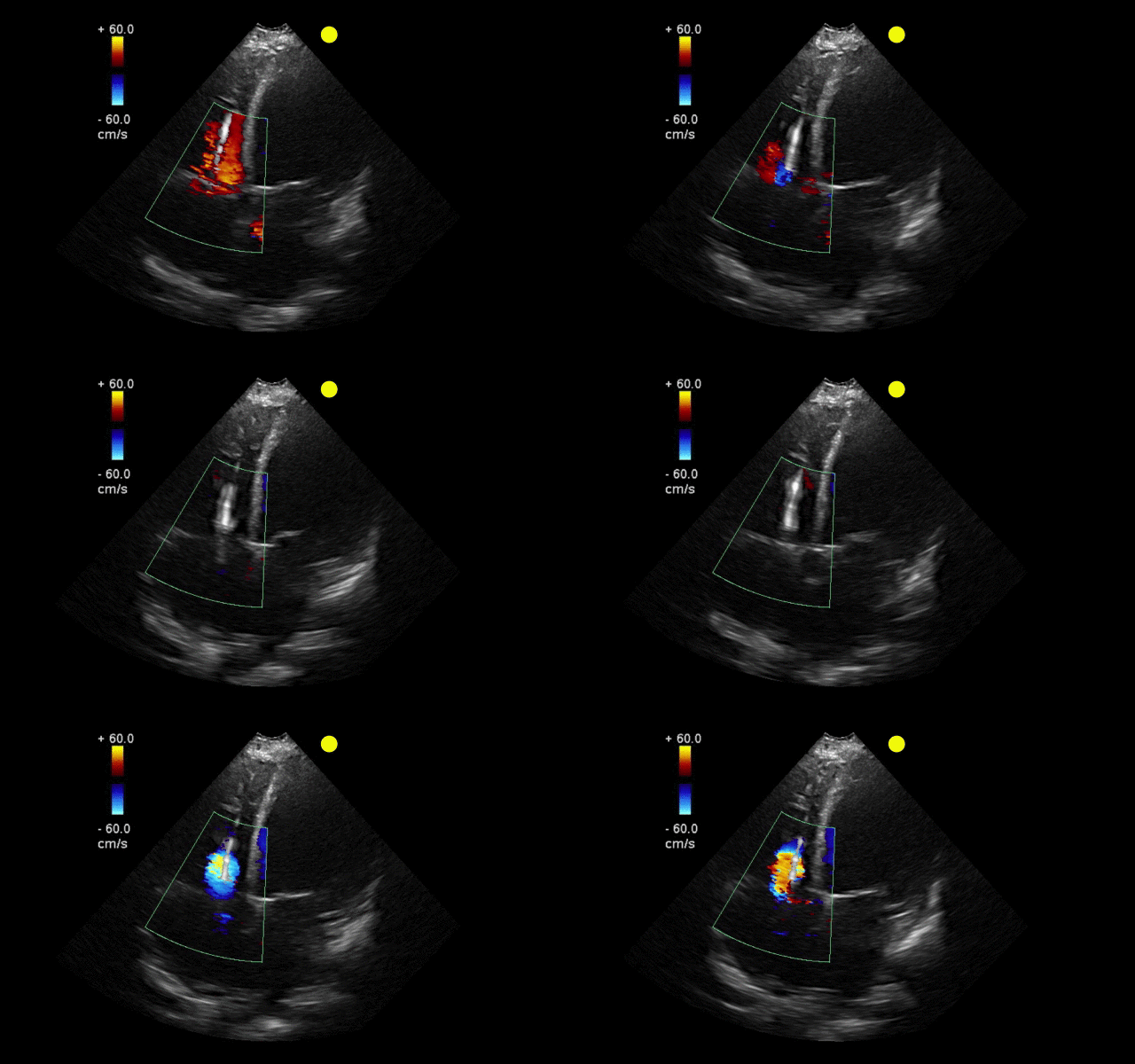
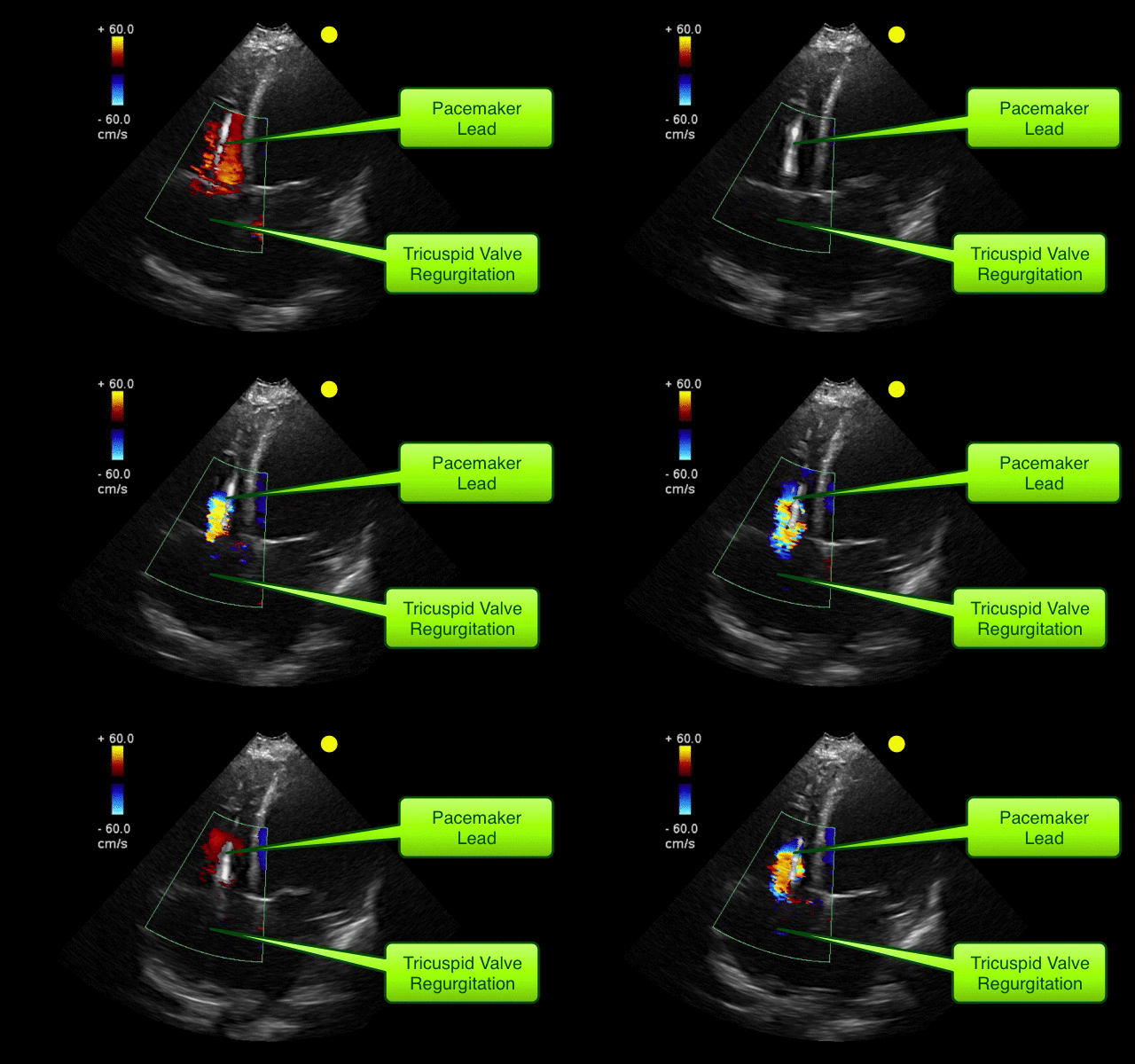
55 year-old male presents with chest pain. You take a look at his cardiac function with ultrasound and here's the patient's apical four-chamber view. What's in his right ventricle and why would it be there?
Show Answer
Show References
Ebstein's Anomaly
- Congenital defect of the tricuspid valve (TV) and the right ventricle (RV)
- TV septal and posterior leaflets are apically displaced resulting in "atrialization" of a portion of the right ventricle (ultimately a large right atrium and small right ventricle)
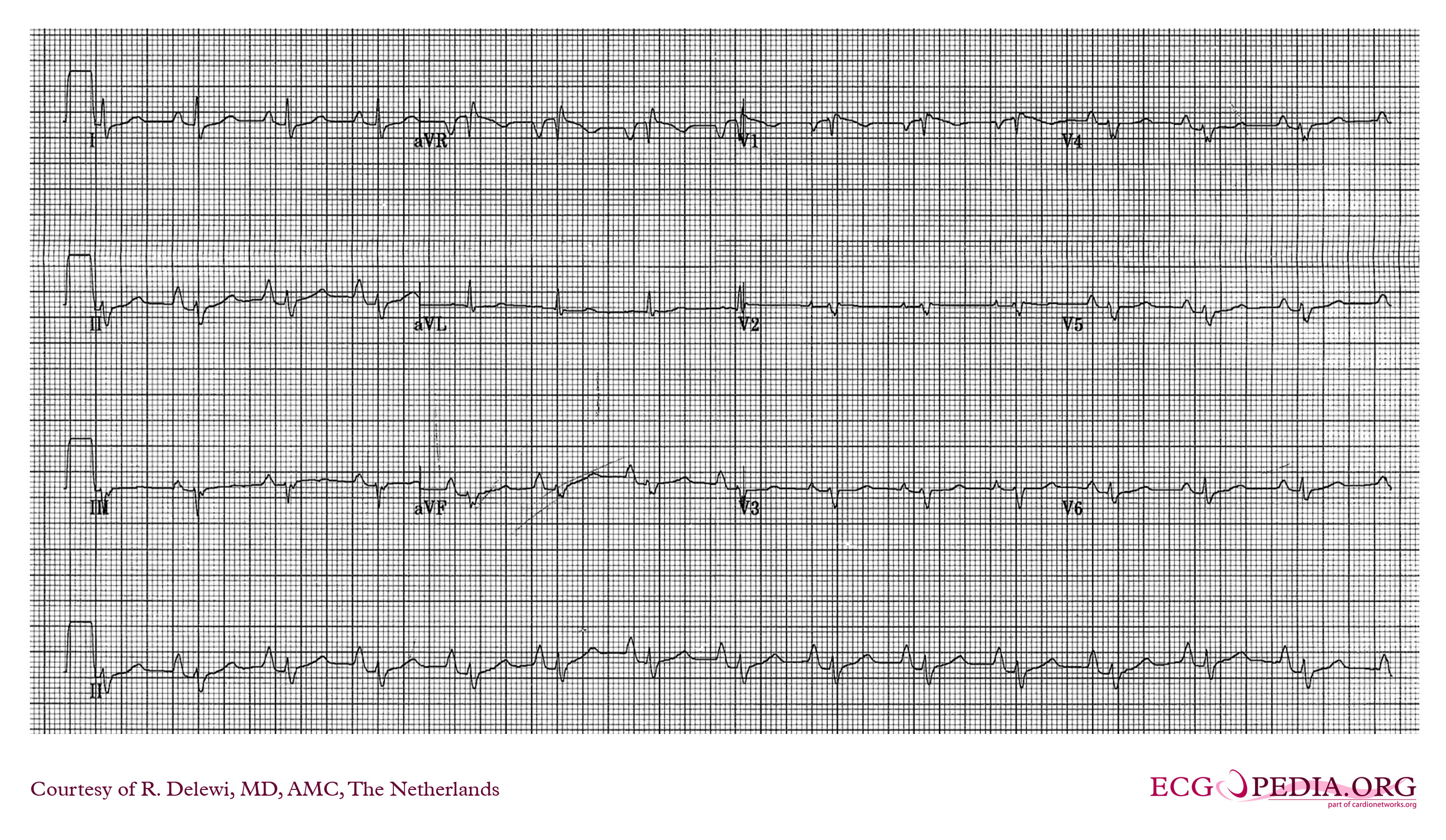
- ~40-50% of individuals with Ebstein anomaly have evidence of Wolf-Parkinson-White, secondary to the atrialized right ventricle
- ECG abnormalities include:
- Right atrial enlargement or tall and broad P waves (Himalayan P waves)
- Prolonged PR interval
- Right bundle branch block
- Low amplitude QRS complexes in the right precordial leads
- T wave inversions V1-V4 and/or Q waves V1-V4
Show References
Pediatric patients with an isolated skull fracture and normal neurological exam have a low risk of neurosurgical intervention and outpatient follow up may be appropriate (assuming no suspicion of abuse and a reliable family). In a study published in 2011, a retrospective review over a 5 year period at a level 1 trauma center showed that 1 out of 171 admitted patients with isolated skull fractures developed vomiting. This patient had a follow up CT showing a small extra-axial hematoma that did not require intervention. 58 patients were discharged from the ED within 4 hours.
You can also check out another recent article published in Annals of Emergency Medicine on the same topic this month!
Show References
Drugs that cause hearing loss:
Reversible - Chloroquine, erythromycin, quinine, CO, loop diuretics, NSAIDS, ASA
Irreversible - aminoglycosides, bleomycin, vincristine, vinblastine, cisplatin, lead, mercury, arsenic
Show References
General Information:
Trachoma is the leading cause of preventable blindness caused by an infectious disease. It is spread by direct contact with people, objects, or flies carrying Chlamydia trachomatis. Blindness occurs due to corneal scarring with repeated infections (severe scaring of the eyelid-->eyelid inversion-->repeated corneal abrasions).
Clinical Presentation:
-Mild: Hypopigmented follicles on the inner eyelid; Moderate: inner eyelid scarring/eyelash inversion; Severe: corneal scarring/blindness (irreversible)
Diagnosis:
- Clinical: eyelid eversion and careful examination looking for the above
Treatment:
- Azithromycin 20mg/kg ONE TIME DOSE (preferred)
- 1% Tetracycline ointment bid x6 weeks
- If scarring or eyelid inversion is present, surgery is needed.
Bottom Line:
Trachoma is a clinical diagnosis and easy to treat early with a single dose of antibiotics. Patients with late findings should be referred for surgery.
University of Maryland Section of Global Emergency Health
Author: Andi Tenner, MD, MPH, FACEP
Show References
There have been so many great talks at ACEP 2013, but Dr. Michael Winters' talk "The ICU is NOT Ready for Your Patient" was chock full of great critical care pearls. Here are just a few:
- Increased mortality for ICU patients boarding in the Emergency Department; the increase is 1.5% per each hour of delayed transfer.
- Intubated patients should receive analgesia BEFORE sedation; fentanyl is recommended because hemodynamically stable, but you can use anything. Good analgesia will also reduce total sedative dosing
- Use continuous capnography for the intubated patient; can detect equipment malfunction and allow titration of ventilation
- Keep an eye out for abdominal compartment syndrome. Physical exam is not always conclusive, should obtain bladder pressures
- Reduce the risk of ventilator-associated pneumonia by keeping endotracheal cuff pressures adequate and keeping the head of bed elevated 30-45 degrees
Show References
Question
A 23 year-old male presents with the rash below. He originally presented to his primary care doctor for a sore throat and was given a prescription for a medication; this rash subsequently broke out. What's the diagnosis and which medication did he receive?

Show Answer
Show References
Question
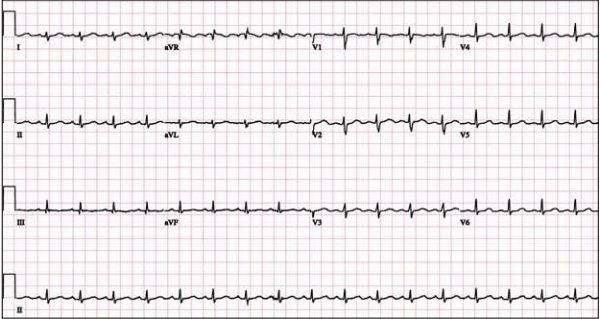
A 48 year-old female presents to the ED with progressive dyspnea and chest discomfort over the past 3 months. HR = 105, BP = 100/60 mmHg, with mild JVD on exam. Her ECG is shown below. What ECG abnormalites are present? What does your differential diagnosis include? What is the best initial diagnostic test?
Show Answer
Show References
Attachments
- 1310132023_ECGs_with_small_QRS_voltages.pdf (578 Kb)
- 1310132023_Low_QRS_voltage_and_its_causes.pdf (108 Kb)
Toxicologists should be aware of non-toxicological mimics of delirium, including anti-NMDA receptor encephalitis. It is an under-recognized progressive neurological disorder caused by antibodies against NMDA receptors.
Cases often present with altered mental status, autonomic instability, increased muscle tone, and movement disorders. It can easily be mistaken for neuroleptic malignant syndrome (NMS). A new case series describes two such patients for which toxicologists were consulted.
Must read links:
Dr. Leon Gussow provides a great review of the case series on his Poison Review blog.
Dr. Chris Nickson reviews the basics of the disease on the Life in the Fast Lane blog.
Show References
General Information:
- Salmonella: gram-negative rod-shaped bacilli
- S/S: diarrhea (often bloody), fever and abdominal cramping; Incubation: 12-24hrs, duration: 4-7d
- Generally resolves without treatment. Antibiotics prolong bacterial shedding and thus only recommended in severely ill patients (high fever, severe diarrhea/dehydration, sepsis), the very young, and the very old.
Area of the world affected:
- Worldwide, especially in developing countries
Relevance to the US physician:
- As of Oct. 7th, 278 people infected in the most recent US outbreak, thought to be related to chicken from Foster Farms
- Many of these strains of Samonella were drug-resistant
Bottom Line:
Suspect Salmonellosis in patients with appropriate exposure and symptoms, give supportive care for most, only give antibiotics to severely ill patients after sending blood and stool culture and sensitivities.
University of Maryland Section of Global Emergency Health
Author: Andi Tenner, MD, MPH
Show References
Want to improve your chances of success in the resus room? Download a metronome app on your smartphone and set it to a rate of 100-120 beats per minute. There are a number of cheap (usually free) metronome applications for both iOS and Android devices.
A recent review looked at the evidence behind CPR feedback devices and found:
- Compared to baseline, chest compression rates and end-tidal CO2 improved after activation of the metronomes.
- There was a significant improvement in the hands-off time per minute during CPR
- The proportion of intubation attempts taking under 20 seconds improved
- There were Increased survival rates when implemented in the pre-hospital setting
So instead of going to iTunes and downloading the Bee Gees, go over to the App store and download a free metronome. Your resus team will be able to stay on track with their compressions and even better - they won't have to hear you sing!
Show References
Question
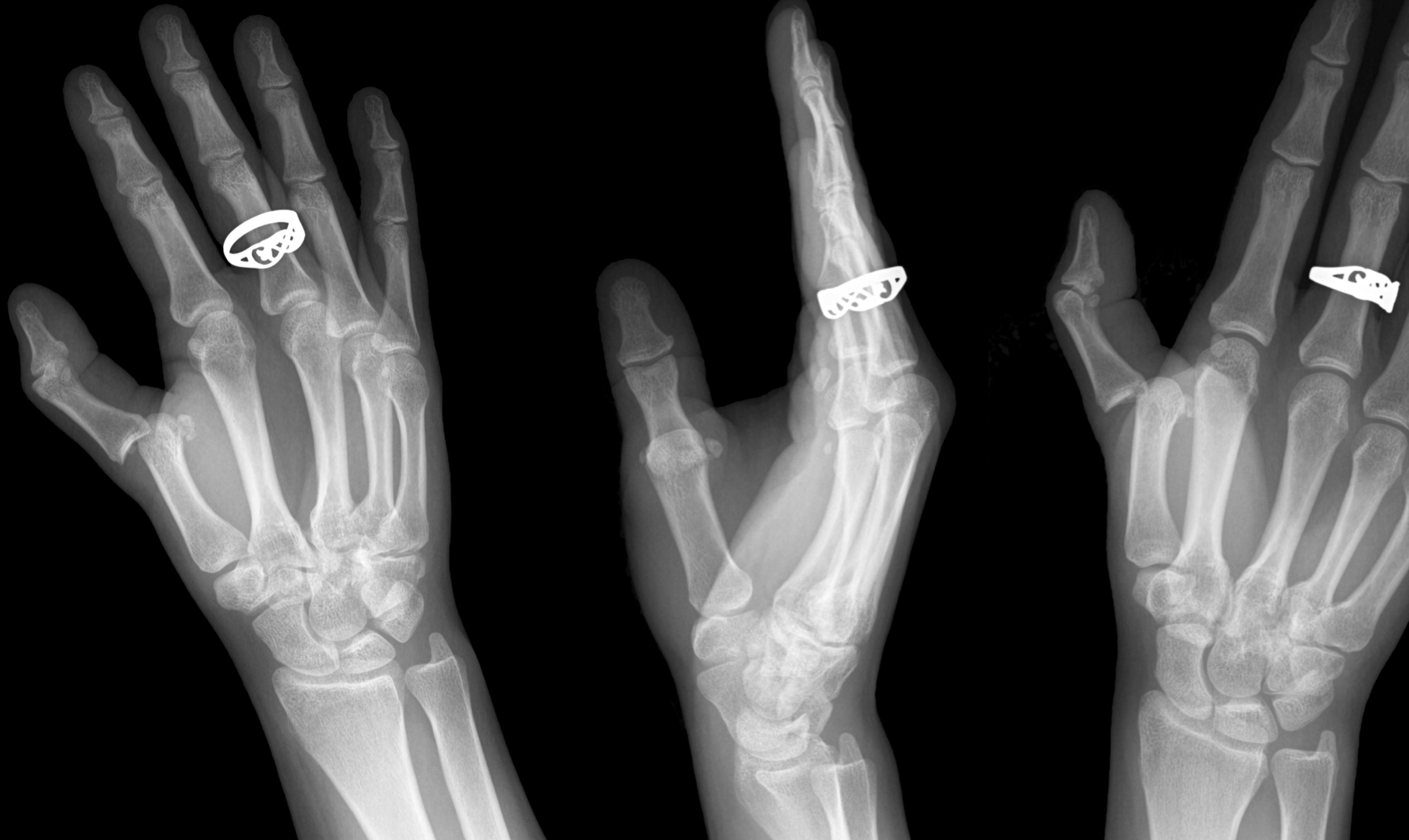
25 year-old female struck in the left hand by a football. Presents with pain, visible deformity, and the Xray below. What are the next step(s) in management?