
Football helmets
A review of head and neck injuries from football from 1959 to 1963 found the rates of intracranial hemorrhage /intracranial death were 2-3X higher than the rates of cervical spine fracture/dislocation or cervical quadriplegia. In contrast, a study of football injuries from 1971 to 1975, revealed a dramatic reversal in rates. Cervical injuries now exceeded the rate of ICH by 2-4X.
A 66% reduction in ICH
A 42% reduction in craniocerebral deaths
A 204% increase in cervical spine fractures and dislocations
The shift was attributed to the modern football helmet, whose superior protection promoted “spearing” (headfirst tackling technique). Spearing involves hitting with the crown of the helmet leading to axial loading of the spine. Spearing accounted for 52% of the quadriplegia injuries from 1971 to 1975. Research by Joesph Torg, M.D., resulted in rule changes that led to an immediate 50% reduction in quadriplegia in NCAA football.
As a parent, coach or team physician, teach and enforce proper form and protect our young athletes.
- Over the last decade, multiple studies have shown that pain and sedation in children can be easily and quickly treated via intransal administration of traditional drugs.
- Inexpensive atomizers are used to quickly administer medications which are absorbed through the mucosal surface and rapidly delivered to the bloodstream and CNS with equivalent effects to intravenous administration.
- Considerations include using concentrated forms as volumes greater than 1mL per nostril may over-saturate the mucosa and drip out rather than be fully absorbed.
- The few side effects included cough, vocal cord irritation, and laryngospasm; but pre-treating with a single puff of lidocaine spray minimizes them and has been found to enhance sedative effects.
- Fentanyl, 2mcg/kg for pain
- Midazolam, 0.2 - 0.5mg/kg for sedation and antiepileptic.
- Ketamine and Dexmedetomidine have also been used with success, but standardized doses are still being studied.
Show References
In a single academic medical center, 273 poisonings required Pediatric ICU (PICU) admission over a 5-year period. This represented 8% of total PICU admissions during that time. Key findings include:
- Most poisonings occurred in patients either ≤3 years or ≥13 years.
- Most admissions were for less than 48 h and 41% were for less than 24 h. Mean PICU length of stay was 1.2 + 0.7 days.
- Analgesics and antidepressants were the most common substances.
- 27 patients received mechanical ventilation.
The majority of poisonings were non-fatal and required supportive care, close monitoring, and some specific treatment. Drug classes causing poisonings have changed to a higher percentage of opioids in younger patients and atypical antidepressants in adolescents.
Show References
In patients presenting to the ER with a TIA (transient ischemic attack), the classic teaching has been to calculate their ABCD2 score (age, blood pressure, clinical features, duration of episode and diabetes) to determine their risk of developing a stroke.
The problem is, a moderate-to-high ABCD2 score is sensitive (86%) but not specific (35%) for a stroke in 7 days.
The solution: Combining imaging data with the scoring system!
The presence of an acute infarct on a diffusion-weighted MRI (DWI) in a patient with an ABCD2 score of 4 or more carries the highest risk of stroke, at 14.9% at 7 days. On the other hand, a negative DWI predicts a 0-2% stroke risk at 7 days irrelevant of the ABCD2 score.
Show References
- When considering starting a patient on non-invasive ventilation (NIV), ask yourself whether the patient is having a problem of oxygenation (Type I respiratory failure) or a problem of CO2 removal or ventilation (i.e., Type II respiratory failure); don’t forget both types can be present, simultaneously
- Examples of Type I problems are pneumonia and pulmonary edema; examples of Type II problems are COPD, drug overdose, and neuromuscular disease (e.g., myasthenia gravis). Once the underlying problem is identified, selecting the type of NIV is straight-forward.
- There are only two interventions for type I disorders: 1) increase fio2 and/or 2) increase mean airway pressure (positive end-expiratory pressure; a.k.a. PEEP). There are only two interventions for type II disorders: 1) increase tidal volume and/or 2) increase respiratory rate
- Continuous positive airway pressure (CPAP) only provides support for type I problems (i.e., can titrate FiO2 and PEEP); CPAP does not provide a tidal volume or a respiratory rate (needed for type II support)
- Bi-level positive airway pressure (BPAP) provides support for type II problems; tidal volume can be titrated by increasing the pressure support and a respiratory rate can be dialed in.
Editors note: The new Back 2 Basic series will review essential critical care concepts on the first Tuesday of each month. Want a specific topic reviewed? Contact us by email or Twitter.
Show References
Question
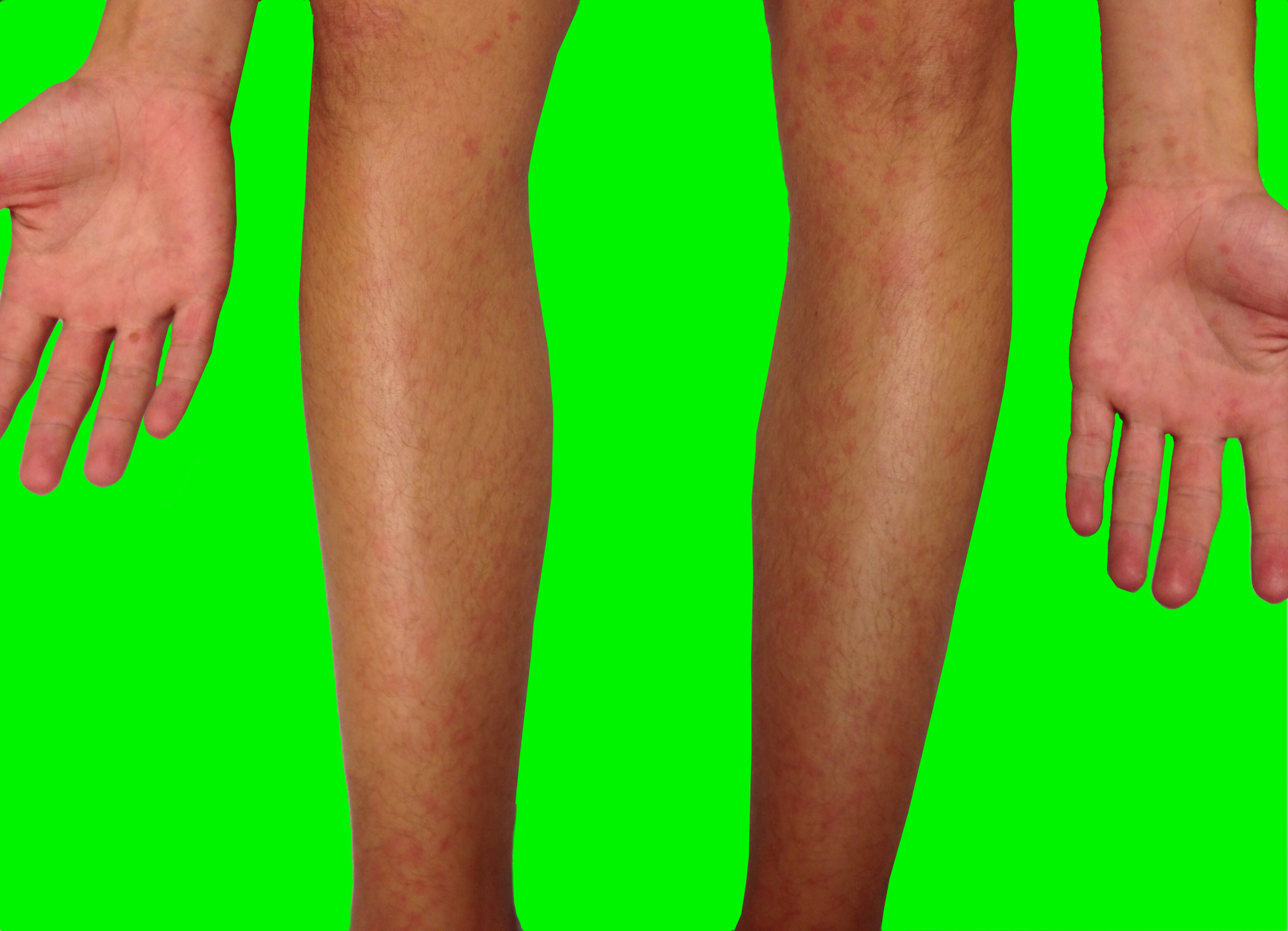
10 year-old male complains of fever and rash (shown below); no other complaints. He went camping 10-days ago. What’s the diagnosis...and what medication(s) should he receive?
Show Answer
Show References
Role of Magnesium in Cardiovascular Disease
* Magnesium (Mg2+) is an essential element that is obtained via dietary intake of leafy green vegetables, legumes, nuts/seeds, and whole grains; it is relatively deficient in the American diet.
* Mg2+ is critical for the normal physiological functioning of the vascular smooth muscle, endothelial cells, and myocardium. Several epidemiological and clinical studies have linked Mg2+ in the pathogenesis of cardiovascular disorders (CVD).
* Mg2+ is well known for its antiarrhythmic properties via modulation of myocardial excitability and in the pathogenesis and treatment of cardiac arrhythmias (polymorphic ventricular tachycardia/torsades de pointes & digoxin toxicity).
* Mg2+ supplementation has also been shown to cause significant decrease in ventricular ectopic beats and nonsustained ventricular tachycardia in NYHA class II–IV heart failure patients.
* A recent meta-analysis by Qu et al examined the association between dietary Mg2+ intake, serum Mg2+ levels, and the risk of total CVD events; the greatest reduction in CVD events was observed for intake between 150-400 mg/d.
* Given the magnitude of CVD and Mg2+-deficient diet in the US, there is a critical need to further investigate the interrelationship between Mg2+ and CVD events. Additionally increasing Mg2+ intake in the diet to maintain high normal serum Mg2+ level is both physiologic and judicious.
Show References
Clindamycin used to be a first-line agent for many SSTIs, particularly where MRSA was suspected. With growing resistance to staph species, the 2014 IDSA Guidelines recommend clindamycin as an option only in the following situations:
- Nonpurulent SSTI (primarily strep species)
- Mild - oral clindamycin
- Moderate - IV clindamcyin
- Severe, necrotizing infections - adjunctive clindamycin only with suspected or culture-confirmed strep pyogenes
- Purulent SSTI (primarily staph species)
- Clindamycin only recommended in moderate or severe cases if cultures yield MSSA
* Clindamycin may be used if clindamycin resistance is <10-15% at the institution.
Show References
Question
Background:
- With current medical advances and the adoption of healthier lifestyles, people are living longer.
- 65+ years old is the fastest growing segment of the global population
- In 1994:
- 65+ accounted for 13% of the population
- By 2030:
- Developed Countries: 65+ age segment of population will be larger than <65 age in many developed countries
- Developing Countries: 75% of elderly will be living in lower and middle income countries with less well-developed health care systems
Relevance to the EM Physician:
- Elderly account for 12% to 24% of all ED visits
- Older patients present with a higher level of acuity and generally have more serious medical illness.
- Arrive more often by ambulance
- Higher rates of test use and longer ED stays
- 2.5 to 4.6 times higher risk for hospitalization
- 5-fold higher admission rate to an ICU
- More likely to be misdiagnosed
- More frequently discharged with unrecognized / untreated problems.
Show Answer
Show References
Risk of infection from Blood transfusions
- We are already moving to decreasing transfusions in general for most of our hospital patients
- But now there is evidence that more transfusions can lead to an increase in nosocomial infections
JAMA Meta-Analysis
- 18 randomized trials with 7,593 patients
- All tested higher vs lower transfusion thresholds in a variety of inpatient settings
- Hospital-acquired infections were the outcome
What they found
- Absolute risk for nosocomial infection was 17% among patients with a higher hemoglobin target compared to 12% with a lower target
- NNT to avoid an infection was 38 using a restrictive transfusion strategy
Bottom Line
- Potential cost savings to the healthcare industry with less transfusions
- For most patients, a hemoglobin > 7 g/dL is just fine
Show References
Question
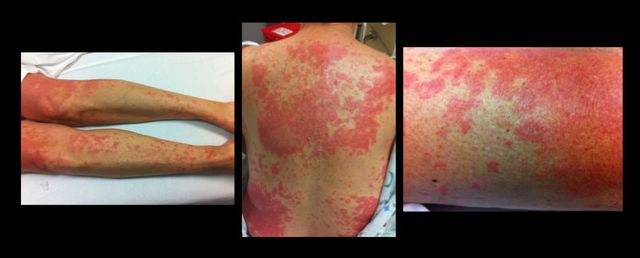
49 year-old female on trimethoprim/sulfamethoxazole presents with a rash & lesions on her oral mucus membranes. What's the diagnosis?
Show Answer
Show References
IVUS Plaque Correlation to Cardiovascular Death
Several non-invasive studies are currently utilized for the identification of coronary artery disease (i.e. coronary CTA, intravascular ultrasound- IVUS, etc.)
Few studies have quantified which of those with CAD (i.e. coronary plaques) are considered high-risk or unstable plaques
A recent study utilizing IVUS looked at autopsies over a 2 year-period comparing near-infrared detection of high-risk plaques and cardiovascular related deaths
IVUS findings associated with CAD are classified into 3 categories: echo-attenuation, echolucent zone, and spotty calcification
Echo-attenuated plaques, especially superficial echo-attenuation, was found to be a significant and reliable finding suggestive of vulnerable plaques and future cardiovascular death
Show References
Colchicine tablets and injectable solution is frequently used for the treatment of gout and familial Mediterranean fever. An overdose is extremely serious, with considerable mortality that is often delayed. It is considered a cellular poison due to its inhibition of cellular mitosis of dividing cells.
After an acute overdose, symptoms typically are delayed for 2-12 hours and include nausea, vomiting, abdominal pain, and severe bloody diarrhea.
Chronic poisoning presens with a more insidious onset.
Late complications include bone marrow suppression, particularly leukopenia and thrombocytopenia (4-5 days) and alopecia (2-3 weeks).
Treatment includes aggressive supportive care, monitoring and treatment of fluid and electrolyte disturbances.
The usual cause of death from acute poisoning is due to hemodynamic collapse and cardiac arrhythmias (typically 24-36 hours after ingestion or could be sudden) or from infectious or hemorrhagic complications.
Show References
Show References
General Information: Tetanus is caused by the toxin of Clostridium tetani--a gram-positive bacillus found in soil and animal excrement. It is a life-threatening but preventable disease. Cases have declined by > 95% in the past 65 years, but dozens of cases still occur annually in the US and it is still frequently seen in developing countries.
Clinical Presentation:
- Generalized increased rigidity
- Convulsive spasms of skeletal muscles
- Risus sardonicus (severe facial spasms with a “sardonic” smile)
- autonomic instability (fever, sweating, tachycardia, salivation, hyper- or hypo prefusion)
- Lucid mental state
Diagnosis:
Clinical Case Definition: In the absence of a more likely diagnosis, an acute illness with muscle spasms or hypertonia. There is no diagnostic laboratory test for tetanus.
Treatment:
- Supportive care (including ventilator support as needed)
- Control symptoms with muscle relaxants and anticonvulsants as needed
- Wound debridement and antibiotics (metronidazole, e.g. 0.5 gm every 6 hours) to decrease C tetani
- Passive immunization with human tetanus immune globulin (TIG) (may shorten course and decrease severity--Dose: TIG 3,000-6,000 units IM)
- Tetanus toxoid vaccine (clinical disease does not produce immunity!)
Bottom Line:
Tetanus is not as rare as we would like to think. Acute diagnostic acumen and assertive clinical management can help save the life of someone with this potentially deadly disease
University of Maryland Section for Global Emergency Health
Author: Jon Mark Hirshon, MD, MPH, PhD
Show References
Prophylactic FFP for Procedures?
- FFP is commonly transfused to correct abnormal coagulation studies prior to performing procedures in nonbleeding critically ill patients.
- Despite common practice, there is little to no supportive evidence to demonstrate a clinical benefit to transfusing FFP in this patient population.
- Muller, et al recently evaluated the use of FFP before invasive procedures in critically ill patients. Brief highlights include:
- Prospective, randomized, open-label study at 4 sites in the Netherlands
- 76 adult ICU patients with INRs between 1.5 and 3.0
- Procedures: central line placement, thoracentesis, percutaneous tracheostomy
- Result: no difference in major bleeding events between those who received FFP and those randomized to no FFP
- Take Home Point: In the nonbleeding critically ill patient, routine transfusion of FFP to correct lab abnormalities prior to procedures is not indicated.
Show References
Question
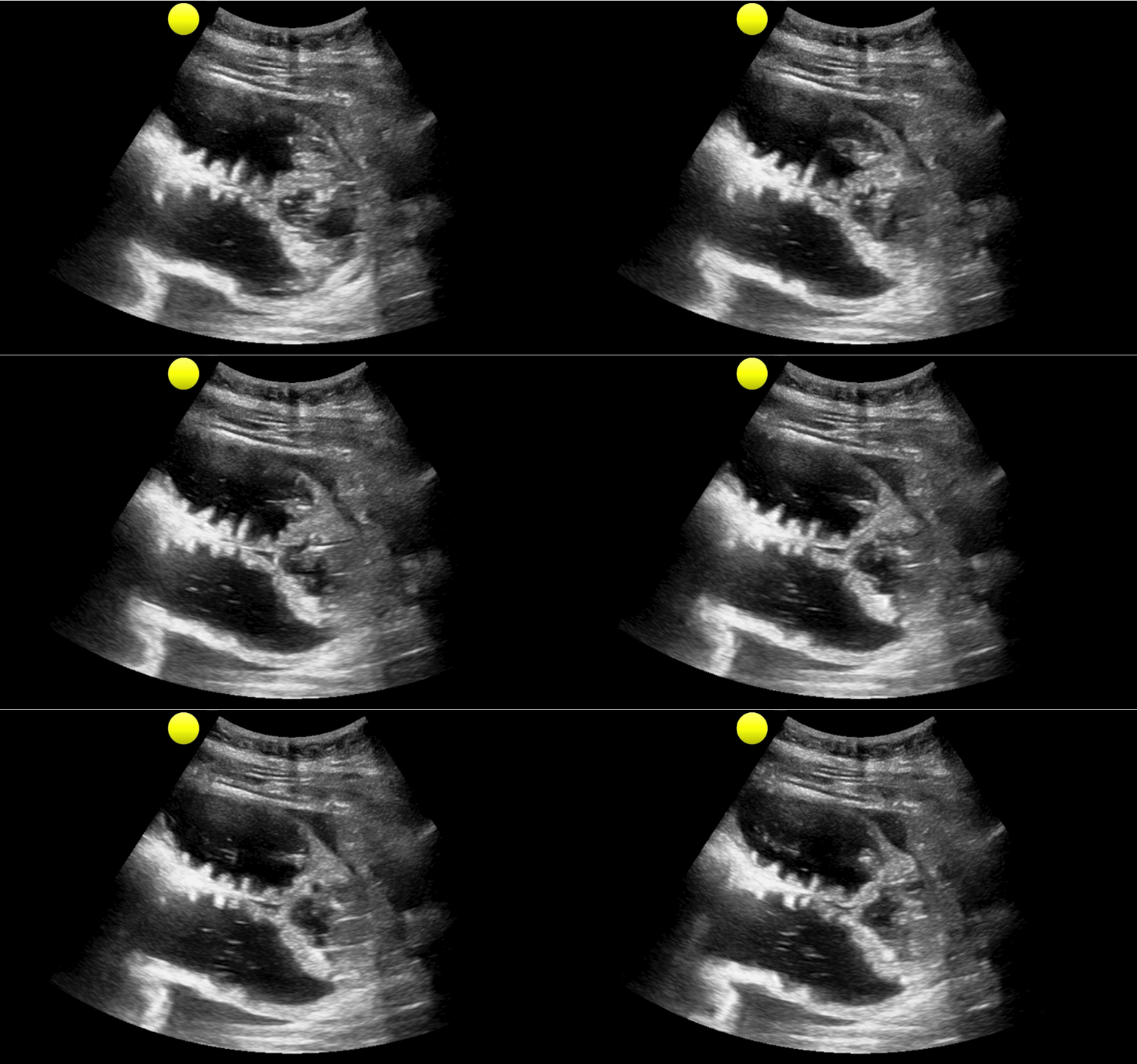
35 year-old female presents with nausea and vomiting 1 week post-op for an abdominal surgery. Abdominal ultrasound is below; what's the diagnosis?
Show Answer
Show References
Some quick facts about Knee Injuries:
- The most common cause of acute traumatic hemarthrosis of the knee is an anterior cruciate ligament tear.
- Most patients with an ACL injury will give a history of immediate pain, disability, knee swelling and audible pop.
- The most common ligament injuried in the knee is the medial collateral ligament.
- Patella dislocations
- Usually lateral dislocations and often spontaneous reduce.
- Hyperextend the knee to make the reduction easier.
- Dislocation of the knee:
- Anterior is the most common and usually secondary to hyperextension
- Popliteal artery injury is commonly seen and must be looked for. Easy bedside test is Ankle Brachial Index.
- Normal pulses do NOT exclude a vascular injury.
- Patients should be monitored for vascular complications and compartment syndrome.
- Vascular injuries due to knee dislocation are associated with a high rate of amputation, which markedly increases if not repaired within 6-8 hours.
Show References
NAC is an effective antidote against acetaminophen (APAP) toxicity in preventing acute hepatotoxicity. It provides cysteine that is essential for glutathione synthesis and its availability is rate limiting.
Currently, PO and IV formulation is available in the U.S. Regardless of the route, NAC is equally effective in preventing APAP induced acute hepatotoxicity when administered within 8 hours after single acute ingestion. 1
Adverse effects of NAC
1. Anaphylactoid reaction
a. More frequently reported with IV administration and during the first regimen of NAC (150 mg/kg over 60 min) administration. (dose and rate dependent)
b. Higher risk of anaphylactoid reaction in patients with negative APAP vs. patients with elevated APAP level.2
c. Management: Benadryl as needed and slow infusion rate.
2. Hyponatremia in children if inappropriate volume of diluent (D5W) used. Dose calculator: http://acetadote.com/dosecalc.php
3. Laboratory: increase Prothrombin time (PT).3
4. Fatality from iatrogenic NAC overdose has been reported.
Advantage of IV NAC
1. Convenience
2. 100% bioavailability
3. Shorter hospital length of stay
4. Minimum GI symptoms (nausea & vomiting) compared to PO route
Indication of IV NAC
1. Severe hepatotoxicity or fulminant liver failure
2. APAP poisoning during pregnancy
3. Unable to tolerate PO intake (nausea, vomiting, altered mental status)
However many clinicians administer IV NAC for their advantages over PO NAC.
Take home message:
1. PO and IV NAC are equally effective when administered within 8 hours after single acute ingestion.
2. Anaphylactoid reaction is frequently encountered AE during the infusion of 1st NAC regimen and patients with negative/low APAP level may be at higher risk.
3. No emergent need to start NAC in presumed acetaminophen overdose patients prior to obtaining APAP level.