
Heart Failure & Pulmonary Hypertension (Part II)
- HFpEF-PH management guidelines recommend the treatment of symptoms of congestion and volume overload, targeting LV relaxation and co-morbidities; including the management of pulmonary congestion, ischemia, sleep apnea, atrial fibrillation, and diabetes.
- Both atrial/ventricular dysrhythmias contribute to the mortality associated with HF & control of particularly atrial fibrillation, is an essential part of the early pulmonary vascular remodeling process.
- Both endothelin receptor antagonists (ERA) and prostanoids have been effective for PAH & clinical trials utilizing these agents have also been attempted in treatment of PH due to left heart disease, but have proven to be either neutral or even detrimental.
- Selective dilation of the pulmonary vessels in patients with postcapillary PH, without simultaneously ensuring the unloading of the LV, can cause profound pulmonary venous congestion resulting in sudden pulmonary edema, which greatly increases the morbidity in patients with this form of PH.
- Currently, the most compelling published data for pharmacological treatment targeting PH in HFpEF involves phosphodiesterase (PDE) inhibitor sildenafil.
Show References
The cross-reactivity between cephalosporins and penicillins is significantly lower than the 10% figure many of us learned. In fact, the beta-lactam ring is rarely involved. So, when the warning pops up next time you order ceftriaxone in a penicillin-allergic patient, what should you do?
In a patient with a documented penicillin allergy, here is a simple chart to help determine when a cephalosporin is ok to use:
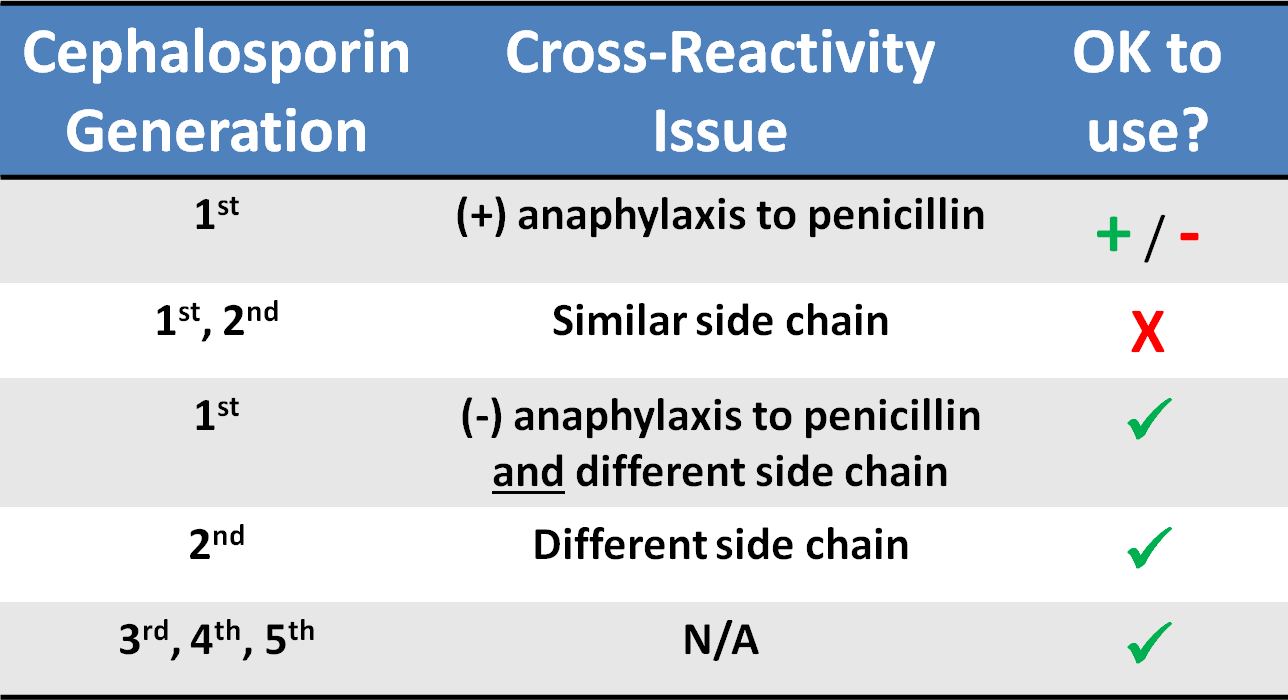
Common penicillins and cephalosporins with similar side chains include ampicillin/amoxicillin and cephalexin, cefaclor, cephadroxil, and cefprozil.
Show References
Background:
- There is a great deal of fear, media attention, and misinformation concerning Ebola.
- As an emergency physician, you must be able to identify and appropriately manage individuals with possible Ebola presenting to your hospital.
- ACEP's Ebola Expert Panel worked with the Centers for Disease Control and Prevention to help create a clear and concise algorithm in case someone presents with possible Ebola.
ED Algorithm For Patients with Possible Ebola
- Identify:
- Do they have the right travel history (step 1)?
- Do they have the right signs and symptoms (step 2)?
If yes to both identification questions, then:
- Isolate (step 3):
- Place patient in private room or separate enclosed area
- Private bathroom or covered, bedside commode
- Only essential personnel should evaluate patient and provide care
- Level of personal protective equipment should be determined
- Based upon patient’s clinical status (signs and symptoms)
- Place patient in private room or separate enclosed area
- Inform (step 4)
- Immediately notify the hospital infection control program and other appropriate staff
- Immediately notify the health department
- Further evaluation and management will depend on the patient’s clinical status and other potential diagnoses (step 5).
Bottom line:
Whether the patient has Ebola or not, a well-developed response is necessary for patient management and public health preparedness. The fear of the disease is much more widespread and impactful than the disease itself.
See the full algorithm, with more details at: http://www.cdc.gov/vhf/ebola/pdf/ed-algorithm-management-patients-possible-ebola.pdf
Attachments
Heart Failure & Pulmonary Hypertension (Part I)
~50% of patients with heart failure & preserved ejection fraction (HFpEF) develop pulmonary hypertension (PH)
HFpEF with PH portends reduced survival and increased hospitalization rates compared to those without PH
HFpEF-PH is often confused with idiopathic pulmonary hypertension (IPAH) given the similar hemodynamics; differentiating them is challenging and requires careful consideration of clinical, radiologic, and hemodynamic data
|
| PAH | HFpEF |
| Clinical parameters: | ||
| Age | Typically 3rd–5th decade | Typically 6th–8th decade |
| Comorbidities (HTN, HLD, DM, CAD) | Rare | Common |
| Atrial arrhythmias | Rare | Common |
| Obstructive sleep apnea | Rare | Common |
| Echocardiographic parameters: | ||
| LA size/volume | Normal | Increased |
| LV diastolic function | Normal to mildly abnormal | Moderate to severely abnormal |
| Hemodynamic parameters: | ||
| Resting PAWP | Always <15 mmHg | May be < or >15 mmHg |
| Response to volume | PAWP <15 mmHg (increase ≤5 mmHg) | PAWP >15 mmHg (increase >5 mmHg) |
| Response to exercise | PAWP <15 mmHg (increase ≤5 mmHg) | PAWP >15 mmHg (increase >5 mmHg) |
(Table reproduced from article)
Show References
Iliocostal syndrome aka iliocostal friction syndrome
Consider this entity in an elderly patient with osteoporosis with unexplained abdomen/flank or back pain.
Osteoporosis and/or vertebral compression fractures can result in a narrowing of the distance between .
the lowest anterior rib and the top of the iliac crest producing pain where this rib contacts the pelvis.
This can be perceived as side or back pain. This pain can restrict walking leading to a possible misdiagnosis of spinal stenosis. Treatment is with physical therapy and therapeutic injection.
http://www.caringmedical.com/wp-content/uploads/2013/09/iliocostalis.syndrome.jpg
The 2013 neurosurgery guidelines mention two of the more controversial therapies used in spinal cord injuries:
- “MAP Push” (maintaining the patient’s MAP 85-90mmHg, which theoretically increases the blood flow to the penumbra): evidence for the particular MAP goal is not great, but studies show that ICU level monitoring for the first 7-14 days improves outcome as patients may have delayed cardiovascular or pulmonary instability
- Steroids are not recommended anymore (they were an “option” in the previous guidelines)
Show References
Choosing Wisely in the ICU
- There is a general overuse of medical tests and treatments
- This wastes healthcare resources
- The Choosing Wisely Campaign was developed to have providers of different specialties choose medical services that should be questioned
The Critical Care Societies Collaborative came up with this list for ICU providers
1. Don’t order diagnostic tests at regular intervals (such as every day) but rather in response to specific clinical questions. Do you really need a daily INR check or CBC check in all ICU patients? Really?
2. Don’t transfuse red blood cells in hemodynamically stable, non-bleeding ICU patients with a hemoglobin concentration greater than 7 g/dl. See last week’s Pearl!
3. Don’t use parental nutrition in adequately nourished critically ill patients within the first seven days of an ICU stay. TPN is the Cinnamon Toast Crunch of fungi.
4. Don’t deeply sedate mechanically ventilated patients without a specific indication and without daily attempts to lighten sedation. Use as little as possible when you can.
5. Don’t continue life support for patients at high risk for death or severely impaired functional recovery without offering patients and their families the alternative of care focused entirely on comfort. Engage families early in the hospital stay regarding aggressive life-sustaining treatments. Get palliative care involved in the ED!
Show References
Question
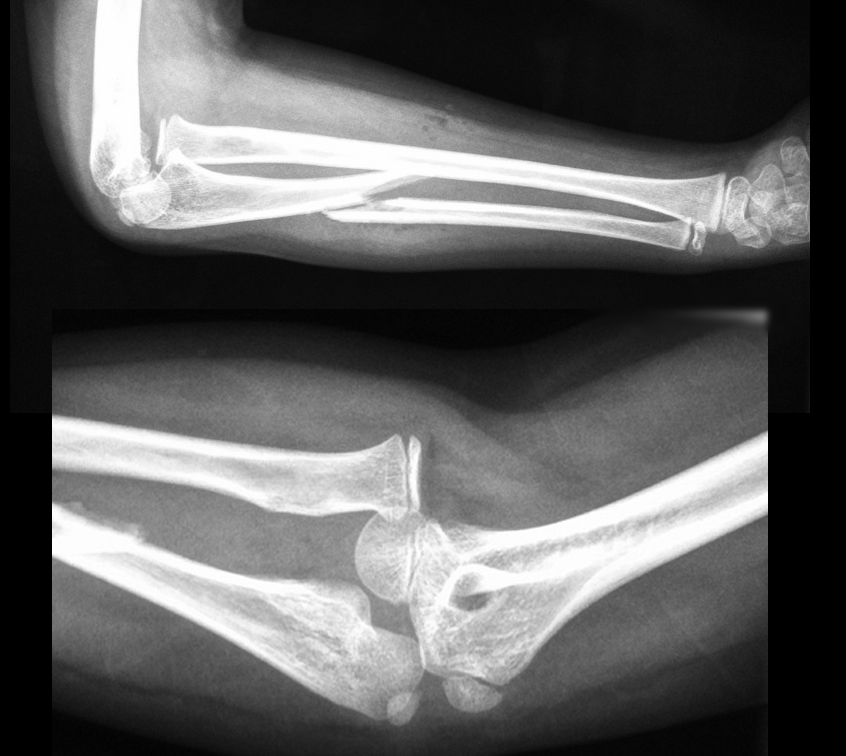
13 year-old right-hand dominant following assault with blunt object. What’s the diagnosis?
Show Answer
Show References
Cardiovascular Morbidity & Sleep Apnea
Obstructive sleep apnea (OSA) is characterized by sleep-related periodic breathing, upper-airway obstruction, sleep disruption, and hemodynamic perturbations
Epidemiological data shows a strong association between untreated OSA & cardiovascular morbidity/mortality
Two recent studies by Gottlieb et al. (1) & Chirinos et al. (2) elucidated two important explicit and complicit treatment considerations for OSA
(1) In moderate-to-severe obstructive sleep apnea, the use of CPAP alone during sleep may ameliorate systemic hypertension and cardiovascular risk, even in patients who do not have "subjective" sleepiness
(2) Weight loss combined with CPAP use may further decrease cardiovascular morbidity
Show References
The Reverse Segond Fracture
Most people have heard of a segond fracture (avulsion fracture of the lateral tibeal platuea) seen on knee xrays which is a marker for Anterior Cruciate Ligament and medial meniscus injuries. See Pearl https://umem.org/educational_pearls/1015/
However, there is also a Reverse Segond Fracture that is another benign appearing avulsion fracture of the medial tibeal plateau that is marker for significant injury to the Posterior Cruciate Ligament (PCL).
If a Segond or Reverse Segond Fracture is seen consider immobilzing the patients knee until they can follow up with Orthopedics and/or get an MRI to determine if additional injuries are present.
The world of pediatrics is still working on catching up to adult literature in terms of lactate utilization and its implications. The study referenced looked at over 1000 children admitted to the pediatric intensive care unit. Lactate levels were collected 2 hours after admission and a mortality risk assessment was calculated within 24 hours of admission (PRISM III). Results showed that the lactate level on admission was significantly associated with mortality after adjustment for age, gender and PRISM III score.
Bottom line: In your critically ill pediatric patient, lactate may be a useful predictor of mortality.
Show References
With all the current concern about Ebola, it is important to understand what are quarantine and isolation and who can order these.
Per the Centers for Disease Control:
- Quarantine: separates and restricts the movement of people who were exposed to a contagious disease to see if they become sick.
- Isolation: separates sick people with a contagious disease from people who are not sick
Federal Law allows for quarantine and isolation:
- From the Commerce Clause of the U.S. Constitution
- Delegated to the Centers for Disease Control (CDC) by the U.S. Secretary of Health and Human Services
- The CDC is "authorized to detain, medically examine, and release persons arriving into the United States and traveling between states who are suspected of carrying these communicable diseases."
- The CDC may issue a federal isolation or quarantine order
- Last large scale use was during the influenza pandemic of 1918-1919
- Breaking of a federal quarantine order is punishable by fines and imprisonment
State laws allows for the enforcement of isolation and quarantine within their borders.
Bottom Line:
- There have been no large-scale quarantine or isolation orders for 100 years. However, the CDC can issue an order that has the authority of the Constitution and federal law for enforcement.
Show References
Valproic acid (VPA) is often used to treat seizure disorder and mania as a mood stabilizer. The mechanism of action involves enhancing GABA effect by preventing its degradation and slows the recovery from inactivation of neuronal Na+ channels (blockade effect).
VPA normally undergoes beta-oxidation (same as fatty acid metabolism) in the liver mitochondria, where VPA is transported into the mitochondria by carnitine shuttle pathway.
In setting of an overdose, carnitine is depleted and VPA undergoes omega-oxidation in the cytosol, resulting in a toxic metabolite.
Elevation NH3 occurs as the toxic metabolite inhibits the carbomyl phosphate synthase I, preventing the incorporation of NH3 into the urea cycle.
Signs and symptoms of acute toxicity include:
- GI: nausea/vomiting, hepatitis
- CNS: sedation, respiratory depression, ataxia, seizure and coma/encephalopathy (with serum concentration VPA: > 500 mg/mL)
Laboratory abnormalities
- Serum VPA level: signs of symptoms of toxicity does not correlate well with serum level.
- NH3: elevated
- Liver function test: elevated AST/ALT
- Basic metabolic panel: hypernatremia, metabolic acidosis
- Complete blood count: pancytopenia
Treatment: L-carnitine
- Indication: hyperammonemia or hepatotoxicity
- Symptomatic patients: 100 mg/kg (max 6 gm) IV (over 30 min) followed by 15 mg/kg IV Q 4 hours until normalization of NH3 or improving LFT
- Asymptomatic patients: 100 mg/kg/day (max 3 mg) divided Q 6 hours.
Show References
Valproic acid (VPA) is often used to treat seizure disorder and mania as a mood stabilizer. The mechanism of action involves enhancing GABA effect by preventing its degradation and slows the recovery from inactivation of neuronal Na+ channels (blockade effect).
VPA normally undergoes beta-oxidation (same as fatty acid metabolism) in the liver mitochondria, where VPA is transported into the mitochondria by carnitine shuttle pathway.
In setting of an overdose, carnitine is depleted and VPA undergoes omega-oxidation in the cytosol, resulting in a toxic metabolite.
Elevation NH3 occurs as the toxic metabolite inhibits the carbomyl phosphate synthase I, preventing the incorporation of NH3 into the urea cycle.
Signs and symptoms of acute toxicity include:
- GI: nausea/vomiting, hepatitis
- CNS: sedation, respiratory depression, ataxia, seizure and coma/encephalopathy (with serum concentration VPA: > 500 mg/mL)
Laboratory abnormalities
- Serum VPA level: signs of symptoms of toxicity does not correlate well with serum level.
- NH3: elevated
- Liver function test: elevated AST/ALT
- Basic metabolic panel: hypernatremia, metabolic acidosis
- Complete blood count: pancytopenia
Treatment: L-carnitine
- Indication: hyperammonemia or hepatotoxicity
- Symptomatic patients: 100 mg/kg (max 6 gm) IV (over 30 min) followed by 15 mg/kg IV Q 4 hours until normalization of NH3 or improving LFT
- Asymptomatic patients: 100 mg/kg/day (max 3 mg) divided Q 6 hours.
Show References
Hemoglobin Threshold in Septic Shock
- Numerous trials have demonstrated the benefit of lower hemoglobin thresholds for blood transfusion in critically ill patients.
- The recently published Transfusion Requirements in Septic Shock (TRISS) trial evaluated the effects on mortality of a lower versus higher hemoglobin threshold in ICU patients with septic shock.
- The TRISS trial randomized 1005 patients to a lower hemglobin threshold (7 g/dL) or a higher hemoglobin threshold (9 g/dL).
- Overall, there was no difference in 90-day mortality between groups.
- Patients randomized to the lower threshold received significantly fewer units without any increase in ischemic or adverse events.
- Take Home Point: A hemoglogin threshold of 7 g/dL for blood transfusion appears effective for most patients with septic shock.
Show References
Question
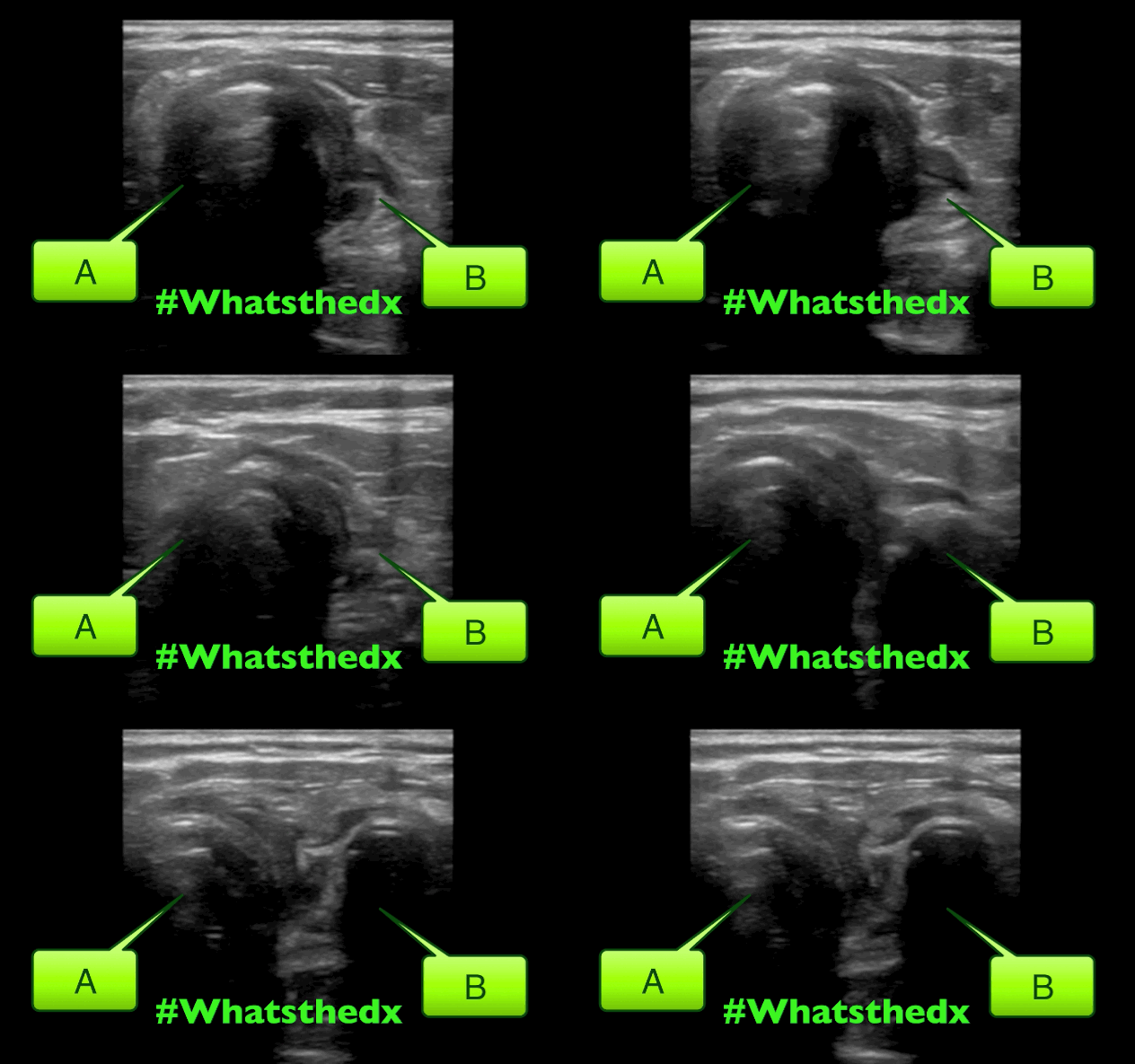
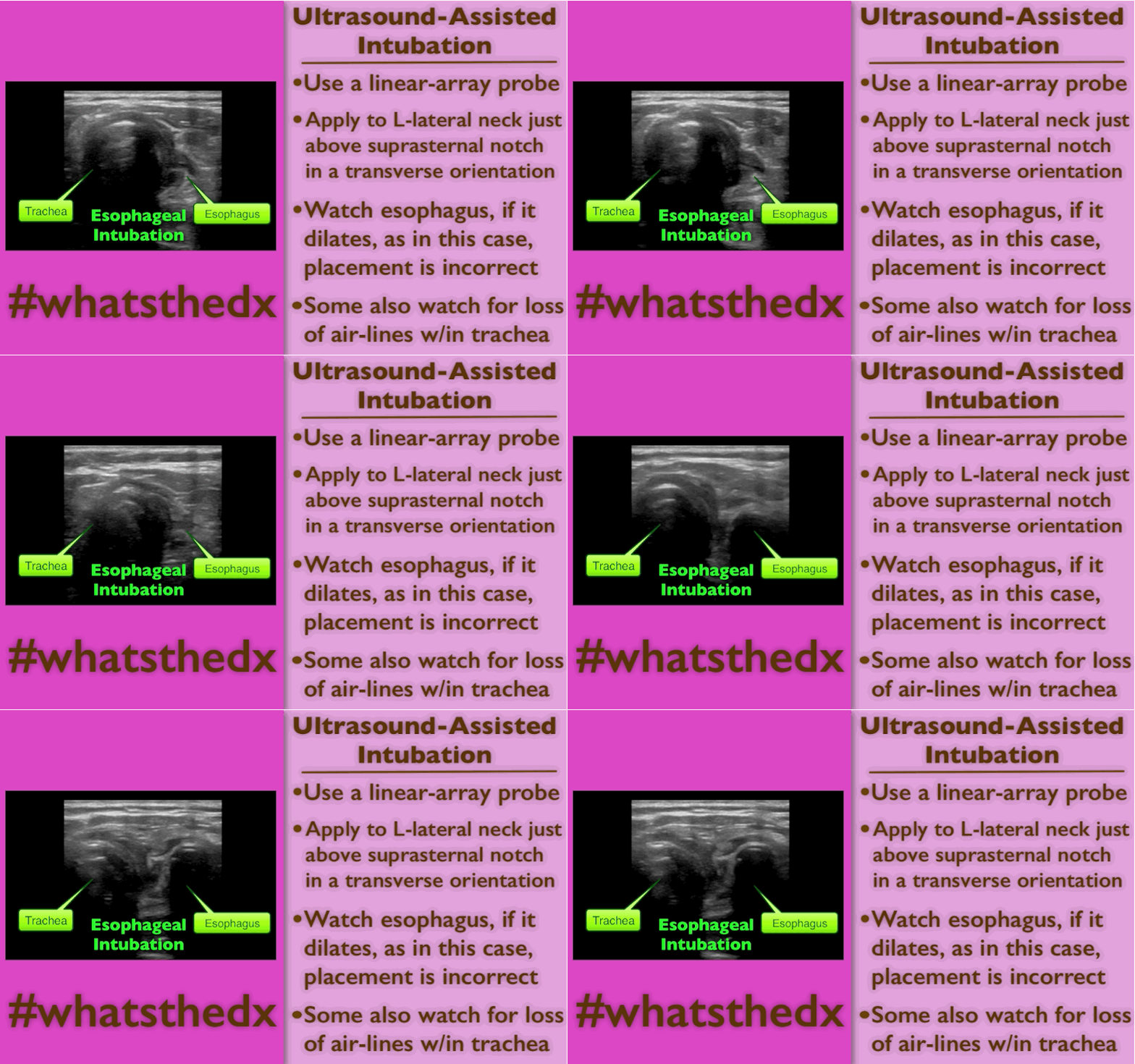
A neck ultrasound is performed during endotracheal intubation. What is labeled "A", what is labeled "B" and what's the diagnosis?
Show Answer
Show References
Kounis Syndrome (Part II)
- KS can develop from multiple etiologies: hymenoptera, proteins, vasoactive amines, histamine, acetylcholine, multiple antibiotics, and various medical conditions (angioedema, serum sickness, asthma, stress-induced cardiomyopathy).
- Hypersensitivity myocarditis and KS are two cardiac entities of allergic etiology affecting the myocardium and coronary arteries, respectively. These two entities can mimic each other and can be clinical indistinguishable.
- Presence of eosinophil’s, atypical lymphocytes, and giant cells on myocardial biopsy suggests hypersensitivity myocarditis.
- There is evidence showing use of corticosteroids with vasospastic angina with evidence of allergy or the presence of symptoms refractory to high-dose vasodilators has been reported to resolve symptoms.
Show References
There is no effective pharmacologic treatment known to hasten recovery from concussion. In future pearls we will examine possible interventions that may help.
The importance of educating our patients was demonstrated in two studies looking at concussion education. Patients were separated into 2 groups. The intervention group received a booklet of information discussing common symptoms of concussion, suggested coping strategies and the likely time course of recovery. At a 3 month follow-up evaluation, the intervention group reported fewer symptoms. This was repeated in pediatric patients with similar results.
Take Home: Consider taking the time to put such an information sheet together for concussed patients seen in the ED.
Show References
- For uncomplicted community acquired pneumonia which is treated as an outpatient, high dose amoxicillin (80-90mg/kg/day) is the first-line antibiotic of choice.
- Macrolides and third-generation cephalosporins are acceptable alternatives, but are not as effective due to pneumococcal resistance and lower systemic absorption, respectivley.
- Hospitalization should be strongly considered for children younger than 2 months or premature due to an increased risk for apnea.
- Patients hospitalized only for pneumonia, should be treated with ampicillin while those who are septic should be treated with a combination of vancomycin along with a second- or third- generation cephalosporin.