
UMSOM Researchers Create Revolutionary Database to Map Neocortical Development Across Species
March 25, 2026 | Heide Aungst
Result Could Lead to Treatments for ASD, Schizophrenia, and Dementia
Researchers have described major advances in the understanding of the development of the neocortex —layer-by-layer and cell-by-cell—thanks to a pioneering database developed at the University of Maryland School of Medicine (UMSOM) that combines multiomic data from 188 different studies. The revolutionary and publicly accessible database, called the Neuroscience Multi-Omic Analytics (NeMO Analytics), is helping scientists make groundbreaking discoveries about the brain and disease development by using vast amounts of human, non-human primate, mouse, and organoid data.

The study is part of a collection of papers on human brain development published in Nature and Nature Neuroscience by an international consortium of researchers in the National Institutes’ of Health BRAIN Initiative Cell Atlas Network (BICAN). NeMO Analytics, which is housed at the Institute for Genome Sciences (IGS) at UMSOM, is a critical part of BICAN. Scientists from IGS and UMSOM—along with colleagues at Johns Hopkins University (JHU), NIH, Yale University, and the University of Toronto—published their findings in Nature Neuroscience.
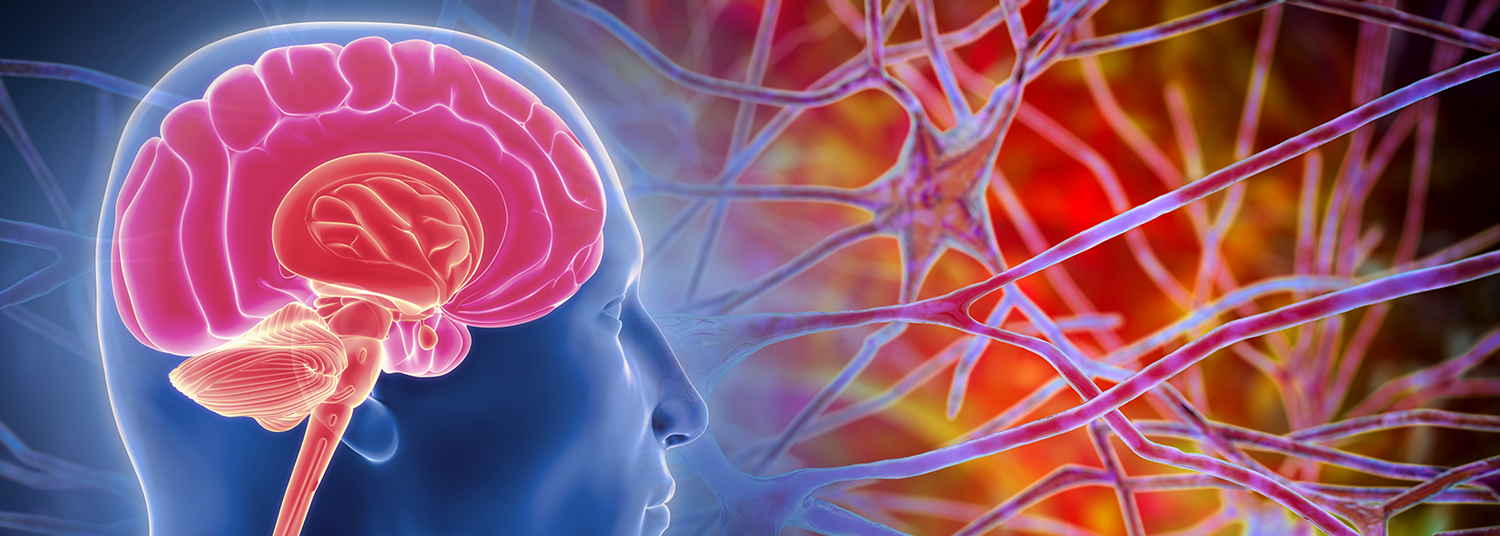
The neocortex is a part of the brain that processes sensory information, language, memory, and consciousness. Changes in neocortical development impact risk for many brain disorders, including autism spectrum disorders (ASD) and schizophrenia. The neocortex also has undergone dramatic changes in size and organization in the lineage leading to humans, compared to non-human primates and other mammals.

“We faced two major challenges in doing this research,” said the study’s senior author Carlo Colantuoni, PhD, a Research Associate at IGS and UMSOM’s Department of Neurology, as well as an Adjunct at JHU’s School of Medicine. “First, existing individual databases only cover portions of a brain region, developmental stage, or specific species. Secondly, most existing analysis pipelines cannot identify common molecular mechanisms across diverse datasets.”
The research team analyzed vast amounts of data, including gene-level data from 30-million single-cell transcriptomes, spatial transcriptomes, and RNA sequencing from sorted cells and bulk tissue to identify shared patterns of gene activity. In all mammals, neurons develop into specialized cells within the six layers of the neocortex. In this study, the researchers discovered, that while mouse cortical development is complete within months, neurons in humans take many years to reach full molecular maturity. Further, they showed that in brain organoids, which mimic early brain development, neurons do not develop fully into cells specific to the individual layers of the neocortex.
 “One of the key discoveries in this study is that brain disorders aren’t just caused by missing or faulty genes—they can also result from how genes are turned on or off during brain development,” said UMSOM Dean Mark Gladwin, MD, who is also the Vice President for Medical Affairs at the University of Maryland, Baltimore, and the John Z. and Akiko K. Bowers Distinguished Professor. “For example, the team discovered that a gene called FOXN3 is turned on in neural progenitors in mice, potentially limiting growth, but it was turned off in human progenitors, allowing for more growth.”
Added Seth Ament, PhD, a co-author on the study, IGS faculty member, and Associate Professor of Psychiatry at UMSOM: “The ability to integrate and analyze so many types of data at once within NeMO Analytics allows scientists to map patterns, discover features unique to human brain development, and track how disruptions, such as inflammation or epigenetic changes, could cause brain diseases. By making this resource user-friendly and available to all scientists, we are enabling faster discoveries that will lead to earlier detection, targeted treatments, and even preventive approaches for human brain disorders.”
Contact
Heide Aungst
HAungst@som.umaryland.edu
(216) 970-5773 (cell)
Related stories

Wednesday, July 09, 2025
University of Maryland School of Medicine Launches Groundbreaking Study on THC/CBD Therapy for Dementia-Related Agitation at End of Life
The University of Maryland School of Medicine (UMSOM) Palliative Medicine Program has launched a new clinical trial funded by the National Institute on Aging to explore a potential treatment for agitation in patients with dementia nearing the end of life. The study focuses on an investigational oral drug, T2:C100, which contains the two active ingredients in cannabis: THC and CBD.

Tuesday, October 31, 2017
UM SOM Professor of Psychiatry Recognized for Innovative and Promising Research in Schizophrenia
Deanna Kelly, PharmD, BCPP, Professor of Psychiatry at the University of Maryland School of Medicine (UM SOM), has been awarded the 2017 Maltz Prize for Innovative and Promising Schizophrenia Research from the Brain and Behavior Research Foundation. The Maltz award is considered one of the top awards in the field of psychiatric disorders.

Thursday, September 28, 2017
University of Maryland School of Medicine Researchers Identify Intriguing Links Between Sleep, Cognition and Schizophrenia
More than 3.2 million Americans suffer from schizophrenia; about 100,000 people are newly diagnosed every year. The disease includes a wide range of symptoms including visual and auditory hallucinations, cognitive problems and motivational issues.

Tuesday, February 07, 2017
University of Maryland School of Medicine Researchers Find Novel Chemical Switch That May Help Decrease Crucial Symptoms of Schizophrenia
A new study by University of Maryland School of Medicine researchers has found that in mice, adjusting levels of a compound called kynurenic acid can have significant effects on schizophrenia-like behavior. The study appeared in the latest issue of the journal Biological Psychiatry.