
UM School of Medicine Launches Global Health Alliance on World Health Day
April 20, 2026 | Jennifer Gonzales
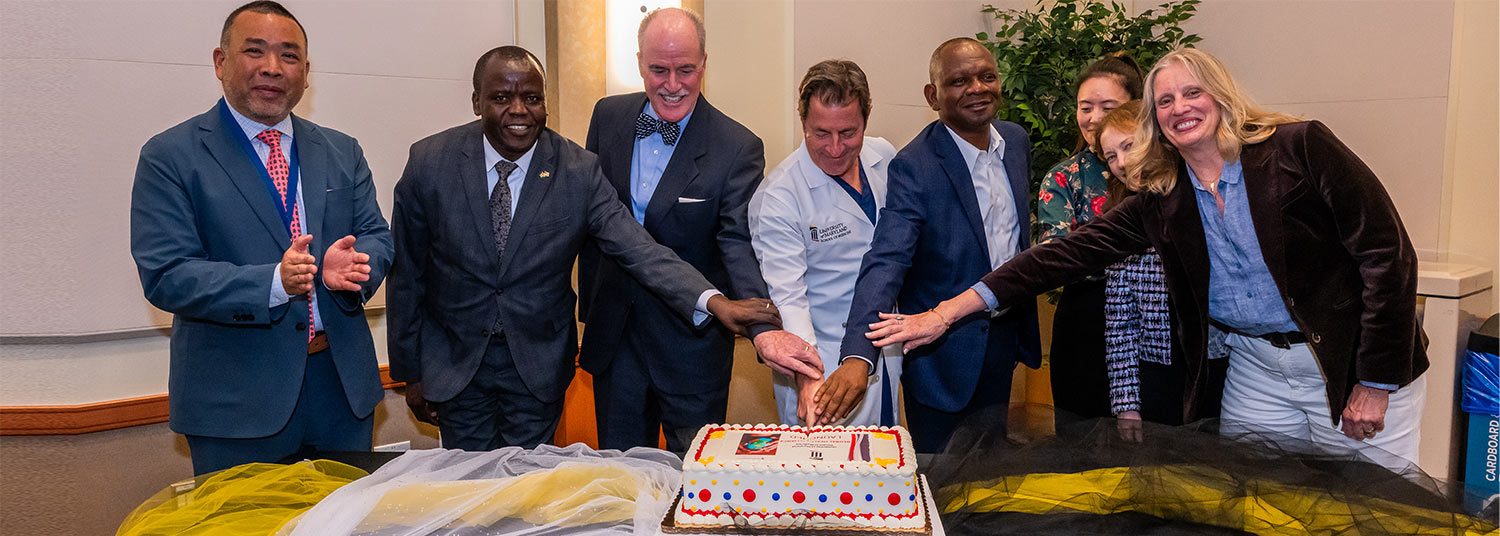
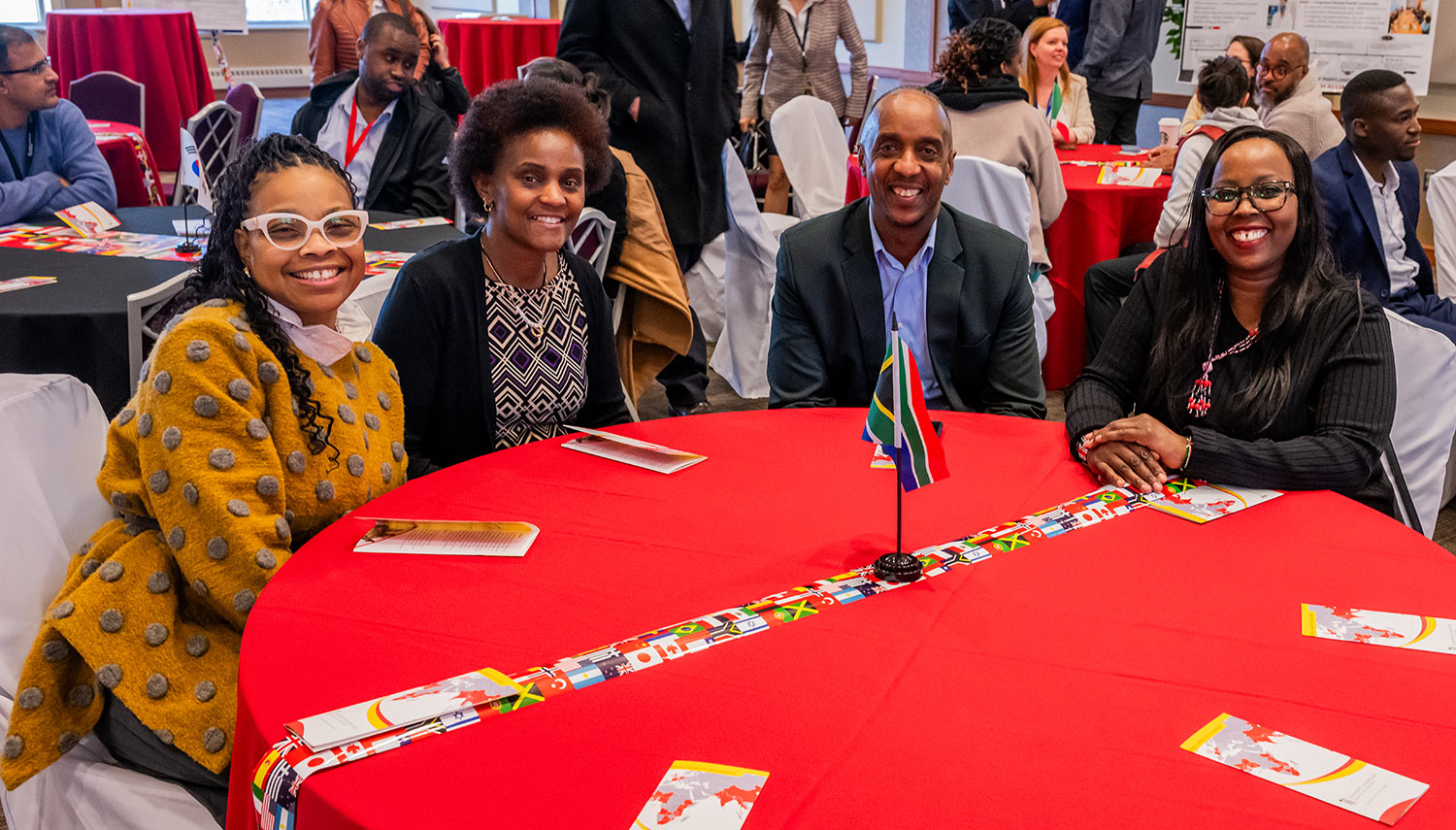
On April 7, 2026, World Health Day, the University of Maryland School of Medicine (UMSOM) formally launched the Global Health Alliance (UMGHA), a new platform designed to strengthen and connect the School’s decades of global health work. The launch brought together faculty, trainees, international partners, and government leaders from Kenya, Nigeria, and the United States, reflecting the collaborative spirit that has defined UMSOM’s global engagement for more than 50 years.
Opening the evening, Cathy Mwangi, PhD, Director of International Operations at the Institute of Human Virology (IHV) and UMGHA Coordinator, emphasized that the Alliance is not simply a new initiative, but a recognition of the partnerships that already shape UMSOM’s global impact. “This is not just a launch,” she said. “It is a celebration of partnerships… of impact and of shared vision to strengthen global health through research, training, and collaborations.”
Her remarks reflected a core truth: UMSOM’s global health footprint has grown organically through long-standing relationships, shared research priorities, and the commitment of faculty and partners working across continents.
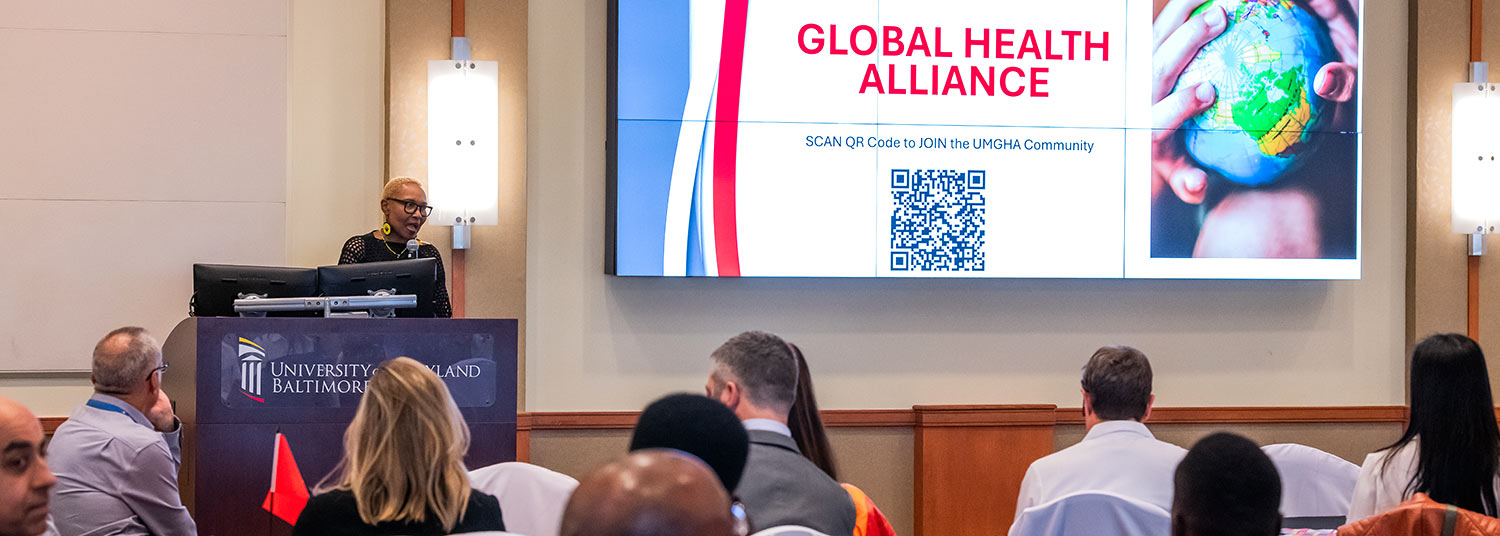
In his overview, Man Charurat, PhD, MHS, Global Director of Center for International Health, Education, and Biosecurity (Ciheb) and UMGHA Co-Director, highlighted that University of Maryland Baltimore (UMB) is home to “one of the great, longest-standing global health programs… in the entire country,” a legacy built over more than two centuries of scientific and community service.
He described the Alliance as a connector, an effort to bring visibility and cohesion to work that spans more than 30 countries. “The core of the Global Health Alliance is integration,” he noted. “It’s not about replacing. It’s about connecting.”
Representatives from Kenya and Nigeria underscored how UMSOM’s collaborations have contributed to national health priorities.
Speaking on behalf of the Kenyan Ambassador, Mr. Bartholomew Lumbasi described how U.S.–Kenya partnerships (supported by NIH, PEPFAR, and UMSOM) have strengthened HIV prevention and treatment, research capacity, and health workforce development. He noted that many programs “successfully transitioned into locally led and locally owned organizations,” a marker of sustainable impact.
From Nigeria, Muyi Aina,Phd, MPH, Director General of the National Primary Health Care Development Agency, reflected on more than two decades of collaboration. He highlighted UMSOM’s role in expanding HIV treatment to millions, supporting TB programs, and strengthening laboratory and surveillance systems that proved essential during outbreaks such as Ebola and COVID-19. “This remains one of our most important institutional partnerships as a government,” he said.
Representing the NIH Fogarty International Center, Peter Kilmarx, MD, Deputy Director at Fogarty International Center at NIH, emphasized the importance of research training in global health. He noted that one-third of NIH-funded publications involve international collaborators, and that these joint efforts have higher scientific impact. He praised UMSOM’s leadership in programs like the INSIGHT consortium, which trains both U.S. and international early-career scientists.
Two trainees shared firsthand how these investments shape careers and communities.
- Serah Gitome, MB ChB, MPH, a physician and researcher at the Kenya Medical Research Institute (KEMRI), described her work on bacterial vaginosis and its implications for women’s health. She opened with a vivid metaphor: “Imagine walking on shifting sand… just when stability is within reach, the ground shifts again.” Her research aims to break cycles of recurrence and improve reproductive health outcomes.
- Jane Park,MD, MPH, a UMSOM fellow based in Zambia, reflected on her experience helping build a tropical medicine training program and conducting research on infections among cancer patients. Her story illustrated the Alliance’s commitment to bi-directional learning and equitable partnership.
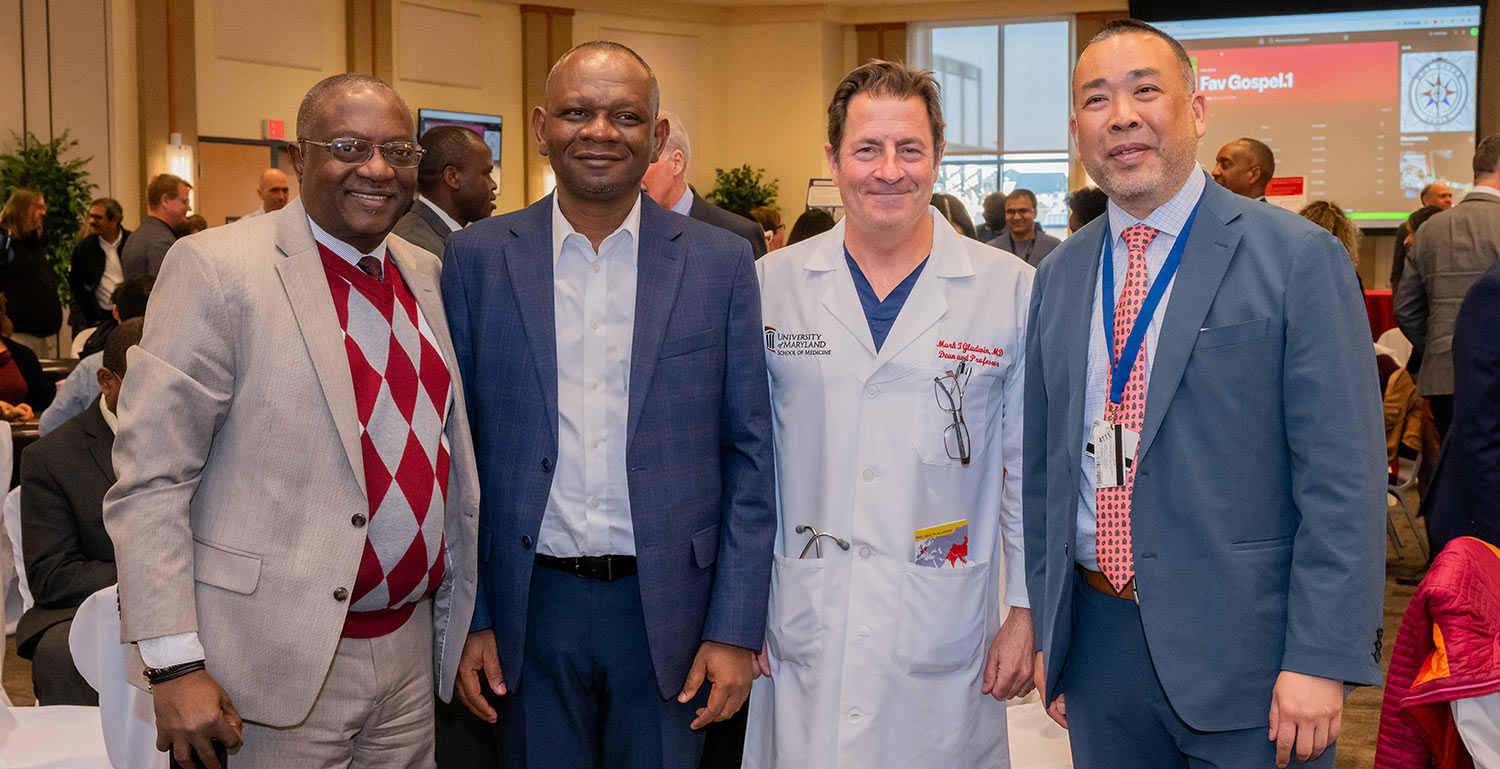
In his closing keynote, UMSOM Dean Mark T. Gladwin affirmed that the Global Health Alliance will serve as a catalyst—connecting faculty, elevating partnerships, and supporting the next generation of global health leaders. The launch, he noted, comes at a time when global health is rapidly evolving and requires coordinated, collaborative approaches.
The evening concluded with a symbolic moment: representatives from Kenya, Nigeria, NIH, and UMSOM joined together to cut the Alliance’s launch cake. As Dr. Mwangi remarked, “This is global… so we’re not going to do it the American way—we’re going to do it the global way.”
The launch of the University of Maryland Global Health Alliance marks a new chapter, one that builds on decades of partnership and positions UMSOM to deepen its impact worldwide. By connecting researchers, strengthening systems, and investing in future leaders, the Alliance reflects a simple but powerful belief shared by all who gathered that night:
Global health is a shared responsibility, and progress happens when institutions learn, innovate, and lead together.
Contact
Jennifer.Gonzales@ihv.umaryland.edu
Related stories
Tuesday, September 30, 2025
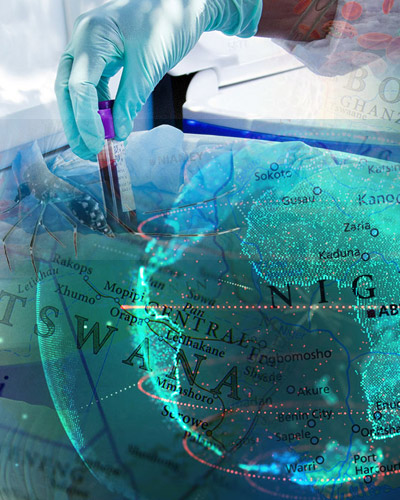
University of Maryland School of Medicine Forms Global Health Alliance
Global health research in U.S. academic medical centers is facing dire threats with proposed cuts to the federal budget that would reduce funding for global health programs by 62 percent, from $10 billion to $3.8 billion. Cuts include reducing funding for the President’s Malaria Initiative by nearly 45 percent, zeroing out U.S. funding for Gavi, the Vaccine Alliance, which received $300 million this year, as well as discontinuing $1.7 billion annually for the Global Fund to Fight AIDS.