
Multi-Strain Probiotic Therapy Shows Promise in Preventing Bacterial Vaginosis Recurrence
March 18, 2026 | Heide Aungst
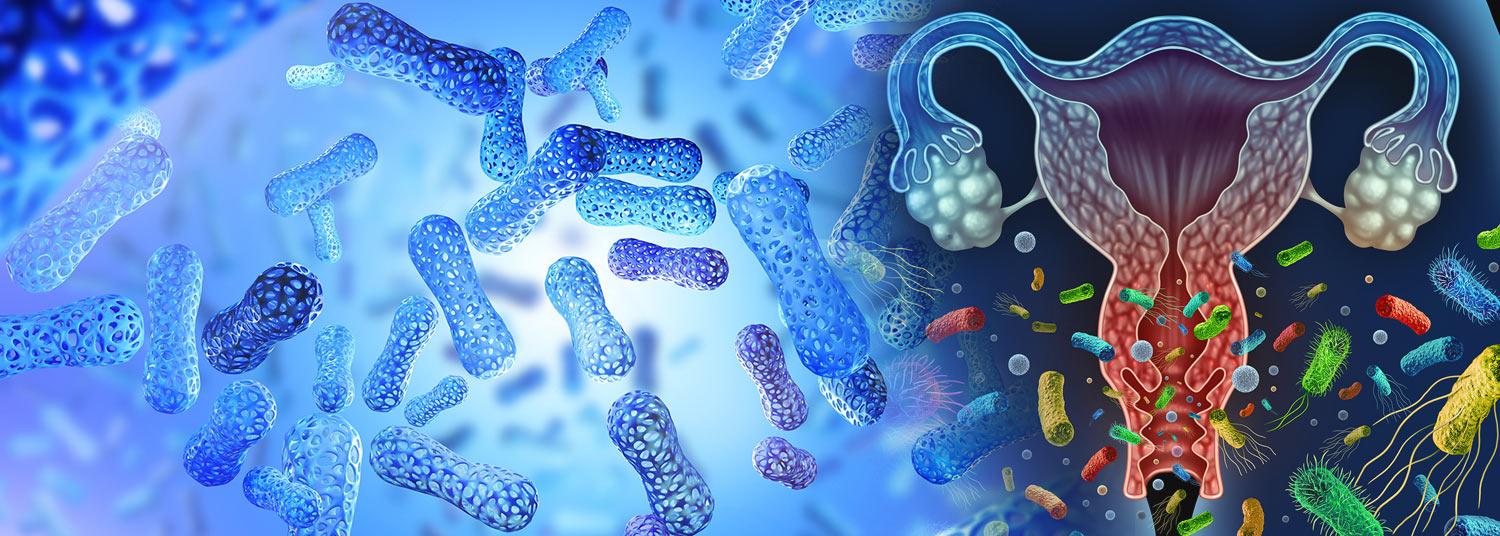
A one-week treatment was enough to add protective bacteria to the vagina that stayed for months after therapy ended
A global team of experts has identified a promising new approach to prevent recurrence of bacterial vaginosis (BV), a condition that affects millions of women worldwide. In a Phase 1 randomized clinical trial of women in the United States and South Africa, researchers found that a short course of a multi-strain probiotic restored protective bacteria to the vagina, significantly reducing disease recurrence. Cell Host & Microbe published the results from the study—a collaboration between investigators from the University of Maryland School of Medicine (UMSOM), Mass General Brigham, the Centre for the AIDS Programme of Research in South Africa (CAPRISA), and collaborators from the Vaginal Microbiome Research Consortium.
 “Bacterial vaginosis is associated with not only bothersome and disruptive symptoms, but also poor reproductive health outcomes,” said corresponding author Caroline Mitchell, MD, MPH, director of the Vulvovaginal Disorders Program at Massachusetts General Hospital and an obstetrician/gynecologist in the Mass General Brigham Department of Obstetrics and Gynecology. “For decades, we’ve relied on medications that clear the infection but do not restore beneficial bacteria, leaving the vaginal environment vulnerable. We wanted to see if we could 're-seed' that environment with protective bacteria and help the body stay healthy on its own.”
Globally, BV affects approximately 30 percent of women, causing discharge, odor, and irritation, and is associated with increased risk for preterm birth, HIV acquisition, and abnormal cell growth on the cervix. BV is a disruption of the vaginal microbiome, the environment of microorganisms that live in the vagina. Although antibiotics can provide short-term symptom relief, up to 60 percent of women have BV again within six months.
 “This trial represents a major step forward in expanding treatment options for BV with an innovative live therapeutic,” said Jacques Ravel, PhD, a lead author on the study and the Director of the Center for Advanced Microbiome Research & Innovation (CAMRI) at the Institute for Genome Sciences (IGS) at UMSOM. “Rather than using a traditional probiotic, we carefully designed a live biotherapeutic composed of multiple strains of Lactobacillus crispatus that recreate the ecology of stable, resilient, and optimal vaginal microbiomes. The study showed that colonization occurred rapidly even after a short three-day treatment.”
The trial, called VIBRANT (Vaginal lIve Biotherapeutic RANdomized Trial), was a multi-institutional collaboration led by the Vaginal Microbiome Research Consortium. The CAPRISA team extracted the DNA from all samples, and Dr. Ravel’s team at IGS’s Maryland Genomics performed the genomic analyses. They then mapped the sequence data to the VIRGO2 non-redundant gene catalog—developed in Dr. Ravel’s laboratory—to determine taxonomic composition and quantify the proportions of the therapeutic strains. Dr. Mitchell served as the regulatory sponsor, overseeing the manufacturing and FDA approval process. The CAPRISA team in Vulindlela, South Africa, together with Dr. Mitchell led participant enrollment.
Disebo Potloane, MB, ChB, who led the trial at CAPRISA’s rural South African research clinic said, “HIV remains a major challenge in young women in Africa and reducing their risk of infection has been an elusive goal. The encouraging results of the VIBRANT trial bode well for development of strategies aimed at removing a fundamental cause of their HIV risk.” Potloane acknowledged her collaborators in this initiative saying that these results lay a good foundation for the pathway to potential new HIV prevention strategies for women.
Ninety participants from Vulindlela, South Africa and Boston, Massachusetts, enrolled in the trial. Each received antibiotics and one of three treatments—placebo tablets, six-strain tablets or 15-strain tablets— for seven days. Zero, three, or seven tablets contained probiotic bacteria, with any remaining days containing placebos.
The genomic analyses found that the vaginal microbiomes of two-thirds of participants (66%) contained protective L. crispatus bacteria within the first five weeks even though some only received three days of active treatment. Participants with protective bacteria at five weeks were significantly less likely to experience BV recurrence during the study period.
The research team is planning a follow-up trial to optimize the treatment before initiating larger-scale clinical trials aimed at securing FDA approval of vaginal live biotherapeutic for BV. Beyond the clinical implications, the VIBRANT trial provides a rare window into the biological mechanisms of the vaginal microbiome.
“We are woefully ignorant about the basic biology of the vaginal environment,” Dr. Mitchell said. “This study is about more than just testing a new product; it’s one of the only ways we have to actually study these beneficial bacteria and identify what leads to colonization.”
Contact
Heide Aungst
HAungst@som.umaryland.edu
(216) 970-5773 (cell)