
Kahlert Institute for Addiction Medicine Inaugurates New Facility to Develop Treatments for Addiction
June 29, 2026 | Jon Kelvey
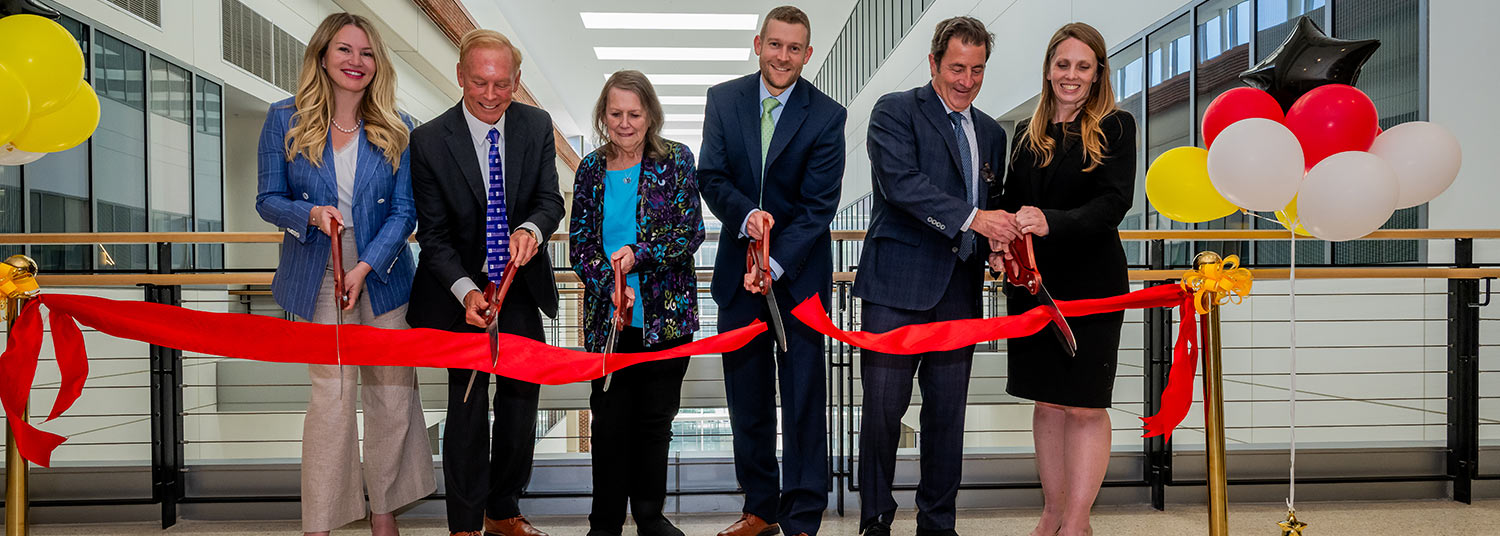
 The University of Maryland School of Medicine (UMSOM) celebrated a major milestone on June 2 with a ribbon cutting ceremony to officially inaugurate 34,000 square feet of newly renovated space for the Kahlert Institute for Addiction Medicine. Located on the fifth floor of the Health Sciences Research Facility (HSRF) III building on the school’s Baltimore campus, the new space brings together operations, basic science, and clinical research laboratories in a unified environment designed to accelerate breakthroughs in addiction science.
Founded three years ago in May 2023 as a major initiative of UMSOM Dean Mark T. Gladwin, MD, the Kahlert Institute received its initial funding through two $10 million investments from the philanthropic Kahlert Foundation and the University of Maryland, Baltimore, along with an additional $5 million from UMSOM. Leadership from all three organizations stood alongside Kahlert Institute faculty at the ribbon cutting ceremony.
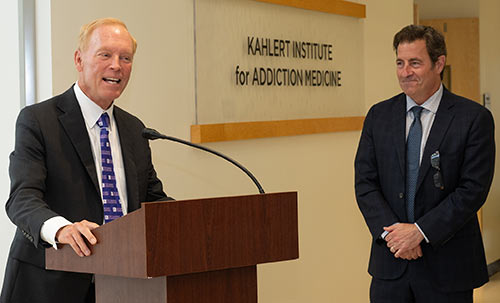
In his opening remarks, Dean Gladwin praised the major strides the Institute has made over those three years, including building a team of 28 faculty members, launching 19 major funded projects, and securing $9 million in direct funding the past two years alone. The Institute has also recently secured a $10 million grant from the City of Baltimore aimed at opioid prevention.
 "What I see is probably one of the most successful ventures of my 30-year career in academic medicine,” Dean Gladwin, who is also the Vice President for Medical Affairs, University of Maryland, Baltimore, and the John Z. and Akiko K. Bowers Distinguished Professor said in his remarks. “There aren't many institutes, departments, or programs where I've seen such a breathtaking pace of success. And it all starts with the values of the Kahlert family and their commitment to philanthropy and supporting great causes.”
Speaking on behalf of the Kahlert Foundation, President and CEO Greg Kahlert also praised the Institute’s progress in advancing addiction science and medicine.
"This is the largest gift that the Kahlert Foundation has made in the state of Maryland. From the very beginning, we saw the importance of the work, and again we've just been so impressed by what's happened in the last few years, and all the momentum and the good work and results,” he said. "We're honored to be part of this partnership.”
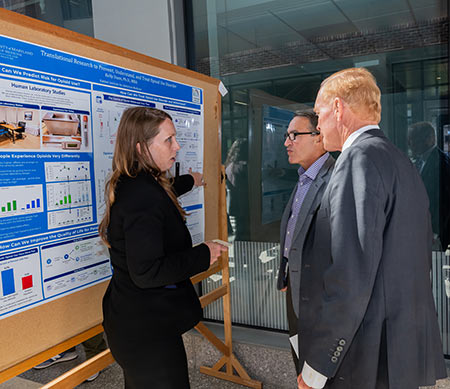
The newly renovated space includes wet and dry laboratory facilities alongside fully integrated environments for clinical trials and educational outreach. The design aims to serve as a bridge between fundamental basic discoveries in neuroscience, first-in-human studies and advanced clinical trials, and implementation science, according to Kelly Dunn, PhD, MBA, the Director of the Kahlert Institute for Addiction Medicine and Professor of Psychiatry and Neurobiology at UMSOM.
View the Image Gallery
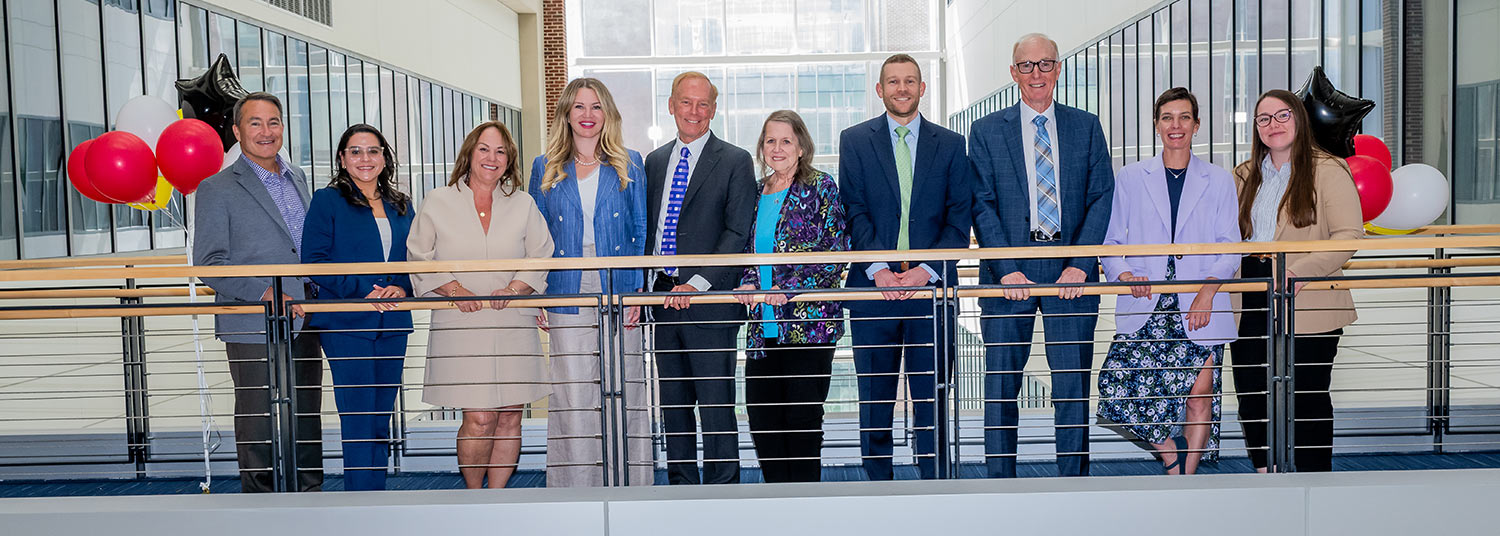
Members of the Kahlert Foundation
"Something that really distinguishes this research program is that we have co-located the basic science and the clinical science teams together. We're actively working to find ways to collaborate and translate across the studies," Dr. Dunn said. “We moved into the new space in February, and we’re excited to be settling in with all the equipment and infrastructure we need to build out team science, recruit new faculty, build our culture and continue making new discoveries."
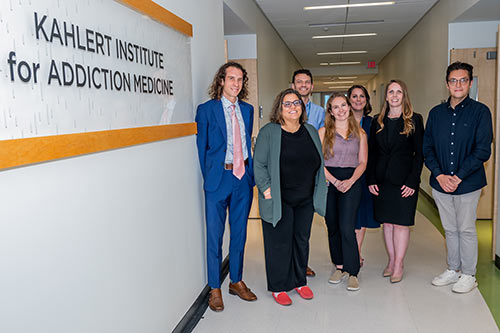 The need for discoveries in addiction medicine is urgent. Although Centers for Disease Control and Prevention statistics show drug overdoses decreasing over the past few years — likely thanks to greater public awareness and increased access to the emergency drug naloxone — overdoses still claimed more than 100 lives a day in 2025. The Kahlert Institute’s mission is to make discoveries and develop the therapies necessary to continue pushing the rate of overdoses down, while also lessening the risk for addiction and helping to improve the lives of those suffering with addiction. The new facilities will accelerate the institute’s already impressive progress toward that goal.
"I see you all having this awesome opportunity, and awesome responsibility, to bend the curve on this in the same way we're bending the curve on breast cancer, on lung cancer, on cardiovascular disease, on diabetes, and now on obesity,” Dean Gladwin said. “This is the next big frontier of human civilization, which is understanding the human brain and healing the human brain.”
Contact
Jon Kelvey
JKelvey@som.umaryland.edu