
Greenebaum Family Donates $5.5 Million to Advance Cancer Research and Patient Care
April 13, 2026 | Katie Ghiardi
Funding Designated for the University of Maryland Greenebaum Comprehensive Cancer Center Extends Family’s 30-Year Legacy of Philanthropy, Commitment to Health Care and Community
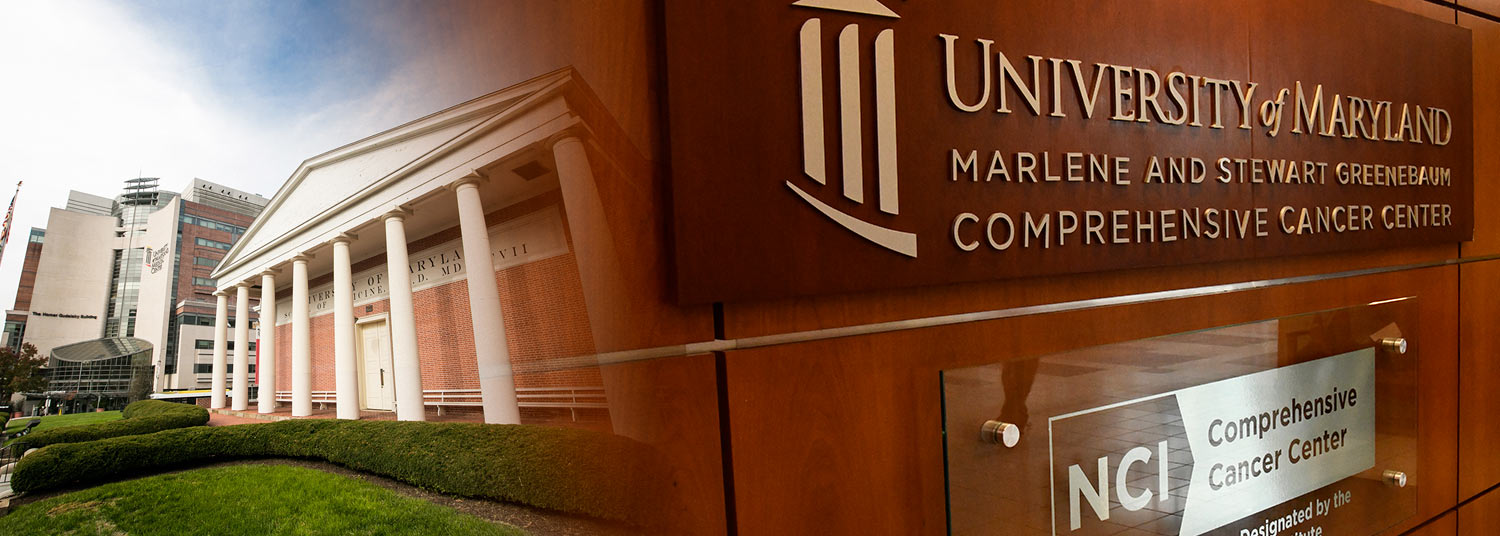
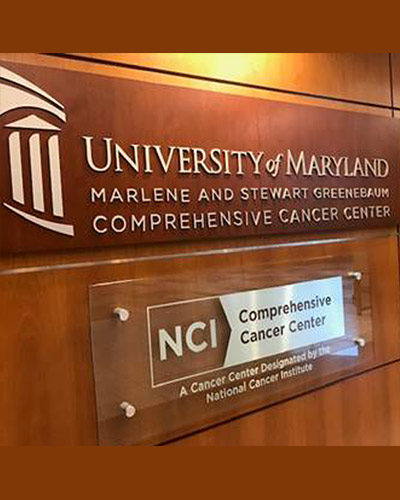
 The Marlene and Stewart Greenebaum Family Foundation has donated $5.5 million to the University of Maryland Greenebaum Comprehensive Cancer Center (UMGCCC) to help advance groundbreaking scientific research and compassionate, state-of-the-art cancer care in Maryland and across the region. The National Cancer Institute (NCI)-designated comprehensive cancer center is named in honor of Marlene and Stewart Greenebaum, who gave a transformative gift 30 years ago, after Mrs. Greenebaum’s successful treatment for breast cancer.
The funds will be used to help foster research conducted by faculty at the University of Maryland School of Medicine (UMSOM) and to advance innovative treatments, such as using immunotherapies like CAR T-cells to treat solid tumors. It will also be used to strengthen UMGCCC’s support for cancer survivors, allowing for the investigation of effective uses for emerging wearable technologies, specialized care to improve quality of life, and tailored nutritional support.
Having experienced tremendous growth in recent years, UMGCCC is poised for a major expansion when it moves into the Stoler Center for Advanced Medicine in the fall of 2026. In recognition of the Greenebaums’ legacy, the lobby of the new building will be named in the family’s honor. The sleek, modern space will welcome visitors to the cancer center’s new home and serve as the main entrance of the University of Maryland Medical Center (UMMC) at 22 S. Greene St. UMMC is the academic flagship hospital of the 11-hospital University of Maryland Medical System (UMMS).
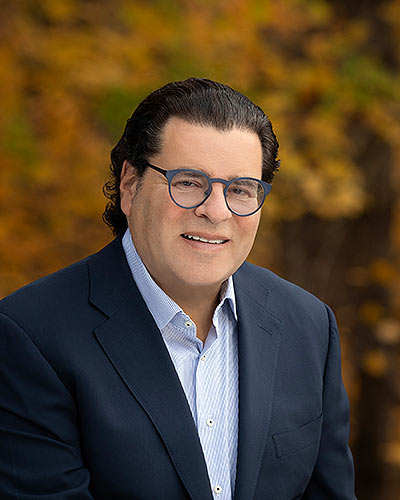
“We could not imagine a more meaningful way to mark the 30th anniversary of my parents’ founding gift while celebrating this pivotal moment for the cancer center,” said Michael Greenebaum, a business leader and philanthropist. “This milestone and this new commitment reflect our family’s dedication to advancing cancer research, improving treatment, and expanding access to care for all. It is a legacy we are proud to carry forward for generations to come.”
 “The Greenebaum Comprehensive Cancer Center is already an incredible resource for people diagnosed with cancer in Maryland and beyond,” said Mr. Greenebaum who serves as Chair of UMSOM’s Board of Visitors; he is also a member of the UMGCCC Board of Advisors and founded the Maryland Half-Marathon & 5K, now in its 18th year which has raised more than $8 million to support the cancer center. “With this major expansion, the center will be well-prepared to meet the growing needs for expert cancer care in our state and region, serving as a powerhouse of scientific discovery and clinical innovation in the fight to eradicate this terrible disease.”
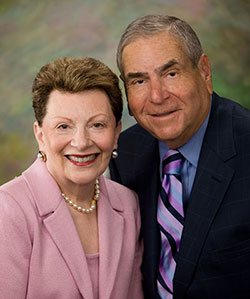 Marlene Greenebaum lived 28 years after being diagnosed with breast cancer because of the extraordinary medical care that she received at the University of Maryland Medical Center. She was treated with an aromatase inhibitor, a drug invented by Angela Brodie, PhD, who was a preeminent breast cancer researcher at the cancer center.
Amy Burwen, Marlene and Stewart Greenebaum’s daughter, said, “I have seen firsthand the incredible work being done by the cancer center to not only extend lives but to also improve the quality of life for countless people in our community fighting this disease. It is my hope that UMGCCC continues to positively impact lives through research and patient care for many years to come.”
Robbie Greenebaum said he views his family’s latest gift as a way to honor his grandparents’ legacy of giving and caring for others. “I am tremendously proud of their commitment to the cancer center and building a brighter future for cancer patients. I believe that this gift will help to ensure that the center that bears their name continues to lead the way in advancing cancer treatments while providing the highest standard of care for patients and their families,” he said.
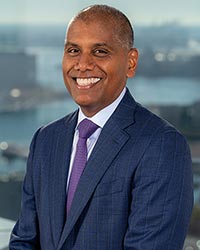 Mohan Suntha, MD, MBA, UMMS President and Chief Executive Officer, said, “The vision and generosity of the Greenebaum family continues to have a lasting and measurable impact on every patient and family who turns to us for cancer care. The family’s investment in our mission has fueled our discoveries and strengthened our ability to translate innovation into outstanding patient care. As we honor three decades of partnership, we are inspired by the possibilities for generations to come.”
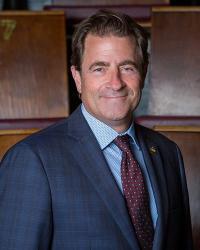 Mark T. Gladwin, MD, the John Z. and Akiko K. Bowers Distinguished Professor and Dean of UMSOM and Vice President for Medical Affairs at the University of Maryland, Baltimore, said, “Over the past two decades, patient volume at the UMGCCC has increased by more than 50 percent, with more than 3,700 new patients treated each year and over 60,000 outpatient visits. Our oncology faculty are now leading more than 450 clinical trials — more than twice the number from earlier years — and research funding has grown to over $130 million annually. The Greenebaum family’s longstanding generosity and support, along with Michael's exemplary service and leadership on our Board of Visitors, has played an essential role in advancing cancer research and patient care, and in our rise as one of the nation's leading academic medical centers.”
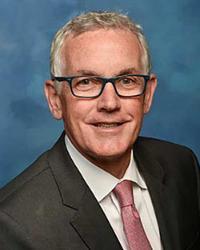 Bert W. O’Malley, MD, President of UMMC and Executive Vice President for the Academic Health Division of UMMS, said, “We are deeply grateful for the Greenebaum family’s continued trust and partnership. This gift will allow us to further build on their legacy, accelerating promising research that will shape the future of oncology and elevating our patient experience to offer personalized support and resources to help meet each patient’s needs before, during and after treatment.”
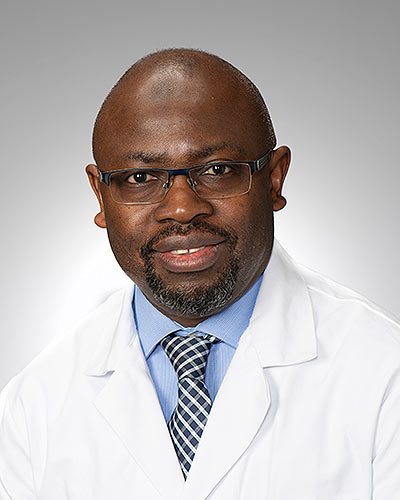
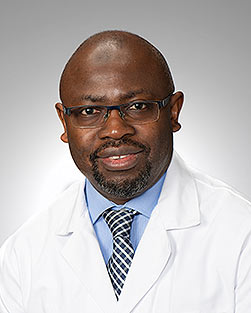 “We are extremely grateful for the Greenebaum family’s generous investment in UMGCCC over the last three decades. Their unwavering financial support and steadfast partnership have truly transformed our cancer center,” said Taofeek K. Owonikoko, MD, PhD, UMGCCC’s Executive Director and the Kevin J. Cullen Distinguished Professor of Oncology at UMSOM. “With this new gift, we are better able to fulfill our mission as an NCI-designated comprehensive cancer center, translating discoveries in the laboratory into effective, next-generation treatments for patients.”
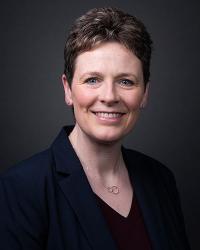 Heather S. Culp, JD, Chief Philanthropy Officer for University of Maryland Medicine, Senior Vice President for UMMC, and Senior Associate Dean for Development at UMSOM said, “For three decades, the Greenebaum family has helped define what’s possible at the cancer center, and this new gift arrives at a pivotal moment as we prepare to expand into the Stoler Center for Advanced Medicine. Their generosity will fuel research, advance innovative therapies, and elevate the patient and family experience from the moment they walk through our doors.”
The UM Greenebaum Cancer Center received national designation as an NCI Cancer Center in 2008 and then received the highest recognition possible when it was designated as a comprehensive cancer center in 2016. It earned renewal of the prestigious designation in 2021.
About the University of Maryland Marlene and Stewart Greenebaum Comprehensive Cancer Center
The University of Maryland Marlene and Stewart Greenebaum Comprehensive Cancer Center (UMGCCC) is a National Cancer Institute-designated comprehensive cancer center within the University of Maryland Medical Center in Baltimore, the flagship academic hospital of the University of Maryland Medical System. It offers a multidisciplinary approach to treating all types of cancer and has an active clinical and basic science research program through its relationship with the University of Maryland School of Medicine. The center is ranked among the top 50 cancer programs in the country by US News & World Report. www.umgccc.org
About the University of Maryland Medical Center
The University of Maryland Medical Center (UMMC) is comprised of two hospital campuses in Baltimore: the 800-bed flagship institution of the 11-hospital University of Maryland Medical System (UMMS) and the 200-bed UMMC Midtown Campus. Both campuses are academic medical centers for training physicians and health professionals and for pursuing research and innovation to improve health. UMMC's downtown campus is a national and regional referral center for trauma, cancer care, neurosciences, advanced cardiovascular care, and women's and children's health, and has one of the largest solid organ transplant programs in the country. All physicians on staff at the downtown campus are clinical faculty physicians of the University of Maryland School of Medicine. The UMMC Midtown Campus medical staff is predominately faculty physicians specializing in a wide spectrum of medical and surgical subspecialties, primary care for adults and children and behavioral health. UMMC Midtown has been a teaching hospital for 140 years and is located one mile away from the downtown campus. For more information, visit www.umm.edu.
About the University of Maryland Medical System
The University of Maryland Medical System (UMMS) is an academic private health system, focused on delivering compassionate, high-quality care and putting discovery and innovation into practice at the bedside. Partnering with the University of Maryland School of Medicine and University of Maryland, Baltimore who educate the state’s future health care professionals, UMMS is an integrated network of care, delivering 25 percent of all hospital care in urban, suburban and rural communities across the state of Maryland. UMMS puts academic medicine within reach through primary and specialty care delivered at 11 hospitals, including the flagship University of Maryland Medical Center, the System’s anchor institution in downtown Baltimore, as well as through a network of University of Maryland Urgent Care centers and more than 150 other locations in 13 counties. For more information, visit www.umms.org.
About the University of Maryland School of Medicine
Now in its third century, the University of Maryland School of Medicine was chartered in 1807 as the first public medical school in the United States. It continues today as one of the fastest growing, top-tier biomedical research enterprises in the world -- with 46 academic departments, centers, institutes, and programs, and a faculty of more than 3,000 physicians, scientists, and allied health professionals, including members of the National Academy of Medicine and the National Academy of Sciences, and a distinguished two-time winner of the Albert E. Lasker Award in Medical Research. With an operating budget of more than $1.2 billion, the School of Medicine works closely in partnership with the University of Maryland Medical Center and Medical System to provide research-intensive, academic and clinically based care for nearly 2 million patients each year. The School of Medicine has nearly $600 million in extramural funding, with most of its academic departments highly ranked among all medical schools in the nation in research funding. As one of the seven professional schools that make up the University of Maryland, Baltimore campus, the School of Medicine has a total population of nearly 9,000 faculty and staff, including 2,500 students, trainees, residents, and fellows. The combined School of Medicine and Medical System (“University of Maryland Medicine”) has an annual budget of over $6 billion and an economic impact of nearly $20 billion on the state and local community. The School of Medicine, which ranks as the 8th highest among public medical schools in research productivity (according to the Association of American Medical Colleges profile) is an innovator in translational medicine, with 606 active patents and 52 start-up companies. In the latest U.S. News & World Report ranking of the Best Medical Schools, published in 2023, the UM School of Medicine is ranked #10 among the 92 public medical schools in the U.S., and in the top 16 percent (#32) of all 192 public and private U.S. medical schools. The School of Medicine works locally, nationally, and globally, with research and treatment facilities in 36 countries around the world. Visit medschool.umaryland.edu.
Contact
Katie Ghiardi
kghiardi@som.umaryland.edu
(301) 742-6959
Karen Warmkessel
Email: kwarmkessel@umm.edu
Cell: (410) 404-1532
Related stories
Friday, March 27, 2026
University of Maryland Greenebaum Comprehensive Cancer Center Receives $3 Million NCI Award to Develop Next Generation of Cancer Researchers
The University of Maryland Marlene and Stewart Greenebaum Comprehensive Cancer Center (UMGCCC) has been awarded a prestigious $3 million National Cancer Institute (NCI) Career Development Award to train the next generation of oncology researchers focused on treating patients of all backgrounds.
Tuesday, October 01, 2024
Cancer Patients Who Experience Cognitive Decline After Radiation Treatment for Brain Metastases May Regain Full Neurocognitive Function, New Study Suggests
Nearly 40 percent of cancer patients who experienced memory loss, brain fog and other cognitive difficulties after radiation treatment for brain metastases regained full neurocognitive function within six months, according to a new analysis by radiation oncology researchers at the University of Maryland Greenebaum Comprehensive Cancer Center (UMGCCC).
Monday, October 02, 2023
Internationally Recognized Thoracic Oncologist Dr. Taofeek K. Owonikoko Named Executive Director of the University of Maryland Marlene and Stewart Greenebaum Comprehensive Cancer Center
University of Maryland School of Medicine (UMSOM) Dean Mark T. Gladwin, MD, and University of Maryland Medical Center (UMMC) President & CEO Bert W. O’Malley, MD, announced today that Taofeek K. Owonikoko, MD, PhD, a distinguished physician-scientist with a global reputation in thoracic oncology, has been appointed Executive Director of the University of Maryland Marlene and Stewart Greenebaum Comprehensive Cancer Center (UMGCCC). Dr. Owonikoko will join the faculty of the University of Maryland School of Medicine (UMSOM) as The Marlene and Stewart Greenebaum Professor in Oncology in the Department of Medicine and Executive Director of the UMSOM Program in Oncology. He will also become Chief of Service at UMMC. As the lead Oncologist for both UMMC and UMSOM, he will assume the positions of Senior Associate Dean for Cancer Programs at UMSOM and Associate Vice President for Cancer Programs at University of Maryland, Baltimore (UMB).
Monday, October 31, 2022
NCI Grants Awarded to IHV to Prevent Cancer and Improve Screening in Sub-Saharan Africa
Institute of Human Virology (IHV) researchers at the University of Maryland School of Medicine (UMSOM) have received two five-year awards from the National Institutes of Health’s National Cancer Institute (NCI) for a total of $7.5 million. One award aims to reduce the incidence of lung cancer and other cancers associated with using tobacco in Botswana. The other is focusing on improving screening and treatment of anal precancer in Nigeria. Both grants will make use of existing HIV treatment and prevention infrastructure in low- and middle-income countries to reach people living with HIV who are most at risk for these particular types of cancers.
Tuesday, February 01, 2022
Study: Losing Excess Weight in Adulthood Reduces Risk of Developing Polyps that can Lead to Colorectal Cancer
Weight loss for adults, particularly those who are overweight or obese, may reduce their risk of developing a type of polyp that can lead to colorectal cancer, according to a new study led by researchers at the University of Maryland School of Medicine (UMSOM). Findings were published today in the journal JNCI Cancer Spectrum.
Tuesday, July 14, 2020
UM School of Medicine Researchers Identify Mechanism for Treating Cancer Cells
Researchers at the University of Maryland School of Medicine (UMSOM) have identified a surprising new mechanism that may significantly expand use of an important cancer drug, called a PARP inhibitor. These drugs are currently only approved to be used in those with certain mutations in the BRCA1 or BRCA2 genes that are associated with breast and ovarian cancers. The new findings were published online last week in the Proceedings of the National Academy of Science (PNAS) journal in collaboration with a group at Johns Hopkins School of Medicine.