
Awards & Accolades
Three CVD Researchers Receive Pivot Awards from UMB
June 15, 2026

In light of changing Federal funding priorities, the University of Maryland, Baltimore (UMB) created a Pivot Strategic Investment Initiative, committing up to $33 million in research support to strengthen the institution’s resilience. The funds will be distributed across the university. With the majority of funds deployed over the next 12 months—and a portion reserved to sustain high-performing programs and address emerging challenges—the initiative is guided by core principles that prioritize protecting critical biomedical research, promoting excellence through rigorous review, supporting long-term growth, encouraging cross-disciplinary partnerships, and ensuring accountability through robust performance tracking and measurable outcomes.
After a rigorous review process, three research proposals from the University of Maryland School of Maryland (UMSOM) Center for Vaccine Development and Global Health (CVD) were selected for this competitive funding opportunity. These proposals expand the Center’s research priorities to tackle problems affecting people both in Maryland and around the world. The Center is receiving $2.2 million to pursue the three selected initiatives.
The three funded initiatives include:
Evolution of Dengue Virus in Response to Host Factors, Climate Drivers and Vector Kinetics
CVD is launching a new initiative that will examine factors that may be contributing to the explosive rise of dengue in West Africa, including how people respond to dengue infection, changes in the virus and mosquito populations, and the effects of climate change. The initiative aims to build regional capacity for dengue surveillance and clinical trials, while providing insights needed to inform prevention strategies and respond to the growing global dengue threat.
 The WHO has ranked dengue as one of the top ten infectious disease threats worldwide. Dengue fever, spread through the bite of infected mosquitoes, can be a mild flu-like illness or can progress to shock, severe bleeding, or organ impairment.
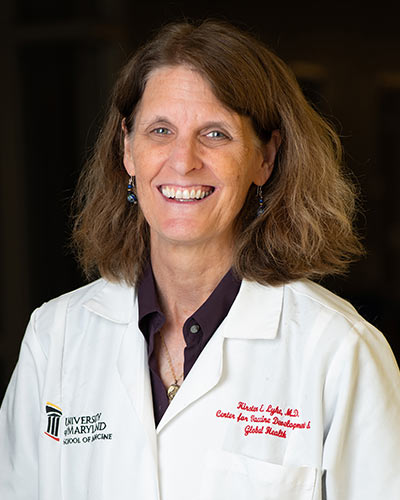
“CVD has built an extensive network of collaborators across Africa to study malaria and Ebola,” explained Kirsten Lyke, MD, Professor of Medicine and lead investigator on this initiative. “The goal of this award is to leverage existing public health infrastructure and collaborations across multiple African countries, including Burkina Faso, Mali, Ivory Coast, Niger and Nigeria, to investigate the rapid rise of dengue cases in West Africa and beyond.”
In addition to international collaborations, the Pivot Initiative will involve collaborations within UMSOM including the Institute for Genome Sciences, Institute for Human Virology, and the Department of Microbiology and Immunology, as well as promote two young investigators to faculty status.
Maryland Respiratory Pathogen Project: A New Platform for Respiratory Disease Research
 Responding to rising disease burden, declining vaccination coverage, and gaps in national surveillance, CVD researchers are launching the Maryland Respiratory Pathogen Project (MRPP). This will integrate clinical, immunization, microbiologic, and genomic data into a unified system to better understand how respiratory pathogens spread and impact patients. By combining data analytics, clinical research, and genomic sequencing, MRPP will evaluate vaccine effectiveness, disease severity, and pathogen evolution. The initiative also aims to transform routine healthcare data into actionable evidence, strengthen pandemic preparedness, and position Maryland as a leader in health system–driven infectious disease research and innovation.
Respiratory pathogens are a leading cause of hospitalizations in Maryland and across the United States. With vaccine skepticism on the rise and changes within Federal centers charged with disease surveillance, Maryland needs a system to evaluate respiratory pathogen epidemiology and countermeasures.
“Maryland Respiratory Pathogen Project aims to create a unique platform embedded within the University of Maryland Medical System integrating analytic, clinical, and pathogen characterization capabilities,” explained Justin Ortiz, MD, MS, Professor of Medicine and lead investigator on this award. “The program will help evaluate prevention and treatment strategies for respiratory infections.”
The MRPP, while spearheaded by CVD, will rely heavily on collaborators from across the University of Maryland Medical System including UMSOM Departments of Medicine, Epidemiology and Public Health, Pediatrics, Microbiology and Immunology, and Institute for Genome Research; University of Maryland College Park; and Maryland Department of Health.
Unraveling Maternal Milk Bolstering of Infant Gut Health
 The Unraveling Maternal Milk Bolstering of Infant Gut Health (UMBIGH) initiative is an innovative, multidisciplinary effort to better understand how human milk supports the development of the infant gut—particularly in vulnerable preterm newborns. Addressing the serious risks of intestinal immaturity and diseases such as necrotizing enterocolitis (NEC), the project will integrate clinical cohorts, advanced molecular analyses, microbiome research, and cutting-edge “gut-on-a-chip” models to uncover how milk-derived components and signals drive gut maturation.
By identifying predictive biomarkers of neonatal intestinal permeability and isolating key protective components in breastmilk, UMBIGH aims to inform the development of new diagnostic tools and enhance donor milk and infant formula to more effectively support infant health. Ultimately, the initiative seeks to translate these discoveries into practical interventions that improve neonatal care and reduce long-term health risks.
Preterm infants are born before their gut is able to fully mature, which can lead to many life-threatening diseases. One such disease, necrotizing enterocolitis, affects 1 in 1,000 premature babies.
 “Human milk is the most effective treatment for preterm infants with NEC,” explained Marcela Pasetti, PhD, Professor of Pediatrics and principal investigator of this initiative. “Unfortunately, why breastmilk is so effective is not understood. Studying how human milk supports healthy gut development may lead to improved interventions for infants who are not able to receive milk from their birth parent.”
The UMBIGH will involve collaborations across UMSOM, including the Departments of Pediatrics, Surgery, and Microbiology and Immunology, and the Institute of Genome Sciences.
“Global health needs are continuously evolving,” added Stefan Kappe, PhD, CVD Director. “These new initiatives expand on the Center’s existing capabilities, allowing us to combat infectious diseases both here in Maryland and around the world.”
About the Center for Vaccine Development and Global Health
Founded in 1974, the University of Maryland School of Medicine’s Center for Vaccine Development and Global Health is internationally recognized for its research in vaccine development, infectious disease, and clinical trials that have paved the way for lifesaving interventions around the world. The CVD’s mission is to reduce the global burden of infectious diseases through research, training, and public health impact.
About the University of Maryland School of Medicine
The University of Maryland School of Medicine, established in 1807 as the first public medical school in the U.S., continues today as one of the fastest growing, top-tier biomedical research enterprises in the world. The School has nearly $500 million total research funding, 46 departments, centers, and institutes, more than 2,200 student trainees and over 3,000 faculty members, including notable members of the National Academy of Medicine. As the largest public medical school in the DC/MD/VA region, faculty-physicians are working to help patients manage chronic diseases like obesity, cancer, heart disease and addiction, while also working on cutting-edge research to address the most critical generational health challenges. In 2024, the School ranked #12 among public medical schools and #27 among all medical schools for R&D expenditures by the National Science Foundation. With a $1.3 billion total operating budget, the School partners with the University of Maryland Medical Center to serve nearly 2 million patients annually. The School's global reach extends around the world with research and treatment facilities in 33 countries. In Maryland, the School of Medicine is spearheading new initiatives in AI and health computing and partnering with the University of Maryland BioPark to develop new medical technologies and bioengineering ventures. For more information, visit medschool.umaryland.edu.