
University of Maryland School of Medicine logo
Emergency Medicine
All Departments
UMSOM Assistant

UMEM Educational Pearls

  • Home
  • Departments
  • Emergency Medicine
  • CME
  • UMEM Educational Pearls
  • CME
  • Courses and Conferences
  • Free Open Access Medical Education
  • UMEM Educational Pearls
Previous  |  1 |  ... |  82 |  83 |  84 |  85 |  86 |  87 |  88 |  89 |  90 |  91 |  92 |  ... |  239 |  Next

Title: Bacterial Meningitis in Pediatric Complex Febrile Seizures

Category: Pediatrics

Keywords: Febrile seizure, meningitis (PubMed Search)

Posted: 8/18/2017 by Jenny Guyther, MD (Updated: 9/17/2026)

Febrile seizures occur in children 6 months through 5 year olds.  A complex febrile seizure occurs when the seizure is focal, prolonged (> 15 min), or occurs more than once in 24 hours.

The prevalence of bacterial meningitis in children with fever and seizure after the H flu and Strep pneumomoniae vaccine was introduced is 0.6% to 0.8%.  The prevalence of bacterial meningitis is 5x higher after a complex than simple seizure.

From the study referenced, those children with complex febrile seizures who had meningitis all had clinical exam findings suggestive of meningitis.  More studies are needed to provide definitive guidelines about when lumbar punctures are needed in these patients.

Show Additional Information

This study was a retrospective review of children aged 6 months to 5 years who had complex febrile seizures in France between 2007-2011.

Children were excluded if they had a simple febrile seizure, history of non-febrile seizure, conditions associated with a higher risk of seizure (cerebral malformations, genetic syndrome, trauma in the previous 24 hours) or predisposing to bacterial meningitis (sickle cell, cancer, immunosuppressive treatments).  Outcomes were the diagnosis of bacterial or HSV meningitis at 7 days

The rate of bacterial meningitis was 0.7% (CI 0.2-1.6).  There were no cases of HSV meningitis. 

69% of the study patients did not have a lumbar puncture, however, follow up was done by repeat exam, phone and review of the meningitis and also death registry if the patient was lost to follow up.

The clinical exam in the 5 children with bacterial meningitis was suggestive of meningitis (irritability, altered mental status, bulging fontanel).  In a subgroup of patients without physical exam findings suggestive of meningitis, there were no cases of bacterial meningitis.


Show References

Guedji R et al.  Do All Children Who Present With a Complex Febrile Seizure Need a Lumbar Puncture?  Annals of Emergency Medicine. 2017; 70 (1):52-62.


Title: Which patients with suicidal ideation are safe to discharge?

Category: International EM

Keywords: suicide, clinical policies, risk-assessment tools (PubMed Search)

Posted: 8/16/2017 by Jon Mark Hirshon, MPH, MD, PhD (Updated: 8/16/2017)

In patients presenting to the ED with suicidal ideation, physicians should not use currently available risk-assessment tools in isolation to identify low-risk patients who are safe for discharge. The best approach to determine risk is an appropriate psychiatric assessment and good clinical judgment, taking patient, family, and community factors into account. (Level C Recommendation, based upon the quality of the research.) 

Show Additional Information

As noted in a previous Pearl (see August 2, 2017), the American College of Emergency Physicians recently published a methodological rigorous clinical policy entitled “Critical Issues in the Diagnosis and Management of the Adult Psychiatric Patient in the Emergency Department.”


Another question addressed within the document was the following: “In the adult patient presenting to the ED with suicidal ideation, can risk-assessment tools in the ED identify those who are safe for discharge?”


They determined that in patients presenting to the ED with suicidal ideation, physicians should not use currently available risk-assessment tools in isolation to identify low-risk patients who are safe for discharge. The best approach to determine risk is an appropriate psychiatric assessment and good clinical judgment, taking patient, family, and community factors into account. (Level C Recommendation, based upon the quality of the research.) 

Show References

http://www.annemergmed.com/article/S0196-0644(17)30070-7/fulltext


Title: Catastrophic Antiphospholipid Syndrome

Category: Critical Care

Keywords: autoimmune, rheumatology, thrombosis, hematology (PubMed Search)

Posted: 8/15/2017 by Kami Windsor, MD

Catastrophic Antiphospholipid Syndrome (CAPS):

A life-threatening “thrombotic storm” of multi-organ micro & macro thrombosis in patients with antiphospholipid syndrome (known or unknown).

Triggered circulating antibodies (usually by infection, but can be prompted by malignancy, pregnancy, and lupus itself) cause endothelial disruption and inflammation leading to prothrombotic state, commonly with SIRS response.

Mortality is high at an estimated 40%.

Confirm diagnosis with antiphospholipid antibody titers.

Treat ASAP with unfractionated heparin, corticosteroids, and Hematology consultation for plasma exchange and/or IVIG.

Show References

Kazzaz NM, McCune WJ, Knight JS. Treatment of catastrophic antiphospholipid syndrome. Curr Opin Rheumatol. 2016;28(3):218-27. 

Cervera R, Rodriguez-Pinto I, Colafrancesco S, et al. 14th International Congress on Antiphospholipid Antibodies Task Force. Report on catastrophic antiphospholipid syndrome. Autoimmun Rev 2014; 13:699–707.


Title: Pituitary Apoplexy

Category: Neurology

Keywords: pituitary apoplexy, subarachnoid hemorrhage, meningitis, headache, CT, MRI (PubMed Search)

Posted: 8/9/2017 by Danya Khoujah, MBBS (Updated: 9/17/2026)

Pituitary apoplexy is a sudden hemorrhage or infarction of the pituitary.
  • It most commonly occurs in patients with preexisting pituitary adenomas, but 3 out of 4 patients with pituitary adenomas are unaware of their diagnosis.
  • Patients may acutely present with thunderclap headache, with or without visual field deficits or cranial nerve dysfunction. They may also have meningeal symptoms due to extravasation of blood into the subarachnoid space.
  • Endocrine dysfunction is common but not readily diagnosed in the ED.
  • Symptoms may be triggered by some hormonal treatments (e.g. GnRH agonists for prostate CA), head trauma, angiographic procedures, or anticoagulation therapy.
  • CT is diagnostic in only one-third of cases, but can reveal the intrasellar mass in 80% of cases, and therefore should be the initial test. Blood may be missed in subacute cases.
  • MRI is the test of choice, with a sensitivity of over 90%.  

Bottomline: Keep pituitary apoplexy in your differential when considering SAH or meningitis, especially in the presence of risk factors, and have a low threshold to order an MRI. 

Show References

Ishii, M. Endocrine Emergencies With Neurologic Manifestations. Continuum 2017;23(3):778–801. 


Title: Haloperidol for Diabetic Gastroparesis (HUGS)

Category: Gastrointestional

Keywords: Gastroparesis, haloperidol (PubMed Search)

Posted: 8/5/2017 by Ashley Martinelli

Take Home Point: In patients with diabetic gastroparesis, haloperidol may be an effective adjunctive treatment to prevent hospitalizations and reduce opioid requirements. 

Show Additional Information

In Depth:  

Study Design: single-center, retrospective review, case-matched to prior visit for gastroparesis  

Patients: 

  • 52 patients with previously diagnosed diabetic gastroparesis by gastric motility study who presented to the ED for gastroparesis treatment 

Groups: 

  • Haloperidol administered visit 

  • Haloperidol NOT administered visit (most recent visit, >7 days prior to haloperidol visit) 

Results: 

  • Baseline characteristics: median age 32 (21-57), 62% (32/52) female 

  • Statistically significant reduction in hospital admissions for the haloperidol visit: (5/52 [10%] [CI 3-21%]) vs the non-haloperidol visit (14/52 [27%] [CI 16-41%]) p=0.02 

  • Statistically significant reduction in opioid administration during the haloperidol visit: 6.75 ME (IQR 7.93) vs 10.75 ME (IQR 12) p=0.009 

  • No difference in ED LOS, hospital LOS or need for additional antiemetics/prokinetics 

  • No dystonic reactions, akathesia, excessive sedation, or cardiovascular complications in patients who received haloperidol 

Limitations: 

  • Small, single-center, retrospective study that only included patients with diabetic gastroparesis 

  • Only intramuscular administration was studied 

  • Baseline QT not reported 

  • Young patient population, no description of comorbidities or home medications 

Conclusions: 

  • Haloperidol may be considered as an adjunctive therapy in patients with diabetic gastroparesis for its antiemetic and analgesic properties. Prospective studies are necessary to confirm findings.


Show References

Ramirez R, Salcup P, Croft B, Darracq MA. Am J Emerg Med 2017;35:1118-1120. 


Title: Should you order labs on that routine psychiatric patient?

Category: International EM

Keywords: Mental health, routine laboratory test, acute psychiatric patient (PubMed Search)

Posted: 8/2/2017 by Jon Mark Hirshon, MPH, MD, PhD

Patients with psychiatric disorders are found globally, with a recent global burden of disease estimate that mental illness accounted for 32.4% of years lived with disability and 13.0% of disability-adjusted life-years.


The American College of Emergency Physicians just published a methodological rigorous clinical policy entitled “Critical Issues in the Diagnosis and Management of the Adult Psychiatric Patient in the Emergency Department.”


One question they sought to answer was “In the alert adult patient presenting to the ED with acute psychiatric symptoms, should routine laboratory tests be used to identify contributory medical conditions (nonpsychiatric disorders)?”


Their assessment was: “Do not routinely order laboratory testing on patients with acute psychiatric symptoms. Use medical history, previous psychiatric diagnoses, and physician examination to guide testing.” This was a Level C recommendation, based upon the quality of the research.


Bottom Line: Current literature does not support routinely ordering laboratory testing on patients with acute psychiatric symptoms. However, the quality of the evidence was not strong and local clinical context should be considered.

Show References

http://www.thelancet.com/journals/lanpsy/article/PIIS2215-0366(15)00505-2/abstractege of

http://www.annemergmed.com/article/S0196-0644(17)30070-7/fulltext


Title: APRV Effects on RV Function

Category: Critical Care

Keywords: RV dysfunction, APRV, echo, ultrasound (PubMed Search)

Posted: 8/1/2017 by Daniel Haase, MD

--RV systolic function is negatively affected by high RV afterload

--High mean airway pressures on the ventilator (particularly in modes such as APRV [airway pressure release ventilation]) can induce RV dysfunction

*****CLICK BELOW FOR A GREAT CASE!!!*****

Show Additional Information

A 25yoF with ARDS is on APRV (36/0 and 5/0.5). She is on norepi to maintain a MAP >65. A bedside echo reveals a dilated, dysfunctional RV.

--Open "A4C end diastole"

Measurement of TAPSE confirms the RV dysfunction, but also reveals the cause. 

--Open "TAPSE"

Every 5th beat, the TAPSE significantly improves to "normal" range. The four beats inbetween are abnormal. The 5th normal beat coincides with the APRV relase, when airway pressures are zero! Thus, this change in RV function is from the ventilator alone. The TAPSE decreases by almost 40%!

--Open "TAPSE measured"

Be careful with high mean airway pressures in patients with known or suspected RV dysfunction. This is why we try to avoid intubation in HD significant pulmonary embolism!

Attachments

  • 1708011802_A4C.jpg (34 Kb)
  • 1708011802_TAPSE.jpg (71 Kb)
  • 1708011802_TAPSE_measured.jpg (166 Kb)


Title: Is there benefit to early oseltamivir in otherwise healthy pediatric patients with influenza? (Submitted by Sam Cordiero, MD)

Category: Pediatrics

Posted: 7/29/2017 by Mimi Lu, MD

The answer appears to be ... it depends.

Early Oseltamivir Treatment in Influenza in Children1-3 Years of Age: A Randomized Controlled Trial

A study in 2010 out of Finland by Heinonen, et al showed that if given in the first 12 hours of symptom onset to otherwise healthy pediatric patients between the age of 1-3 years:

-  decrease incidence of acute otitis media by 85%

-  no difference if given within 24 hours

Among children with influenza A, oseltamivir started within 24 hours of symptom onset

-  shortened medium time to resolution of illness by 3.5 days (3.0 versus 6.5) in all children

- shortened median time to resolution of illness by 4.0 days in UNvaccinated children

- Reduced parental work absenteeism by 3 days

*  no differences were seen in children with influenza B *

Limitations***

- Single Center study in Finland

- The authors received support from the drug manufacturer

- The sample size of children with confirmed influenza cases with small (influenza A: 79, influenza B: 19)

Takeaway:

If you have a patient between the age of 1-3 years with very early symptoms concerning for flu, a positive rapid influenza A test could allow you to cut her symptoms by 3 days, prevent complications, and allow parents to go back to work sooner.


Show Additional Information

Show References

Heinonen S, Silvennoinen H, Lehtinen  et al. Early oseltamivir treatment of influenza in children 1-3 years of age: A randomized controlled trial. Clin Infect Dis. 2010;51(8):87-94.


Title: Importance of hemodialysis in intubated salicylate poisoned patients

Category: Toxicology

Keywords: salicylate poisoning, endotracheal intubation, hemodialysis (PubMed Search)

Posted: 7/27/2017 by Hong Kim, MD

Patients with severe salicylate poisoning may require endotracheal intubation due to fatigue from hyperventilation or mental status change.

A previously published study (Stolbach et al. 2008) showed that mechanical ventilation increases the risk of acidemia and clinical deterioration.

A small retrospective study investigated the impact of hemodialysis (HD) in intubated patients with salicylate poisoning.


Findings:

53 cases with overall survival rate of 73.2%

In patients with salicylate level > 50 mg/dL

  • No HD: 56% survival (14/25)
  • HD: 83.9% survival (0/9)

If salicylate level > 80 mg/dL

  • No HD: 0% survival (26/31)
  • HD: 83.3% survival (15/18)

Bottom Line:

There is moratality benefit of HD in intubated salicylate-poisoned patient.

Show References

McCabe DJ, Lu JJ. The association of hemodialysis and survival in intuated salicylate-poisoned patients. Amer J Emerg Med 2017;35:899-903.

Stolbach QI, Hoffman RS, Nelson LS. Mechanical ventilation was associated with acidemia in a case series of salicylate-poisoned patients. Acad Emerge Med 2008;15;866-869.


Title: Improving Resuscitation Performance

Category: Critical Care

Posted: 7/25/2017 by Mike Winters, MBA, MD (Updated: 9/17/2026)

Improving Resuscitation Performance

  • Resuscitating the critically ill patient can often be quite stressful.
  • Stress has been shown to decrease the quality and effectiveness of decisions, decrease the amount of information a person can process, and lead to short-term memory deficits.
  • Recently, there has been emphasis on the use of performance-enhancing psychological skills (PEPS) to allow providers to think clearly, maintain situational awareness, recall important information, and perform skills efficiently.
  • A recent article highlights 4 key elements of an EM model for PEPS that can be used to improve performance in resuscitations.
    • Breathe - consider tactical breathing
    • Talk - positive instructional or motivational self-talk
    • See - visualize the steps of a procedure before actually performing it
    • Focus - use a trigger word as a prompt to shift attention to a prioritized task

Show References

Lauria M, et al. Psychological skills to improve emergency care providers' performance under stress. Ann Emerg Med. 2017; epub ahead of print.


Title: Posterolateral knee injuries

Category: Orthopedics

Keywords: Knee instability (PubMed Search)

Posted: 7/23/2017 by Brian Corwell, MD

PCL injuries can sometimes have involvement of the posterolateral corner (PLC)

The dial test can be used to diagnose posterior lateral instability and help differentiate it from isolated PCL injuries

The dial test involves comparing the amount of external rotation of the lower leg at the knee while the knees are in 30° and in 90° of knee flexion.

https://www.youtube.com/watch?v=rnk62Y-nDSQ

An isolated injury to the posterolateral corner will result in more than 10° of external rotation in the injured knee that is present at 30° but not at 90° of knee flexion.

http://www.kneejointsurgery.com/wp-content/uploads/2015/06/DIAL-TEST.jpg

http://www.kneejointsurgery.com/wp-content/uploads/2015/06/DIAL-TEST-90.jpg


Show References

http://www.kneejointsurgery.com/ligament-injuries/posterolateral-corner/


Title: Reducing radiation exposure in evaluation of ventricular shunt malfunctions in children

Category: Pediatrics

Keywords: CT scans, radiation exposure, pediatrics (PubMed Search)

Posted: 7/21/2017 by Jenny Guyther, MD (Updated: 9/17/2026)

Ventricular shunt (VP) malfunction can be severe and life-threatening and evaluation has typically included a dry CT brain and a shunt series which includes multiple x-rays of the skull, neck, chest and abdomen.  The goal of this study was to decrease the amount of radiation used in the evaluation of these patients since these patients will likely present many times over their lifetime.  Several institutions have more towards a rapid cranial MRI, however, this modality may not be readily available.

This multidisciplinary team decreased the CT scan radiation dose from 250mA (the reference mA in the pediatric protocol at this institution) to 150 mA which allows for a balance between reducing radiation exposure and adequate visualization of the ventricular system.  They also added single view chest and abdominal x-rays.

The authors found that after implementing this new protocol, there was a reduction in CT radiation doses and number of x-rays ordered with no change in the return rate.


Show References

Marchese et al.  Reduced Radiation in children presenting to the ED with Suspected Ventricular Shunt Complication.  Pediatrics. 2017; 139 (5).


Title: Vaginal Detox?

Category: Toxicology

Keywords: Vaginal pearls, intravaginal foreign bodies (PubMed Search)

Posted: 7/21/2017 by Kathy Prybys, DO (Updated: 7/21/2017)

Vaginal douching is a common and potentially dangerous practice. Women engage in this practice predominately for personal hygiene reasons but also with the false belief it will prevent or treat infections and for contraception. Numerous public health agencies and medical societies discourage douching as it has been associated with many adverse outcomes including pelvic inflammatory disease, bacterial vaginosis, cervical cancer, low birth weight, preterm birth, human immunodeficiency virus transmission, sexually transmitted diseases, ectopic pregnancy, recurrent vulvovaginal candidiasis, and infertility.

An increasing fad is the use of intravaginal detox products. Claiming to enhance female health by removing toxins, these mesh cloth-covered balls containing herbs such as mothersworth, osthol, angelica, borneol, and rhizoma, not FDA-approved, are inserted into the vagina for 3 days. Clinical experience demonstrates these products decompose into numerous pieces which become scattered retained intravaginal foreign bodies, cause mucosal irritation, and thereotically could serve as a nidus for serious infections.


Show Additional Information

Show References

Vaginal Douching: Evidence for Risks or Benefits to Women’s Health. Martino JL, Vermund SH. Epidemiologic Reviews. 2002;24(2):109-124.


Vaginal Douching Practices of Women in Eight Florida Panhandle Counties. Hansen CB. Journal of Obstetric, Gynecologic & Neonatal Nursing. 2006 Vo. 35 , Issue 1 , 24 - 33.


Vaginally inserted herbs causing vesico-vaginal fistula and vaginal stenosis. Adaji SE, Bature SB, et al. Int Urogynecol J. 2013 Jun;24(6), 1057-8.


Douching, Talc use, and risk of ovarian cancer. Gonzalez NL, O'Brien KM, et al. Epidemiology, 2016. Nov ;27(6): 797-802.


Title: Benefits of Family Presence During CPR

Category: Critical Care

Keywords: Resuscitation, CPR, family, policy (PubMed Search)

Posted: 7/17/2017 by Kami Windsor, MD

When surveyed, half of general medicine patients interviewed stated that they would prefer to have a loved one present if they were to develop cardiac arrest and require CPR. So far, studies have demonstrated that…

Allowing family presence during CPR is associated with the following benefits to family members:

  • Decreased rates of PTSD-related symptoms
  • Decreased scores on anxiety and depression scales
  • Decreased incidence of complicated grief
  • Decreased incidence of family member regret (at having been present vs absent during CPR)

And is NOT associated with a difference in:

  • Survival rate
  • Duration of resuscitation efforts
  • Type or dose of administered medications
  • Number of shocks delivered
  • Emotional stress level of medical providers
  • Occurrence of medicolegal conflict

Show Additional Information

Several studies have demonstrated benefits to patient family members who are offered the opportunity to witness ongoing CPR when their loved one develops cardiac arrest.  These benefits--decreased rates of PTSD-related symptoms, anxiety, depression (including need for medication, professional treatment, and suicide attempts), and complicated grief--have been shown to persist at 1 year post-resuscitation event.

Themes that arise when discussing the resuscitations with family members afterward include:

1. The feeling of active involvement in the resuscitation process

  • The importance of being emotionally present for their loved one
  • The ability to see the efforts of the resuscitation team

2. Communication with the resuscitation team

  • Providing medical information on the loved one’s behalf
  • Explanation from the team of what was happening

3. Perception of the reality of death

  • Understanding actual death as the cause for CPR
  • Seeing the failure of CPR and even nonverbal communication between participants of the team

4. Experience of and reaction to witnessing (or not witnessing) the resuscitation

  • Examples given when witnessed:
  1. Relief that the patient did not or would not suffer
  2. Feeling that there was even excessively heroic treatment
  • Examples given when not witnessed:
  1. Feeling of brutality and dehumanization
  2. The inability to say goodbye

Twelve percent of family members who chose to NOT be present during CPR expressed regret at their choice, versus three percent of relatives who chose to be present.

Negative outcomes cited by family members who witnessed CPR involved feeling like they were not being communicated with, or that their loved one was being over-zealously resuscitated. 

Show References

  1. Bradley C, Keithline M, Petrocelli M, et al. Perceptions of adult hospitalized patients on family presence during cardiopulmonary resuscitation. Am J Crit Care. 2017;26(2):103-110.
  2. Jabre P, Belpomme V, Azoluay E, et al. Family presence during cardiopulmonary resuscitation. N Engl J Med. 2013;368(11):1008-18.
  3. Jabre P, Tazarourte K, Azoulay E, et al. Offering the opportunity for family to be present during cardiopulmonary resuscitation: 1-year assessment. Intensive Care Med. 2014;40(7):981-7.
  4. Goldberger Z, Nallamothu B, Nichol G, et al.  Policies allowing family presence during resuscitation and patterns of care during in-hospital cardiac arrest. Circ Cardiovasc Qual Outcomes. 2015;8(3):226-34.
  5. De Stefano C, Normand D, Jabre P, et al. Family presence during resuscitation: A qualitative analysis from a national multicenter randomized clinical trial. PLoS ONE.  2016;11(6): e0156100.


Title: Nursemaid Elbow

Category: Orthopedics

Keywords: nursemaid, elbow (PubMed Search)

Posted: 7/15/2017 by Michael Bond, MD

Take Home Points:

  1. A radial head subluxation that is common in 1-3 year olds
  2. Often secondary to a longitudinal traction on an extended arm
  3. With a classic story radiographs are not required
  4. The hyperpronation technique has been show to be more effective and less painful in reducing it


Show Additional Information

  • Due to a tearing of annular ligament attachment to radial neck, with detatched portion trapped between subluxed raidal head and capitellum
  • children refuse to use affected arm and hold in a flexed pronated position
  • Xrays are generally unnecessary unless history and physical are not consistent with nursemaid's elbow, symptoms for greater than 12 hours, or reductions attempts are unsuccessful
  • Traditionally, reduce by supination of forearm with elbow in 90' of flexion

The Hyperpronation Method: This reduction technique for a nursemaid's elbow (radial head subluxation)  has been found to have better first attempt success than classic supination/flexion technique and less painful.  (Pediatrics July '98). 

  • Support the elbow with a finger on the radial head, and forcefully hyperpronate.  You do NOT need to flex the elbow.

Click here to see a video of the technique https://youtu.be/-0ROu4hCXwQ?t=1m15s


Title: Don't drink that bubbly liquid! hydrogen peroxide ingestion

Category: Toxicology

Keywords: hydrogen peroxide (PubMed Search)

Posted: 7/13/2017 by Hong Kim, MD

Hydrogen peroxide (H2O2) is a common household liquid that is used for wound irrigation/antiseptic and cosmetic purposes. The concentration of household product is 3% to 5% and is considered to be relatively safe except in large volume ingestion.

High-concentration H2O2 (>10%) is commercially available as “food grade” (35%) that is diluted for household use or for alternative medicine therapy (i.e. hyperoxygenation).

Ingestion of high-concentration of H2O2 can result in caustic injury as well as ischemic injury from gas embolism.

Ingestion of 1 mL of 3% H2O2 produces 10 mL of O2 gas while 1 mL of 35% H2O2 produces 115 mL of O2 gas.

Common symptoms/findings of H2O2 ingestions includes:

  • Nausea/vomiting
  • Abdominal pain due to gas in portal venous system
  • Caustic injury of GI track (ingestion of > 10% H2O2)
  • Arterialization of O2 gas result in end-organ injury (e.g. CVA)

A retrospective review of  >10% H2O2 ingestion from National Poison Data System showed:

  • 13.9% developed gas embolic event
  • 6.8% experienced permanent disability, including 5 deaths.

Management

  • Minor symptoms: primary supportive
  • CT ABD/Pelvis should be considerd if abdominal pain is present
  • If significant gas is present in portal vein or evidence of end-organ injury (i.e. CVA), HBO therapy is recommended (limited evidence).
  • Endoscopy should be considered in concentrated H2O2 ingestion to evaluate for caustic injury.

Show References

Hatten BW et al. Outcomes after high-concentration peroxide ingestions. Ann Emerg Med. 2017;69:726-736.


Title: What is the cause of this patient's decreased vision?

Category: Neurology

Keywords: Terson syndrome, vitreous hemorrhage, intraocular hemorrhage, subarachnoid hemorrhage (PubMed Search)

Posted: 7/12/2017 by WanTsu Wendy Chang, MD

Question

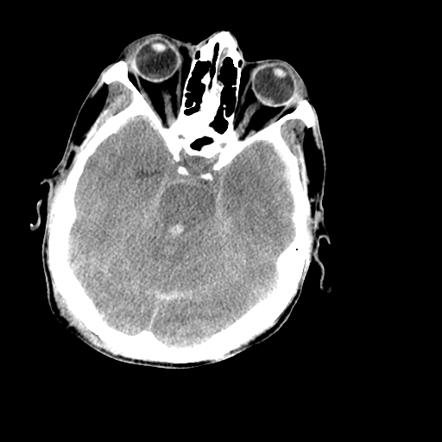
50 YOF with acute onset of worst headache of life associated with nausea and vomiting.  Patient is somnolent, will rouse to noxious stimuli and complains of a headache as well as decreased vision.
Show Answer

  • There is a vitreous hemorrhage of the left globe associated with subarachnoid hemorrhage (SAH), intraventricular hemorrhage, and diffuse cerebral edema on this non-contrast head CT.
  • This is also known as Terson syndrome, reported to occur in 15-30% of patients with SAH.
  • The mechanism by which this intraocular hemorrhage occurred is thought to be from a sudden increase in intracranial pressure causing obstruction of the central retinal vein.

Show References

Image courtesy of Dr. Nasir Siddiqui, Radiopaedia.org. From the case rID: 36469


Follow me on Twitter @EM_NCC


Title: Legg Calve Perthes Disease

Category: Orthopedics

Keywords: Hip, pediatrics, arthritis (PubMed Search)

Posted: 7/9/2017 by Brian Corwell, MD

Question

Idiopathic osteonecrosis of the femoral head

Children as young as 2 or as old as 12 but generally 4 to 8 (worse in older children)

Fare better than adults with osteonecrosis of femoral head

1 in 10,000

4-5x more common in males, much less common ini African Americans

Unilateral femoral head involvement 90% of the time (Bilateral 10% of the time)

Long term consequences are deformity and arthritis

Typical presentation: Subacute limping for weeks (Painless)

As activity worsens limp, it is maximal at the end of the day (Intermittent)

As in adults with hip pathology, IF pain is reported, it is located at the upper anterior thigh and groin

On examination, look for restriction in range of motion of the hip (compare with contralateral side)

May only present with mild to moderate decreased range of motion of the hip

            30 versus 60 degrees for example

             ABduct both legs with pelvis in neutral OR Place one hand on contralateral pelvis and ABduct affected leg with other hand.


Show Answer


Title: Toxicity of Antidepressants

Category: Toxicology

Keywords: Antidepressants (PubMed Search)

Posted: 7/7/2017 by Kathy Prybys, DO

Serious outcomes after overdose or nonintentional exposures to medications used to treat depression have risen dramatically over the past 15 years. Morbidity and mortality associated with drugs used to treat depression were studied utilizing the National Poison Data System from 2000-2014. Tricyclic and monoamine oxidase inhibitor medications were associated with the highest morbidity and mortality. Newer agents such as Lithium, venlafaxine, bupropion, quetiapine, olanzapine, ziprasidone, valproic acid, carbamazepine, and citalopram were also associated with higher mortality indices.

Show References

Morbidity and Mortality Associated With Medications Used in the Treatment of Depression: An Analysis of Cases Reported to U.S. Poison Control Centers, 2000-2014. Nelson C, Spyker DA. Am J Psychiatry. 2017 May 1;174(5):438-450. doi: 10.1176/appi.ajp.2016.16050523. Epub 2017 Jan 31.


Title: In the Time of Cholera

Category: International EM

Keywords: Cholera, conflict, children (PubMed Search)

Posted: 7/5/2017 by Jon Mark Hirshon, MPH, MD, PhD (Updated: 9/17/2026)

Cholera is an acute diarrheal disease that can kill within hours if left untreated.

Rising cholera, diarrhea and malnutrition is a deadly combination in war torn countries, such as Yemen, South Sudan, Somalia and Sudan, especially for children.

Yemen currently has the worst outbreak globally, with over 260,000 suspected cases and over 1,600 deaths. In Yemen:

o   Half the suspected cases are children

o   A quarter of the deaths are among children


Bottom Line:

Cholera remains a major cause of morbidity and mortality globally, especially in areas of conflict.

Show References

http://www.who.int/mediacentre/factsheets/fs107/en/

http://www.un.org/apps/news/story.asp?NewsID=57114#.WV2aQ9Pyu9Y


Previous  |  1 |  ... |  82 |  83 |  84 |  85 |  86 |  87 |  88 |  89 |  90 |  91 |  92 |  ... |  239 |  Next
University of Maryland School of Medicine logo
  • Departments
  • Programs
  • Research Centers
  • Institutes
  • Graduate Education
  • CIBR Cores
  • Offices of the Dean
    • University of Maryland, Baltimore
    • University of Maryland Medical Center
    • Medical Alumni Association of the University of Maryland
    • Health Sciences and Human Services Library
University of Maryland School of Medicine
655 W. Baltimore Street
Baltimore, MD 21201
Contact Us

© University of Maryland School of Medicine

    • Webmaster
    • Web Accessibility
    • Site Index
    • UMB Hotline
    • Employment
    • Map