
C. Diff Colitis
The general treatment recommendations for C. Diff Colitis are to place the patient on PO metronidazole and if they fail this treatment PO vancomycin (125 mg 4x day). Vancomycin is generally reserved for resistant cases due to the fear that it could induce Vancomycin resistant enterococcus.
For severally ill patients it is recommended that you prescribe IV metronidazole and PO vancomycin when they are not actively vomiting. Remember there is no role for IV vancomycin as it does not get into the bowel lumen to eradicate the infection.
There is some great news though, the FDA recently approved a new drug, a macrolide antibiotic fidaxomicin (Dificid), for the treatment of C. Diff Colitis. Fidaxomicin was found to be as effective as vancomycin in preventing recurrence 3 weeks after treatment. Currently it is recommended that fidaxomicin be reserved for cases where patients are having recurrences after 3 weeks of vancomycin treatment.
The FDA news release can be found at http://www.fda.gov/NewsEvents/Newsroom/PressAnnouncements/ucm257024.htm
Now that summer is in full swing, the question is: Should the evaluation of the febrile young infant change during the summer and fall months? And can that affect length of hospitalization and antibiotic use?
Two retrospective cohort studies from the Children’s Hospital of Philadelphia (CHOP) suggest yes! The addition of enterovirus polymerase chain reaction (PCR) testing to cerebrospinal fluid (CSF) may improve the care of infants with fever during enterovirus season (early June through late October).
Of note, at CHOP: 1) infants 56 days or younger routinely undergo lumbar puncture during evaluation for fever. 2) Most CSF enterovirus PCR test results (90%) were available within 36 hours; 95% of results were available within 48 hours.
In the King study, having positive enterovirus PCR CSF results decreased the length of hospitalization and the duration of antibiotic use for young infants less than 90 days, supporting the routine use of this test during periods of peak enterovirus season. In multivariate
analysis, a positive CSF enterovirus PCR result was associated with a 1.54-day decrease in the length of stay and a 33.7% shorter duration of antibiotic use.
Bottom line: Consider adding enterovirus PCR testing to CSF obtained during the evaluation of febrile young infants during enterovirus season, as this may reduce length of hospitalization and duration of antibiotic use. The effects, however, may be limited at institutions with slower lab turnaround times.
References:
1) King RL, Lorch SA, Cohen DM, Hodinka RL, Cohn KA, Shah SS. Routine cerebrospinal fluid enterovirus polymerase chain reaction testing reduces hospitalization and antibiotic use for infants 90 days or younger. Pediatrics. 2007 Sep;120(3):489-96. http://pediatrics.aappublications.org/content/120/3/489.full.pdf
2) Dewan M, Zorc JJ, Hodinka RL, Shah SS. Cerebrospinal fluid enterovirus testing in infants 56 days or younger. Arch Pediatr Adolesc Med. 2010 Sep;164(9):824-30.
Levamisole is an antihelminthic agent used in humans to treat certain parasitic infections and cancers. It is more commonly used for veterinary purposes. It has recently seen increasing use as a cutting agent for cocaine and heroin, found in up to 70% of cocaine sample seized by the DEA. It adds bulk and weight to powdered cocaine and is even theorized to increase the stimulant effects.
Toxicity of levamisole includes agranulocytosis and vasculitis (see attached document for recent image from NEJM).
Trivia: Levamisole was found in DJ AM and Andrew Koppel (Ted Koppel’s son), who both died of drug overdoses.
Show References
Attachments
- Emergency Department (ED) management of Multiple Sclerosis (MS) includes two components:
(1) immunomodulatory therapy for the underlying immune disorder, often with high dose
intravenous (IV) steroids which speeds recovery, and
(2) management of symptoms through supportive measures and amelioration of risk factors
associated with precipitating acute exacerbations such as infection through aggressive use
of antibiotics. Treatment of fever with antipyretics also key as even small increases in
temperature can significantly affect conduction through partially demyelinated fibers.
- In patients with fulminant MS or disseminating acute encephalitis, management includes the following:
Show References
Hemodynamic Optimization in the Post-Arrest Patient
- Hemodynamic instability is common in the post-cardiac arrest patient.
- While the optimal targets remain unclear, hemodynamic stabilization often consists of intravenous fluids, vasopressors, and in rare cases mechanical support, such as an intra-aortic balloon pump or left-ventricular assist device.
- Based on recent literature, current recommendations for mean arterial pressure (MAP) in the post-arrest patient range from 65-100 mm Hg.
- Depending upon the baseline blood pressure and degree of myocardial stunning, many post-arrest patients will need a higher MAP (80-100 mm Hg) in order to maintain critical perfusion pressure to vital organs such as the brain.
Show References
Question
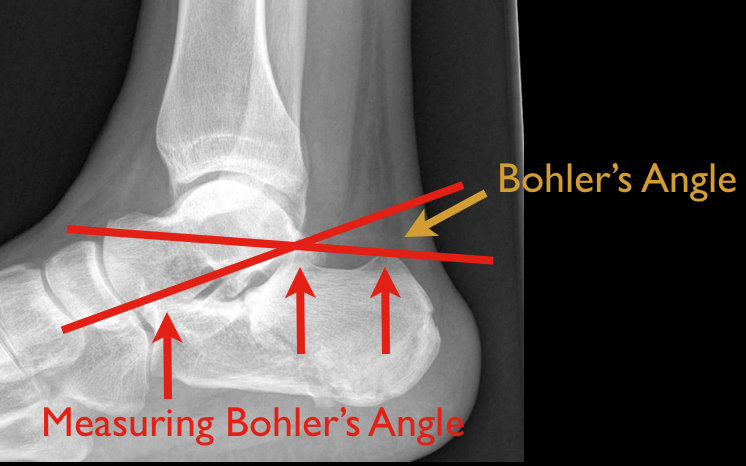
48 year old male following 15 foot fall onto both feet. What is the diagnosis?
…and why is it called the “Lover’s Fracture”?

Show Answer
Show References
There has been some controversy regarding the actual clinical benefit of non-invasive ventilation (NIV) for patients with cardiogenic pulmonary edema in recent years. However a recent Cochrane review has confirmed the benefit of NIV for these patients. Early (ED) use of NIV is associated with a decrease in both intubation rates and mortality. The NNT to prevent one intubation is 8, and the NNT to prevent one hospital mortality is 13. To put this in perspective, the NNT for NIV to prevent death in patients with cardiogenic pulmonary edema is lower than the NNT for thrombolytics to prevent death in acute MI.
One key point to remember is that it MUST be used early! If you wait until your patient is decompensating, it is often too late. Start the NIV as soon as possible in these patients.
Show References
Emergency physicians are often called upon to provide event coverage for marathons.
Prolonged endurance racing is safe for the majority of participants.
Hyponatremia (8.2% - 13.5%) - finishing times of greater than 4 hours is an independent risk factor
Hypokalemia – uncommon
Renal function – BUN > 30 or Cr > 1.4 mg/dL (23.6%). There is no data that this is of any clinical significance.
Cardiac Troponin - (11%) had significant increases (troponin T > or = 0.075 ng/mL or troponin I > or = 0.5 ng/mL). Elevations were more commonly seen with weight loss and increased Cr levels and may be associated with running inexperience (< 5 previous marathons) and young age (< 30 years) though interestingly not with race duration or traditional cardiac risk factors.
Findings are similar for men and women
Show References
- occurs when the small opening in the abdominal muscles which allows passage of umbilical cord does not completley close after birth
- allowing intestinal loops to pass through the opening
- 10% of all children are affected
- more common in blacks, girls, and premature infants
- most resolve by age 1year, but consider outpatient referral if becoming larger or still present after 2-3 years of age
- emergent consultation if not reducible, but rarely as most are harmless
Many physicians will tell patients to avoid caffeine as it is thought to lead to arrhythmias, however evidence does not support this practice.
-
Animal studies show high doses of caffeine produces catecholamine triggered activity
-
Small studies in high risk patients (recent MI, malignant arrhythmias) have shown no increase in frequency or severity of arrhythmia
-
No large scale human studies exist evaluating caffeine's effects on patients with malignant arrhythmias (VF/VT)
-
Overall, the data suggest that caffeine is well tolerated in moderate doses in most patients, even those with known or suspected arrhythmias
-
In patients who claim sensitivity to caffeine, or in those with known arrhythmias where catecholamines are felt to drive the arrhythmia, caffeine may be discouraged by physicians.
Show References
- Transient Ischemic Attacks (TIA's) are warning signs of something worse to come and must not be ignored.
- Within 90 days of a TIA, about 10.5% of patients go on to have a full blown stroke, half of which occur within 1 to 2 days of their emergency department visit.
- Have an extremely low threshold to admit TIA patients in order that a work-up to determine the source and risk factors can be completed promptly.
- The typical TIA work-up consists of a brain CT, brain MRI, an electrocardiograph and cardiac monitoring (to evaluate for arrhythmia such as atrial fibrillation), echocardiogram (to evaluate heart function, check for a patent foramen ovale and clots), and carotid doppler ultrasound (to evaluate for atherosclerotic disease).
Amiodarone is a class III anti-arrhythmic for tachyarrhythmias
Although most patients remain euthyroid on amiodarone, 4-18% develop thyroid disease months to years after exposure.
Amiodarone-induced thyroid disease occurs because amiodarone is structurally similar to triiodothyronine and thyroxine and each 200mg tablet contains 75 mg of iodine.
Two types of amiodarone-induced thyroid disease:
- Amiodarone-induced hypothyroidism (AIH)
- Amiodarone-induced thyrotoxicosis (AIT)
Amiodarone-induced hypothyroidism (AIH)
- Presents with subtle to overt hypothyroidism
- Treat by discontinuing amiodarone; thyroid recovers within 3 months
- If amiodarone cannot be discontinued, start levothyroxine
Amiodarone-induced thyrotoxicosis (AIT)
- Sudden symptom onset months to years following exposure; mean 2-47 months post-exposure
- Can be a life-threatening presentation (similar to thyroid storm) with severe cardiac manifestations and hemodynamic instability
- Treatment (treat like thyroid storm, if severe)
- Discontinue drug, if possible
- Thionamides (inhibit enzyme producing thyroid hormones)
- Methimazole or propylthiouracil
- Beta-blockers
- Steroids
- Airway and hemodynamic support
Show References
DDx for JVD + hypotension + clear lungs:
RV infarction
massive PE
tension PTX (clear lung)
pericardial tamponade
Assuming your physical exam diagnoses tension PTX, you only need two simple tests to make the diagnosis amongst the other possibilities:
1. EKG: RV infarction will almost always show a concurrent inferior MI;
2. bedside U/S: tamponade patients have effusion, PE patients have RV distension
Show References
Patients requiring anticoagulation for HIT or with a history of HIT may be initiated on argatroban. We have recently been seeing increased utilization. Here are some important points to remember.
- MOA: Direct thrombin inhibitor – reversibly binds to the active thrombin site of free and clot-associated thrombin
- Monitoring parameters:
- aPTT prior to starting therapy (similar to heparin)
- aPTT two hours after initiation of therapy or after dose change
- Signs/symptoms of bleeding, LFTs, CBC, Hgb/Hct
- Dosing (general): 2 mcg/kg/min (actual body weight)
- Important notes:
- Discontinue all heparin products including hep locks and coated catheters. This includes all LMWH such as enoxaparin.
- Causes false elevation of INR by cross-reacting with the INR assay
- radial head subluxation
- usually 1-3 years of age
- often after sudden longitudinal traction on extended arm with wrist in pronation
- tearing of annular ligament attachment to radial neck, with detatched portion trapped between subluxed raidal head and capitellum
- children refuse to use affected arm and hold in a flexed pronated position
- traditionally, reduce by supination of forearm with elbow in 90degrees of flexion
- newer reduction technique, hyperpronation with elbow flexion has better success rateand less pain
The mounting evidence on the use of 20% lipid emulsion or intrlipid has been growing for any patient that is hemodynamically unstable due to a drug exposure. There is now a recent case report of a verapamil overdose patient that received intralipid and did well. They were able to measure verapamil levels before and after administration. They were able to remove the lipid from the serum to appropriately measure the level and found effective removal. This adds to the theory of the "lipid sink" where the lipid actually is binding/surrounding a lipophilic molecule effectively removing it from interaction.
Show References
- Don't forget to give aspirin to patients presenting with acute ischemic stroke (AIS).
- Large trials such as the International Stroke Trial (IST) and Chinese Acute Stroke Trial (CAST) have shown that starting 160 to 300 mg of aspirin within 48 hours of the presumed onset of ischemic stroke reduces the risk of early recurrent ischemic stroke, with no major increased risk of hemorrhagic conversion and with improved long-term outcome.
- Studies have also shown that high and low doses of aspirin (30 to 1200 mg per day) after AIS yield similar efficacy for preventing vascular events, but that higher doses are associated with a greater risk of gastrointestinal hemorrhage.
Show References
Hepato-Renal Syndrome
- Hepato-renal syndrome (HRS) is the development of acute kidney injury (AKI) in patients with advanced cirrhosis.
- HRS is traditionally divided into two types based upon how quickly AKI develops:
- Type I: a rapid decline in function in less than 2 weeks
- Type II: a slow decline in function over weeks to months
- Type I is more likely to be seen in the ED and is often due to a precipitating event such as:
- GI bleed
- Spontaneous bacterial peritonitis (SBP)
- Hypovolemia from aggressive diuresis
- In ED patients with advanced cirrhosis and new, or worsening, AKI think about HRS.
- If suspected, look for precipitants (i.e. SBP), restore volume with IVFs, avoid nephrotoxins (IV contrast), and administer vasopressor therapy when indicated.
Show References
Question
49 y.o. female on Trimethoprim/sulfamethoxazole presents with rash and oral mucus membrane lesions. Diagnosis?

Show Answer
Show References
Paroxysmal supraventricular tachycardia (PSVT) is a common tachydysrhythmia encountered in ED practice. PSVT in itself has not been found to be an isolated manifestation of myocardial infarction or unstable angina (i.e. "isolated" = in the absence of other concerning symptoms, such as anginal-type pain, etc.). Nevertheless, some physicians will routinely test cardiac troponin levels to evaluate for ACS in these patients. We should all remember, though, that tachydysrhythmias including PSVT are a potential cause of elevated troponin levels in the absence of coronary disease, and these elevations do NOT correlate with adverse outcomes unless other concerning symptoms/signs are present as well.
A recent study1 corroborated this point: 11 out of 38 patients with PSVT had a positive troponin level. Only 2 of the 11 ruled in for ACS, and all of the patients were well at 30 days. Both patients presented with hypotension (SBP in the 70s) and also had other concerning symptoms, such as chest pain (both), dizziness (both), and dyspnea (one).
The takeaway point is simple: if you routinely send troponin levels on your patients for PSVT in the absence of other concerning symptoms/signs, you'll find yourself chasing a lot of false-positive levels.