
A facial laceration on a child can present a unique challenge which is not limited to the initial visit. The traditional teaching has been to use nonabsorbable sutures and have the patient return in 5 days for removal. A recent study compared the cosmetic outcome of linear facial lacerations 1 to 5 cm that were closed with either Ethicon fast absorbing surgical gut or monocryl nonabsorbable sutures. Patients were randomized and returned to the ED in 4-7 days and 3-4 months. Scars were assessed by caregivers and blinded physicians. Results showed that caregivers preferred absorbable sutures. Visual analog scores as given by caregivers were not statistically different between the 2 groups at the 3 month mark. The blinded physicians did give better cosmetic outcome scores to the absorbable suture group which differs from previous studies that had shown equivocal results. Of note, all absorbable sutures were no longer visible after 14 days.
Bottom line: Try absorbable sutures the next time you are suturing a child and the parents may be happier and you will not have to try and take out your sutures from a squirming, screaming child.
Show References
There is minimal evidence of cross-reactivity between sulfonamide antibiotics and non-antibiotics [1-4]. Despite this, the U.S. FDA-approved product information for many non-antibiotic sulfonamide drugs contains warnings concerning possible cross-reactions.
Key Findings from a New Review Article [5]:
- An estimated 3-6% of the general population is allergic to sulfonamides.
- Structurally, none of the non-antibiotic sulfonamides exhibit both of the features shown to be responsible for sulfonamide reactions (i.e., an N-containing ring attached to the N1 nitrogen of the sulfonamide group and an arylamine group at the N4 position).
- A comprehensive literature search (1966-December 2011) identified only 9 case reports indicating possible cross-reactivity to sulfonamide medications; however, in most cases, adequate patient testing was not conducted to firmly establish either sulfa allergy or sulfonamide cross-sensitivity.
Bottom line: You can feel safe prescribing furosemide, glyburide, and hydrochlorothiazide to your patient with an allergy to sulfamethoxazole/trimethoprim.
Other blog reference on this topic: http://lifeinthefastlane.com/2011/04/sulfa-drug-discombobulation/
Show References
General Information:
XDR TB is “extensively drug resistant tuberculosis”—resistant to isoniazid, rifampin, any fluoroquinolone, and at least one of the 3 injectable 2nd line drugs
Clinical Presentation:
- Identical to regular TB (weight loss, fevers, night sweats, cough, hemoptysis)
- Suspect in patients who are failing usual treatment
-Exposure in Eastern Europe or Russia (highest prevalence, although 84 countries have had documented XDR, including the US.)
Diagnosis:
- Plating on agar or liquid media for drug susceptibility testing
Treatment:
- Should be guided by susceptibility testing
- Isolate the patient!
Bottom Line:
XDR TB is increasing in prevalence, have a high index of suspicion in patients with persistent symptoms who are receiving treatment and isolate if any concerns.
University of Maryland Section of Global Emergency Health
Author: Andi Tenner, MD, MPH
Show References
Clostridium Difficile Associated Diarrhea and The Elderly Patient
- Infectious diseases remain the leading cause of mortality in the elderly.
- An infection that is increasing in prevlance among elderly patients is Clostridium difficile-associated diarrhea (CDAD).
- Mortality rates are up to 3.5 times higher in elderly patients with CDAD compared to younger patients.
- Antimicrobial therapy within the previous 6 weeks is the strongest risk factor for CDAD.
- Though any antibiotic may cause CDAD, clindamycin, fluoroquinolones, and cephalosporins have the highest risk.
- Importantly, the diarrhea may not always bloody.
- Metronidazole remains the treatment of choice for uncomplicated infections.
Show References
Question
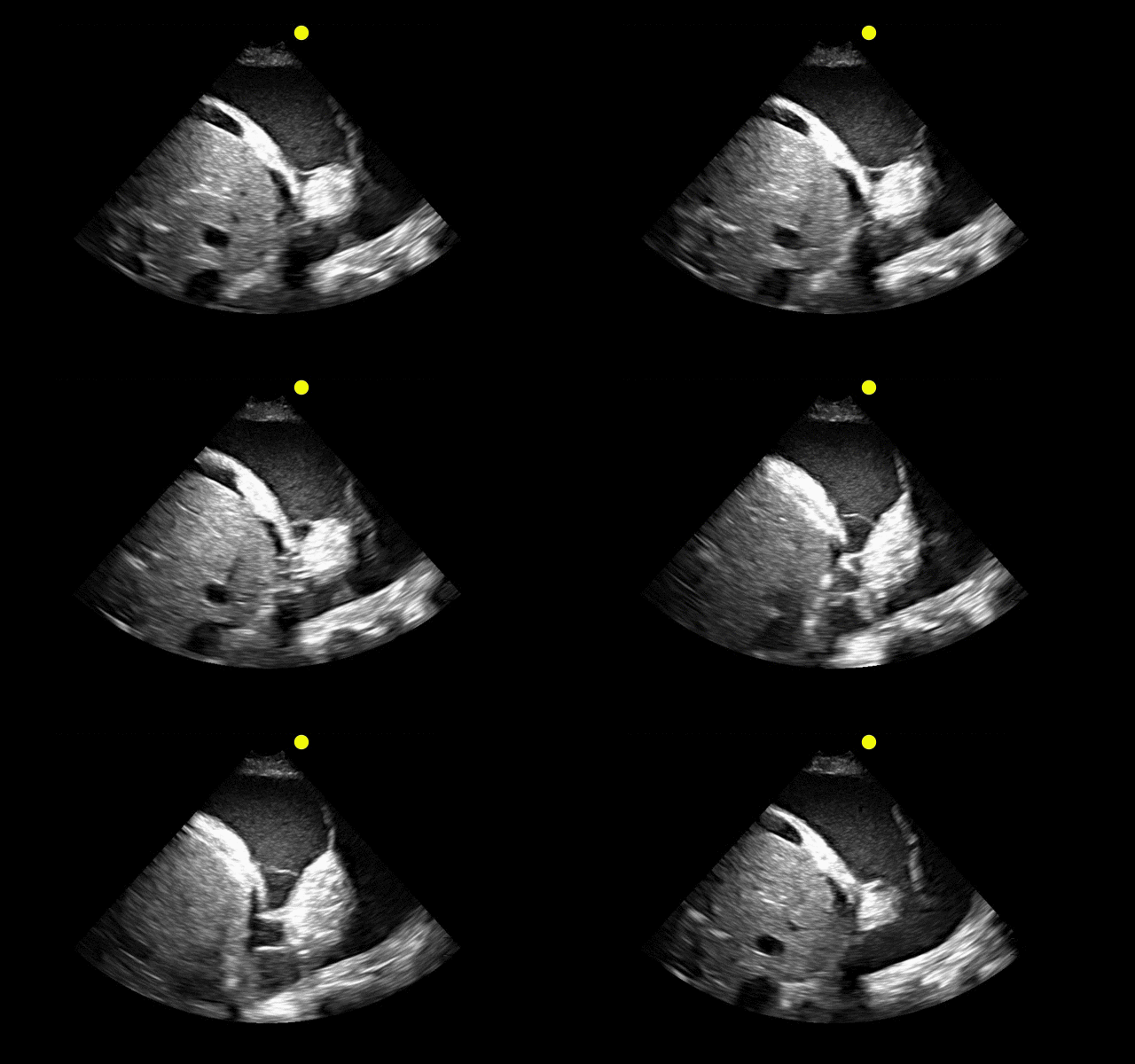
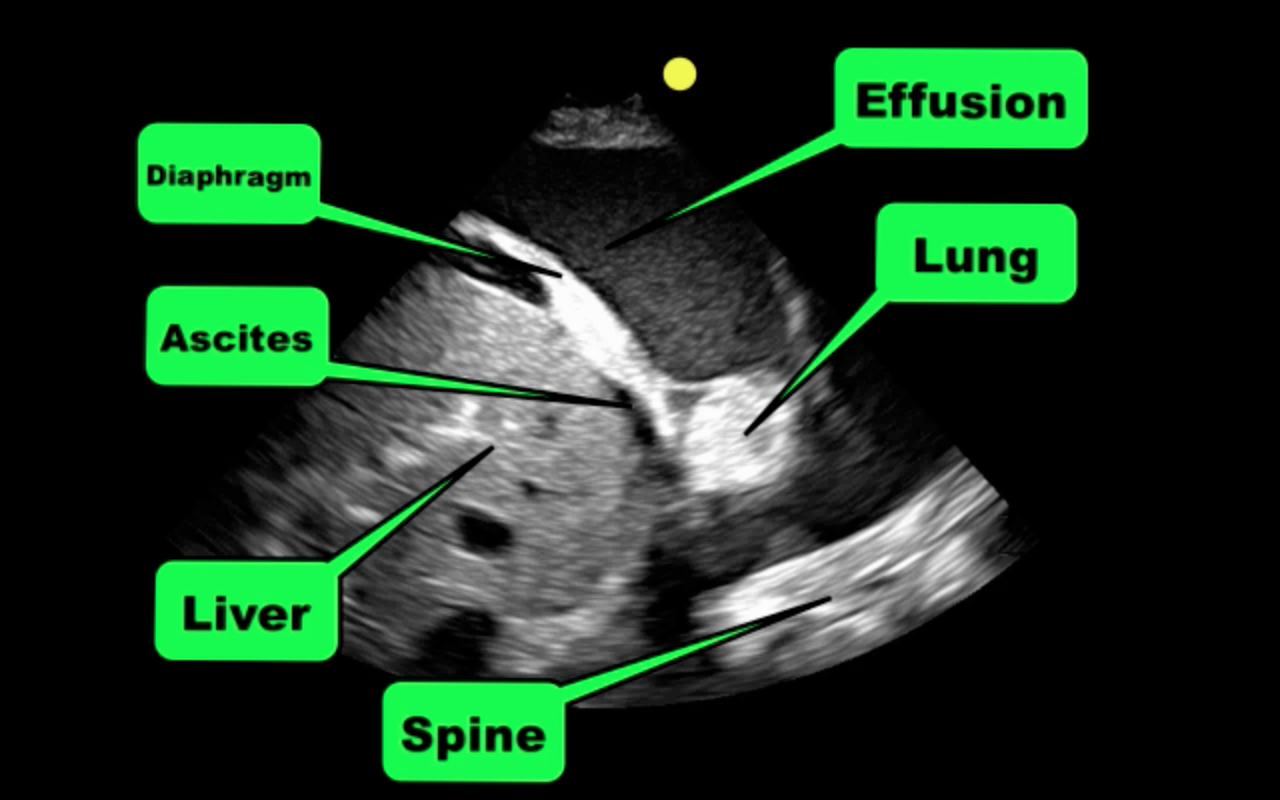
Patient with liver disease presents with dyspnea, fever, and the following ultrasound? What's the diagnosis? (Hint: there are two)?
Show Answer
Show References
The flexor tendons of the finger may become thickened and narrowed from chronic inflammation and irritation.
- Causes limitation in range of motion and snapping or locking during flexion
- Can involve any digit but usually the ring and the long finger
CC: pain, "catching" May awake to finger being "locked" with spontaneous resolution during the day
Stenosis occurs at the MCP level
PE: Distal flexor crease tender to palpation and may have a painful nodule
Full finger flexion is sometimes not possible
Tx: NSAIDs and steroid injection in tendon sheath. If this fails - surgical release.
Clinically important traumatic brain injuries are rare in children. The PECARN study provides decision rules for when to avoid unnecessarily obtaining a CT for children who have suffered head trauma.
For children < 2 years old: <0.02% risk of clinically important TBI
- Normal mental status
- No scalp hematoma, except frontal
- Loss of consciousness < 5 seconds
- No palpalble skull fracture
- Normal behavior
- Nonsevere mechanism (fall < 3ft, pedestrian struck, rollover MVC)
For children > 2 years old: <0.05% risk of clinically important TBI
- Normal mental status
- No signs of basilar skull fracture
- No loss of consciousness
- No vomiting
- No severe headache
- Nonsever mechanism (fall < 5ft, pedestrian struck, rollover MVC)
Show References
Naloxone can be administered via pretty much any route. One that has gained popularity in the past several years is nebulized naloxone. Although anecdotal reports tout the benefits of nebulized naloxone, what does the literature say?
- Case report of 46 y/o f with initial oxygen saturation of 61%. Naloxone was administered by nebulizer and within 5 min oxygen saturation was 100% and mental status was normal. [1]
- Retrospective analysis of prehospital adminstration in 105 patients. 22% had "complete response" and 59% had "partial response." Problem is the initial respiratory rate was 14 bpm with GCS of 12. [2]
- Prospective analysis of 26 patients in an inner-city, academic ED. Pre-naloxone respiratory rate was 13 with GCS of 11. Post-naloxone respiratory rate was 16 with GCS of 13. Three patients (12%) experienced moderate-to-severe agitation and 2 (8%) were diaphoretic. [3]
Bottom Line: Many of the studied patients may not have needed naloxone in the first place (initial respiratory rate 13-14), with a few developing withdrawal symptoms. Nebulized naloxone may have a role in the not-too-sick opioid overdose in whom you want to prove your diagnosis and wake the patient up enough to obtain a history. It is not a therapy for the apneic opioid overdose.
Show References
General Information:
·You must know the diagnosis to deliver effective and high quality care to patients; likewise for health systems to be effective, it is necessary to understand what the global burden of disease is.
·In 1991, the World Bank and World Health Organization launched the Global Burden of Disease Study which as of 2010 evaluates 291 disease and injuries as well as 1160 sequelae of these causes.
·In order to compare the burden of one disease with that of another, you must consider death and life expectancy of persons affected by the disease as well as disability imposed by the condition.
·The combined composite summary metric is termed disability adjusted life years (DALYs).
·There have been three major worldwide studies to date (1990, 2005, 2010) attempting to quantify the burden of disease yet no study to date has ever attempted to quantify the burden of disease requiring emergent intervention.
Bottom Line:
DALYs are a useful tool for quantifying the burden of disease and provides essential input into health policy dialogues to identifies conditions and risk factors that may be relatively neglected and others for which progress is not what was expected. To date, there has been no rigorous scientific effort to quantify the burden of disease worldwide that requires emergent intervention to avoid death and disability.
University of Maryland Section of Global Emergency Health
Author: Emilie J. B. Calvello, MD, MPH
Show References
Bad brain, good lungs.... Right?
A recent retrospective study reviewed the incidence of acute respiratory distress syndrome (ARDS) in patients presenting with spontaneous intracerebral hemorrhage over a 10-year period. After reviewing 1,665 patients, the authors found that:
- The development of ARDS occurred in approximately 27% of patients with spontaneous ICH (similiar to previous literature).
- The incidence ARDS after spontaneous ICH was similiar to other "high-risk" conditions such as sepsis, trauma, & aspiration.
- Modifiable risk factors include: high tidal volume ventilation, higher total fluid balance, & transfusion of PRBCs/FFP.
It's of particular importance to note that high tidal volume ventilation (>8cc/kg) was the single greatest modifiable factor for the development of ARDS.
Bottom line: Try and use lung-protective ventilation strategies (6-8cc/kg ideal body weight) and avoid excessive volume resuscitation in your critically-ill patients whenever possible. Even in cases of isolated intracerebral hemorrhage - where the patient's lungs may appear to be completely normal - traditional tidal volume settings may be harmful.
Show References
Question
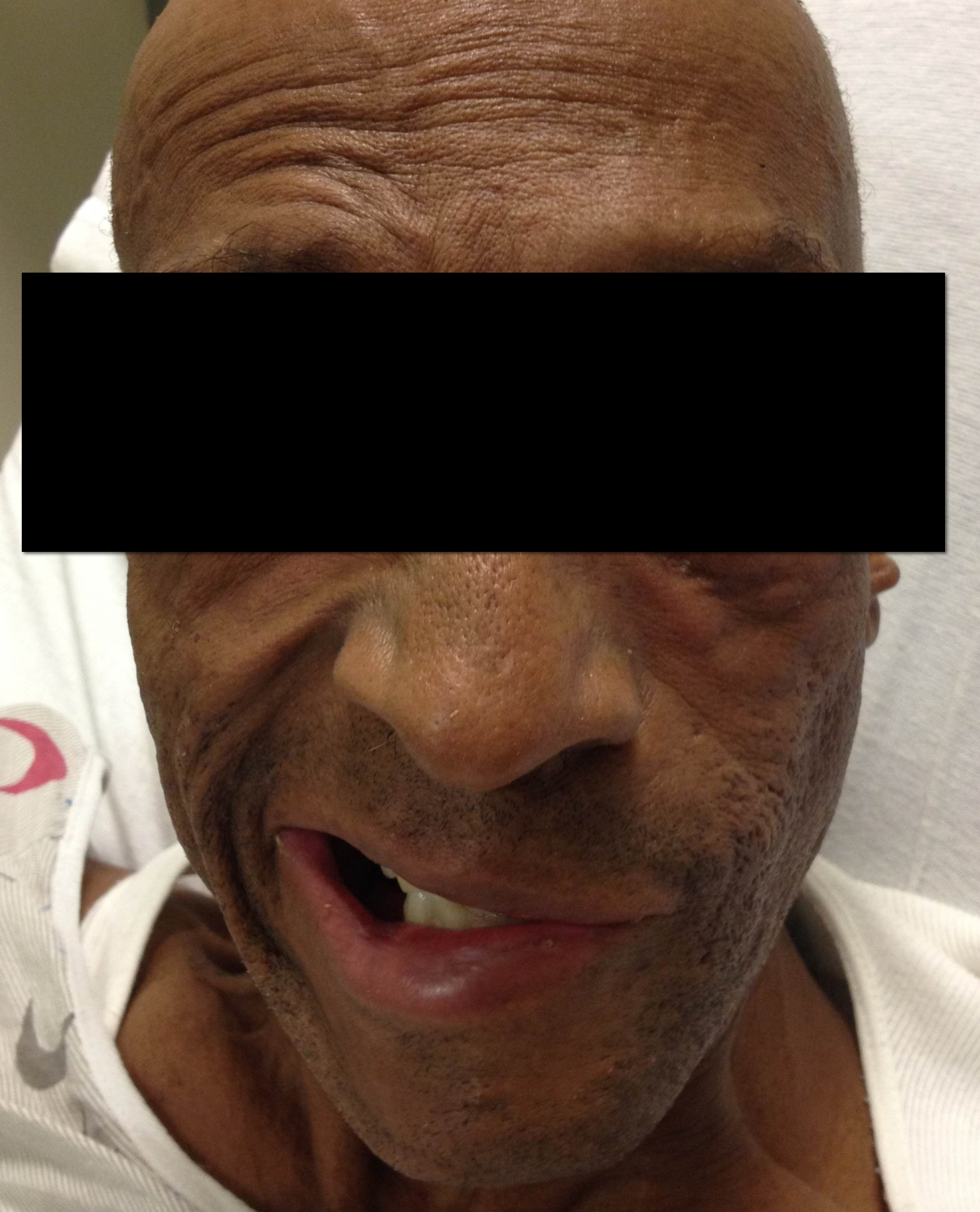
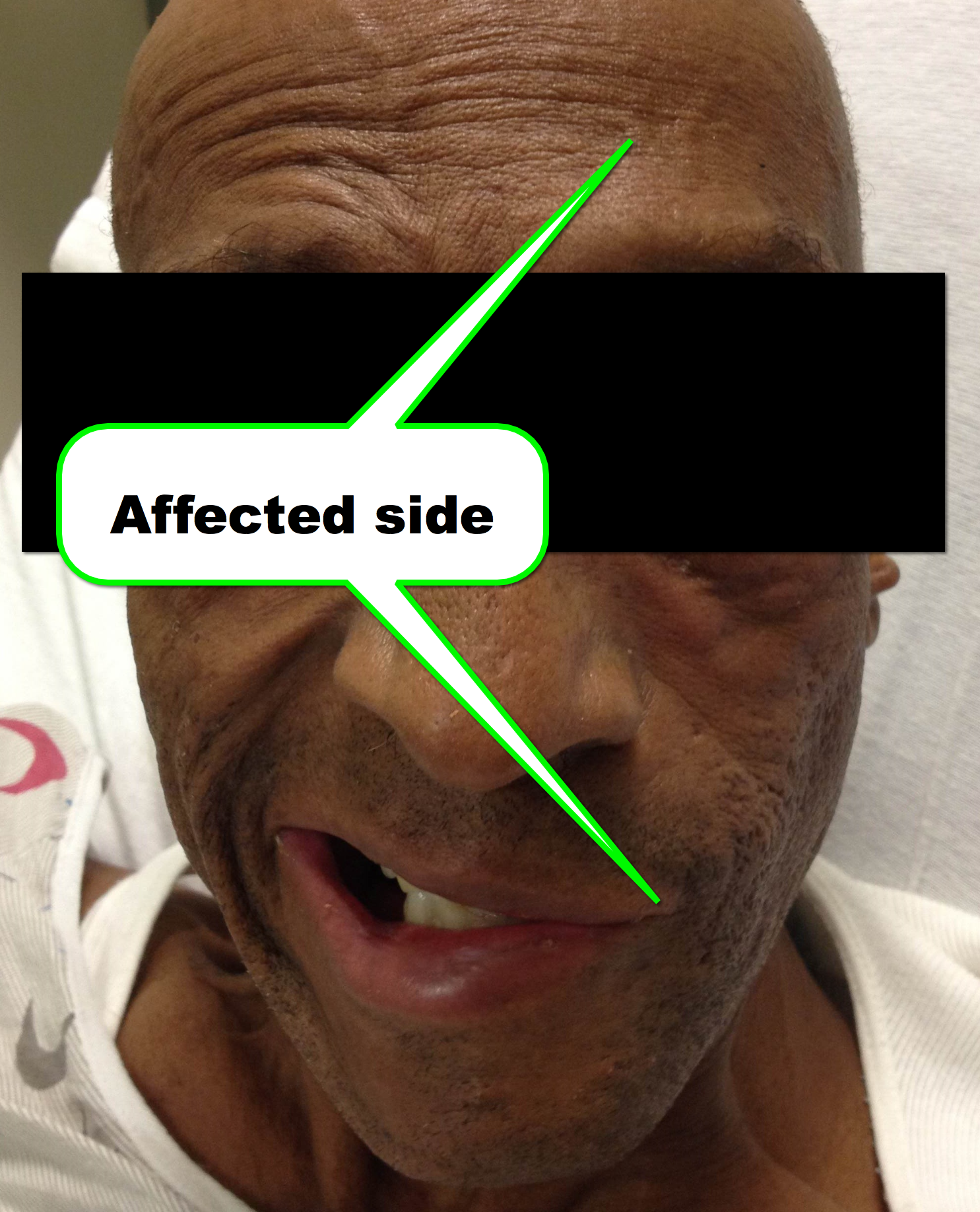
45 year-old man presents after he cannot close his left eye. In the photo below, he is trying to simultaneously raise his forehead and smile. Of note, he was also started on doxycycline recently for Lyme disease. What two medications should he receive?
Show Answer
Show References
- Classically MVP is considered a benign diagnosis associated w/palpitations, atypical chest pain, dyspnea, and carries a low risk of complications
- A recent study investigated MVP and its association w/ventricular arrhythmias in a cohort of unexplained out-of-hospital cardiac arrest (OHCA)
- A small subset of patients w/MVP experienced life threatening arrhythmias coined "malignant" MVP
- Malignant MVP was most often associated w/female sex, bileaflet valve, and frequent complex ventricular ectopic activity
Show References
A recent review identified 5 key points to consider when prescribing fluids.
- Fluids should be prescribed as drugs, recognizing that any fluid can be harmful if dosed incorrectly.
- The differences in efficacy between administering a 'crystalloid versus colloid' are modest; however, the cumulative differences in safety appear more significant.
- The qualitative toxicity associated with hydroxyethyl starch (HES) and isotonic saline remains a concern.
- The differences in chloride load and strong ion difference between cystalloid solutions, such as isotonic saline compared with physiologically more balanced solutions, appear to have clinical relevance.
- The 'default' resuscitation fluid for acutely ill patients should likely be physiologically balanced crystalloid solutions (eg, PlasmaLyte or Ringer's lactate ).
Show References
Definition: An episode that is characterized by some combination of apnea, color change, change in muscle tone, choking, gagging, or a fear in the observer that the infant has died.
DDx: VAST!
- GERD is by far the most common underlying etiology
- Do NOT forget about child abuse
Workup: Dependent on your Hx/PE (Take into account the child’s age (<30 days or h/o prematurity), existence of prior ALTE episodes, general appearance, etc.)
One study showed the concordance of initial working to discharge diagnosis of GERD was 96%, and non-concordant diagnoses evolved within 24 hours
Dispo: The easy part! ADMIT!
Even well-appearing children with a “benign” diagnosis like GERD have been shown to benefit from admission. And there is a high likelihood that ALTE’s from a serious cause are likely to recur within 24hours.
A recent study looked at 176 infants who presented to the ED with an ALTE over a 5 year period. Essentially all were admitted.
- Blood cultures were obtained in 63% and CSF cultures were obtained in 37% and no pathogens were identified in either
- CXRs were obtained in 115 (65%) patients and 12 had infiltrates
- RSV nasal washing were obtained in 32% and positive in 9 patients
- At the time of follow up, 2 patients had died, both after hospital discharge and within 2 weeks of ED visit and both of pneumonia. Both had a negative diagnostic evaluation in the ED.
Conclusion: The risk of subsequent mortality in infants presenting ALTE is substantial, and we should consider routine admission for all of these patients.
Show References
A recent article was published in the Journal of Medical Toxicology reviewing the use of sodium acetate for treatment of overdoses and poisonings.
Acetate is metabolized to bicarbonate, causing a net increase in cations; this increased strong anion difference leads to alkalemia.
It has been used to treat acidosis in uremia, diarrhea, and in trauma patients.
Although no studies have been conducted using sodium acetate as an antidote, if bicarbonate is unavailable this is a viable option for management of salicylate overdose, and for qrs widening or arrhythmias due to overdoses.
Sodium acetate, if given rapidly (in animals and hemodialysis patients), causes myocardial depression, hypotension, and hypopnea.
The bolus dose should be given as 1-2 mEq/L given over 15-20 minutes. For the maintenance infusion, dilute 150 mEq diluted to 1 L in dextrose 5%, infuse at 2X the maintenance rate.
It must be diluted in dextrose 5% and NOT normal saline.
Show References
General Information:
As of July 30th, 2013, there have been 378 cases of Cyclospora infection from multiple states in the US. Cyclospora is most common in tropical and sub-tropical regions, and is spread via fecal-oral route. While the cause of the most recent outbreak is unknown, outbreaks in the US are generally foodborne.
Clinical Presentation:
- Symptoms usually begin 7 days after exposure
- Watery diarrhea, cramping, bloating, nausea, fatigue, increased gas, vomiting, low grade temperature
- Can persist several weeks to > 1 month
Diagnosis:
- Concentrated Stool Ova and Parasites— viewed under modified acid fast or fluorescence microscopy (labs can submit photos to the CDC for “telediagnosis”)
Treatment:
- TMP-SMX DS one tab po bid x7-10 days
- No effective alternate for failed treatment or sulfa allergy
- Most will recover without treatment but S/S can persist for weeks to months
Bottom Line:
Consider Cyclospora as a cause of prolonged diarrheal illness, treat with TMP-SMX.
University of Maryland Section of Global Emergency Health
Author: Andi Tenner, MD, MPH
Show References
Question
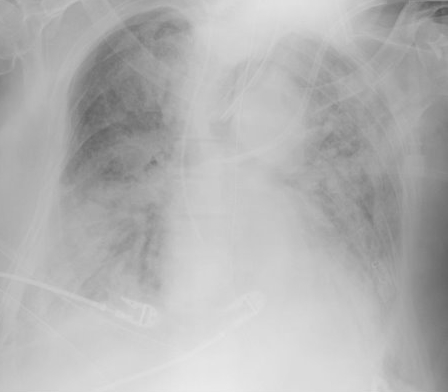
Elderly patient who originally presented for severe pancreatitis now intubated for worsening hypoxemia. CXR is shown below, what's the diagnosis?
Show Answer
Show References
Question
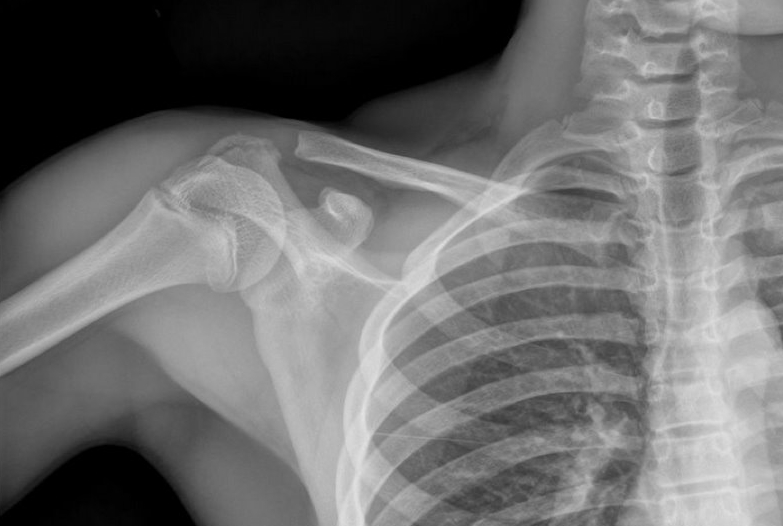
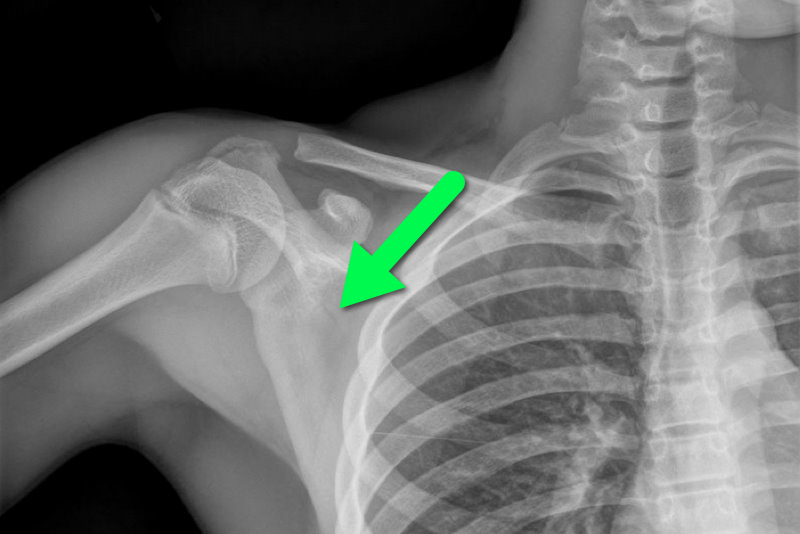
13 year-old female fell on right shoulder while catching a rebound during a basketball game. The patient is holding her arm in adduction and has exquisite scapular tenderness on exam. What’s the next step in management? …oh, and what’s the diagnosis?
Show Answer
Show References
Tight glycemic control (HbA1C<7%) has previously been recommended in CAD based on data from the United Kingdom Prospective Diabetes Study (UKPDS)
A recent study (JACC) evaluated the relationship between glycemic control, cardiovascular disease (CVD) risk, and all-cause mortality
Patients with a mean HbA1C 7-7.4% were compared to those with mean HbA1C <6%; tight glycemic control had a 68% increased risk of CVD hospitalization
Lenient HbA1C>8.5% also had significantly higher risk
CVD risk and all-cause mortality is greater with both aggressive and lax glycemic control and the optimal reference range may lie between 7-7.4%
Show References
Dupuytren disease is a nodular thickening and resultant contraction of the palmer fascia.
Increased in those of Northern European dissent.
One or more painful nodules located near the distal palmer crease.
Over time may result in flexion at the MCP joint.
Most commonly affects the ring finger.
Sensation is normal.
Over time affects ADLs
Tx: night splints and surgery