
Awards & Accolades
Seth Ament, PhD, Receives Maryland Stem Cell Research Fund Award
October 26, 2026
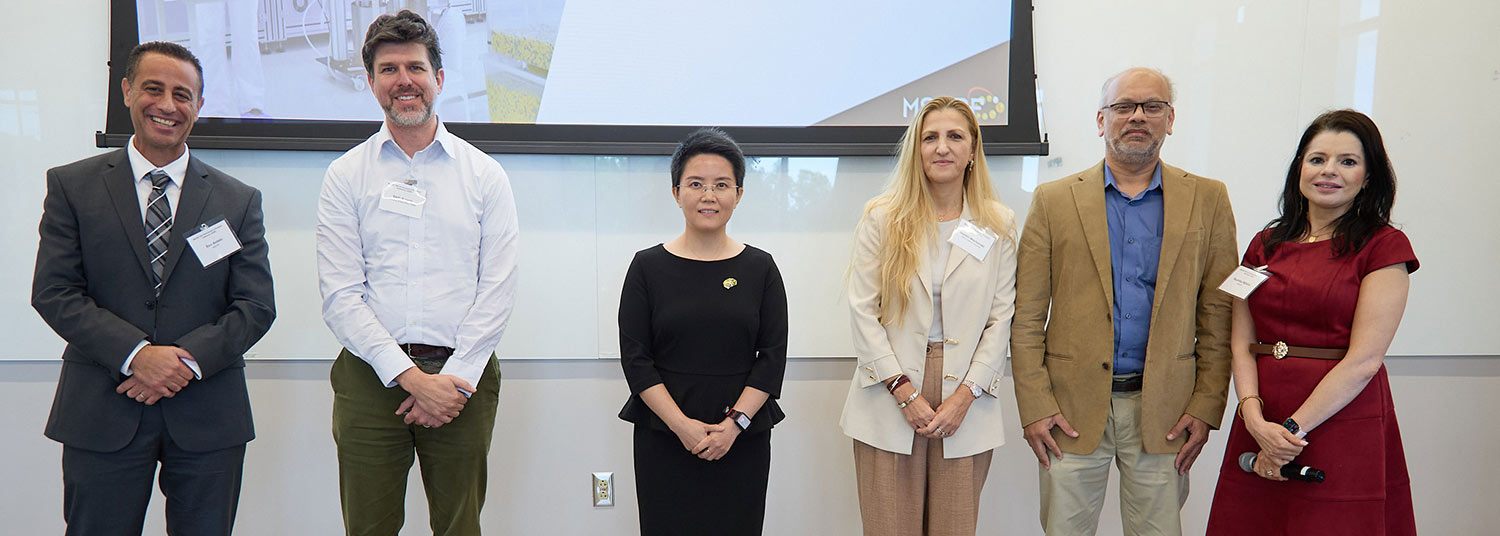
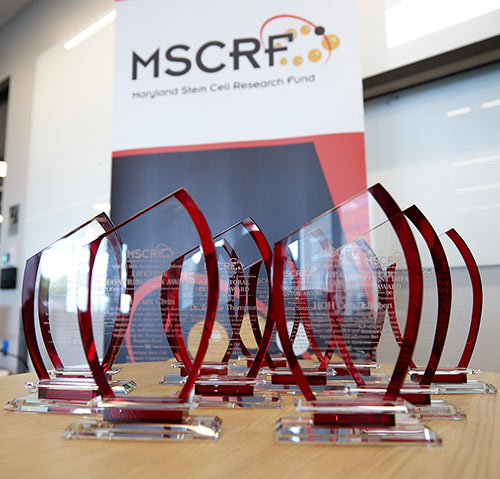
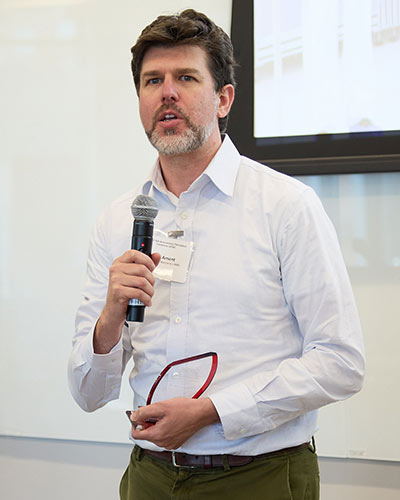 Seth Ament, PhD, a scientist at the Institute for Genome Sciences and Professor in the Maryland Psychiatric Research Center (MPRC) in the Department of Psychiatry at the University of Maryland School of Medicine has received the Transformative Potential Award from the Maryland Stem Cell Research Fund (MSCRF) for his work understanding brain function and diseases, such as schizophrenia, substance-use disorders, brain injury, and autism. MSCRF presented him with the award at their 20th Year Felicitation Ceremony.
The award “celebrates bold research with the potential to change how we understand and treat complex diseases,” according to MSCRF, based in Columbia, Maryland. MSCRF simultaneously gave Lena Smirnova, PhD, from Johns Hopkins Bloomberg School of Public Health the same award.
“We are proud to recognize Drs. Seth Ament and Lena Smirnova for their innovative research,” said Ben Antebi, PhD, Associate Director of MSCRF. “Their work is creating more predictive models of human diseases, opening new possibilities for understanding disease mechanisms, accelerating therapeutic discovery, and bringing better treatments closer to patients.”
Dr. Ament's research focuses on discovering genomic and cellular mechanisms and advancing precision medicine for brain disorders. With support from MSCRF, his lab uses stem cells from patients to grow brain organoids -- small, simplified models of the brain -- to study how genetic changes linked to disease affect different types of neurons and test new treatments to correct these problems. His lab uses leading-edge multi-omic technologies and AI to compare these models to patterns observed in intact brain tissue.
 He is an investigator with the National Institutes of Health BRAIN Initiative Cell Atlas Network (BICAN). For example, his BICAN research has uncovered that inflammation in the cerebellum region of the brain causes changes in brain development related to Autism Spectrum Disorder (ASD) and schizophrenia. MSCRF is supporting a project to develop an organoid model for this disease mechanism.
“I am thrilled that MSCRF has supported my research through the years and has honored me with this award,” Dr. Ament said. “Our research—thanks in large part to their funding—is really making a difference in what we know about brain disorders and should help lead us to treatments in the future.”
In addition to his positions at IGS and MPRC, Dr. Ament holds roles in UMSOM’s Kahlert Institute for Addiction Medicine; the University of Maryland Medicine Institute for Neuroscience Discovery (UM-MIND).