
University of Maryland School of Medicine Researchers Develop New Human Challenge Model to Advance Dengue Vaccine and Treatment Research
November 16, 2026
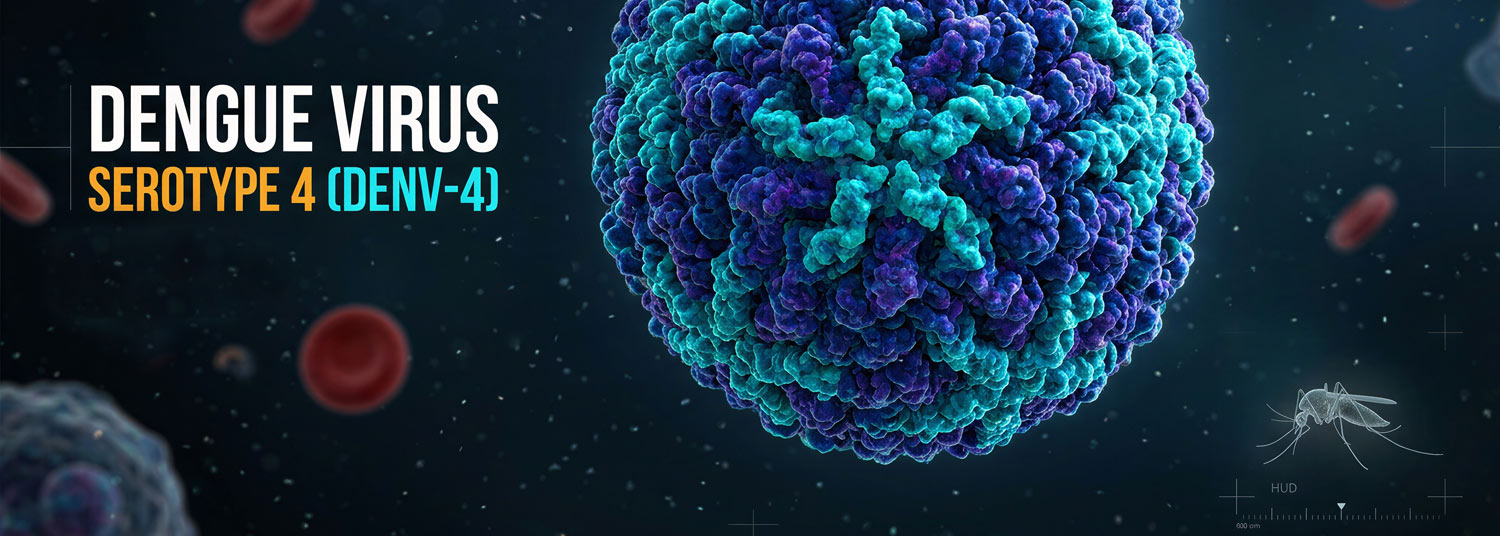
Researchers at the University of Maryland School of Medicine (UMSOM) and the Institute of Human Virology (IHV) have developed the first successful human challenge model for dengue serotype 4, a major advance that could speed the development of new drugs and vaccines against a strain of the dengue virus that remains difficult to study. The findings were published this week in The Lancet Microbe.
 Dengue is the flavivirus. Each received a single injection under the skin containing 95 plaque-forming units of the challenge virus — a very low dose by the standards of earlier dengue challenge studies, which used at least seven times more virus.
Participants were checked daily for symptoms, had blood drawn regularly, and were housed in a local hotel while the virus was detectable in their blood, so that local mosquitoes could not pick it up and spread it.
The study ran at the University of Maryland School of Medicine in Baltimore between April 2022 and December 2023.
What the researchers found
All 14 participants developed detectable virus in their blood and mild-to-moderate dengue symptoms. The most common symptoms were rash and fatigue, which every participant developed, followed by headaches. “The study also offered us a rare opportunity to examine how immunity develops and persists following dengue infection,” said Joel Chua, MD, Associate Professor of Medicine, Institute of Human Virology, UMSOM. “We gained new insights into the immune system's response at the earliest timepoints after dengue exposure and also found evidence that the immune response generated by an initial DENV-4 exposure can provide durable, serotype-specific protection at least one year later.”
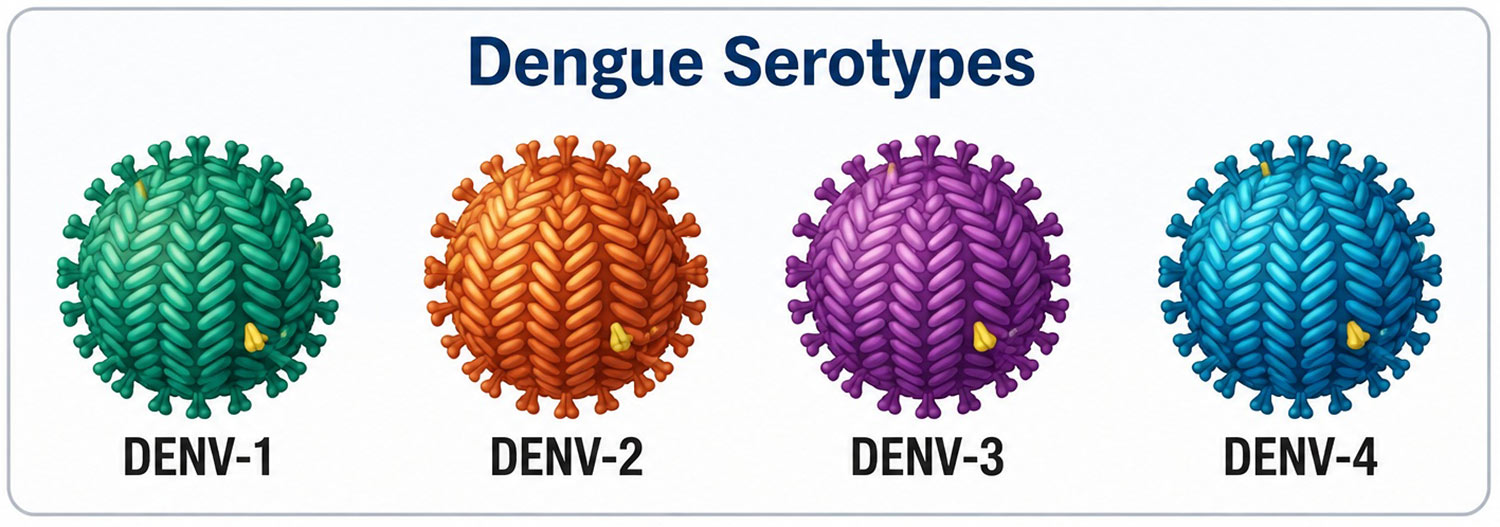
One of the world’s most prevalent mosquito-borne infections, the Dengue virus has four distinct serotypes, known as DENV-1 through DENV-4. While infection with one serotype generally produces lasting protection against that same serotype, it does not necessarily protect against the other three. The dengue serotype 4 poses a particular challenge because, unlike other dengue types, it circulates slowly and unpredictably, sometimes with decades between outbreaks. Large field trials have not been able to measure how well vaccines work against it. Recent phase 3 trials of dengue vaccines could not produce reliable efficacy estimates for dengue serotype 4.
In addition to evaluating clinical symptoms and viral activity, researchers conducted extensive immunological and transcriptomic analyses to better understand the body's response to both initial exposure and subsequent rechallenge. Following primary infection, participants demonstrated robust antibody responses, expansion of antibody-producing cells, and activation of antiviral genes. These responses were largely absent following the second exposure, consistent with the observed protection.
 The findings build on previous work developing human challenge models for dengue serotypes 1 and 3. Together, these models provide researchers with additional tools to investigate the distinct characteristics of each serotype and evaluate promising vaccine and therapeutic candidates before advancing them into larger clinical trials.
“Dengue virus is one of the WHO top ten global health threats and the outbreak in Florida is only a harbinger of the spread of dengue that is expected within the United States by 2080,” said study principal investigator Kirsten E. Lyke, MD, Professor of Medicine, Center for Vaccine Development and Global Health. “We have no antiviral therapy against dengue, so the development of vaccines is critically important for protection now and into the future. Human challenge models allow us to test therapeutics, biologic agents and vaccines, in order to focus our energy development product with known efficacy. This study is part of a consortium effort to develop human challenge models for all four serotypes.”
Although the study involved a relatively small group of healthy adult volunteers and further research is needed, the results establish an important foundation for future dengue vaccine and antiviral development. The ability to reliably evaluate immune responses to DENV-4 in a controlled clinical setting could help researchers address longstanding gaps in the development of effective countermeasures against all four dengue serotypes.
The study was funded by the Military Infectious Disease Research Program and the Medical Technology Enterprise Consortium.
Contact
Office of Public Affairs
655 West Baltimore Street
Bressler Research Building 14-002
Baltimore, Maryland 21201-1559
Contact Media Relations
(410) 706-5260
Related stories
Friday, March 29, 2019
12th Annual Dr. Aaron I. Grollman Visiting Professorship in Basic Sciences Lectureship Features Dr. Eva Harris
Eva Harris, PhD, never met a mosquito she didn’t like. A Professor of Infectious Diseases and Vaccinology and Director of the Center for Global Health at the University of California, Berkley, Dr. Harris was recently the guest speaker at the University of Maryland School of Medicine’s (UMSOM) Dr. Aaron I. Grollman Visiting Professorship in Basic Sciences Lectureship, where she shared her research on the control of Zika, dengue, and chikungunya—the most prevalent mosquito-borne diseases in humans. She is also the Co-Founder and President of the Sustainable Sciences Institute (SSI), an international non-profit dedicated to developing sustainable local research and public health systems in resource-poor settings.