
- The NIH Stroke Scale (NIHSS) is a widely used scale in assessing neurological deficits in stroke patients.
- It is a useful communication tool and is accurate in predicting clinical outcomes.
- However, it has been critiqued for its complexity and potential poor interrater reliability of certain items within the scale.
- Prior studies have suggested modifying or shortening the scale to 11, 8 or 5 items for use in stroke clinical trials or the prehospital setting.1,2,3
A recent study compared the original NIHSS with the shortened 11, 8, and 5 item versions.4
- They found the original NIHSS has higher discriminatory value and responsiveness to change as well as improved ability to predict clinical outcomes than shortened versions.
Bottom Line: The original 15-item NIHSS should still be used to evaluate patients’ stroke severity.
The reliability of the NIHSS has been found to improve with personal and videotaped training.
Show References
- What type of fluid we use in critical care resuscitation has been hotly debated for some time
- The most recent battles have been played out between NS and plasmalyte or buffered solutions
- There has been some evidence that high chloride solutions can lead to renal injury requiring renal replacement therapy (RRT)
- Does a buffered crystalloid reduce renal complications compared with normal saline in patients admitted to the ICU?
- The SPLIT Trial (Saline vs Plasma-Lyte) from New Zealand ICU's adds more to our knowledge about this topic while enrolling over 2,000 patients
- Summary:
- Primary outcome was a rise in creatinine
- There was no difference in the primary outcome or incidence of AKI
- There was no difference in use of RRT or mortality
- Suggesting that is doesnt make too much of a difference
- There were some limitations: 90% of patients were given fluid before enrollment that was buffered crystalloid and patients were only given around 2 liters on average of fluid in the ICU
The Bottom Line: This was a nicely designed study to evaluate the safety of both fluids. It does suggest that either fluid type is for the most part OK. But in patients requiring hefty fluid boluses, we should be cautious in what type of fluid we choose.
Show References
Question
Show Answer
Show References
Tramadol has a reputation for being a safe, non-opioid alternative to opioids. Nothing could be further from the truth. Several blogs have published about the dangers of tramadol:
- Tramadol: When to Avoid It from ALiEM blog
- Three Reasons Not to Prescribe Tramadol from EM PharmD blog
- Hypoglycemia: Another Adverse Effect Associated with Tramadol from Poison Review blog
But what about seizure risk? Previous studies have been unable to confirm an increased seizure risk with therapeutic doses of tramadol (Seizure Risk Associated with Tramadol Use from EM PharmD blog). However, a new study refutes that premise.
22% of first-seizure patients had recent tramadol use!
- Mean total tramadol dose in last 24 hours (reported): 140 mg
- Duration of tramadol use less than 10 days: 84.5%
- Seizure within 6 hours of tramadol consumption: 74%
This was a retrospecitve study without laboratory confirmation of tramadol intake. Nevertheless, it behooves us not to think of tramadol as a safer alternative to opioids. It is an opioid after all, and it comes with significant adverse effects.
Show References
Carbon monoxide (CO) is a colorless, odorless, tasteless toxic gas produced by incomplete combustion in fuel-burning devices and is a leading cause of poisoning morbidity and mortality.
Symptoms can be easily misinterpreted (e.g., headache, nausea, dizziness, or confusion) thus victims may not realize they are being poisoned.
CO detectors use an audible alarm and are effective in alerting potential victims of presence of CO. Some versions offer a digital readout of the CO concentration. Detectors are not a simple alarm level (as in smoke detectors) but are a concentration-time function.
In the UL 2034 Standard, Underwriters Laboratories specifies response times for CO alarms:
- 70 ppm sounds alarm within 60-240 minutes
- 150 ppm sounds alarm within 10-50 minutes.
- 400 ppm: sounds alarm within 4-15 minutes.
Current Occupational Safety and Health Administration permissible exposure limit for CO is 50 parts per million as an 8-hour time-weighted average concentration.
CO detectors have a limited lifespan of up to 7 years.
Forty percent of residential detectors studied failed to alarm in hazardous concentrations, despite outward indications that they were operating as intended.
CO detectors 10 years and older had the highest failure rates.
Show References
On a day when the 355th mass shooting this year in the USA occurred in San Bernardino, California, it seems appropriate to discuss gun violence.
A recently accepted publication in the American Journal of Medicine compared morality data from the USA to other high-income countries, and found the following:
The US homicide rates were 7.0 times higher than the aggregated rates of all other high-income countries.
- This is driven primarily by a gun homicide rate that is 25.2 higher
- For 15-24 year olds, the gun homicide rate is 49.0 higher
The overall US suicide rate is average
- However, in the USA the firearm-related suicide rates were 8.0 times higher
Unintentional firearm deaths were 6.2 times higher in the US.
The overall firearm death rate in the US from all causes was 10.0 times higher.
Bottom line: As stated in the article: “The US has an enormous firearm problem compared to other high-income countries with much higher rates of homicide and firearm-related suicide.”
Show References
Mechanical Ventilation for Septic Patients in Resource-Limited Settings
- An international team of physicians just published a series of recommendations for ventilatory support of septic patients in resource-limited settings.
- Pearls from these recommendations include:
- Elevate the head of the bed to 30o - 45o
- Consider tidal volumes of 5 - 7 ml/kg PBW in all patients
- Use minimum levels of PEEP ( 5 cm H2O) in all patients with sepsis and acute respiratory failure (unless the patient has moderate to severe ARDS)
- Lower FiO2 to target SpO2 > 88% or PaO2 > 60 mm Hg
- Use lung ultrasound to evaluate pulmonary edema when CXR is not available
- Consider using SpO2 to FiO2 (S/F) as an alternative to P/F when blood gas analyzers are not available
Show References
Question
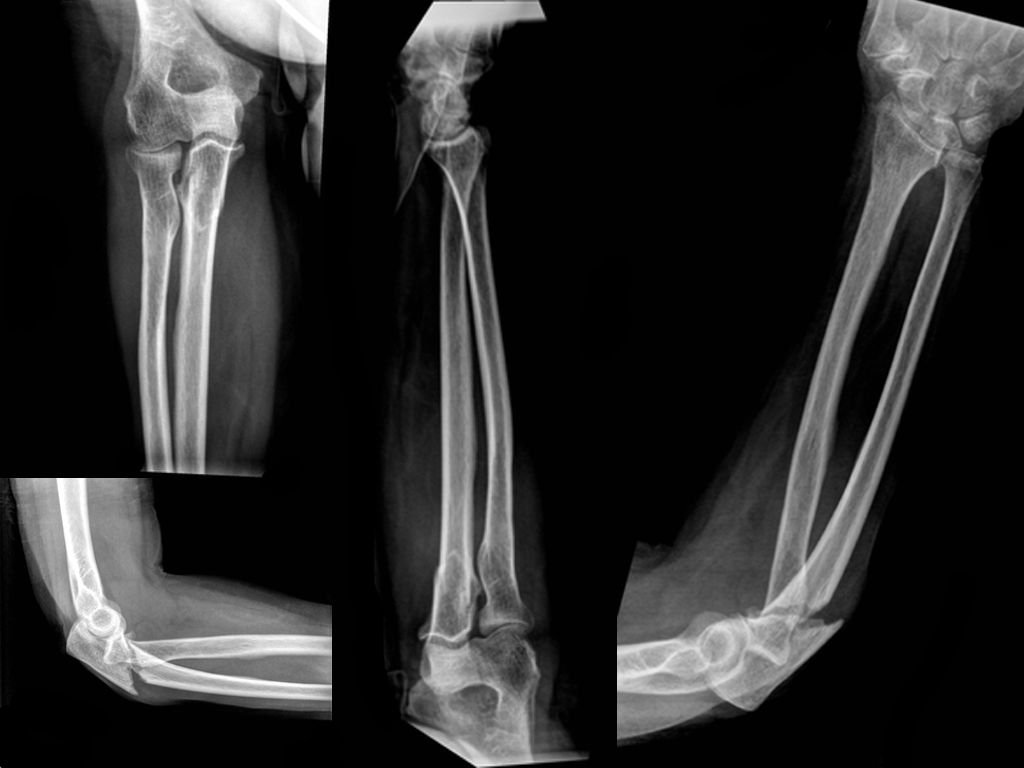
Patient presents with right elbow pain after a fall. What's the diagnosis and what other injury should you look for?
Show Answer
Show References
Medial elbow pain is common among baseball pitchers and is also seen in other sports including football, javelin and gymnasts.
More than 97% of elbow pain in pitchers is located medially.
The ulnar collateral ligament of the elbow is an important structure in these patients.
http://www.aafp.org/afp/2014/0415/afp20140415p649-f3.jpg
While initially primarily seen in professional throwers, these injuries are now being seen in younger athletes.
Initially, patients may only note changes in stamina or strength of throws.
Later, they will note pain during the acceleration and follow through-phase of throwing
http://stlhealthandwellness.com/wp-content/uploads/2013/02/elbow03.jpg
The Valgus stress test for UCL deficiency is similar to the valgus test for the knee
https://www.youtube.com/watch?v=f6YvPSVk6G8
Treatment: splinting, ice, NSAIDs
Surgical indications: Failure of non-operative treatment with desire to return to same or higher level competition.
Ketamine has been the drug du jour for everything from agitation to pain, but status epilepticus?
Looking at the pathophysiology of seizures, they occur due to an imbalance between excitatory mechanisms (through glutamate at the NMDA receptors) and inibitory mechanisms (at GABA receptors). The mainstay for seizure treatment has been mostly potentiation of the inhibitory mechanisms, but why not inhibit the excitatory mechanisms at the NMDA receptors?
Ketamine is the only NMDA antagonist that has been investigated for refractory status epilepticus, mostly in retrospective small series, with only 3 prospective cohort studies, totaling to 162 patients (110 adults and 52 pediatrics). Variable results were recorded, from studies with complete response in all patients to complete treatment failure, with a total of 56.5% of the adult patients having electrographic response. The optimal bolus dose appears to be 1.5-4.5 mg/kg, with an infusion of up to 10 mg/kg/hour.
Bottom Line? Consider using ketamine in patients who are in refractory status - after benzodiazepines, a 2nd line agent (such as fosphenytoin, valproic acid or levetiracetam) and IV anesthetics have failed.
(NMDA: N-methyl-D-aspartate, GABA: -aminobutyric acid)
Show References
--The role of antibiotics in acute exacerbations of COPD remains controversial in many settings. However, a recent Cochrane review concludes that antibiotics have "large and consistent" benefit in ICU admissions [1]:
- decreased length of hospital stay
- decreased treatment failure
- decreased mortality
--However, patients on antibiotics had increased side effects, are at risk for increased drug-drug interaction (think azithromycin/levofloxacin), and the effect on multi-drug resistance is unclear.
--GOLD Guidelines are a bit more liberal with their recommendations for antibiotics [2], recommending antibiotics based on symptoms or in patients needing mechanical support.
--TAKEAWAY -- if your patient needs BiPAP or ICU, they should also get antibiotics!
Show References
Question
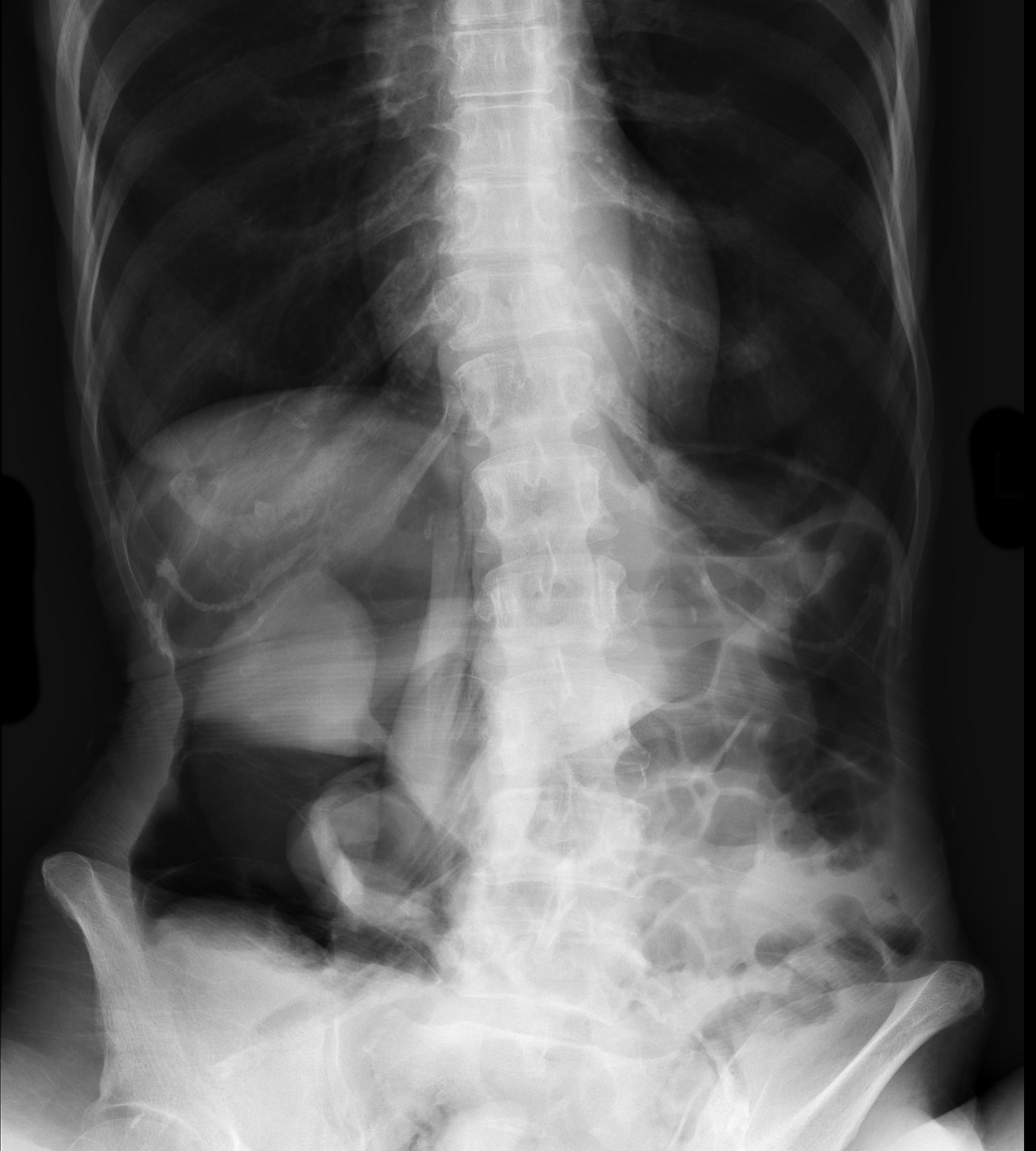
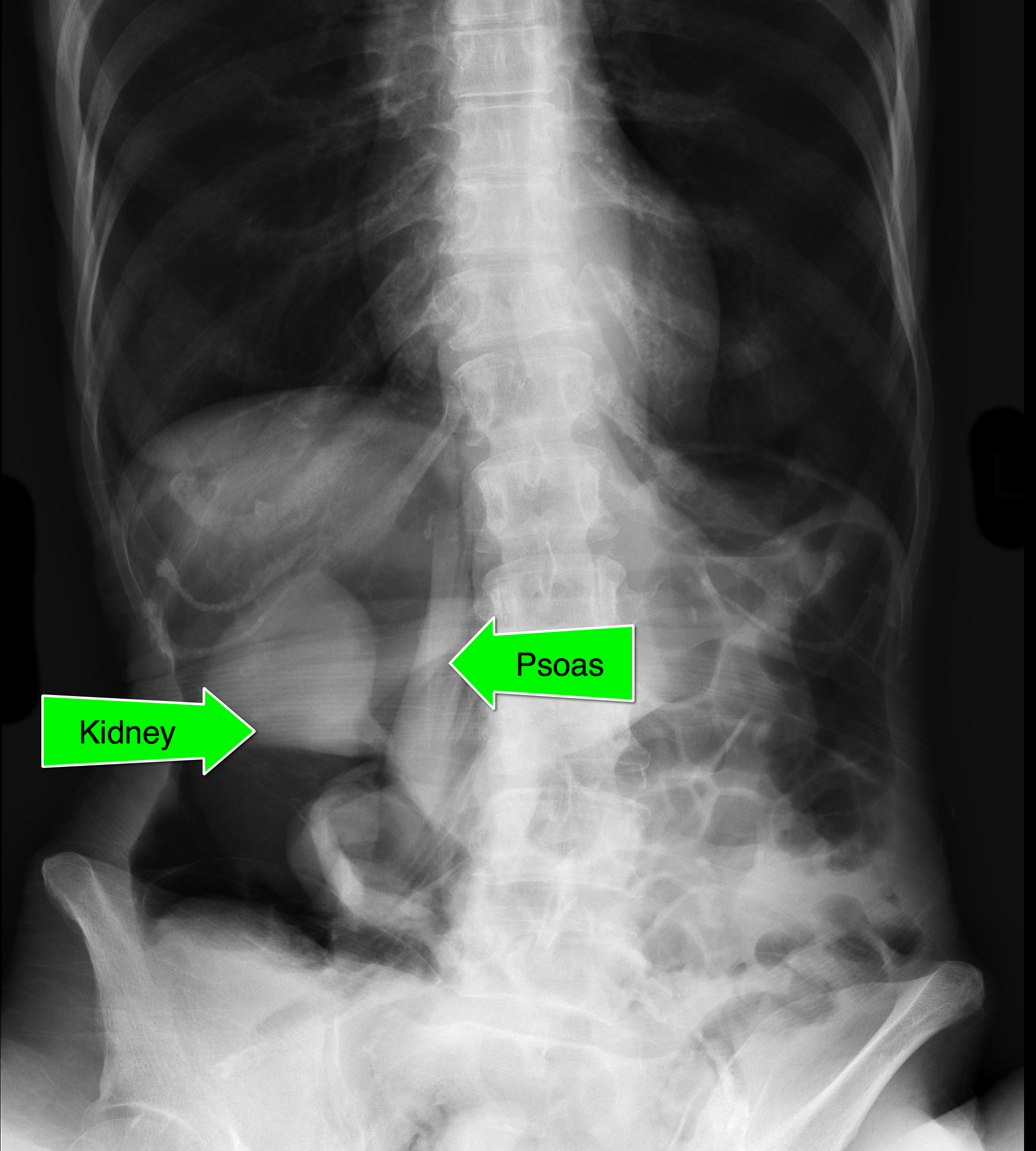
An elderly patient presents with a history of weight loss and chronic constipation. The abdominal Xray is shown below. What's the diagnosis?
This one is tricky so here's a hint: why is the right kidney and psoas muscle so well defined?
Show Answer
Show References
Steroids and Back Pain:
This pearl, https://umem.org/educational_pearls/2805/, by Dr. Corwell reported on the trail published in JAMA that showed that Steroid use does NOT help in the treatment of acute sciatica. But what about just general back pain. Do steroids help with that?
An article published in January in the Journal of Emergency Medicine, http://dx.doi.org/10.1016/j.jemermed.2014.02.010, reported on a randomized controlled trial of prednisone 50mg daily for 5 days versus placebo for the treatment of Emergency Department patients with Low Back Pain.
The study showed that at follow-up there was no difference between the groups in respect to pain, resuming normal activities, returning to work, or days lost from work. More patients in the prednisone group then the placebo group sought additional medical treatment (40% vs 18%).
CONCLUSION: The authors detected no benefit from oral corticosteroids in ED patients with musculoskeletal back pain, and it might actually increase their chance of returning for additional medical care. Just say NO to steroids in back pain.
Show References
Show References
Electronic cigarettes have been gaining popularity in the U.S. as a smokeless delivery system for nicotine. These devices require liquid nicotine (e-liquid) that are vaporized and inhaled (vaping).
E-liquid can have nicotine concentration as high as 100 mg/mL, which are diluted prior to use. When ingested in high concentration and in sufficient volume (1 vial = 15 mL) patients can develop significant nicotinic toxicity. Recently a case of cardiac arrest has been reported after ingesting two 15 ml vial (100 mg/mL).
Nicotine mimics the effects of acetylcholine (Ach) release by binding to nicotinic receptors located in:
- Brain
- Spinal cord
- Autonomic ganglia
- Adrenal medulla
- Neuromuscular junction
- Chemoreceptors of carotid/aortic bodies
Clinical manifestation of toxicity (similar to cholinergic toxidrome) is biphasic with early central stimulation followed by depression. (see table below)
|
| GI | Respiratory | Cardiovascular | Neurologic |
| Early (1 hr) | Nausea Vomiting Salivation Abdominal pain | Bronchorrhea Hyperpnea | Hypertension Tachycardia Pallor | Agitation Anxiety Dizziness Blurred vision Headache Hyperactivity Tremors Fasciculation Seizures |
| Late (0.5-4 hr) | Diarrhea | Hypoventilation Apnea | Bradycardia Hypotension Dysrhythmias Shock | Lethargy Weakness Paralysis |
Management: There is no specific antidote or reversal agent. The management of nicotine toxicity focuses on organ-specific dysfunction.
Show References
There are two main models of Emergency Medical Services (EMS) Systems
Franco-German
- Doctor is brought to the patient
- Care often provided by emergency physicians
- Based upon the “stay and stabilize” philosophy
- Fewer transports to the hospital
- Direct transport to inpatient wards
- Utilizes more extensive advanced technology
- Widely implemented in Europe
- EMS as part of public health organization
Anglo-American
- Patient is brought to the doctor
- Care provided by emergency medical technicians/paramedics
- Based upon the “scoop and run” philosophy
- More patients transported to the hospital
- Brought to the emergency department
- More likely to be found in countries with emergency medicine as a developed specialty
- Widely implemented in English speaking countries globally
- However, also found in other countries such as in the Arabian Gulf
- EMS as part of public safety organization
Show References
Hook of Hamate Fracture
Rare (2% of all carpal fractures)
Mechanism usually direct blow from a stick sport (golf, hockey, baseball)
Presents with hypothenar pain and pain with gripping activities
Physical examination - local swelling and tenderness to palpation over hook of hamate
Diagnostic test - Hook of hamate pull test
https://www.youtube.com/watch?v=A-mjRnC1yWQ
XR - standard wrist series but add carpal tunnel view
http://openi.nlm.nih.gov/imgs/512/60/2904904/2904904_256_2009_842_Fig1_HTML.png
http://www.cmcedmasters.com/uploads/1/0/1/6/10162094/7851913.png?359
Not to be outdone by the recent FDA approval of Idarucizumab to reverse dabigatran, a new factor Xa reversal agent is under investigation. "Andexanet binds and sequesters factor Xa inhibitors within the vascular space, thereby restoring the activity of endogenous factor Xa and reducing levels of anticoagulant activity, as assessed by measurement of thrombin generation and anti factor Xa activity, the latter of which is a direct measure of the anticoagulant activity."
Design
Two parallel randomized, placebo-controlled trials (ANNEXA-A [apixaban] and ANNEXA-R [rivaroxaban]) were conducted in healthy vounteers to evaluate the ability of andexanet to reverse anticoagulation, as measured by the percent change in anti factor Xa activity after administration.
What they Found
Compared to placebo, andexanet significantly reduced anti-factor Xa activity, increased thrombin generation, and decreased unbound drug concentration in both the apixaban and rivaroxaban groups.
Application to Clinical Practice
- This drug is not yet FDA approved.
- These trials were funded by the maker of andexanet (Portola Pharmaceuticals) and supported by the makers of apixaban and rivaroxaban.
- Studies are needed in patients requiring urgent reversal.
- The trials looked only at laboratory markers of anticoagulation. We don't know how fast (or the extent of) the reversal activity is in the clinical setting.
Show References
Last month we discussed causes of serotonin syndrome including common ED medications such as cyclobenzaprine (Flexeril), tramadol (Ultram), metoclopramide (Reglan), and ondansetron (Zofran).
Let’s conclude this series and discuss how to treat serotonin syndrome:
- Treatment of serotonin syndrome is mainly supportive.
- Discontinuation of all serotonergic agents is crucial, and may be all that's needed in mild cases.
- In moderate to severe cases, use benzodiazepines and titrate to patient sedation and normalization of vital signs.
- Avoid droperidol and haloperidol due to their anticholinergic properties that inhibit sweating and dissipation of body heat.
- Caution if using antipsychotics as neuroleptic malignant syndrome can be misdiagnosed as serotonin syndrome.
- Severely intoxicated patients may exhibit autonomic instability with large and rapid changes in blood pressure and heart rate.
- This should be managed with short-acting agents, such as esmolol or nicardipine.
- Aggressive control of hyperthermia associated with serotonin syndrome can potentially minimize severe complications such as seizures, coma, DIC, and metabolic acidosis.
- There is a limited role for antipyretics as the mechanism is due to muscle tone rather than central thermoregulation.
- In cases of uncontrollable hyperthermia, intubation and paralytics may be required.
- Cyproheptadine is an antihistamine with anti-serotonergic properties that should be used if no significant response to supportive measures.
- Adult dosing is 12 mg PO followed by 2 mg every 2 hours if symptomatic. Max 32 mg in 24 hours.
- A case series reported the use of dexmedetomidine for the treatment of refractory serotonin syndrome.
This concludes our 3-part series on serotonin syndrome!
Show References
- Invasive candidal infections can carry a high mortality (up to 40%) and can hard to diagnose
- In the ICU it is important to know which patients are at risk for developing invasive candidal infections
Risk factors for invasive candidal infections
- Critical illness (long ICU stays)
- Abdominal surgery (anastomotic leaks, repeat laporatomies)
- Necrotizing pancreatitis
- Hematologic malignencies
- Solid organ transplant
- Solid organ tumors
- Neonates (low birth wt, preterm)
- Use of broad spectrum antibiotics
- Central lines/PICC lines
- TPN
- Hemodialysis
- Steroid use
- Candidal colinization (urine, sputum)