
Search
Subscribe to daily UMEM Pearls (FREE!) via:
101-120 of 361 results by Brian Corwell
Treatment of Hamstring Strains in Athletes
28 year old athlete presents to the ED and diagnosed with a hamstring strain
Localized swelling, moderate pain and a small limp. Incomplete tearing of the muscle
He is worried that he will miss the remainder of his season and when he returns will reinjure the same hamstring
Consider referral to sports medicine/orthopedics
A recent study looked at use of ultrasound guided hematoma aspiration followed by platelet-rich plasma (PRP) treatment on recovery in acute hamstring injuries
55 male athletes between ages 18 -32 weighing between 170 and 260lbs
27 with treatment protocol plus rehabilitation and 28 treated conservatively (rehabilitation)
All had Grade 2 hamstring injuries diagnosed on MRI
Partial muscle tear (<50% cross sectional area)
Note: Grade 2 hamstring injuries are often associated with INTERmuscle hematoma and subsequent scarring. This can lead to persistent pain/discomfort and reinjury
Average return to play time was 32.4 days in the standard of care group
Average return to play time was 23.5 days in the intervention group (P<0.001)
Recurrence rate of hamstring strain was 28.6% in the standard of care group
Recurrence rater of hamstring strain was <4% in the intervention group (P=0.025)
Athletes with grade 2 hamstring injuries treated with hematoma aspiration and PRP injection into the strain had significantly shorter return-to-play and much lower recurrence rate that athletes treated with rehabilitation alone
Show References
The knee is one of the most commonly affected joints from osteoarthritis (OA).
Patients will complain of knee pain, swelling and stiffness.
This leads to disability as it interferes with walking, using stairs at home and getting in and out of chairs and the bath without assistance.
Increasing incidence due to aging of the general population and rising rates of obesity.
Patients frequently present to the ED for knee pain and imaging is often obtained.
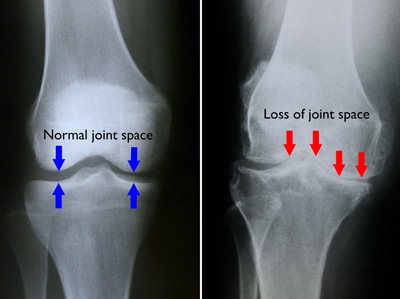
Diagnosis of knee OA can be made with an appropriate history and imaging that shows osteophytes and joint space narrowing.
The best views for knee OA include 1) PA weight-bearing & 2) 45 degree of knee flexion
https://d3i71xaburhd42.cloudfront.net/6f8ce215fb4bcd153a478187c9a6a2ae652a5fc4/250px/1-FigureI-1.png

Note: Weight-bearing radiographs will demonstrate greater joint space narrowing than non-weight-bearing radiographs
Of the 3 compartments of the knee, the medial tibiofemoral compartment is most commonly affected > patellofemoral compartment > lateral tibiofemoral compartment.
Examples of knee OA
https://roberthowells.com.au/wp-content/uploads/2016/04/A00212F02.jpg
https://orthoinfo.aaos.org/link/e7e6933819db4020bc2f3822c45c538f.aspx
Question
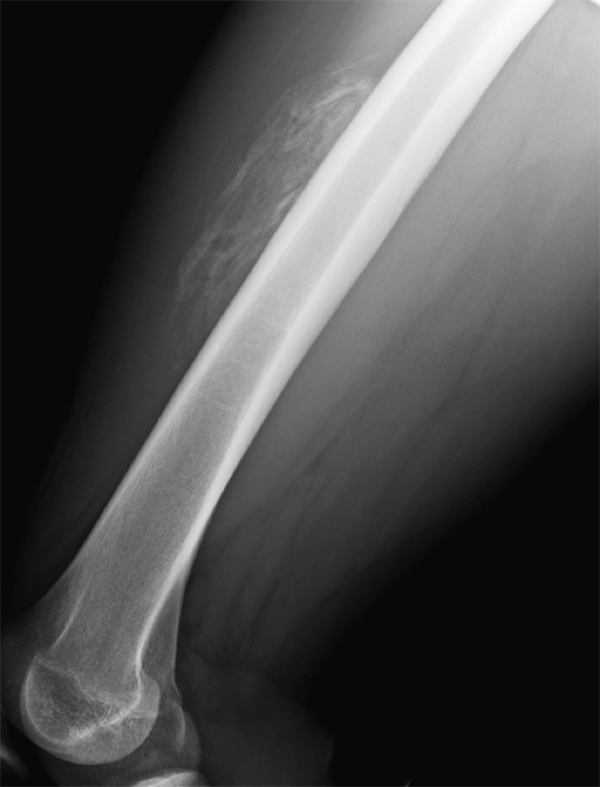
23 y/o otherwise healthy Male presents for approx. 3 month history of Right leg mass. It is painful with activity (deep and sharp) but not enlarging. Patient remembers a fall from a bicycle 6 months ago, with negative imaging for fracture.
What is the diagnosis?
https://plinthsandplatforms.files.wordpress.com/2016/06/screen-shot-2016-06-20-at-10-58-18-am.png

https://radsource.us/wp-content/uploads/2019/02/1E.jpg
Show Answer
Quadriceps contusion
Mechanism: Blunt trauma from ball, helmet, stick
Usually to the central region
Damage to highly vascular area of the muscle and to local blood vessels can cause hematoma formation
Typical trauma history and pain worse with muscle activation (knee flexion)
Physical exam: Bruising, tenderness, palpable mass/hematoma
Goals of care: Minimize intramuscular bleeding
Treatment: NSAIDS, crutches, unique type of immobilization
Attempt to increase resting length of the quadriceps muscle to facilitate early healing and return to function
- Immediately immobilize the affected leg in 120°of flexion with an elastic wrap x 24 hr
- https://img.medscapestatic.com/pi/meds/ckb/18/43218.jpg
- Frequent icing
- Followed by early stretching/ROM (Consider referral for formal PT)
- Continue restricted weight bearing on crutches as needed

Note: Left untreated, large contusions may result in myositis ossificans
Hamstring Injury
Prevalence varies by sport ranging from 8 to 25 percent with a high recurrence rate frequently during the ensuing sport season, usually in next 2 months but may extend up to one year!
Highest in sports that involve rapid acceleration and deceleration
3 highest risk sports - football and men’s and women’s soccer
Average time lost 17-21 days
Injury much less common in younger athletes
The hamstring is composed of three muscles: the biceps femoris, semitendinosus, and semimembranosus.
Primarily involved in knee flexion and hip extension
Biceps femoris is most commonly injured
https://www.ncbi.nlm.nih.gov/books/NBK539862/figure/article-28873.image.f1
Simple grading system using 3 grades
Grade 1 – mild strain
Grade 2 – Partial tear
Grade 3 – Complete tear
Proximal injuries are more common than distal injuries, occurring at the musculotendinous junction
Avulsion fractures of the ischium occur rarely occur in adults but may occur in skeletally immature athletes
https://radiopaedia.org/cases/ischial-tuberosity-avulsion
When watching a sporting event you will see the athlete grab the buttock or upper thigh. They usually cannot return to play. Most grade 2 or 3 injuries will require crutches. If seeing them the following day significant bruising may be seen.
Numerous modifiable and non-modifiable risk factors have been identified including:
*Weakness of ipsilateral quadriceps or contralateral hamstring, hamstring, hip & quadriceps tightness/poor flexibility, poor warm-up, sudden increased training volume and muscle fatigue.
*Older age (risk increase may begin as early as age 23)
Prior hamstring injury (up to 6x increased risk)
**Premature return to sport increases the risk of reinjury
Differential Diagnosis: Lumbar radiculopathy, sciatic nerve irritation or compression, stress fracture of femur.
Refer to sports medicine/orthopedics for avulsion injuries, complete proximal complete tears and partial or complete distal tears
Caffeine is probably the most wildly used and studied drug/supplement in the world.
It has been shown to enhance exercise capacity and performance.
Mechanism of action is likely multifactorial and involves adenosine receptor antagonism via direct CNS action improving mental alertness, reaction time and reducing the perceived exertion rate (pain).
To no surprise, amateur and elite athletes use caffeine to improve performance.
The well-accepted dosage of caffeine to improve performance is between 3 and 6 mg/kg, approximately 60 min before exercise. This dosage promotes (between 1 and 8%) performance gains in aerobic exercises and exercises with high glycolytic demand from cyclists to tennis players to weightlifters.
Consider the lower end of this range if interested in trying this on your own.
In an evaluation of 20,686 urine samples of elite athletes, almost 75% of the samples contained caffeine in concentrations higher than 0.1 μg/mL
Caffeine also increases maximal oxygen uptake (VO2 max)
23 elite athletes were tested twice with and twice without caffeine.
Randomized, double-blinded, placebo-controlled study.
Caffeine 4.5 mg/kg taken 45 minutes before exercise
Measures: Time to exhaustion and VO2 max.
Caffeine increased time to exhaustion and VO2 max, thereby increasing overall performance.
If you are going to incorporate using caffeine before your next workout, I suggest espresso shots for extra caffeine without the volume of a large cup of coffee. Beware of known side effects such as jitters, anxiousness and difficulties with sleep if taken later in the day. Also consider stomach upset digestive issues, and increased heart rate.
Happy Holidays!!!!
Show References
Presentations of Fracture in Nursemaids Elbow
Study group: Visits by children younger than 10 years, with a diagnosis of radial head subluxation at 1 of 45 pediatric EDs from 2010 to 2018.
Retrospective cohort study of 88,466 ED visits for radial head subluxation
Outcome: Missed fracture (return visit for upper extremity fracture within 7 days of the index visit).
Results
Median patient age was 2.1 years,
59% of visits were by female patients,
60% of cases occurred in the left arm.
Radiography was performed at 28.5% of visits (Range 19.8% to 41.7%.)
Extremity fractures were observed in 247 cases, representing 0.3% of the cohort.
The odds of missed fracture were higher in:
- Children older than 6 years
- Children who underwent radiography at the index visit
- Children receiving acetaminophen or ibuprofen in the ED.
Summary:
Only 0.3% of children with a diagnosis of radial head subluxation subsequently received a diagnosis of an upper extremity fracture within 7 days of the index visit.
Missed fractures were commonly about the elbow such as a supracondylar fracture. However, this study also found a significant proportion of missed fractures in other locations (e.g. shoulder, wrist), highlighting the importance of a careful physical examination, and the limitations of localizing pain in younger children.
Recurrence was common, and the risk of recurrence decreased with increasing age at first presentation. Overall, radial head subluxation recurrence was 8.7% after the first visit VERSUS 12%-13% in children younger than 2 years. THese patients are likely to return to the ED with a recurrence within 2 years. These findings should help inform anticipatory guidance to parents regarding the risk of recurrence based on their child’s age.
The classic mechanism for nursemaids elbow is axial traction on a pronated forearm and extended elbow.
The force allows a portion of the annular ligament to slip over the radius.
Consider this diagnosis with other mechanisms of injury especially if the exam is not suggestive of fracture.
Suspect in a patient in minimal distress with arm held semi flexed and pronated.
A recent retrospective study looked at other mechanisms of injury.
69 subjects with a median age of 2.5 years
The most common mechanisms of injury were fall (57%), direct hit to the elbow (16%), and rolling over (7%).
Some studies note the left elbow is more commonly involved but this is likely due to most guardians being right-handed, thereby holding the child’s left hand
Show References
The total number of concussions tripled among female athletes aged 14 to 18 years during a 20-year period from 2000 to 2019.
Query of National Injury Surveillance System
Female athletes with sports-related concussions or closed head injuries who presented to the ED
In 14- to 18-year-old females the number of concussions increased from 9,000 in 2000 to 32,000 in 2019.
65% of all concussions among female athletes occurred in soccer, basketball, cheerleading, softball, and volleyball.
Association between an increase of 308.7 annual concussions per 10,000 annual female participants.
In a study of more than 80,000 teenage players across US high schools, female athletes are 1.9 times more likely to develop a sports-related concussion than are their male counterparts in comparable sports.
In boys, the most common way of becoming concussed was through direct contact with another player (50%)
In girls, the most common way of becoming concussed was after colliding with another object (ball/goalpost).
This mechanism may partly explain another finding: Boys were also more likely to be removed from play immediately after a suspected head injury than were girls
The Role of Active Rehabilitation in Concussion Management: A Systematic Review and Meta-analysis
Concussions make up 70% to 90% of all traumatic brain injuries
During the recovery process, prolonged rest has been shown to slow recovery and precipitate secondary symptoms of fatigue, reactive depression, anxiety and physical deconditioning.
As a result, a gradual increase in low-level activities has been encouraged after 24-48 h of rest.
23 articles for a total of 2547 concussed individuals, 49% female, both kids and adults. Included both sport related and non-sport related concussion.
None of the studies reported any adverse events in symptomatic participants after subthreshold exacerbation aerobic exercise.
Duration ranged from 15-20 minutes per session or until symptom exacerbation.
Subthreshold activity generally targeted 80% of max heart rate achieved during a graded symptom threshold test.
Every study showed improved concussion symptom scores with a physical activity intervention.
Most common treatment duration was 6 weeks (Range 1-12 wk)
Best outcomes if initiated with 2-3 weeks after injury but intervention beneficial in chronic phases of recovery as well.
The intervention of physical activity decreases post concussion symptom scores and the overall effect across studies was large and positive.
Optimal intensity, duration and time to initiation of exercise intervention needs further investigation.
Exercise effect is likely multifactorial including:
- Improvement in cerebral autoregulation
- Increases levels of brain-derived neurotrophic factor which promotes neuron growth and repair
- May reduce fear of exercise and perception of illness and injury
- Reintegration with social environments and support
One of the best effects I have seen in treating these patients is that active exercise allows a proactive approach to patient recovery. Patients become less focused on every minor symptom or irregularity.
Show References
Exertional Heat Stroke at the Boston Marathon
Study goal: To assess for possible associations between exertional heat stroke (EHS) and sex, age, prior performance and environmental conditions
Data sourced from 2015-2019 Boston Marathon races.
Why Boston: The Boston marathon is one of the only marathons that require qualifying times for entry for a majority of runners which yields a high proportion of faster than average runners. The race is frequently characterized by extreme weather conditions, including warm and humid days.
Results: 136,161 race starters. Incidence of EHS was 3.7 cases per 10,000 starters.
Note: Twin Cities Marathon found 3 cases per 10,000 runners.
Mean age of runners was 43.3. Female 45%, male 55%.
Significant associations between sex and age, sex and start wave and age group and start wave.
Sex not associated with increased EHS incidence.
Age < 30 and assignment to the first 2 waves (faster runners) was significantly associated with increased EHS.
All cases of EHS occurred with average wet bulb globe temperatures (WBGT) were 17° – 20° C.
Linear correlation between EHS and incidence in addition to increases in WBGT from start to peak.
72.5% of cases were race finishers. Non finishers presented after mile 18.
Almost 30% developed post treatment hypothermia.
Almost 2/3rds were discharged directly, the remainder required hospital transport.
Authors estimate needing at least 4 ice water immersion tubs per 10,000 runners with potential of needing 8-10 if race day is humid.
Conclusions: Overall, EHS represented a small percentage of medical encounters but required significant resources.
Younger and faster runners are at high risk of EHS.
Greater increases in heat stress from start to peak worsens risk.
Definitions: WGBT - The Wet Bulb Globe Temperature (WBGT) is a measure of the heat stress in direct sunlight, which takes into account: ambient temperature, relative humidity, wind speed, sun angle and cloud cover (solar radiation). This differs from the heat index, which takes into consideration temperature and humidity and is calculated for shady areas.
Show References
Study Question: A recent study investigated whether a history of concussion caused greater disturbances in cerebral blood flow and cerebral white matter after subsequent concussions.
Background: Researchers used changes in blood flow in the cingulate cortex and white matter microstructure in the corpus callosum as evidence of underlying brain injury.
Population: 228 athletes with an average age of 20. Divided into 2 groups, recent and non-recent concussion.
61 athletes had a recent (uncomplicated) concussion and 167 did not. Within the first group, 36 had a history of concussion. Within the second group, 73 had a history of concussion.
Note: researchers used “self-reported” history of concussion in study.
Intervention: Researchers took up to 5 MRI scans of each recently concussed athlete. This encompassed the acute phase of injury (1 to 7 days post-injury), the subacute phase (8 to 14 days), medical clearance to return to sport, one month post return and one year post return.
The sport concussion assessment tool (SCAT) was also used to evaluate effects of history of concussion on symptoms, cognition and balance.
Results: One year after a recent concussion, those athletes with a history of concussion had sharper declines in blood flow within one area of the cingulate cortex compared to those without a history of prior concussions.
Athletes with a history of concussion had an average cerebral blood flow of 40 mL per minute, per 100 grams of brain tissue.
Athletes without a history of concussion had an average cerebral blood flow of 53 mL per minute, per 100g of brain tissue.
In the weeks following concussion, those athletes with a prior history of concussion had microstructural changes in the corpus callosum.
Effects were seen in the absence of differences in SCAT domains or time to return to sport.
Conclusion: Athletes with a history of concussion experience identifiable injury to their brains as evidenced by changes in blow flow and white matter microstructure. Athletes “cleared” for return to play following concussion may be at greater risk of subtle patterns of brain injury versus their peers.
Show References
Chronic Exertional Compartment Syndrome (CECS)
Similar pathology to acute compartment syndrome except symptoms are related to activity (frequently running) and abate with rest.
95% involve lower extremity
Inappropriately elevated tissue pressure in one or more lower leg compartments associated with exercise
Anterior compartment most frequently involved
As tissue pressure increases, local perfusion is decreased. This leads to symptoms of pain, pressure, cramping and paresthesias.
Also commonly associated with team sports such as soccer, lacrosse and field hockey.
More likely in competitive athletes than recreational.
Patient will be symptom free at time of ED evaluation
Make diagnosis of CECS with history
- Pain must be induced with exercise
- Usually limited to a single compartment, frequently the anterior
- Pain occurs at predictable time in exercise and forces athlete to stop running
- Pain resolves with rest
- If witnessed, tenderness is present only in the involved compartment and not elsewhere
Diagnosis with compartment pressure measurements done in office with treadmill exercise.
Non operatively, gait retraining programs have been shown to help symptoms. Appropriate if symptoms are mild.
Surgical treatment involves a minimally invasive fasciotomy
Post surgery success rates are between 63-100% with recurrence rates up to 20%
Low dose ketamine was compared to morphine for the treatment of patients with long bone fractures
126 patients with upper and lower extremity long bone fractures were divided into two treatment groups
- IV morphine at a dose of 0.1 mg/kg
- IV ketamine at a dose of 0.5mg/kg
Pain scores were compared pre and at 10 minutes post treatment
Pain severity significantly decreased in both groups to a similar degree
Increase adverse effects (emergence phenomenon) noted in ketamine group but all effects resolved spontaneously without intervention.
Conclusion: Analgesic effect of ketamine is similar to morphine in patients with long bone fractures.
Show References
NSAIDs for lower back pain (LBP)
NSAIDs are recommended for first line treatment of lower back pain.
Ibuprofen (600mg), ketorolac (10mg) and diclofenac (50mg) were compared.
3 arm, double-blinded study in an ED population with musculoskeletal LBP.
66 patients in each arm.
Outcomes via telephone interview 5 days later
Primary outcome was improvement in Roland-Morris Disability Questionnaire (RMDQ).
Lower scores indicate better LBP functional outcomes.
Secondary outcomes: Pain intensity and the presence of stomach irritation.
Baseline characteristics similar in 3 groups.
Results: No significant differences between 3 arms in primary outcome.
Ibuprofen 9.4, ketorolac 11.9, and diclofenac 10.9 (p = 0.34).
Ketorolac group reported less overall pain intensity at day 5.
Ketorolac group reported less stomach irritation that the other drugs ((p < 0.01).
While there was no differences in terms of functional outcomes, there may be a benefit of using ketorolac in terms of overall pain intensity and stomach irritation. This would benefit from further study in a larger population in order to draw definitive conclusions.
Show References
You are covering a sporting event or working an ED shift when a young adolescent athlete without significant PMH presents with SOB and wheezing associated with exercise.
You immediately think exercise-induced asthma, prescribe a short-acting bronchodilator and pat yourself on the back.
While you may be right, there is increasing recognition of an alternative diagnosis
Exercise-induced laryngeal obstruction (EILO)
During high intensity exercise, the larynx can partially close, thereby causing a reduction in normal airflow. This results in the reported symptoms of SOB and wheezing.
This diagnosis has previously been called exercise induced vocal cord dysfunction. As the narrowing most frequently occurs ABOVE the level of the vocal cord, EILO is a more correct term.
While exercise induced bronchoconstriction has a prevalence of 5-20%, EILO is less common with a prevalence of 5-6%.
Patients are typically adolescents, with exercise associated wheezing and SOB, frequently during competitive or very strenuous events. Wheezing is inspiratory and high-pitched. Symptoms are unlikely to be present at time of medical contact unless you are at the event as resolution occurs within 5 minutes though associated cough or throat discomfort can persist after exercise cessation. EIB symptoms typically last up to 30 minutes following exercise.
Inhaler therapy is unlikely to help though some athletes report subjective partial relief. This may be explained as approximately 10% of individuals have both EIB and EILO.
In athletes with respiratory symptoms referred to asthma clinic, EILO was found in 35%.
Consider EILO in athletes with unexplained respiratory symptoms especially in those with ongoing symptoms despite appropriate therapy for EIB.
Hand elevation test
- Hand elevation has been known to reproduce the symptoms of carpal tunnel syndrome.
- This phenomenon prompted the idea of developing a simple hand elevation test to diagnose carpal tunnel syndrome.
- To perform: Ask the patient to elevate both arms in the air for one minute. Hands are raised actively and without strain, keeping the elbows and shoulders relatively loose.
- A positive test reproduces symptoms of carpal tunnel syndrome.
- The hand elevation test has a high sensitivity (75-86%) and specificity (89-98.5%) and may be comparable to or likely better than other provocative tests.
https://www.youtube.com/watch?v=IO2qC5qHVFE
Show References
A recent article in Pediatrics attempted to estimate the association between fluoroquinolone use and tendon injury in an adolescent population.
Fluoroquinolones are thought to negatively impact tendons and cartilage in the load-bearing joints of the lower limbs through collagen degradation, necrosis, and disruption of the extracellular matrix.
Population: 4.4 million adolescents aged 12–18 years with filled outpatient fluoroquinolone prescription vs. an oral broad-spectrum antibiotic for comparison.
Fluoroquinolones included ciprofloxacin, levofloxacin, moxifloxacin, and gatifloxacin
Comparator antibiotics included amoxicillin-clavulanate, azithromycin, cefalexin, cefixime, cefdinir, nitrofurantoin, and bactrim.
Outcomes: Primary outcome was 90-day tendon rupture (Achilles, patellar, quadricep, patellar, tibial) identified by diagnosis and procedure codes. Secondary outcome was tendinitis.
Results: The weighted 90-day tendon rupture risk was 13.6 per 100 000 fluoroquinolone-treated adolescents and 11.6 per 100 000 comparator-treated adolescents.
Fluoroquinolone-associated excess risk: 1.9 per 100 000 adolescents; the corresponding number needed to treat to harm was 52 632.
The weighted 90-day tendinitis risk was 200.8 per 100 000 fluoroquinolone-treated adolescents and 178.1 per 100 000 comparator-treated adolescents
Fluoroquinolone-associated excess risk excess risk: 22.7 per 100 000 adolescents; the corresponding number needed to treat to harm was 4405.
Conclusion:
The excess risk of tendon rupture associated with fluoroquinolone treatment was extremely small, and these events were rare. On average, 50,000 adolescents would need to be treated with a fluoroquinolone for 1 additional tendon rupture to occur
The excess risk of tendinitis associated with fluoroquinolone treatment though larger was also small.
Besides tendon rupture, other more common potential adverse drug effects may be more important to consider for treatment decision-making, in adolescents without other risk factors for tendon injury.
Show References
Both erythrocyte sedimentation rate (ESR) and C-reactive protein (CRP) are highly sensitive (84-100%) for spinal infections and are observed in >80% with vertebral osteomyelitis and epidural abscesses.
ESR
Most sensitive and specific serum marker, usually elevated in both spinal epidural abscess (SEA) and vertebral osteomyelitis.
ESR was elevated in 94-100% of patients with SEA vs. only 33% of non-SEA patients
Mean ESR in patients with SEA was significantly elevated (51-77mm/hour)
CRP
Not highly specific
Less useful for acute diagnosis since CRP levels rise faster and return to baseline faster than ESR (elevated CRP seen in 87% of patients with SEA as well as in 50% of patients with spine pain not due to a SEA)
Better used as a marker of response to treatment.
Show References
Erythrocyte sedimentation rate (ESR) for spinal infection
Sensitive for spinal infection but not specific
Elevated ESR is observed in greater than 80% of patients with vertebral osteomyelitis and epidural abscess
ESR is the most sensitive and specific serum marker for spinal infection
Usually elevated in acute presentations of SEA and vertebral osteomyelitis
ESR was elevated in 94-100% of patients with SEA vs. only 33% of non-SEA patients
Mean ESR in patients with SEA was significantly elevated (51-77mm/hour)
Infection is unlikely in patients with an ESR less than 20 mm/h.
Incorporating ESR into an ED decision guideline may improve diagnostic delays and help distinguish patients in whom MRI may be performed on a non-emergent basis