
- The ADAPT (2-Hour Accelerated Diagnostic Protocol to Assess Patients With Chest Pain Symptoms Using Contemporary Troponins as the Only Biomarker) trial was a prospective observational validation study designed to assess a predefined ADP (Accelerated Diagnostic Protocol)
- A low risk patient in this ADP was defined by TIMI 0, ECG w/no ischemic changes, and negative troponin at 0-and 2-hours after presentation
- Primary endpoint was assessment of any major adverse cardiac event (MACE)
- Of 1,975 patients enrolled, 302 (15.3%) had a MACE
- ADP classified 392 patients (20%) as low risk and only 1 (0.25%) had a MACE
- ADP had a sen 99.7%, NPV 99.7%, spec 23.4%, and PPV 19.0%
- Despite ADP identifying patients as low risk for MACE standard of care still requires rapid early outpatient follow-up or further inpatient testing
Show References
Fabella Syndrome
The fabella is a sesamoid bone that is embedded in the tendon of the gastrocnemius muscle where the fibers of the popliteus, arcuate complex and the fibular-fabellar ligament attach.
Fabella syndrome is a painful condition of the posterolateral knee that is exacerbated when the knee is extended. The pain can be exacerbated by palpation of the fabella and if it is compressed against the condyles. The condition is most common in adolescence, but occurs in adults too.
Consider this condition in patients with posterolateral knee pain, which can also be due to tears of the posterior horn of the lateral meniscus, and tendonitis of the lateral head of the gastrocnemius.
General information:
· Salmonella typhi – transmission through fecal-oral, contaminated food, human carriers
· Most cases in the US acquired abroad – Africa, Latin American, Asia
· Vaccine available – not life-long immunity, need 1-2 weeks to take effect
Clinical Presentation:
· sustained high fever (103-104)
· Faget sign: fever and bradycardia (also seen in yellow fever, atypical pneumonia, tularemia, brucellosis, Colorado tick fever))
· Abdominal pain, GI bleed/perforation, hepatosplenomegaly, delirium
· “Rose spots” – erythematous macular rash over chest and abdomen
· Without treatment sx can resolve after 3-4 weeks, mortality from secondary infections 12-30%
Diagnosis:
· Pan-culture for S. typhi
· Serologic: Widal test (negative for 1st week of symptoms, 7-14 days to result)
Treatment:
· Abx: amoxicillin, trimethoprim-sulfamethoxazole, and ciprofloxacin
· MDR typhoid: ceftriaxone or Azithromycine 1st line
Bottom Line:
· Get vaccinated if travelling to endemic areas 1-2 weeks before travel
· Suspect in travelers to endemic areas with sustained high fevers
· Spontaneous resolution does occur but may become carriers without abx
Famous victims or Typhoid fever:
· Wilbur Wright (Wright brothers)
· Prince Albert (Queen Victoria’s husband)
· Hakaru Hashimoto (discovered Hashimoto’s thyroiditis)
· Abigail Adams (1st Lady, wife of John Adams)
University of Maryland Section of Global Emergency Health
Author: Veronica Pei, MD
Show References
Monitoring Hyperosmolar Therapy
- Hyperosmolar therapy (mannitol or hypertonic saline) is commonly used in the treatment of neurocritical care paitents with elevated ICP.
- When administering mannitol, guidelines recommend monitoring serum sodium and serum osmolarity. Though targets remain controversial, most strive for a serum sodium of 150-160 mEq/L and a serum osmolarity between 300 - 320 mOsm/L.
- Unfortunately, serum osmolarity is a poor method to monitor mannitol therapy.
- Instead of serum osmolarity, follow the osmolar gap. It is more representative of serum mannitol levels and clearance. If the osmolar gap falls to normal, the patient has cleared mannitol and may be redosed if clinically indicated.
Show References
Question
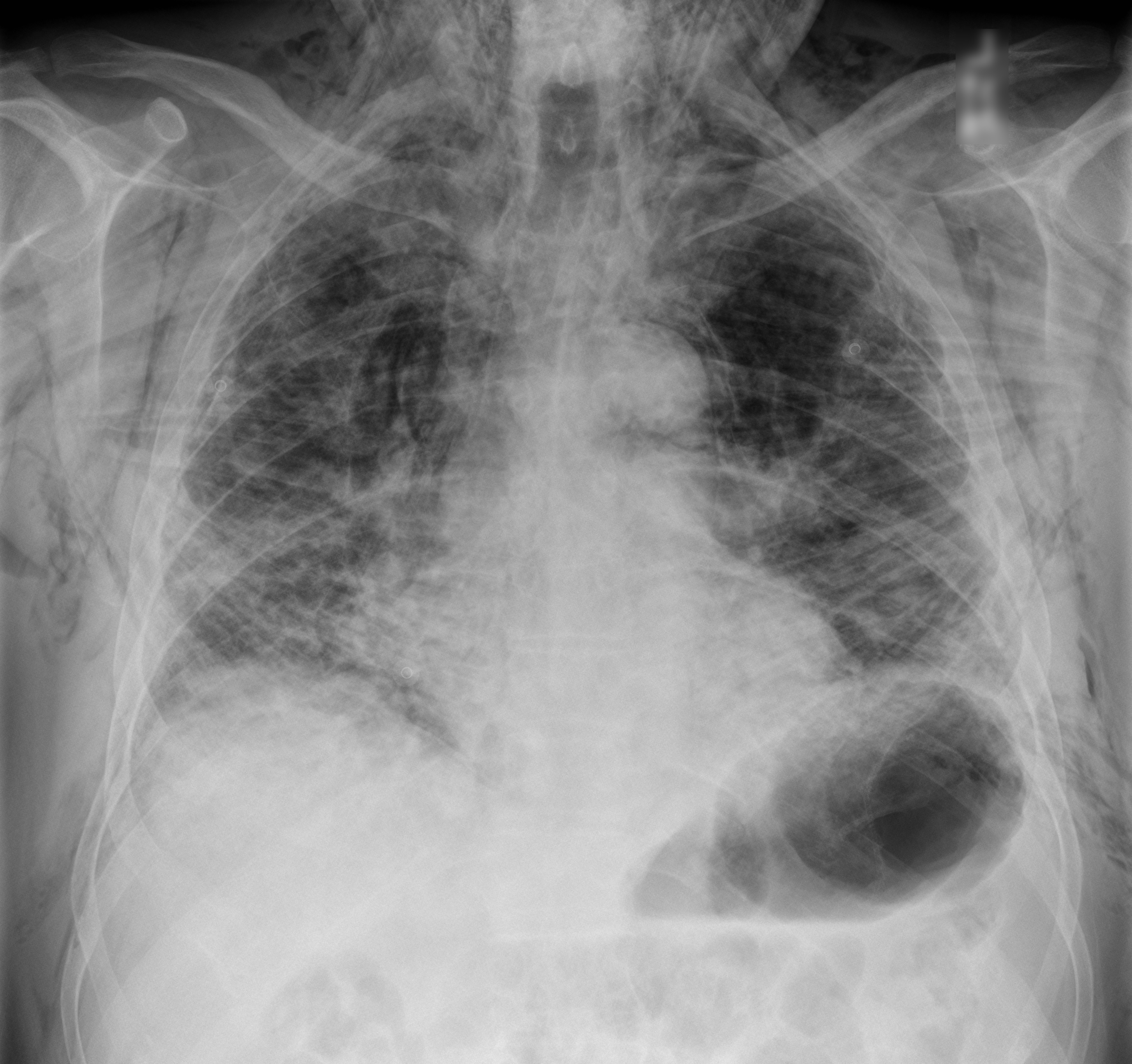
60 year-old male with a history of pulmonary fibrosis presents to the Emergency Department after a lung biopsy. He is complaining of facial swelling and dyspnea. What's the diagnosis?
Show Answer
Show References
- Cardiorenal syndrome (CRS) type 1 is the development of acute kidney injury (AKI) in the patient with acute cardiac illness, most commonly acute decompensated heart failure (ADHF)
- Multiple pathophysiological mechanisms result in CRS characterized by a rise in serum creatinine, oliguria, diuretic resistance, and worsening ADHF
- There are a host of predisposing factors that create baseline risk for CRS (DM, HTN, HLD, OSA)
- The final common pathway often results in bidirectional organ injury, drug resistance, and death
- The combination of worsening renal function, volume overload, and diuretic refractoriness makes the management of CRS challenging
- Current therapies although often ineffective include aggressive diuresis and positive inotropes
Show References
Diffuse Idiopathic Skeletal Hyperostosis
aka 1) ankylosing hyperostosis, 2) Vertebral osteophytosis
Large amount of osteophyte formation in the spine, confluent, spanning 3 or more disks
Most commonly seen in the thoracic and thoracolumbar spine.
Osteophytes follow the course of the anterior longitudinal ligaments.
2:1 male to female ratio. Most patients >60yo.
Sx's: Longstanding morning and evening spine stiffness.
PE: Spinal stiffness with flexion and extension.
Dx: plain films
Tx: NSAIDs and physical therapy
http://www.learningradiology.com/caseofweek/caseoftheweekpix2013%20538-/cow542-1arr.jpg
- diarrhea lasting less than 14 days
- in children, almost all diarrhea is due to an infectious agent
- most etiologies are self-limited and do not need further evaluation except in the following conditions:
- infants < 2 months of age
- gross blood in stool
- WBC's on microscopic exam of stool
- toxic-appearance
- immunocompromised child
- diarrhea developing while an inpatient
- therapy is aimed at oral rehydration and providing nutrional needs
- ORT is best with commerical formulations specific for this as most other clear liquids (juice, sodas) are hypertonic and have excess glucose resulting in ongoing diarrhea-like stools
- after rehydration, resume the child's normal diet.
Show References
Strychnine poisoning is still occasionally found in rat poisons and in adulterated street drugs and herbal products. The typical symptoms are involuntary, generalized muscular contractions resulting in neck, back, and limb pain. The contractions are easily triggered by trivial stimuli (such as turning on a light) and each episode usually lasts for 30 seconds to 2 minutes, for 12 to 24 hours. Classic signs include opisthotonus, facial trismus, and risus sardonicus.
Differential diagnosis includes:
- Tetanus: However, the onset of symptoms is more gradual and the duration much longer than in the case of strychnine poisoning.
- Generalized seizures: However, strychnine poisoning presents with a normal sensorium during the period of diffuse convulsions.
- Dystonic reaction: However, dystonic reactions are usually static, whereas strychnine poisoning results in dynamic muscular activity.
- Serotonin syndrome
- Malignant hyperthermia
- Neuroleptic malignant syndrome
- Stimulant use
Show References
Case Presentation:
A Spanish speaking man in his late 20s is brought in by ambulance for severe dyspnea. Given the language barrier and his clinical status you are unable to obtain any history. He is tachypnic, had a low pulse ox, and was placed on BiPAP. On exam you hear bibasilar rales and a faint holosystolic murmur.
Clinical Question:
What should be included in the differential?
Answer:
Rheumatic heart disease is the result of valvular damage due to an abnormal immune response following a group A streptococcal infection. It affects 15.6 to 19.6 million people worldwide. Most patients present with dyspnea between the ages 20-50. The most common valvular disease is mitral insufficiency, but it may present with mitral stenosis or aortic regurgitation. The disease is most prevalent in sub-Saharan Africa and among the Indigenous population of Australia but it can be found in many developing countries. People who live in rural areas without access to medical care are those at highest risk for developing rheumatic fever and subsequently rheumatic heart disease.
Bottom Line:
Rheumatic heart disease should be considered in patients who present from an endemic region.
University of Maryland Section of Global Emergency Health
Author: Jenny Reifel Saltzberg, MD, MPH
Show References
Fluid boluses are often administered to patients in shock as a first-line intervention to increase cardiac output. Previous literature states, however, that only 50% of patients in shock will respond to a fluid bolus.
Several validated techniques exist to distinguish which patients will respond to a fluid bolus and which will not; one method is the passive leg raise (PLR) maneuver (more on PLR here). A drawback to PLR is that it requires direct measurement of cardiac output, either by invasive hemodynamic monitoring or using advanced bedside ultrasound techniques.
Another technique to quantify changes in cardiac output is through measurement of end-tidal CO2 (ETCO2). The benefits of measuring ETCO2 is that it can be continuously measured and can be performed non-invasively on mechanically ventilated patients.
A 5% or greater increase in end-tidal CO2 (ETCO2) following a PLR maneuver has been found to be a good predictor of fluid responsiveness with reliability similar to invasive measures.
Show References
Question
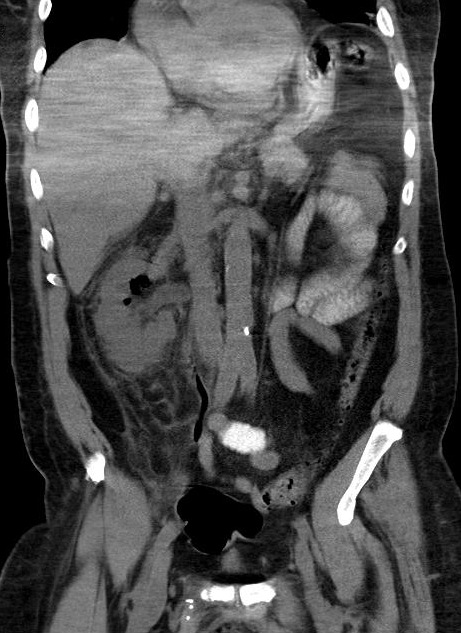
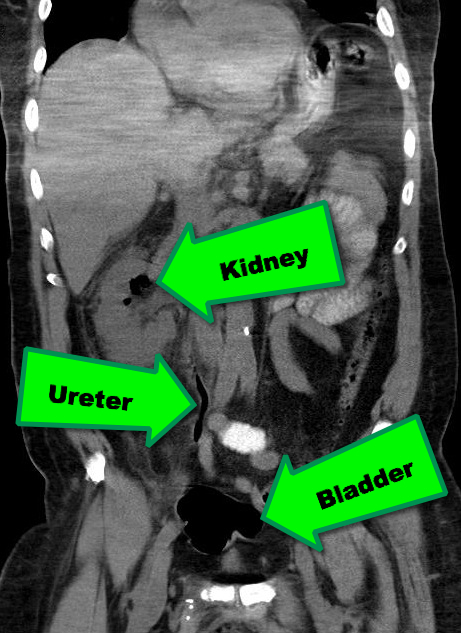
38 year-old male with a past medical history of diabetes presents with back pain and hypotension. CT scan is shown below. What's the diagnosis?
Show Answer
Show References
- Postural tachycardia syndrome (POTS) is defined as orthostatic intolerance w/ an increase in heart rate by 30 bpm (or HR>120 bpm) that occurs within 10 mins of standing or upright tilt
- Orthostatic intolerance due to POTS will NOT cause orthostatic hypotension (defined as fall of >20/10 mm Hg on standing); instead patients may display no change, a small decline, or even a modest increase in blood pressure
- Symptoms include: palpitations, fatigue, lightheadedness, exercise intolerance, nausea, diminished concentration, tremulousness, and syncope
- POTS is a heterogeneous group of disorders with similar clinical manifestations
- Primary POTS - partial dysautonomia form
- Secondary POTS - hyperadrenergic form
- Tx varies according to the subtype/etiology of POTS and must be individualized
- *Caveat inappropriate sinus tachycardia (IST) and POTS are two different diagnosis where significant overlap exists, however thebtachycardia in IST is NOT postural
Show References
Introduction
Fosphenytoin is a prodrug and is metabolized quickly to phenytoin after administration. The conversion of fosphenytoin to phenytoin involves the release of phosphate. In fact, each mmol of fosphenytoin releases 1 mmol of phosphate.
Clinical Question
Are patients at risk for hyperphosphatemia after fosphenytoin loading?
Data
There are only two cases of reported hyperphosphatemia.
- A 17-year old African-American male with end-stage renal disease developed acute hyperphosphatemia to 3.9 mmol/L (12.1 mg/dL) following the IV administration of 1000 mg of fosphenytoin for an idiopathic complex partial seizure
- An infant in status epilepticus had marked hyperphosphatemia 8.4 mmol/L (25.9 mg/dL) after a 5-10 fold dosing error.
Bottom Line
Despite the phosphate load from fosphenytoin administration, hyperphosphatemia is very rare and probably associated with renal insufficiency and dosing errors.
Show References
Acute ischemic stroke occurs in 3.3/100,000 children per year. Up to 30% of these are caused by varicella. This can be diagnosed if the patient has had varicella infection within the past 12 months, has a unilateral stenosis of a great vessel, and has a positive PCR or IgG from the CSF.
Treatment includes anticoagulation, acyclovir for at least 7 days and steroids for 3-5 days.
Outcome is normally good and spontaneous improvement can be seen.
Inflammation of other arteries, including other areas of the brain, can also be seen. Treatment options for this can include high dose glucocorticoids and possibly immunosuppresive agents.
Show References
- Prothrombin Complex Concentrate (PCC) Kcentra™ has been approved for urgent reversal of major bleeding in patients taking vitamin K antagonists (e.g. warfarin).
- It contains factors 2,7,9 and 10, and antithrombotic Proteins C and S.
- Both fatal and non-fatal arterial and venous thromboembolic complications have occurred with Kcentra™. Thrombotic events occurred more frequently in the PCC group compared to plasma, although the differences were not statistically significant.
- Volume overload occurred less frequently in the PCC group, as there is a smaller volume administered with PCC compared to that of plasma.
- Percentage of INR ≤ 1.3 at 30 minutes was 62% in the PCC group and 9.6% in the plasma group.
Approval of Kcentra™ may open the door for studying treatment of the bleeding patient on newer oral anticoagulants.
General Information: Antibiotics are generally classified as time- and concentration-dependent.
Concentration-dependent antibiotics
- Rate of kill is highly dependent on peak concentrations and is tissue-specific (generally 10x MIC needed for optimal bactericidal effect)
- As concentrations of the drug decrease, the bactericidal effect decreases
- Need less frequent dosing but higher doses
- Examples:
-Fluoroquinolones (i.e. Levofloxacin)
-Aminoglycosides (i.e. Gentamicin)
-Azithromycin
Relevance to the EM Physician:
Concentration-dependent antibiotics should be given at the highest appropriate dose for the target tissues (i.e. Levofloxacin 750mg for pneumonia is preferable to 500mg). This is also the rationale for high dose, extended-interval dosing for Gentamicin (>5mg/kg initial dose).
University of Maryland Section of Global Emergency Health
Author: Andi Tenner, MD, MPH
Show References
Neuromuscular Blocking Agents in the Critically Ill
- NMBAs are used in critically ill patients for RSI, patient-ventilator asynchrony, reducing intra-abdominal pressure, reducing intracranial pressure, and preventing shivering during therapeutic hypothermia.
- There are a number of alterations in critical illness that affect the action of NMBAs
- Electrolyte abnormalities
- Hypercalcemia: decreases duration of blockade
- Hypermagnesemia: prolongs duration of blockade
- Acidosis: can enhance effect of nondepolarizing agents
- Hepatic dysfunction: prolongs effects of vecuronium and rocuronium
- Electrolyte abnormalities
- In addition, there are a number of medications that may interact with NMBAs
- Increased resistance: phenytoin and carbamazepine
- Prolongs effect: clindamycin and vancomycin
- Key complications of NMBAs in the critically ill include:
- ICU-aquired weakness (controversial)
- DVT: NMBAs are one of the strongest predictors for ICU-related DVT
- Corneal abrasions: prevalence up to 60%
Show References
Question
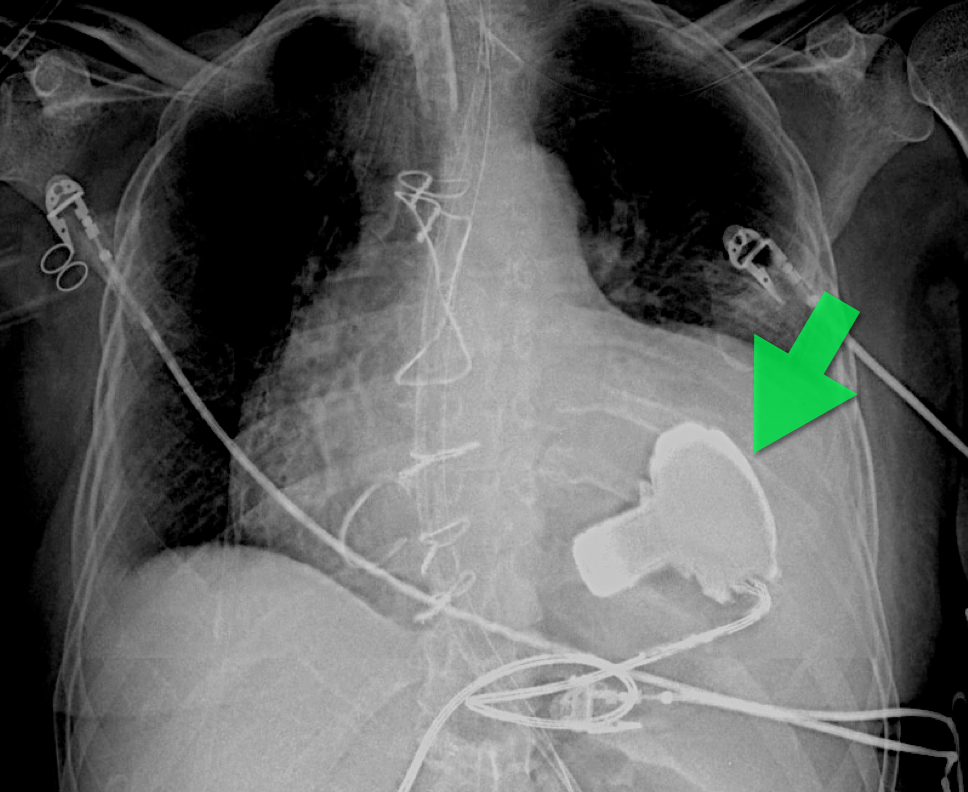
57 year old male presents with a cough. The CXR is shown below. What's the diagnosis?
Show Answer
Show References
- B-type natriuretic peptide (BNP) is a useful prognostic biomarker in patients with reduced LVEF, but data in heart failure (HF) with preserved ejection fraction (HFPEF) is minimal
- A recent study sought to determine the prognostic value of BNP in patients with HFPEF in comparison to data in HF patients with reduced left ventricular EF <40%
- 615 patients with mild to moderate HF were followed for 18 months and BNP was measured at baseline and related to the primary outcomes (mortality and HF hospitalization)
- BNP levels were significantly higher in patients with reduced LVEF than in those with HFPEF (p < 0.001), however the risk of adverse outcomes and prognosis in patients with HFPEF is as poor as in those with reduced LVEF