
Search
Subscribe to daily UMEM Pearls (FREE!) via:
A patient presents with hypoxia, anemia, and the following CT findings:
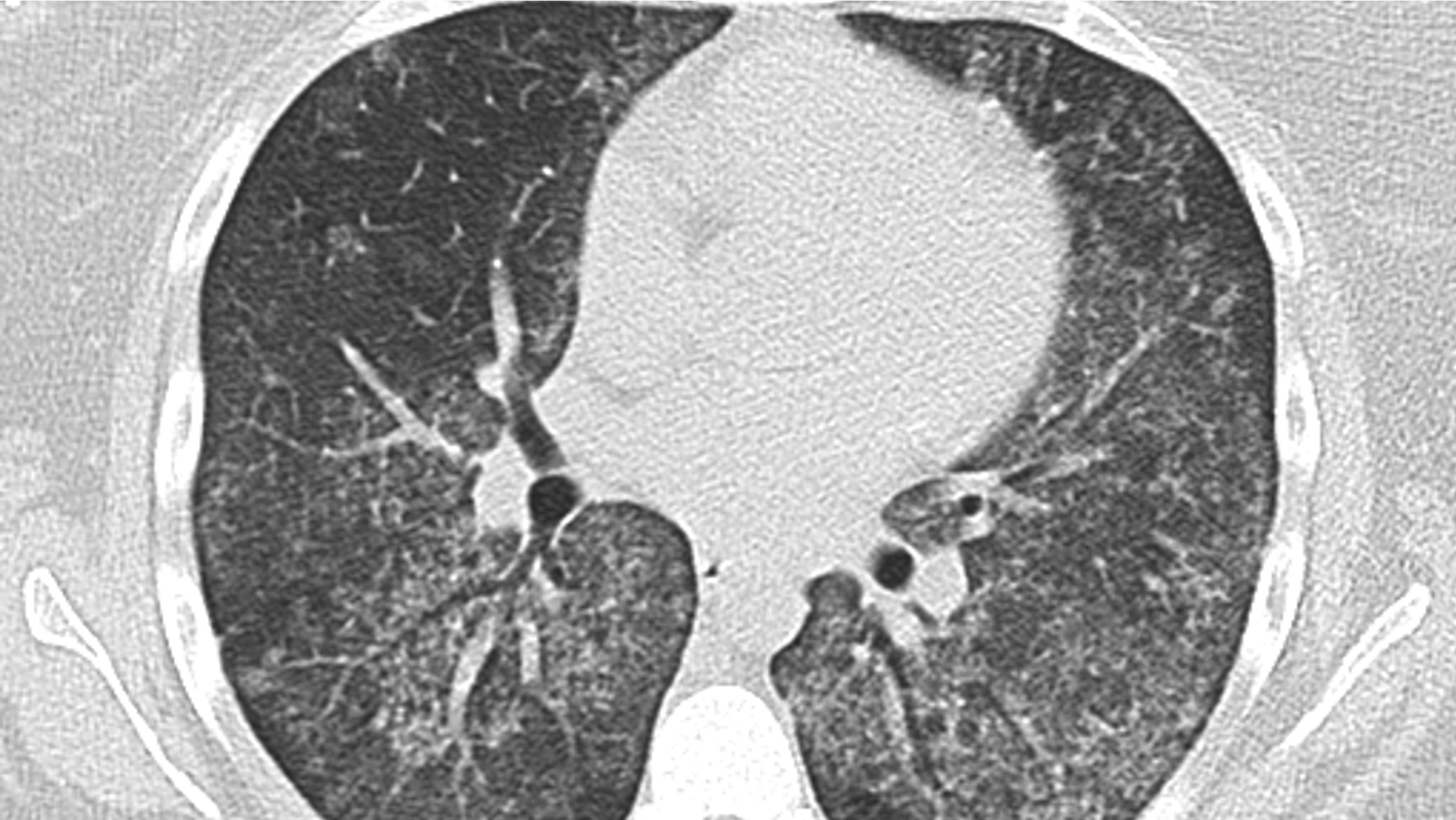
What is the diagnosis? What will you do next?
Additional Information
Diffuse alveolar hemorrhage (DAH) is a clinicopathologic syndrome caused by bleeding from the pulmonary microcirculation into the alveolar spaces. It classically presents with hemoptysis, anemia, hypoxic respiratory failure, and diffuse pulmonary infiltrates. However, patients do not need to have all four features, and up to one-third of patients will present without hemoptysis. When DAH is suspected clinically, bronchoscopy with bronchoalveolar lavage can help confirm the diagnosis by demonstrating progressively bloodier return across sequential aliquots. CT will show diffuse ground-glass opacities, and may also demonstrate subpleural sparing and a dark bronchus sign.
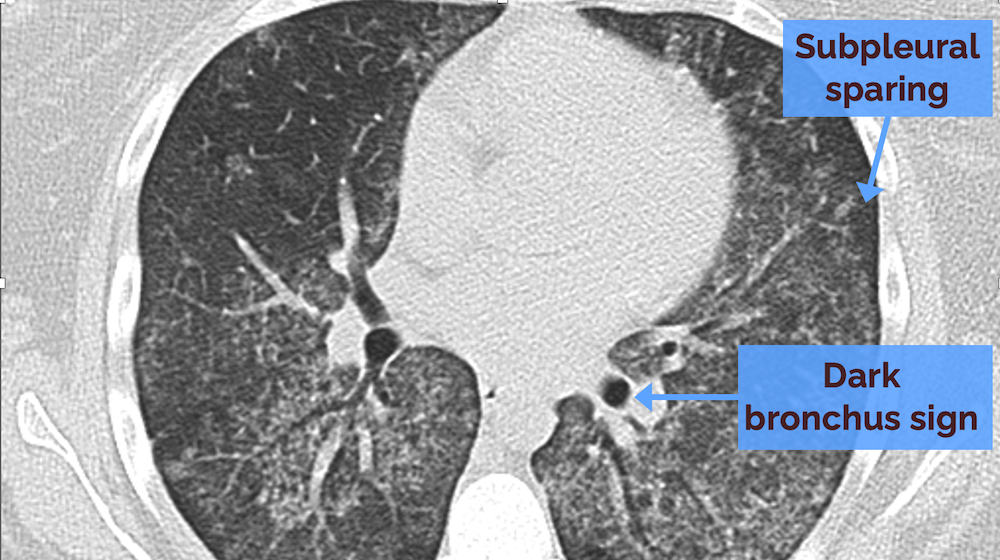
DAH results from an underlying disease process or trigger, such as an autoimmune disease, infection, medication, toxin, or other exposure. Treatment combines supportive care with therapies directed at the underlying cause, which may include high-dose corticosteroids, other immunomodulatory agents, and antibiotics.
References
Weerakkody Y, Knipe H, Walizai T, et al. Diffuse alveolar hemorrhage. Reference article, Radiopaedia.org (Accessed on 23 Oct 2026) https://doi.org/10.53347/rID-19690
Lutz, J.R., Martínez-Brocato, E., Segura-Martínez, S.V. et al. Clinical, radiological and laboratory features and outcomes of diffuse alveolar hemorrhage. Sci Rep 16, 8643 (2026). https://doi.org/10.1038/s41598-026-41864-x