
Search
Subscribe to daily UMEM Pearls (FREE!) via:
341-360 of 479 results with category "Orthopedics"
Hamate Fractures
Occur in two locations: the body of the hamate and the hook (hamular process) of the hamate
Fractures are present in 2 to 4% of carpal bone fractures
Body fractures are less common and are associated with dislocation of the fourth and fifth metacarpals
Axial force transmitted down the metacarpal shaft (a fall or fist strike)
Hook fractures occur from a direct force from an object strikes the palm such as that from a bat, golf club or racket
Have increased suspicion in these athletes who present w/ ulnar sided wrist pain
Diagnosis is frequently missed; chronic fractures are associated w/ flexor tendon rupture and ulnar neuropathy
PE: Tenderness localized over the hamate (in the hypothenar eminence) and over the dorsal ulnar aspect of the wrist. Swelling may be present. Look for resisted flexion of the 5th digit when the wrist is held in ulnar deviation. May note sensory changes in ulnar nerve distribution
Imaging: PA and lateral views of the wrist will show a body fracture but will frequently MISS a fracture of the hook of the hamate. In those with a clinical suspicion for this entity, order a “carpal tunnel view.” In the proper clinical setting, CT imaging is excellent for those with high suspicion and normal plain films.

Panner's disease refers to osteochondrosis of the capitellum.
Affects the dominant elbow of boys between the ages of 5 and 10
Associated with the repetitive trauma of throwing
Must be differentiated from osteochondrosis dissicans (occurs in the older child >13yo)
Hx: Intermittent pain and stiffness of the elbow. Better w rest, worse w activity.
PE: tenderness over capitellum w/ slight effusion. Loss of 20 degrees full extension
The articular surface of the capitellum appears irregular with areas of radiolucency.
Tx: Symptomatic treatment with rest. In severe cases a long arm splint/cast may be applied for 2-3 weeks.
http://www.ultrasoundcases.info/files/Jpg/org_34277-Afbeelding1.jpg
Luxatio erecta, aka inferior shoulder dislocation, is an uncommon form of shoulder dislocation (0.5-2%)
2 Mechanisms: 1) Forceful, direct axial loading of an ABducted arm.
2) Hyperabduction of the arm leads to impingement of the humeral head against the acromion, If forceful enough, this leverage can rupture the capsule and drive the humeral head downward, resulting in an inferior dislocation. This mechanism is more common.
Classic presentation: Arm locked in marked ABduction with the flexed forearm lying above the head.
http://uconnemig.files.wordpress.com/2011/11/emimages-8c.jpg

http://img.medscape.com/pi/features/slideshow-slide/sdrt/fig1.jpg
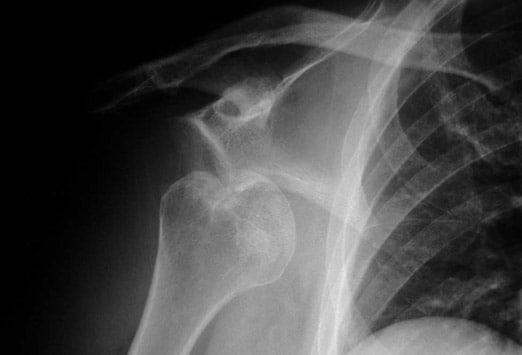
http://www.mypacs.net/repos/mpv3_repo/viz/full/76563/3828172.jpg

One may palpate the humeral head against the lateral chest wall
Bony injuries include fractures to surrounding structures such as the coracoid process, acromion, glenoid rim, clavicle, greater tuberosity and humeral head.
Nerve injuries include damage to the brachial plexus/axillary nerve (usually reversed with reduction)
Vascular injuries: Axillary artery thrombosis
Some quick board review pearls. Remember these fractures/dislocations and the neurologic injury that is associated with them
- Acetabular fracture – sciatic nerve
- Anterior shoulder dislocation – axillary and musculocutaneous nerve
- Elbow dislocation – ulnar or median nerve
- Hip dislocation
- Anterior – femoral nerve
- Posterior – sciatic nerve
- Humerus – radial nerve
- Knee Dislocation – peroneal or tibial nerve
- Olecranon fracture – ulnar nerve
- Supracondylar fracture – median, radial or ulnar nerve
- Tibia plateau fracture – peroneal nerve
Exertional leg pain in the athlete carries a wide range of possible etiologies. In a recent review article, etiologies included, stress fracture (25%), exertional compartment syndrome (33%), medial tibial stress syndrome (13%), nerve entrapment (10%), and popliteal artery entrapment syndrome.
Medial Tibial Stress Syndrome (MTSS) is also known as shin splints. It is a repetitive-stress overuse injury.
Risk factors include: hyperpronation, higher BMI, increased hip internal rotation, and hyperplantar flexion.
While MTSS may be on a stress reaction spectrum that includes fracture, the causes are likely to also include tendinopathy and muscle dysfunction (tibialis anterior, posterior and soleus).
Radiographs will be normal with this condition. MRI and bone scan may show signal abnormality along the posterior medial tibial surface.
Treatment: In most cases participation in sports may continue. Also consider, rest/activity modification, ice, NSAIDs, physical therapy for calf stretching and strengthening, and rigid orthotics (to correct foot hyperpronation). Semi rigid and neoprene orthotics may be considered for prevention in those with a prior history.
A recent study looked at the risk of sudden cardiac death during a marathon.
Many isolated reports of sudden death make headlines in the national news.
However, of nearly 11 million runners, only 59 went into cardiac arrest during a race. This equates to an incidence rate of 0.54 per 100,000 participants,
This rate appears to be on par with sudden death from other athletic endeavors such as triathlons and college athletics.
Median age was 42. Men affected more than women (men also more likely to die from the event).
71% of events were fatal.
Further, risk is greater for both cardiac arrest and sudden death for full marathons than half marathons.
Interestingly, older patients fared better (increased survival in those >40yo), thought to be due to an increased incidence of hypertrophic cardiomyopathy in younger aged runners.
Show References
The plantar fascia arises from the medial tuberosity of the calcaneous and extends to the proximal phalanges of the toes.
Pkantar Fasciitis is the most common cause of heel pain in adults.
Etiology is thought to be from a degenerative tear at the fascial origin followed by a tendinosis type reaction and .
Affects women 2x> men
More common in overweight patients.
Onset is insidious and not related to trauma.
Hx: Pain and tenderness directly over the medial calcaneal tuberosity and 1-2cm distally along the plantar fascia.
Pain is worse with prolonged standing/walking. Pain is most intense however when rising from a resting position such as first thing in the morning.
PE: Pain is increased with passive dorsiflexion of the toes. Tenderness to palaption over the medial calcaneal tuberosity and 1-2cm distally along the plantar fascia.(At times, one may have to apply increased pressure to approximate weight bearing type stress)
XR: Usually not necessary with a good history and exam. Heel spurs are seen in up to 50% with the disease (and in up to 20% without it!)
DDx: Tarsal tunnel syndrome. Calcaneal stress fracture. Fat pad atrophy. traumatic rupture of planter fascia.
Severs disease
- Perhaps the most common overuse injury
-Pain is due to inflammation of the calcaneal apophysis growth plate
- Caused by repetitive microtrauma from the pull of the Achilles tendon on the apophysis.
- Occurs in young athletes ages 7-14
Sx’s bilateral in >50%
Hx – Gradual onset of posterior heel pain, worse with activity, better with rest.
PE – Tenderness at the insertion of the Achilles tendon onto the calcaneous. Swelling is mild.
This is a self limited condition because as the adolescent ages, the physis closes
Tx – Rest (no running or jumping), ice, NSAIDs, heel lifts/arch supports. Outpatient physical therapy for stretching and strengthening exercises.
Morton's Neuroma
- A benign perineural fibroma of an intermetatarsal plantar nerve.
- Most commonly affects the third and fourth intermetatarsal space
- Patient's will often complain of pain and/or numbness in the ball of their foot and toes when the metatarsal heads are compressed together as in when wearing shoes. Pain is often described as burning or shooting. Some patients report that it feels like they are standing on a pebble.
- On physical exam you can reproduce the pain by squeezing the metatarsal heads together. (Mulder's sign)
- Diagnosis can be confirmed with MRI though clearly this does not need to be done in the ED.
- Treatment includes NSAIDs and referral for orthotics, corticosteroid injection, or surgical removal.
Show References
Common herbs and supplements used to treat pain
1) Turmeric root - used for arthritis pain. Little evidence to support its use. May slow blood clotting/enhance anticoagulant/antiplatelet effects.
2) Boswellia - used for OA and RA pain. Little evidence to support its use.May interfere with anticoagulant drugs and leukotreine inhibitors.
3) St. John's Wort - used for HA, migraine, neuralgia, muscle pain, sciatica, fibromyalgia. Little to no evidence to support its use.May interfere with numerous medications including anticoagulants, digoxin and SZ medications.
4) Glucosamine and Chondroitin - used for OA, knee pain, back pain. The glucosamine/chondroitin arthritis intervention trial found that "the dietary supplements Glucosamine and Chondroitin, taken alone or in combination are generally ineffective for OA pain of the knee." May increase the effect of Warfarin.
5) KavaKava - used for HA, muscle pain. Insufficient evidence demonstrating effectiveness for treatment of painful conditions. May cause severe liver damage and potentiate drowsiness side effects of other medications.
6) Echinacea - used for pain, migraines, arthritis. Little evidence to support its use. May exacerbate symptoms of autoimmune disorders.
7) Valerian root – used for joint and muscle pain. Insufficient evidence to support its use. May potentiate sedative side effects of barbiturates and benzos.
8) Chinese Thunder God Vine – used for arthritis. There is some evidence to suggest that this agent has anti-inflammatory properties. Long term this agent may decrease bone mineral density in women, decrease fertility in men, and may produce GI side effects.
9) Feverfew – used for muscle pain, arthritis. Some evidence to suggest that may reduce frequency of migraine headaches. No evidence for benefit in RA. May enhance effects of anticoagulants and some drugs that undergo hepatic metabolism.
10) Cat’s claw – used for herpes zoster, bone pain, arthritis. Possible benefit for OA and RA in small studies in humans but no large study has shown benefit. May interact with clotting agents, BP meds and cyclosporine.
11) Black Cohosh – used for muscle pain and arthritis. Insufficient evidence demonstrating benefit. May be associated with severe liver side effects.
12) Bromelain – used for muscle pain, arthritis, knee pain. The NIH reports that bromelain may be effective for arthritis when used in combination with trypsin and rutin. May interact with amoxicillin and other antibiotics, anticoagulants and antiplatelet drugs.
13) Devil’s claw – used for muscle pain, back pain, arthritis, migraine. The NIH reports that “taking devil’s claw alone or with NSAIDs seems to help decrease OA related pain.” May increase effects of warfarin.
Our old friend Captain Morgan (the rum pirate) may now be able to assist us during a shift, not just afterwards.
http://www.inquisitr.com/wp-content/2011/08/captain-morgans-pirate-ship-satisfaction-panama.jpg
In a small case series in last months Annals of Emergency Medicine, a new reduction maneuver was described as an alternative to the traditional Aliis's maneuver.
The maneuver is named after the pirate spokesperson for the similarities in body positioning.
The patient is placed supine on a stretcher. The pelvis is fixed to a backboard with a strap. The patient's hip and knee are flexed to 90 degrees. The physician places one foot on the back board with the same knee behind the patient's knee. By holding the patient's ankle down, the patient's knee is kept in flexion. The physician then lifts his/her calf, thereby applying an upward force to the hip while gently rotating the lower leg from side to side.
http://www.youtube.com/watch?v=l07K-mO2X84
with a slight variation
http://www.youtube.com/watch?v=sGQZaqB48rw
The success rate was 12 of 13 cases. The single failure occurred in a patient with an acetabular fracture with an intra-articular fragment requiring open reduction. There were no described neurovascular complications or injuries to the knee. The technique limits the physician's risk of back strain and of falling from the stretcher.
Show References
Flexor Tenosynovitis
- This is a rapidly spreading infection of the finger and hand.
- Often starts as an infection in the finger that then spreads into the hand due to the flexor sheaths.
- The flexor tendon sheaths of the long, index, and ring finger extend from the distal phalanx to the superficial palmar arch, and some even extend to the wrist.
- Most patient will need to be admitted for IV antibiotics and a hand consult for probable operative I&D
- You can diagnosis flexor tenosynovitis by documenting the four Kanavel signs:
- Fusiform swelling of the finger
- Finger held in partial flexion (position of comfort)
- Percussion tenderness along the flexor tendon
- Increased pain with passive extension of the finger
You can follow this link, http://www.youtube.com/watch?v=qf9SW0ChsCU , to see the physical exam findings of flexor tenosynovitis
Approximately 48% of shoulder dislocations occur during sports and recreation.
These are usually first managed in the clinic and sideline setting.
In 6 reviewed studies, 5 used 20mL of 1% lidocaine and 1 used 4 mg/kg of 1% lidocaine.
Patients incurred significantly reduced cost compared to IV sedation
There were no infections, neurovascular damage or systemic effects of the lidocaine.
No significant differences were noted in pain control, success rate or ease of reduction between intra-articular lidocaine and systemic sedation.
The risk of chondrolysis increases with higher concentration and longer duration of exposure to local anesthetics.
There is scant research about the effects of a single exposure of cartilage to lidocaine.
Show References
The long head of the biceps originates from the glenoid tubercle and superior labrum.
Rupture of the proximal biceps tendon comprises 90-97% of all biceps ruptures
Often in men aged 40-60y
- Almost exclusively involves the long head.
- Aka "Popeye Arm" (distal contraction of the muscle belly)
- May be acutely traumatic or microtears & age associated degeneration
- Minimal loss of function because short head of biceps remains attached
- Many patients can be treated non operatively
- Most asymptomatic after 4-6 weeks
- Place in sling, ice, analgesia
- Refer to ortho for re-evaluation and determination of operative versus conservative management
http://imaging.birjournals.org/content/15/4/193/F7.large.jpg
Metaphyseal bucket handle and corner fractures are almost pathognomonic for child abuse
These injuries were originally identified by clinicians evaluating children with subdural hematomas
These injuries are typically seen in the ankles, knees, elbows and wrists
Violent twisting, shaking, or pulling across a joint creates shearing forces across the weak epiphyseal growth plate and metaphysis
This leads to
1) A thin rim of mineralized metaphyseal bone aka “bucket handle”
http://rad.usuhs.mil/rad/home/peds/bucketarrow.jpg
OR
2) Small flecks of bone from the metaphyseal corner adherent to periosteum
http://t2.gstatic.com/images?q=tbn:ANd9GcT0kZ3VR1f7MwRj7oIa6jaYVp_-f8kZ1NhSbw4kCTRGNLDJ1pKK9g
The Weber classification system
A commonly used, simple, easily remembered system used to describe ankle fractures. The system focuses on the integrity of the syndesmosis.
http://www.accessemergencymedicine.com/loadBinary.aspx?fileName=simo_c017f013t.gif
- TYPE A: fibula fracture below the ankle joint/syndesmosis (which is intact). Deltoid ligament intact. Medial malleolus can be fractured. Usually treated with closed reduction.
http://www.gentili.net/image1.asp?ID=-241442344&imgid=AnkleWeberAAP600.jpg&Fx=Weber+A+Fracture
- TYPE B: is a transsyndesmotic fracture with usually partial rupture of the syndesmosis (though may be intact). No gross widening to the tib/fib articulation.. Deltoid ligament intact. Medial malleolus often fractured. Variable stability. Any clinical or radiographic injury to the medial joint complex make this an unstable fracture
http://www.gentili.net/image.asp?ID=145&imgid=AnkleWeberBmortise600.jpg&Fx=Weber+B+Fracture
- TYPE C: Fibular fracture above the level of the syndesmosis with usually a total rupture of the syndesmosis (seen as widening of the distal tib/fin articulation), resulting in instability of the ankle mortise. Associated with medial malleolus fracture or deltoid ligament injury. Unstable.
http://www.gentili.net/image1.asp?ID=146&imgid=anklewebcapoblx2600.jpg&Fx=Weber+C+Fracture
Show References
Low Back is one of the most common complaints that we see in the Emergency Department. Our first priority is to rule out those causes that can lead to paralysis or death (i.e.: epidural abscess, pathological fracture, cauda equina syndrome, etc…). However, most of the back pain that we will see is musculoskeletal in origin.
The American College of Physicians (ACP) and the American Pain Society (APS) released joint recommendations on the evaluation of treatment of individuals with back pain in 2007.
In summary their key recommendations were:
- Routine imaging is not required. However, diagnostic imaging and testing should be obtained for patients with low back pain when severe or progressive neurologic deficits are present or when serious underlying conditions are suspected.
- For patients with low back pain, clinicians should consider the use of medications with proven benefits in conjunction with back care information and self-care. For most patients, first-line medication options are acetaminophen or nonsteroidal anti-inflammatory drugs.
- Medications that have good evidence of short-term effectiveness for low back pain are NSAIDs, acetaminophen, skeletal muscle relaxants (for acute low back pain), and tricyclic antidepressants (for chronic low back pain).
Links to the Clinical Guidelines are listed below:
- Evaluation and Treatment
- Nonpharmacologic Therapies for Acute and Chronic Low Back Pain
- Medications for Acute and Chronic Low Back Pain
Arthrocentesis of the Wrist
First locate and feel comfortable identifying two important landmarks:
1) Lister's tubercle is an elevation found in the center of the dorsal aspect of the distal end of the radius
http://www.aafp.org/afp/2004/0415/afp20040415p1941-f2.jpg
2) The extensor pollicis longus (EPL) tendon runs in a grove just radially to Lister's tubercle. Active extension of wrist and thumb aid with identification.
http://www.rad.washington.edu/academics/academic-sections/msk/muscle-atlas/upper-body/extensor-pollicis-longus/atlasImage
A) Positioning: Place wrist in ulnar deviation and 20 - 30 degrees of flexion. Apply longitudinal traction to the fingers of the hand.
B) Technique: Insert a small needle (22g) just distal to the tubercle and on the ulnar side of the EPL tendon.
http://img.medscape.com/pi/emed/ckb/clinical_procedures/79926-79928-80032-1477044tn.jpg
http://www.youtube.com/watch?v=nlPdb_mymw4&feature=related
http://www.youtube.com/watch?v=UVG7fZvZD-s&feature=related
Show References
The TFCC (triangular fibrocartilage complex) is a ligamentous/cartilage like complex similar to the meniscus of the knee located on the ulnar side of the wrist.
http://yanyanxu.com/wp-content/uploads/2008/01/trifibcc.gif
Hx: ulnar sided wrist pain following trauma and associated with activity related mechanical symptoms such as clicking.
PE: tenderness to palpation distal to ulnar head or at ulnar styloid . Tenderness against resisted radial deviation.
Plain film may show ulnar styloid avulsion or injury to carpal structures.
Refer to hand/wrist surgeon
Splint in ulnar gutter of long arm spica
MRI or arthrogram are studies of choice.
http://www.cobalthealth.co.uk/MImageGen.ashx?image=%2Fmedia%2F12951%2Fwrist-tfcc-tear-big.jpg&width=170&crop=true
Sinus Tarsi Syndrome
- A painful syndrome of the ankle normally due to an inversion injury. Results in pain along the lateral side of the ankle.
- Often misdiagnosed as an ankle sprain.
- Will have pain localized to the sinus tarsi (inferior and anterior to the anterior border of the lateral malleolus.
- Can be diagnosed by injecting lidocaine into the sinus tarsi, which should completely relieve the pain.
- Treatment consists of
- NSAIDs
- Ankle immobilization
- Physical therapy
- Oral or injected steroids in resistant cases