
Search
Subscribe to daily UMEM Pearls (FREE!) via:
221-240 of 889 results with category "Critical Care"
Background: SOFA score has been used as a predictor for poor outcomes in patients with sepsis. However, the original SOFA score utilizes PaO2/FiO2 ratio to calculate the SOFA’s respiratory component. When there are no ABG, thus no PaO2, we have to convert patients’ spO2 to PaO2, and the amount of oxygen support to FiO2 (for example, 2 liters of oxygen via nasal cannula = 0.27). This is cumbersome.
Objective: This study assessed whether spO2 can be used instead of PaO2/FiO2 ratio for SOFA’s respiratory score.
Settings: 8 hospitals across Sweden and Canada
Patients: Adults with sepsis. 19396 patients were included for the derivation group while there were 10586 patients for the validation cohort.
Study Results:
- When PaO2 was not measured, assigning respiratory SOFA score of 1 for spO2 94% and respiratory SOFA score of 2 for spO2 < 90% had good discriminatory capability.
- The AUROC with SOFA score using spO2 threshold as above was 0.783 (0.767-0.798), which was slightly increased from the model using previous methods to calculate respiratory SOFA scores (0.781 [0.765-0.796]).
Discussion:
- For Emergency Medicine, using a cut-off threshold for spO2 of 94% (respiratory SOFA of 1) and 90% (respiratory SOFA of 2) can simplify how to calculate the SOFA score.
- It’s also simpler to do research when we collect SOFA score retrospectively.
Show References
Background:
There are also no clear guidelines regarding how fast fluid boluses should be administered, and there has been debate about whether different infusion rates could lead to different outcomes in patients receiving intravenous fluid (IVF) boluses (i.e. fast infusions may cause more third spacing due to the rapidity of the expansion of the intravascular space compared to fluid administered more slowly). A recent study compared IVF infusion rates in ICU patients.
-- Unblinded, randomized
-- 10,520 patients clinically requiring a fluid challenge, from 75 ICUs in Brazil
-- Infusion rate 333 mL/hr vs 999 mL/hr
* (Trial also compared plasmalyte vs 0.9% saline, analyzed in separate study)
-- Some notable exclusion criteria: severe hypo/hypernatremia, AKI or expected to need RRT 6 hrs after admission
--Other caveats:
* Faster infusion rates allowed at physician discretion in patients with active bleeding or severe hypotension (SBP < 80 or MAP < 50 mmHg); patient was returned to assigned rate after condition resolved
* Almost 1/2 the patients received at least 1L of IVF in 24 hours prior to enrollment
-- Results: No sig difference in 90-day survival, use of RRT, AKI, mechanical ventilator free days, ICU/hospital mortality/LOS
Bottom Line: There is not yet compelling evidence that there are differences in patient outcomes in patients receiving fluid boluses given at 333 cc/hr vs. 999 cc/hr.
Show References
Approximately 15,000 children experience an in hospital cardiac arrest (IHCA) with little improvement in outcomes over the last two decades. During that time, epinephrine has been the constant basis for resuscitation of these patients. Current recommendations by the AHA recommend bolus dosing of epinephrine every 3-5 minutes in a pediatric cardiac arrest. Animal studies suggest that more frequent dosing of epinephrine may be beneficial.
This was a retrospective study of 125 pediatric IHCAs with 33 receiving “frequent epinephrine” interval (≤2 minutes). Pediatric CPC score 1-2 or no change from baseline was used as primary outcome to reflect favorable neurologic outcome, with frequent dosing associated with better outcome (aOR 2.56, 95%CI 1.07 to 6.14). Change in diastolic blood pressure was greater after the second dose of epinephrine among patients who received frequent epinephrine (median [IQR] 6.3 [4.1, 16.9] vs. 0.13 [-2.3, 1.9] mmHg, p=0.034).
This study is subject to all sorts of confounding and should be studied more rigorously, but suggests that more frequent dosing for pediatric IHCA may be of benefit.
Show References
Resuscitative thoracotomy is a dramatic and heroic procedure used in the emergency department in an attempt to resuscitate a patient in arrest due to trauma. There are a few techniques commonly used, but due to the extreme nature of the procedure no prior randomized controlled trials (RCTs) have been done.
The modified clamshell thoracotomy (MCT) is a technique in which the standard left anterolateral thoracotomy (LAT) is extended across the sternum, but does not involve surgical opening of the right chest. The MCT allows for increased visualization of the mediastinum and thoracic cavity structures.
Sixteen Emergency trained physicians (approximately half attending and half senior residents) from a level 1 trauma center underwent didactic and skill based training on both the MCT and LAT techniques using fresh, human cadavers. Following training they were randomized based on order of intervention, performing both techniques.
Their thoracotomies were assessed by a board certified surgeon and “success” was determined based on the complete delivery of the heart and cross clamping of the descending aorta.
Primary outcome: time to successful completion of procedure
Secondary outcomes: successful delivery of the heart from the pericardial sac (as well as time to delivery), cross clamping of the aorta (and time to clamping), procedural completion and number of iatrogenic injuries.
Overall, there was no statistical difference in primary outcome or successful completion between the MCT compared to the LAT (67% vs. 40%). However, 100% of the LAT resulted in some form of iatrogenic injury (rib fractures, lacerations of the diaphragm,/esophagus/heart/lung) compared to 67% of the MCT technique. There was no associated difference in success when previous experience (attending vs. senior resident) were compared. Lastly, MCT was the favored technique of the majority of the study subjects.
Show References
The much anticipated REMAP-CAP trial was epublished ahead of print July 12th in Intensive Care Medicine. It was an RCT investigating four antiviral strategies in critically ill adults with COVID-19: lopinavir-ritonavir, hydroxychloroquine, a combination of the two, and no antiviral therapy (control group).
Despite the hype around protease inhibitors, hydroxychloroquine, and other unproven therapies in COVID (lookin at you next, Ivermectin...), all three strategies had WORSE outcomes than placebo. They all decreased organ-support-free days (all reaching statistical significance), which was the primary outcome. They also all led to longer ICU time, longer time to hospital discharge, and reduced 90 day survival. Not only does this study show no benefit, it shows fairly convincing signs of harm to these therapies.
Bottom Line: Protease inhibitors (e.g. lopinavir-ritonavir) and hydroxychloroquine are unproven therapies for critical COVID-19 infection, and are not recommended. Providers should focus on interventions with demonstrated benefit, most notably steroids and good supportive/critical care.
Show References
Hemophagocytic Lymphohistiocytosis (HLH)
- HLH is a hematologic disorder that results from overactivation of the immune response (macrophages and cytotoxic T cells).
- HLH is often underrecognized and has a mortality that can be as high as 75%.
- Secondary HLH is most commonly associated with infection (sepsis), malignancy (lymphoma), and autoimmune disorders (SLE, RA).
- Hallmark features of HLH include fever, splenomegaly, hepatomegaly, cytopenias, coagulopathy, elevated ferritin, elevated triglycerides, and decreased fibrinogen levels.
- ED resuscitation of patients with suspected HLH includes Hematology consultation, treatment of the underlying disorder (infection), and potentially corticosteroids and chemotherapeutic agents.
Show References
Despite the knowledge that minimizing interruptions in chest compressions during CPR is key to maintaing coronary perfusion pressure and chance of ROSC,1-4 difficulties in limiting hands-off time remain.
Dewolf et al.5 recently performed a prospective observational study using body cameras to find that 33% (623/1867) of their CPR interruptions were longer than the recommended 10 seconds:
- 51.6% Rhythm/pulse checks
- 11.1% Installation/use mechanical CPR device
- 6.7% Manual CPR provider switch
- 6.2% ETT placement
Previous studies have shown an increase in hands-off time associated with the use of cardiac POCUS during rhythm checks as well.6,7
Bottom Line:
- Physicians must be mindful of hands-off time to improve their chance of obtaining ROSC, minimizing each CPR interruption to <10 seconds, and maintaining a hands-on time (also known as chest compression fraction) of >80%.
- Change your pulse check to a rhythm check utilizing arterial line placement, end-tidal monitoring, or US/doppler at the femoral artery in order to minimize the search for a pulse as a reason for prolonged CPR interruption.
- Consider having someone on the team count the seconds out loud during pauses so the entire team is aware of the interruption time and will recognize when CPR needs to be resumed.
Show References
Settings: International multicenter trials; 1:1 randomization, blinded assessment of outcomes.
Patients: adults with witnessed OHCA, regardless of initial rhythm. Patients had more than 20 minutes of CPR. Eligible patients were unconscious, not able to follow command, no verbal responses to painful stimuli.
Intervention: hypothermia to target of 33C for 28 hours, then rewarming at rate of 1/3C every hour until 37C.
Comparison: maintaining temperature at 37.5C or less. Cooling if body temperature reached 37.8C to 37.5C
Outcome: primary outcome was Any cause mortality at 6 months; secondary outcome was poor functional outcome at 6 months (modified Rankin Scale 4-6).
Study Results:
1. 930 hypothermia, mortality 465/925 (50%, RR 1.04, 95%CI 0.94-1.14); 488/881 (55%) had mRS 4-6 (RR 1.0, 95%CI 0.92-1.09).
2. 931 normothermia, mortality 446/925 (48%); 479/866 (55%) had mRS 4-6.
Discussion Points:
- Hypothermia would lead to higher rates of arrhythmia-related hemodynamic instability.
- More studies reinforced that preventing fever is beneficial.
- ED clinicians will not have to rush to cool patients while awaiting for ICU beds (Yay).
Conclusion:
Normothermia in coma patients after OHCA did not lead to higher morality or worse neurologic outcomes.
Show References
A recent prospective observational study examined the diagnostic usefulness of head-to-pelvis sudden death computed tomography (SDCT) in 104 patients with ROSC and unclear OHCA etiology.
- Obtained within 6 hours of hospital arrival
- Noncontrast head CT + ECG-gated chest CTA with abbreviated coronary imaging + contrasted CT of the abdomen to just below the pelvis.
Diagnostic performance:
- Detected 95% of OHCA etiologies diagnosable by CT
- Detected 98% of time-critical diagnoses requiring emergent intervention (including complications of resuscitation)
- The sole reason for diagnosis of OHCA etiology in 13%
Safety:
- 28% of patients with elevated creatinine at 48h (down from 55% at presentation; study excluded GFR < 30ml/min unless treating provider felt the data was needed for care)
- 1% (1 patient) required RRT
- No false positives noted, no allergic contrast reactions, 1 contrast IV extravasation
Bottom Line: For OHCA without clear etiology, SDCT explicitly including a thoracic CTA may have diagnostic benefit over standard care alone with the added benefit of identification of resuscitation complications.
Show References
A recent pilot study was conducted in two centers (Mayo Clinic & Cleveland Clinic Affiliate) and aimed to evaluate if the administration of oral midodrine in early septic shock could decrease the use of IV vasopressors and decrease ICU and hospital length of stay (LOS). The study was a placebo-controlled, double blinded randomized trial.
This study enrolled:
- 32 adult patients
- within 24 hours of Sepsis 3 definition who continued to have hypotension (MAP < 70mmHg) after antibiotic & 30mL/kg IVF administration
- 3 doses of midodrine 10mg were administered
The study did not find a statistical difference between the two groups in the use of vasopressors or ICU/Hospital LOS. However, there was a trend in the midodrine group which is suggestive of decreased vasopressor use and ICU/Hospital LOS.
It is Important to note the study was not powered to determine clinical significance. Overall the trend noted in the midodrine group should encourage further studies that are clinically powered to determine if there is a statistical difference and therefore a potential benefit to early initiation of oral midodrine in septic shock.
Show References
Norepinephrine is widely considered the first-line vasopressor for patients in septic shock. Vasopressin is often added to norepinephrine in patients requiring escalating doses, but when to add vasopressin, and what exactly the benefit is (as opposed to just further titrating up the norepinephrine) remain unclear. Given the limited evidence for a patient-oriented benefit and the increasing cost of vasopressin, some centers are becoming more judicious in the use of vasopressin. A systematic review in AJEM October 2021 examined the literature on early (< 6 hours of diagnosis) addition of vasopressin to the management of septic shock patients, compared to either no vasopressin or starting it after 6 hours.
Improved with early vasopressin: Need for renal replacement therapy (RRT; secondary outcome)
No difference: mortality, ICU length of stay, hospital length of stay, new onset arrhythmias
Bottom Line: When, and if, to start vasopressin in patients requiring escalating doses of norepinephrine remains controversial. Based on the prior VASST trial, many providers will start vasopressin when norepi doses reach ~ 5-15 mcg/min (approx 0.1-0.2 mcg/kg/min), but there remains limited data to support this practice, and either starting vasopressin or continuing to titrate the norepinephrine as needed are both reasonable approaches in most patients.
Show References
Refractory Anaphylaxis
- Refractory anaphylaxis is defined as anaphylaxis that does not respond to at least 2 doses of 300 mcg of epinephrine given IM into the anterolateral thigh.
- Refractory anaphylaxis can be due to several factors including patient comorbidities, delayed diagnosis, delayed epinephrine administration, or concomitant beta-blocker or ACE-inhibitor medication use.
- Consider the following treatments in patients with refractory anaphylaxis, persistent hypotension, and shock:
- Aggressive IVF resuscitation - patients may need up to 7L of IVFs
- Epinephrine infusion (1-10 mcg/min) to target a MAP of 65 mm Hg
- Glucagon (1-5 mg via slow IV push) for those taking a beta-blocker and who fail to respond to epinephrine
- Norepinephrine, vasopressin, angiotensin II, methylene blue, or dobutamine can be administered with epinephrine for persistent hypotension.
- VA-ECMO - though there is no prospective evidence on the use of ECMO in anaphylaxis.
Show References
RECAP: RECOVERY trial is a large, randomized, open label, adaptive trial studying different treatments on COVID-19. Most well known is the use of dexamethasone which reduced mortality by 1/3 in COVID patients requiring mechanical ventilation and by 1/5 in those requiring oxygen, with no benefit on those patients not requiring oxygen.
They recently published results in the Lancet on the use of tocilizumab.
Population:
- Up to 21 days after main randomization, regardless of treatment, RECOVERY trial patients with progressive COVID-19 were eligible for tocilizumab.
Inclusion:
- April 23rd 2020 to Jan 24th 2021-- 21,550 patients with hypoxia (<92% on RA or requiring O2), systemic inflammation (CRP > 75 mg/L) eligible for standard care or standard care plus toci 400-800 mg (dosing based on weight), second dose 12-24 hours later if no improvement
Outcomes:
- Primary outcome 28 day mortality followed by:
- Hospital discharge within 28 days
- Rate of mechanical ventilation
Results:
- 621 (31%) tocilizumab patients and 729 (35%) of usual care patients died within 21 days (RR 0.85, p=0.0028). Consistent even in those receiving steroids (83%).
- Tocilizumab group more likely to be discharged from the hospital, less likely to receive invasive mechanical ventilation (35% vs 42%).
Conclusion:
- Tocilizumab improved survival and other clinical outcomes- by 1/3 for those on simple oxygen, and by ½ for those receiving invasive mechanical ventilation.
- Added to the additional benefit of steroids.
- Findings support the earlier REMAP-CAP trial on the effectiveness of tocilizumab for ICU COVID patients
Show Additional Information
Show References
Background:
Cardiac arrest from massive pulmonary embolism (PE) can be up to 90% (1). A recent systemic review evaluated the efficacy of Venoarterial-Extracorporeal Membrane Oxygenation (VA-ECMO) for PE-related cardiac arrest.
Results:
The authors screened 1115 articles and included 77 articles, including gray literature. The authors performed a quantitative analysis of a total of 301 patients.
Overall, 183/301 (61%) patients survived to hospital discharge, a significant improvement from 90%.
Patients who were cannulated during chest compression were associated with 7x higher odds of death (OR, 6.84; 95% CI, 1.53–30.58; p = 0.01), compared to those who were cannulated after ROSC. However, cannulation in the ED was not associated with improved outcomes, compared with other cannulation site.
No increased risk of death among patients who received tPA prior to VA-ECMO vs. those who did not (OR, 0.78; 95% CI, 0.39–1.54; p = 0.48).
Patients whose age > 65 years of age were associated with 3X risk of death, compared to those with age < 65 years (OR, 3.56; 95% CI, 1.29–9.87; p = 0.02).
Take-home points
Please consider “early” VA-ECMO for eligible patients who have cardiac arrest from massive PE. However, it will take great convincing to push the PERT team to cannulate for VA-ECMO while the patient is still receiving chest compression.
Show References
Background:
Cardiac arrest from massive pulmonary embolism (PE) can be up to 90% (1). A recent systemic review evaluated the efficacy of Venoarterial-Extracorporeal Membrane Oxygenation (VA-ECMO) for PE-related cardiac arrest.
Results:
The authors screened 1115 articles and included 77 articles, including gray literature. The authors performed a quantitative analysis of a total of 301 patients.
Overall, 183/301 (61%) patients survived to hospital discharge, a significant improvement from 90%.
Patients who were cannulated during chest compression were associated with 7x higher odds of death (OR, 6.84; 95% CI, 1.53–30.58; p = 0.01), compared to those who were cannulated after ROSC. However, cannulation in the ED was not associated with improved outcomes, compared with other cannulation sites.
No increased risk of death among patients who received tPA prior to VA-ECMO vs. those who did not (OR, 0.78; 95% CI, 0.39–1.54; p = 0.48).
Patients whose age > 65 years of age were associated with 3X risk of death, compared to those with age < 65 years (OR, 3.56; 95% CI, 1.29–9.87; p = 0.02).
Take-home points
Please consider “early” VA-ECMO for eligible patients who have cardiac arrest from massive PE. However, it will take great convincing to push the PERT team to cannulate for VA-ECMO while the patient is still receiving chest compression.
Show References
Supplemental oxygen therapy is frequently required for patients presenting with acute respiratory distress and COPD exacerbation. Over-oxygenation can derail compensatory physiologic responses to hypoxia,1 resulting in worsening VQ mismatch and, to a lesser degree, decreases in minute ventilation, that cause worsened respiratory failure.
The 2012 DECAF (Dyspnea, Eosinopenia, Consolidation, Acidaemia, and Atrial Fibrillation) score was found to predict risk of in-hospital mortality in patients admitted with acute COPD exacerbation.2,3 Data from the DECAF study’s derivation and external validation cohorts were examined specifically to look at outcome associated with varying levels of oxygen saturation.
- 1027 patients from 6 UK hospitals receiving supplemental oxygen at admission
- Lowest in-hospital mortality seen in the 88-92% cohort
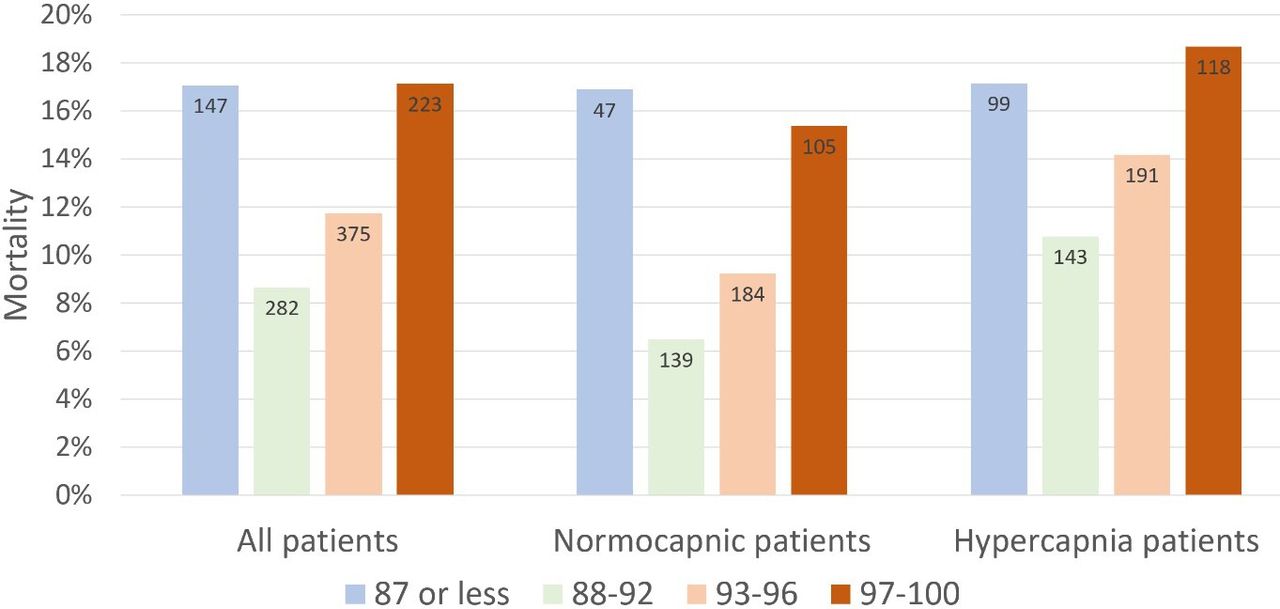
- Adj OR for in-hospital mortality in ≥97% vs 88-92% group: 2.97 (95% CI 1.58-5.58, p=0.001)
- Adj OR for in-hospital mortality in 93-96% vs 88-92% group: 1.98 (95% CI 1.09-3.60, p=0.025)
- Surprisingly, mortality risk seen more in normocapnic than hypercapnic patients
- Association between admission SpO2 and mortality persisted after adjusting for baseline risk and disease severity using the DECAF and NEWS 2 score
Bottom Line
In patients presenting to the ED with acute COPD exacerbation requiring oxygen supplementation, a target oxygen saturation of 88-92% is associated with the lowest in-hospital mortality, and higher oxygen saturations should be avoided independent of patients' PCO2 levels.
Show References
Two items from the recent INSPIRATION trial UMEM pearl were very well pointed out by our own Dr. Michael Scott and require clarification. Thank you to all our readers for their close attention, and please know that we always appreciate you reaching out with questions/comments.
- Dosing Correction - The "standard-dose" prophylactic dosing of enoxaparin in this trial was 40 milligrams/day. Please excuse the error in the prior post stating 40 mg/kg/day (we will revise the post). Standard dosing of enoxaparin for DVT/VTE prophylaxis was a flat 40 mg/day, and was not weight based.
- Major Bleeding - While the difference in major bleeding (2.5% vs 1.4%) was relatively small, this endpoint DID NOT meet non-inferiority. In other words, the study appeared to detect a statistically significant difference in major bleeding between the dosing regimens. Given that this is a single study and there are concerns with this finding (the authors themselves describe this as "exploratory"), I would interpret this with caution, but this supports the very intuitive notion that the intermediate (higher) dose regimen of enoxaparin would be associated with more bleeding than the standard dose regimen.
COVID-19 is generally regarded as a hypercoagulable state, and the role of pulmonary emboli and other VTE in COVID remains unclear. As a result, how to optimally provide prophylactic anticoagulation in COVID-19 patients who are not known to have VTE has been a point of debate.
The INSPIRATION trial looked at 600 patients admitted to academic ICUs in Iran, and compared what is often-referred to as "intermediate-dose" prophylaxis (in this case 1 mg/kg daily of enoxaparin) to standard dose prophylaxis (40 mg/day of enoxaparin). The study utilized a combined endpoint of venous thromboembolism, arterial thromboembolism, need for ECMO, or mortality. As a reminder, composite endpoints can skew results. However, the dose and type of anticoagulant chosen is similar to many academic centers around the world, and pharmacy guidelines often recommend providing this type of "intermediate-dose" prophylaxis in COVID-19 patients, sometimes based on clinical status, d-dimer or other coagulation-related patient-data. As with many things with COVID-19, this practice is based on limited data.
There was no significant difference between groups in the primary outcome (45.7% in intermediate ppx group vs 44.1% in standard group), and while safety outcomes were similar (major bleeding in 2.5% in the intermediate ppx group vs 1.4% in standard group), the intermediate regimen failed to demonstrate non-inferiority to the standard regimen for major bleeding.
Intermediate vs standard-dose ppx was similar in this study with a small, but statistically significant increase in major bleeding in the intermediate-dose group.
Bottom Line: Although this study had methodologic flaws and there are external validity concerns, the INSPIRATION trial supports the notion that standard dose (e.g. 40 mg/g/kg/day enoxaparin) and intermediate-dose (e.g. 1 mg/kg/day enoxaparin) VTE prophylaxis are equivalent in critically ill COVID-19 patients who do not already have a known VTE in terms of preventing negative VTE outcomes. Intermediate-dose may be associated with increased bleeding. As more critically ill patients require ED boarding, the dose of VTE prophylaxis may remain controversial, but the need to start it remains an important consideration.
Show References
Improving Compliance with Lung-Protective Ventilation
- Approximately 250,000 ED patients are intubated and receive mechanical ventilation each year in the United States.
- While emergency physicians understand the importance of providing lung-protective ventilation, current studies demonstrate that more than 40% of ED patients are placed on initial tidal volumes > 8 ml/kg of predicted body weight (PBW).
- In many cases, this may be due to the inaccurate estimation of patient height when determining PBW.
- In a recent single-center study, Tallman and colleagues evaluated a quality improvement intiative, whereby respiratory therapists were provided with a tape measure and an EHR BPA that reminded them to measure the patient's height for PBW.
- In this study, these simple, low-cost interventions significantly increased compliance with lung-protective ventilation.
- Take Home Pearl: Be sure to measure your intubated patient to accurately determine PBW and set the correct tidal volume.
Show References
The PARAMEDIC2 trial in NEJM 2018 studied the outcomes of the use of epinephrine in outside hospital cardiac arrest (OHCA) on survival and neurological outcome.
Methods: Conducted in Britain, randomized 8007 patients to receive either epinepherine 1mg (n=4012) or placebo (n=3995) as part of standard CPR for out-of-hosptial arrest. Their primary outcome was survival at 30 days and their secondary outcomes included length of stay as well as neurological outcomes at 30 days and 3 months.
Results: The epinepherine group had improved survival to hospital admission (23% vs. 8%), at 30 days (3.2% vs. 2.4%) or at 3 months (3% vs. 2.2%). Favourable neurological outcomes, however, had no statistical difference at both hospital discharge and at 3 months.
Bottom line: Epinephrine improves ROSC, though with poor neurological outcomes.
Important facts:
- Demographics: Mean age 69 years, 35% female
- Initial cardiac rhythm: shockable 19%, Non-shockable 78%, Undetermined 2%
- Cause of Cardiac Arrest: Medical 91% Traumatic 2%, Drowning 0.2%, substance overdose 2%, Asphyxia 3%, missing data 2%
- Witness of cardiac arrest: none 37%, Paramedic 11%, Bystander 50%, missing data 1%
- CPR Performed by: Paramedic 11%, bystander 59%, missing data 2%
- Time from: emergency call to ambulance arrival 6min, emergency call to administration of drug 22 min, arrival to ambulance departure 50 min
Recently, a follow up of the PARAMEDIC2 trial was completed in Resuscitation.
They reported long-term survival, quality of life, functional and cognitive outcomes at 3, 6 and 12-months.
Results: At 6 months, 78 (2.0%) of the patients in the adrenaline group and 58 (1.5%) of patients in the placebo group had a favourable neurological outcome (adjusted odds ratio 1.35 [95% confidence interval: 0.93, 1.97]). 117 (2.9%) patients were alive at 6-months in the adrenaline group compared with 86 (2.2%) in the placebo group (1.43 [1.05, 1.96], reducing to 107 (2.7%) and 80 (2.0%) respectively at 12-months (1.38 [1.00, 1.92]). Measures of 3 and 6-month cognitive, functional and quality of life outcomes were reduced, but there was no strong evidence of differences between groups.
Bottom line: Epinephrine improves survival at 12 months, but poor neurological outcomes remain.