University of Maryland School of Medicine logo
Emergency Medicine
All Departments
UMSOM Assistant
UMEM Educational Pearls
  • Home
  • Departments
  • Emergency Medicine
  • CME
  • UMEM Educational Pearls
  • CME
  • Courses and Conferences
  • Free Open Access Medical Education
  • UMEM Educational Pearls

Search

21-40 of 75 results by Danya Khoujah

Previous  |  1 |  2 |  3 |  4 |  Next

Title: Bruising in the Geriatric Population (Submitted by Dr. M. Chris Jackson)

Category: Geriatrics

Keywords: bruising, elderly, forensic, abuse (PubMed Search)

Posted: 3/4/2018 by Danya Khoujah, MBBS

Contrary to a popularly held belief that one can estimate the age of a bruise by its color, present day research found that the color of a bruise at the time of its initial appearance is unpredictable. It is also affected by medications.
Take Home: Do not assumptions about the age of the bruise based on the color.

Show References

1. Mosqueda, L., K. Burnight, and S. Liao, Bruising in the Geriatric Population, final report
submitted to the National Institute of Justice, Washington, DC: June 2006 (NCJ 214649),
available at www.ncjrs.gov/pdffiles1/nij/grants/214649.pdf.
2. Ralph J. Riviello, MD, MS, FACEP | on February 6, 2014 Can You Tell How Old This Bruise Is
Based on its Color? ACEP Now: Vol 37 – No 02 – February 2018
3. NIJ Journal Issue No. 255: Elder Abuse in the United StatesCurrently selected Elder Abuse in
the United States, Catherine C. McNamee with Mary B. Murphy


Title: Headache in the Bodybuilder

Category: Neurology

Keywords: headache, steroids, bleed (PubMed Search)

Posted: 2/28/2018 by Danya Khoujah, MBBS

Benign headaches are common in bodybuilders. However, several less benign headaches are worth noting:

  • Low cerebrospinal fluid (CSF) pressure headache: caused by a small dural tear mostly at the thoracic level. Similar to postdural headache. Treated by recumbency, and blood patches if recalcitrant.
  • Subarachnoid hemorrhage (SAH)
  • Spontaneous intracranial hemorrhage
  • Ischemic stroke
  • Dural sinus thrombosis

All except the first two are exclusively reported in patients on anabolic steroids, growth hormone, and/or “energy” supplements. Make sure to ask your patient about these risk factors.


Show References

Busche K. Neurologic Disorders Associated with Weight lifting and Bodybuilding. Neurology Clinics. 26 (2008) 309–324


Title: Geriatric Dizziness (Submitted by: Dr. Katherine Grundmann)

Category: Geriatrics

Keywords: dizziness, CT, MRI, Cerebellar (PubMed Search)

Posted: 2/5/2018 by Danya Khoujah, MBBS (Updated: 7/21/2026)

15% of older adults presenting to ED for dizziness have serious etiologies; 4-6% are stroke-related and sensitivity of CT for identifying stroke or intracranial lesion in dizziness is poor (16%), so if CNS etiology suspected, seek neuro consult or MRI (83% sensitivity)


Show References

Lo AX, Harada CN. Geriatric dizziness: evolving diagnostic and therapeutic approaches for the emergency department. Clin Geriatr Med. 2013;29(1):181-204.


Title: Brain Tumor Imaging 101

Category: Neurology

Keywords: edema, hemorrhage, tumor, CT, MRI, contrast (PubMed Search)

Posted: 1/24/2018 by Danya Khoujah, MBBS (Updated: 7/21/2026)

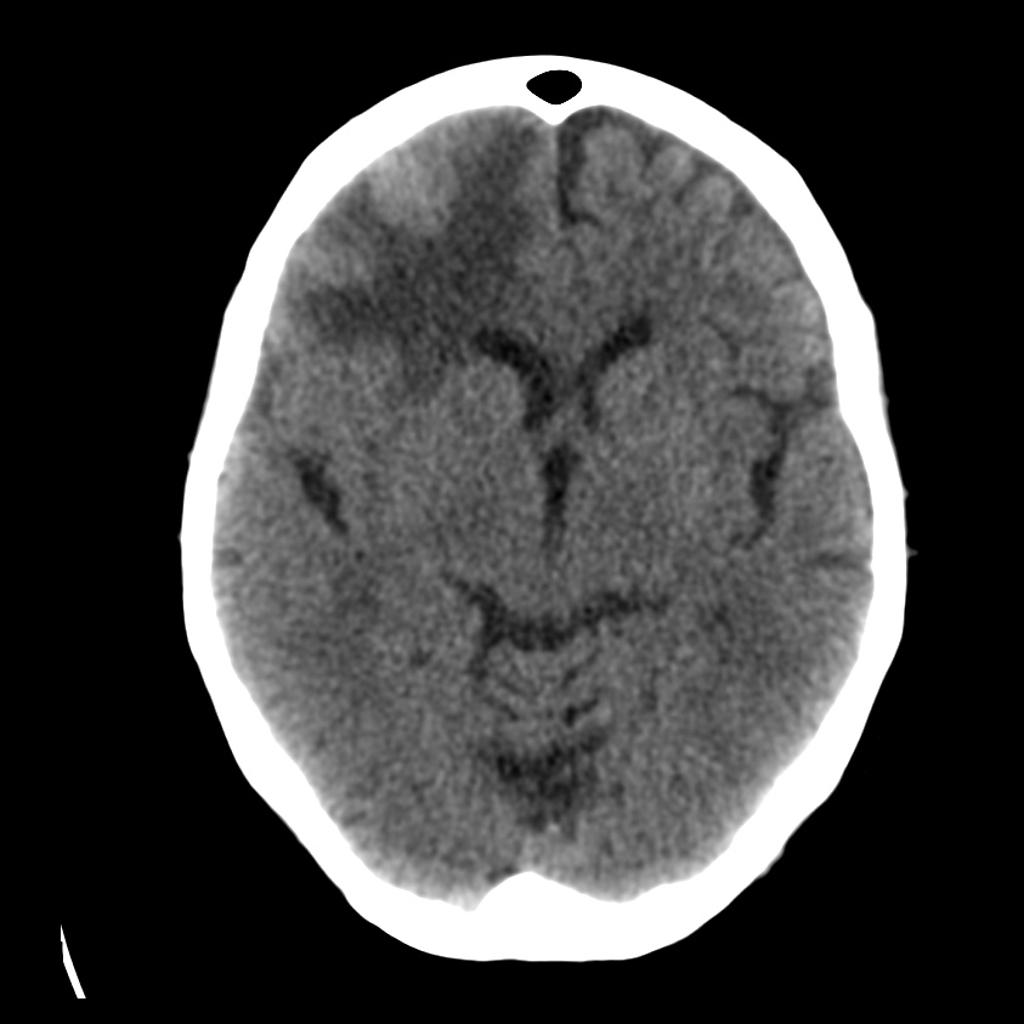
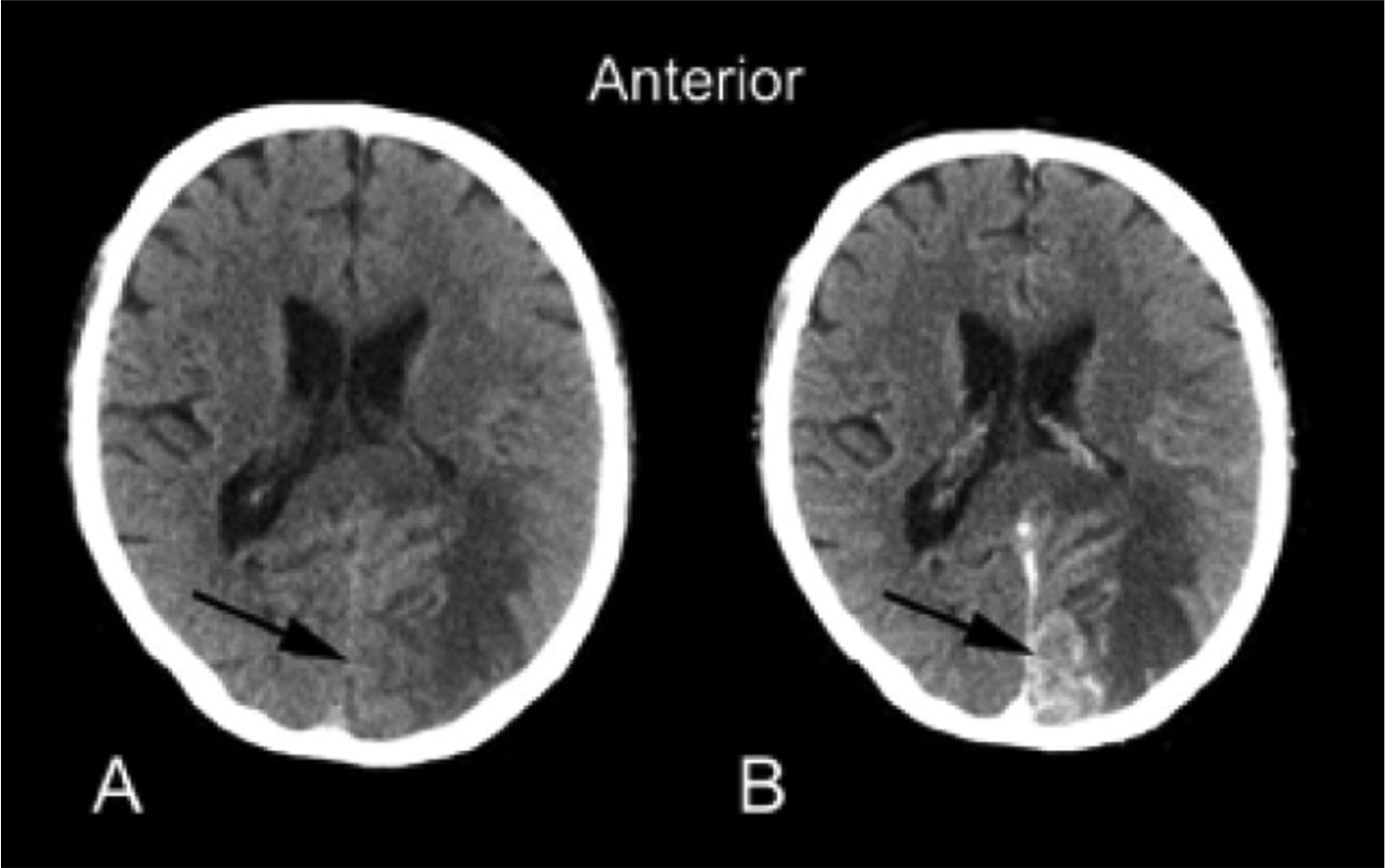
Although MRI is more sensitive for identifying tumors of the CNS, CT is usually the first line imaging modality in the ED. Some pearls:

  • Hyperattenuation = bright = dense (blood)
  • Hypoattenuation = dark = radiolucent (fluid, air, lipid, scar)
  • Masses that are darker + increased volume or mass effect = edema (image 1)
  • Masses that are darker + decreased volume = scar tissue or atrophy (image 2)
  • Masses that are bright + edema = hemorrhage (image 3)
  • Adding IV contrast improves detection of tumors: abnormal enhancement from disruption of blood brain barrier, necrosis or increased vascularity. (Image 4)
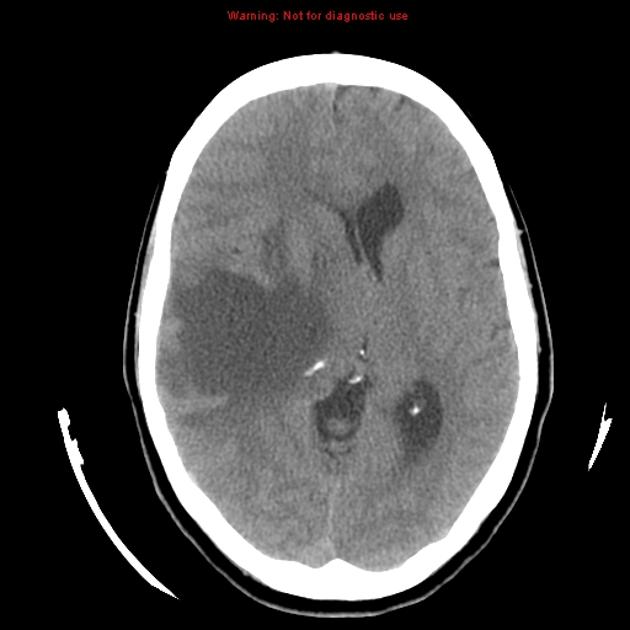
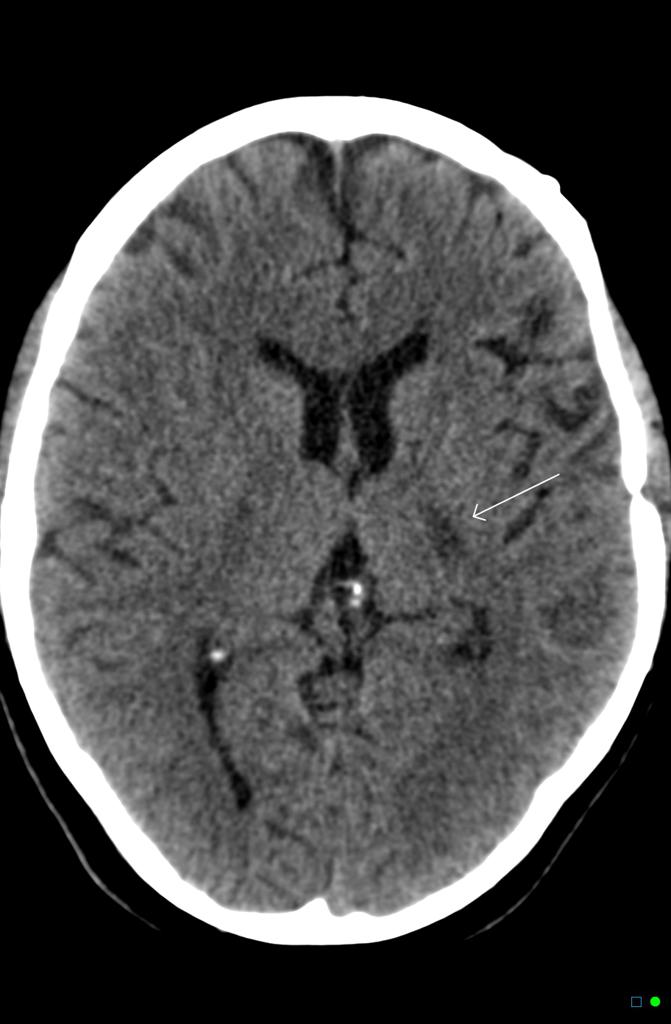
Image 1 Courtesy of Radiopedia.orgImage 2: courtesy of Dr Chris O'Donnell, Radiopaedia.orgImage 3: courtesy of Dr David Cuete, Radiopaedia.orgImage 4: Courtesy of David Kernick, and Stuart Williams Br J Gen Pract2011;61:409-411

Show References

Klein JP, Dietrich J. Neuroradiologic Pearls for Neuro-oncology. Continuum 2017;23(6):1619-1634.


Title: The 4AT to Screen for Delirium (Submitted by Angela Smedley, MD)

Category: Geriatrics

Keywords: Delirium, dementia, screening, altered (PubMed Search)

Posted: 1/7/2018 by Danya Khoujah, MBBS

A recent study was undertaken to validate the 4A's Test for the assessment of delirium in the elderly, with particular focus on inpatient geriatric patients; it revealed that the tool had high sensitivity in detecting delirium, particularly in those with dementia or language barriers, in whom this diagnosis can often be difficult to make.  Further studies would be useful in a similar demographic of emergency department geriatric patients to confirm that this straightforward test is generalizable to the emergency department geriatric patient population.

Show Additional Information

The 4A’s Test used for this study was accessed from www.the4AT.com (Free Access).

The 4AT consists of four items with a maximum achievable score of 12. 

Item 1 determines patient’s level of alertness by operator observation (maximum score 4). 

Items 2 and 3 screen cognition and attention with the use of the Abbreviated Mental Test-4 (AMT-4) (maximum score 2) and Months Backwards (maximum score 2).

Item 4 assesses for ?uctuation and acute changes in mental state (score 0 or 4).

A score of 0 indicates delirium or cognitive impairment is unlikely.

A score between 1 and 3 indicates possible cognitive impairment (corresponding to stand alone dementia screening tools).

A score of 4 and above is suggestive of delirium.

Show References

De J, Wand AFP, Smerdely PI, Hunt GE. Validating the 4A’s test in screening for delirium in a culturally diverse geriatric inpatient population. International Journal of Geriatric Psychiatry. 2017 Dec, 32(12): 1322-1329. doi: 10.1002/gps.4615.


Title: Cerebral Venous Thrombosis (CVT)

Category: Neurology

Keywords: headache, seizure, stroke, neurological deficit, thrombogenic (PubMed Search)

Posted: 12/27/2017 by Danya Khoujah, MBBS (Updated: 7/21/2026)

Cerebral venous thrombosis is a rare (but dangerous) cause of headaches and strokes in patients below the age of 50. It includes thrombosis of the cerebral veins and major dural sinuses. 
A d-dimer can NOT be used to rule it out, as it would be falsely negative in up to 40% of patients. A dry head CT is completely normal in 30% of patients, with nonspecific changes present in another 30%.

Take home: If you are considering the diagnosis, obtain a CT venography (95% sensitive) and don’t rely on a negative dimer or dry head CT.


Show References

Long B, Koyfman A, Runyon MS. Cerebral Venous Thrombosis: A Challenging Neurologic Diagnosis. Emerg Med Clin N Am 35 (2017) 869–878


Title: Bacteriuria - To Treat or Not to Treat? (Submitted by Heidi Teague, MD)

Category: Geriatrics

Keywords: UTI, infection, elderly, symptoms, antibiotics (PubMed Search)

Posted: 12/3/2017 by Danya Khoujah, MBBS

Asymptomatic bacteriuria is common and increases with age, with an incidence of up to 50% in women over the age of 70.  Asymptomatic bacteriuria does not carry an associated high morbidity or mortality if left untreated; it is usually transient and resolves spontaneously.  In order to decrease polypharmacy and possible drug interactions in our elderly patients, they should only be diagnosed with and treated for a UTI if they have laboratory evidence of a UTI (bacteriuria and pyuria) and have two of the following:

·      Fever

·      Worsened urinary urgency or frequency

·      Acute dysuria

·      Suprapubic tenderness

·      Costovertebral angle tenderness

Show References

Mody L, Juthani-Mehta M. Urinary Tract Infections in Older Women: A Clinical Review. JAMA. 2014;311(8):844-854. doi:10.1001/jama.2014.303.


Title: Guillain-Barre's less evil twin - CDIP!

Category: Neurology

Keywords: GBS, weakness, intubation, CSF, LP (PubMed Search)

Posted: 11/22/2017 by Danya Khoujah, MBBS

CDIP, or chronic inflammatory demyelinating polyradiculoneuropathy, is an immune-mediated polyneuropathy which presents similarly to Guillain-Barré Syndrome (GBS). However, it is not as dangerous as GBS. Patients present with symmetric proximal and distal weakness with reduced or absent deep tendon reflexes, just like GBS. The difference is that in typical CDIP, patients have prominent sensory signs, no autonomic dysfunction, no facial weakness, no preceding infectious illness, and most importantly no respiratory failure. It also continues to progress past 4 weeks.

CSF is not diagnostic, and may show albuminocytologic dissociation. The diagnostic test is nerve conduction studies. 

Show References

Allen JA. Chronic Demyelinating Polyneuropathies. Continuum 2017;23(5):1310–1331


Title: Suicidal Risk in Older Adults

Category: Geriatrics

Keywords: elderly, psychiatry, mental health, screening (PubMed Search)

Posted: 11/5/2017 by Danya Khoujah, MBBS

A potential area of care improvement was identified in this recent study; how we address a positive suicide screening test in older adults. Although completed suicide is higher in this age group, older patients are less likely than their younger counterparts to receive mental health evaluation prior to ED discharge for suicidal ideation within the past 2 weeks or a suicidal attempt within the past 6 months, especially if their chief complaint was not of a psychiatric nature.

Show References

Arias, S. A., Boudreaux, E. D., Segal, D. L., Miller, I., Camargo, C. A. and Betz, M. E. (2017), Disparities in Treatment of Older Adults with Suicide Risk in the Emergency Department. J Am Geriatr Soc, 65: 2272–2277. doi:10.1111/jgs.15011


Title: Guillain- Barr Syndrome

Category: Neurology

Keywords: weakness, infection, paralysis, intubation, influenza, vaccine (PubMed Search)

Posted: 10/25/2017 by Danya Khoujah, MBBS

It's respiratory infection and flu vaccine season! Time to brush up on Guillain-Barré Syndrome..

- It is the most common cause of acute or subacute flaccid weakness worldwide

- 70% of cases are preceded by an infection in the past 10-14 days, but most are minimized or forgotten by the patient. 40% of these infections are by Campylobacter jejuni.

- 30% develop respiratory failure requiring intubation and ventilation

- Half of the patients will develop their maximum weakness by 2 weeks, most will develop it by 4 weeks.

Show References

Donofrio PD. Guillain-Barré Syndrome. Continuum 2017;23(5):1295–1309.


Title: Geriatric Emergency Department Guidelines (Submitted by: Jon Mark Hirshon, MD, PhD, MPH)

Category: Geriatrics

Posted: 10/1/2017 by Danya Khoujah, MBBS (Updated: 7/21/2026)

Providing consistent, quality emergency care to the elderly is critically important. The Geriatric Emergency Department (GED) guidelines, developed collaboratively, provide a standardized set of guidelines to help improve care of the geriatric population in the emergency department.

Show Additional Information

In order to improve the standards for geriatric emergency care, representatives from the American College of Emergency Physicians, the American Geriatrics Society, Emergency Nurses Association, and the Society for Academic Emergency Medicine worked together to create the GED Guidelines. These guidelines create a template related to developing a geriatric focused emergency department, including specific recommendations related to staffing and administration, follow up and transition of care, education, quality improvement, equipment and supplies, as well as policies and procedures.

Show References

https://www.acep.org/geriEDguidelines/#sm.0013bwx64lxsf2t107v2mb3tvn6hz

https://www.acep.org/WorkArea/linkit.aspx?LinkIdentifier=id&ItemID=95365


Title: tPA Contraindications

Category: Neurology

Keywords: stroke, tPA, thrombolytics, ICH, hemorrhage, adverse events (PubMed Search)

Posted: 9/28/2017 by Danya Khoujah, MBBS

Classically, the list of contraindications for tPA in stroke has been extensive and excludes a significant percentage of patients. This scientific statement from AHA clarifies the evidence behind these contraindications, and in short, expands the population of patients that should be considered for tPA.
The following is NOT considered a contraindication for tPA: 
- Age over 80 
- Severe stroke (NIHSS >25)
- Improving symptoms, if patient remains moderately impaired and potentially disabled
- A small (<10 mm) unruptured and unsecured intracranial aneurysm (NOT other vascular malformations)
- Extra-axial intracranial neoplasms (e.g. meningiomas, pituitary adenomas)
- Blood glucose of >400mg/dL that is subsequently normalized
- Seizure at onset of stroke if residual impairment is secondary to stroke not a postictal phenomenon 

Show References

Demaerschalk BM, Kleindorfer DO, Adeoye OM, et al; American Heart Association Stroke Council and Council on Epidemiology and Prevention. Scientific Rationale for the Inclusion and Exclusion Criteria for Intravenous Alteplase in Acute Ischemic Stroke: A Statement for Healthcare Professionals From the American Heart Association/American Stroke Association. Stroke 47(2):581–641, 2016. 


Title: Falls in the Elderly (Submitted by Amal Mattu, MD)

Category: Geriatrics

Keywords: arrhythmia, syncope, fall (PubMed Search)

Posted: 9/4/2017 by Danya Khoujah, MBBS (Updated: 7/21/2026)

20% of unexplained falls in the elderly can be attributed to an arrhythmia.

Show References

Bhangu J, McMahon CG, Hall P, et al. Long-term cardiac monitoring in older adults with unexplained falls and syncope. Heart 2016;102:681-686.


Title: Pituitary Apoplexy

Category: Neurology

Keywords: pituitary apoplexy, subarachnoid hemorrhage, meningitis, headache, CT, MRI (PubMed Search)

Posted: 8/9/2017 by Danya Khoujah, MBBS (Updated: 7/21/2026)

Pituitary apoplexy is a sudden hemorrhage or infarction of the pituitary.
  • It most commonly occurs in patients with preexisting pituitary adenomas, but 3 out of 4 patients with pituitary adenomas are unaware of their diagnosis.
  • Patients may acutely present with thunderclap headache, with or without visual field deficits or cranial nerve dysfunction. They may also have meningeal symptoms due to extravasation of blood into the subarachnoid space.
  • Endocrine dysfunction is common but not readily diagnosed in the ED.
  • Symptoms may be triggered by some hormonal treatments (e.g. GnRH agonists for prostate CA), head trauma, angiographic procedures, or anticoagulation therapy.
  • CT is diagnostic in only one-third of cases, but can reveal the intrasellar mass in 80% of cases, and therefore should be the initial test. Blood may be missed in subacute cases.
  • MRI is the test of choice, with a sensitivity of over 90%.  

Bottomline: Keep pituitary apoplexy in your differential when considering SAH or meningitis, especially in the presence of risk factors, and have a low threshold to order an MRI. 

Show References

Ishii, M. Endocrine Emergencies With Neurologic Manifestations. Continuum 2017;23(3):778–801. 


Title: Elder Abuse (Submitted by M. Chris Jackson, MD)

Category: Geriatrics

Keywords: abuse, marks, interview (PubMed Search)

Posted: 7/3/2017 by Danya Khoujah, MBBS

When you are working up an elderly patient for trauma  look for patterns such as circumferential bruising on the wrists that have the pattern of fingers the same way you would look at the injuries of a child. Remember that the person who is sitting next to them is frequently the person that is abusing them. Therefore, it is important to interview the patient alone. 

Show References

Lachs MS, Pillemer KA. Elder Abuse. N Engl J Med 2015; 373:1947-1956


Title: Autoimmune Neurological Disease

Category: Neurology

Keywords: autoimmune, cancer, encephalopathy (PubMed Search)

Posted: 6/28/2017 by Danya Khoujah, MBBS

One of the differentials of a subacute neurological deficit (usually with a fluctuating course) is autoimmune neurologic disorders. This can encompass anything from neuropathic symptoms, to cerebellar pathology, to encephalitis-like picture. A personal or family history of autoimmune disease or malignancy should heighten suspicion, and the CSF is likely an inflammatory CSF profile as well (pleocytosis). Neural autoantibodies confirm the diagnosis, and are usually performed in both the serum and the CSF. Most laboratories perform a global screen for a number of potential antibodies that fit the concerning clinical picture, rather than one or two tests.
In addition, autoimmune CNS pathology is concerning for a paraneoplastic syndrome e.g. teratoma, lymphoma or small cell lung cancer.

Take Home Message: If suspecting an autoimmune pathology due to the risk factors and subacute nature of the disease, obtain some extra CSF to run the necessary tests after consulting with neurology. 

Show References

Tobin WO, Pittock SJ. Autoimmune Neurology of the Central Nervous System. Continuum 2017;23(3):627–653.


Title: ACS in Elderly Patients (Submitted by Dr Katherine Grundmann)

Category: Geriatrics

Keywords: Geriatric, cardiology, symptoms, atypical, angina (PubMed Search)

Posted: 6/4/2017 by Danya Khoujah, MBBS

Older patients with acute coronoary syndrome (ACS) are less likely to present with typical ischemic chest pain (pressure-like quality, substernal location, radiating to jaw, neck, left arm/shoulder and exertional component) compared with younger counterparts.

Typical angina symptoms predictive of acute myocardial infarction (AMI) in younger patients were less helpful in predicting AMI in the elderly population.

Autonomic symptoms such as dyspnea, diaphoresis, nausea and vomiting, pre-syncope or syncope are more common accompaniments to chest discomfort in elderly ACS patients.

Symptoms may also be less likely to be induced by physical exertion; instead, they are often precipitated by hemodynamic stressors such as infection or dehydration

Bottom Line: Keep a high index of suspicion for ACS in older patients as they present atypically.

Show References

Dai X, Busby-Whitehead J, Alexander KP. Acute Coronary Syndrome in the older adults. J Geriatr Cardiol. 2016 Feb;13 (2): 101-108 


Title: Neurally Mediated Syncope - Part 2

Category: Neurology

Keywords: syncope, vasovagal, orthostatic, blood pressure (PubMed Search)

Posted: 5/24/2017 by Danya Khoujah, MBBS


Vasovagal syncope is a subtype of neurally mediated syncope, and it is distinctly different from orthostatic hypotension. 

Patients with orthostatic syncope have severe orthostatic hypotension that results in transient loss of consciousness immediately or within moments of standing up. This is different from neurally mediated syncope, which develops gradually under conditions of prolonged orthostatic stress such as standing for several minutes. Tilt table testing is useful for true orthostatic syncope, but not for neurally mediated syncope. In addition, checking for “orthostatic hypotension” may not capture patient with orthostatic syncope, because the hypotension occurs so quickly after standing up. Of note, patients may still have orthostatic tachycardia or intolerance with neurally mediated syncope. 


Show References

Cheshire WP. Syncope. Continuum 2017;23(2):335–358.


Title: Neurally Mediated Syncope - Part 1

Category: Neurology

Keywords: syncope, vasovagal, seizures, orthostatic, blood pressure (PubMed Search)

Posted: 5/10/2017 by Danya Khoujah, MBBS

"Neurally mediated syncope" is the most common cause of syncope in all age groups, and includes various overlapping entities, such as neurocardiogenic syncope, vasovagal syncope, and vasodepressor syncope. These are distinctly different from orthostatic hypotension and seizures. 
A careful history is the most important “test” to diagnose neurally mediated syncope. It is frequently preceded by a characteristic prodrome with symptoms such as nausea, dizziness, feelings of warmth or coldness, visual dimming or blurring, clammy skin, facial pallor, general weakness, decreased hearing, or fecal urgency. Symptoms last 30 seconds to several minutes prior to syncope. 
Differentiating syncope from seizures:
Brief, multifocal,arrhythmic, myoclonic jerks are observed in up to 90% of patients at the time of syncope. These are caused by brainstem hypoperfusion and may be mistaken for seizures. The jerks follow the LOC (rather than immediate) and the eyes deviate upward (rather than lateral). If tongue biting occurs, it’s the tip (rather than the side, which is what occurs with seizures).
 

Show References

Cheshire WP. Syncope. Continuum 2017;23(2):335–358.


Title: Fall in the Elderly (Submitted by Heidi M. Teague, MD)

Category: Geriatrics

Keywords: geriatric, trauma, imaging (PubMed Search)

Posted: 4/3/2017 by Danya Khoujah, MBBS

·       In the elderly, falling is the most common mechanism of injury
·       Unavoidable Risk factors: age 85 or older, male, Caucasian, history of falls
·       Other factors: alcohol consumption, polypharmacy
·       Mechanisms of fall:  slipping, tripping, stumbling
·       Physical exam to include: gait, balance, proprioception, vision, strength and cognitive function testing
·       Must consider neglect/abuse, affects 10% of seniors per year
·       Evaluate for anticoagulant use due to increased risk of intracranial injury
·       Use advanced imaging to identify occult hip fractures when clinically suspected and plain radiographs are negative


Show References

Abraham, MK, Cimino-Fiallos, NE.  Falls in the Elderly: Causes, Injuries, and Management. Medscape February 1, 2017.

http://reference.medscape.com/features/slideshow/falls-in-the-elderly


Previous  |  1 |  2 |  3 |  4 |  Next
University of Maryland School of Medicine logo
  • Departments
  • Programs
  • Research Centers
  • Institutes
  • Graduate Education
  • CIBR Cores
  • Offices of the Dean
    • University of Maryland, Baltimore
    • University of Maryland Medical Center
    • Medical Alumni Association of the University of Maryland
    • Health Sciences and Human Services Library
University of Maryland School of Medicine
655 W. Baltimore Street
Baltimore, MD 21201
Contact Us

© University of Maryland School of Medicine

    • Webmaster
    • Web Accessibility
    • Site Index
    • UMB Hotline
    • Employment
    • Map