
Search
Subscribe to daily UMEM Pearls (FREE!) via:
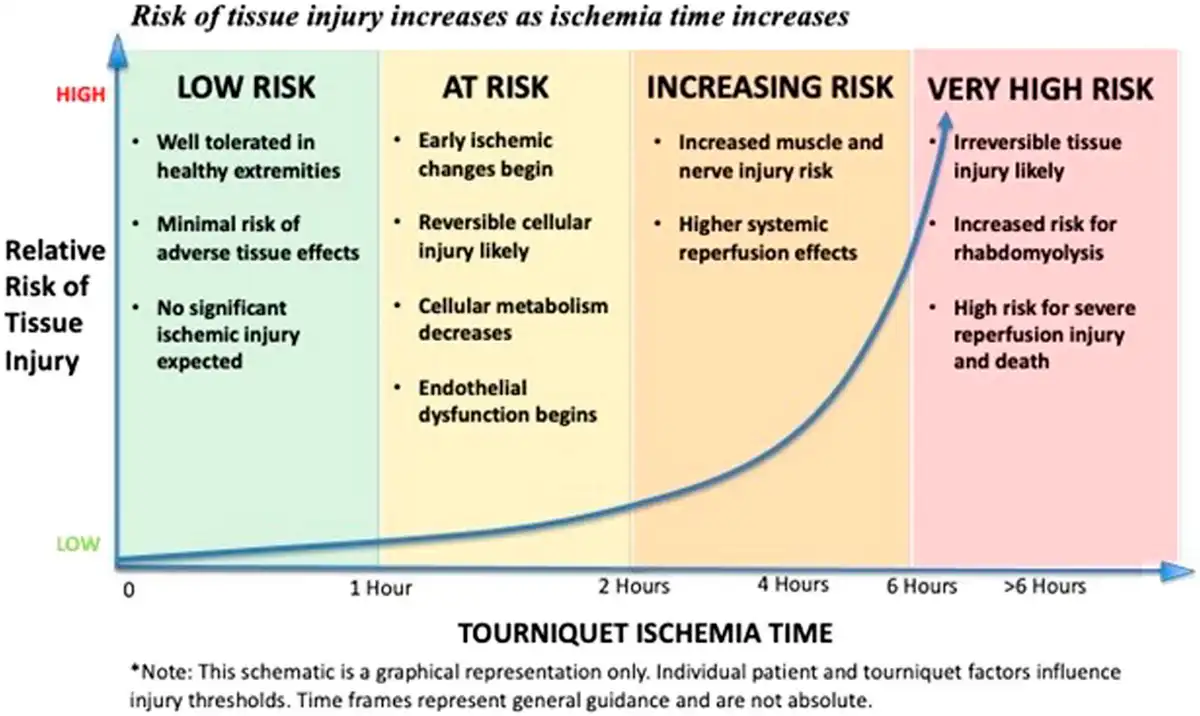
Tourniquets can be life saving. Studies do show they are often unnecessarily applied. Tourniquet time is associated with limb salvageability. For those that practice in an environment where immediate vascular or trauma surgery isn’t available, the ability to convert a tourniquet to a less restrictive process can be limb saving.
This review suggests: “tourniquet conversion requires a controlled, slow release (generally over 1–2 min, followed by at least 2 minutes of direct pressure to the wound with a moist dressing) to assess for ongoing hemorrhage while balancing the competing risks of rebleeding and reperfusion-associated complications. Conversion is generally recommended in patients who are hemodynamically stable, without traumatic amputation, and in whom the wound can be closely monitored for recurrent hemorrhage.”
References
Journal of Trauma and Acute Care Surgery 101(5):p 711-722, November 2026. | DOI: 10.1097/TA.0000000000005108