
Search
Subscribe to daily UMEM Pearls (FREE!) via:
181-200 of 228 results with category "Trauma"
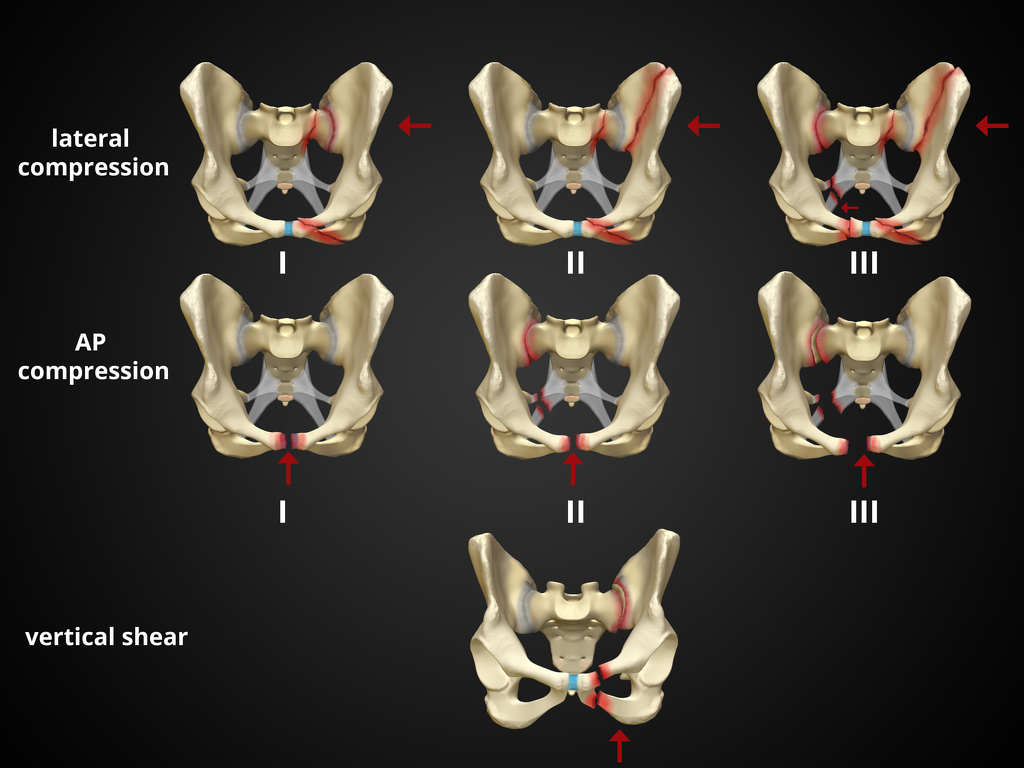
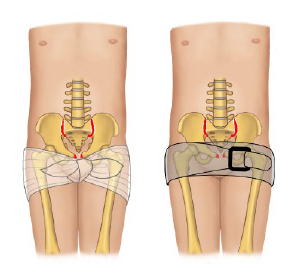
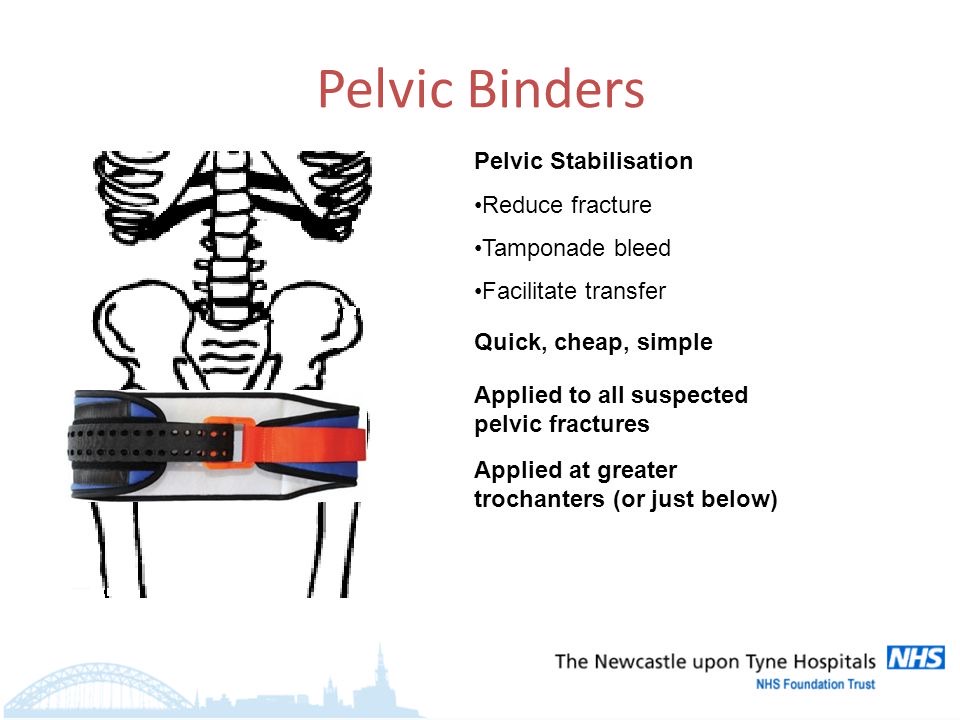
Pelvic fractures can be a major source of life threatening hemorrhage. Suspect fracture with significant force/mechanism. Signs are pelvic tenderness (no need to “rock” the pelvis), bruising at perineum, and hypotension in the setting of major trauma. Major classifications of pelvic fractures are lateral compression, anterior posterior (wide public ramus, open book), and vertical sheer (fall from height). An appropriately applied pelvic binding device can be lifesaving. The biggest mistake in applying these devices is to apply them too high. Maximum pressure is achieved with application directly across the greater trochanters.
Show References
Shock index (heart rate/systolic blood pressure) has been used to predict trauma outcomes. This study from American Journal of Emergency Medicine looked at 89,000 pre-hospital patients who had a normal shock index on arrival at an emergency department. They then looked for those with abnormal pre-hospital shock index vs. those without an abnormal shock index and compared outcomes. Those with an abnormal pre-hospital shock index had worse outcomes than those with normal pre-hospital shock index.
Bottom line: A good handoff from pre-hospital to emergency department staff is critical because any abnormal shock index predicts a worse outcome than those with a normal shock index.
Show References
Use of intravenous lidocaine has been proposed as an adjunct/replacement for opioids in trauma patients with rib fractures. These small studies show a signal that the use of lidocaine decreased the need for opiate pain medication in this cohort of patients. Larger studies are needed, however, trauma surgeons maybe reaching for intravenous lidocaine in patients they are admitting with rib fractures. Also, transdermal lidocaine patches have been shown to have a similar effect in this patient cohort. “In admitted trauma patients with acute rib fractures not requiring continuous intravenous opiates, lidocaine patch use was associated with a significant decrease in opiate utilization during the patients’ hospital course.” 3
Show References
Recognizing that the studies discussing emergency department thoracotomy (ERT) in traumatic injuries are performed at large institutions where surgical back-up is available, emergency physicians should be familiar with the indications of emergency department thoracotomy in the setting of trauma. An informed decision should be made based on resources available along with the limited literature available to make the best decision for the patient and staff present.
Adding to last week’s pearl of no cardiac activity and no pericardial fluid on FAST exam, what else prognosticates intact survival? A 2020 paper concluded “ERT had the highest survival rates in patients younger than 60 years who present with signs of life after penetrating trauma. None of the patients with blunt trauma who presented with no signs of life survived.” 1A review in Trauma last month recommended: “Based on our scoping review of existing literature, we can conclude three major findings in the context of RT: (1) Resuscitative Thoracotomies (RT) performed in the setting of blunt trauma have a worse prognosis compared to patients undergoing RT for penetrating injuries, (2) procedures that have the potential to delay patient transport to hospital, such as intubation, may significantly increase the risk of mortality and (3) the presence of signs of life or hemodynamic stability in the prehospital or in-hospital setting are positive survival predictors in the setting of RT” 2 The best outcome is in patients brought immediately to an ED (preferably a trauma center) with limited on scene time. Police transport had a major association with survival in these patients. Stab wounds have the highest rate of intact survival.
For those at non-trauma centers, have a conversation within your ED group as well as with general surgeons (if available) to decide ahead of time if this procedure will be utilized in the setting of traumatic cardiac arrest and in which patient population.
Show References
Bottom Line: Lack of pericardial fluid or cardiac motion on FAST exam leads to no intact survivors for ED RT for trauma.
Zone 1 REBOA may be as good or better than ED RT for those requiring aortic occlusion after trauma.
Intact neurologic survival after emergency department resuscitative thoracotomy (ED RT) for trauma is low. Best outcomes have been shown for stab wounds to the chest with loss of vital signs in the ED or just prior to ED arrival. Worst outcomes are for blunt trauma with loss of vital signs in the field.
Two studies help us further evaluate the use of emergency department resuscitative thoracotomy. Inaba et al. illustrate in patients undergoing a FAST exam prior to or concomitant with ED RT “The likelihood of survival if pericardial fluid and cardiac motion were both absent was zero.” Cralley et al. compared survival after ED RT to Resuscitative Endovascular Balloon Occlusion of the Artery (REBOA) zone 1 (above celiac axis) and found REBOA was as good or better when used in centers with experience with both procedures. They advocate for a randomized trial to compare the two procedures further.
Show References
A study looking at 177 trauma patients (predominately skiing injuries) treated with oral trans mucosal fentanyl (600 and 800 mcg dosing) found a statistically and clinically significant reduction in pain. This therapy could be an adjunct to patients who require pain relief but IV access is delayed for various reasons.
Show References
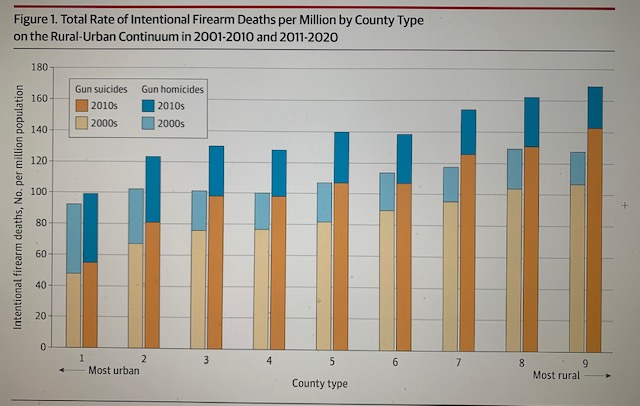
This study looked at 20 years of death by firearm and stratified the location of death from urban to rural. The authors concluded:
“Descriptively, in all county types and both decades of the study, per capita gun suicides were more common than per capita gun homicides, and the most rural counties had higher rates of firearm death compared with the most urban counties. Firearm death rates were meaningfully higher in 2011-2020 compared with 2001-2010, primarily because of an increase in gun suicides.”
Show References
It is time to abandon the ABC's that ATLS teaches and move to hemorhage control (circulation) as well as resucitation before we deal with airway in the majority of trauma patients. Tounriquets save lives. Pelvic binders save lives. Blood transfusion (whole blood) saves lives. Poisitive presssure ventilation, sedativies, and decreasing sympathetic drive in hypoternsive patients makes their hypotension worse.
Please consider changing to a CAB approach to the hyhpotensive trauma patient.
Show References
Delayed sequence intubation can be valuable in the agitated, combative trauma patients who will not tolerate pre-intubation pre-oxygenation. We know peri-intubation hypoxia leads to significant morbidity and mortality. DSI offers us an option to avoid peri-inubation hypoxia.
This study randomized 200 trauma patients into a rapid induction group (Ketamine followed immediately by succinylcholine with immediate intubation) vs. delayed induction group (Ketamine followed by a 3-minute oxygenation period followed by succinylcholine, followed by intubation). The authors found: “Peri-intubation hypoxia was significantly lower in group DSI (8 [8%]) compared to group RSI (35 [35%]; P = .001). First-attempt success rate was higher in group DSI (83% vs 69%; P = .02).”
Show References
This extensive review looks at the literature surrounding vasopressors in trauma. Take away points are:
1. Most of the studies were done when the use of crystalloid was still being used as initial resuscitation fluid instead of blood.
2. Use of whole blood and mass hemorrhage protocols are not reflected in the literature regarding vasopressor use.
3. There are physiologic reasons vasopressors could be useful, particularly in head injured patients where we want increased mean arterial pressures.
4. European guidelines include vasopressor use whereas American ones do not.
5. Vasopressin and norepinephrine appear to be the vasopressors of choice if using a vasopressor in a trauma patient.
6. We need better studies looking at this topic
7. We need better studies looking at permissive hypotension in trauma now that our resuscitative strategy emphasizes mass hemorrhage protocol of blood, blood products, TXA and hemorrhage control.
8. As with all things in medicine, never say never.
Show References
In a systematic review looking at patients over age 65 who sustained a cervical spine injury from a low-level fall, there was a 3.8% prevalence of injury identified. The paper could not correlate injury with GCS level or altered level of consciousness due to the quality of the data available.
Bottom line again is patients over age 65 with low-level falls should be considered to have significant injury until proven otherwise.
Show References
This paper looks at the possibility of intramuscular tranexamic acid (TXA) administration. Pharmacologic studies support this route as giving correct drug bioavailability to control hemorrhage. Several London, England pre-hospital services have begun using intramuscular TXA for trauma patients when intravenous access cannot be quickly obtained. This paper suggests 500 mg intramuscular injection dosing.
Show References
A retrospective review of patients over age 13 presenting to one urban level one trauma center and one urban community hospital looked at traumatic injuries in patients presenting for sexual assault. They looked at 157 patients and found 61% of assailants were acquaintances, 22% strangers, and 15% intimate partners. One third of all patients had some traumatic injury however only 12 patients has serious injuries such as non-fatal strangulation or a fracture. Assault by an intimate partner was more likely to lead to injury/trauma including non-fatal strangulation. Drug and alcohol use was not associated with presence of injury.
Show References
This study is a secondary analysis of another studying looking at hypertonic saline in traumatic brain injury (TBI) making it not the most robust study however it found that TBI patients who’s PaO2 dropped below 100 had a worse outcome than those whose PaO2 did not fall below 100.
Bottom line: This is a reminder that traumatic brain injury patients do not do well with hypoxia or hypotension even if transient (during intubation, etc.). Pre-oxygenate and resuscitate prior to intubation and maintain oxygen saturations in the mid-90s for your traumatic brain injured patients. This applies to prehospital, emergency department, and ICU settings
Show References
Predicting the need for a mass hemorrhage protocol (MHP) activation is important both for individual patient outcome as well as for proper utilization of critical resources such as blood products and healthcare workers time and effort. These two studies look at using the RABT score to predict the need for mass transfusion. The RABT score is:
A 4-point score
blunt (0)/penetrating trauma (1),
shock index (hr/SBP)≥ 1 (1),
pelvic fracture (1)
FAST positive (1)
With a score >2 predictive of needing MHP.
These studies (one in Canadian trauma centers, the other in US trauma centers) validate the use of this score to predict the need for activation of a mass hemorrhage protocol.
Show References
This study from Sweden looked at 2397 trauma patients and identified 768 with thoracic injury. Those with thoracic injury had a 30-day mortality of 11% whereas those without thoracic injury had a 4% 30-day mortality. Patients over age 60 had higher mortality and were more likely to have rib fractures. Those under 60 with thoracic injury were more likely to have thoracic organ injury than rib fracture.
Bottom line: Rib fractures were more common over age 60 and there was a higher mortality for those with thoracic vs non-thoracic trauma.
Show References
Applying a cervical collar to all patients involved in motor vehicle collisions and mechanical falls has been shown to add to patient discomfort, unwarranted imaging studies and prolonged on scene time for emergency medical services. This study adds further evidence that paramedics can use validated algorithms to clinically clear cervical spine injuries without any bad outcomes including spinal cord injuries. EMS medical directors and all of us who interact with EMS providers should be proactive in developing protocols to use cervical immobilization in appropriately selected patients only. This study used the Modified Canadian C-Spine Rule.
Show References
In a small study at a single level one trauma center, ? of patients screened positive for illicit fentanyl use prior to violent or intentional injury. Those who screened positive were more likely to require ICU admission and had a higher rate of previous trauma center admission. The authors concluded:
“Exposure to illicit fentanyl was common among victims of violence in this single-center study. These patients are at increased risk of being admitted to intensive care units and repeated trauma center visits, suggesting fentanyl testing may help identify those who could benefit from violence prevention and substance abuse treatment.”