Search
Subscribe to daily UMEM Pearls (FREE!) via:
181-200 of 558 results with category "Toxicology"
[CORRECTION]: Versed dose is 2-2.5 mg total not mg/kg
Patients with severe agitation present a unique challenge to the emergency department. Acute delirium is often due to psychostimulants such as cocaine, amphetamines, PCP, or synthetic cannabinoids, alcohol, or psychiatric illness. These patients require urgent evaluation necesssitating the use of physical and chemical restraints, not only for their own safety but also the hospital staff's. Fingerstick glucose, pulse oximetry, and vital signs must be expeditiously obtained. Severely agitated combative patients who are physically restrained are at high risk for morbidity from asphyxiation, hypermetabolic consequences (acidosis, hyperthermia, rhabdomyolysis), and death can occur.
Ketamine is phencyclidine derivative that causes dissociative state between the cortical and limbic systems which prevents the higher centers from preceiving visual, auditory, or painful stimuli. Ketamine has a wide safety profile and has been used worldwide for many years with few complications. It possesses ideal characteristics for rapid sedation of agitated patients:
- Rapid onset of action 1-3 minutes
- Preservation of airway reflexes
- Lack of respiratory or cardiac depression or QT prolongation
- Short half-life of 30-40 minutes
- Safe in situations with minimal to no monitoring
- Dose: Intravenous =1.5-2 mg/kg Intramuscular = 5-6 mg/kg (maximum 400 mg)
Experience with Ketamine in patients with excited delirium has shown good initial control of agitation however, patients often require additional medications for deeper or longer duration of sedation. Benzodiazepines are recommmended as second line agents particularly intravenous or intramuscular Midazolam 2-2.5 mg /kg.
Show References
Acute cocaine toxicity can manifest with several cardiovascular issues such as tachycardia, dysrhythmia, hypertension, and coronary vasospasm. A new systematic review collated all of the available evidence for potential treatment options. Here is what the review found (there is also an 'other agents' section for medications with less published reports):
-
Benzodiazepines and other GABA-active agents: Benzodiazepines may not always effectively mitigate tachycardia, hypertension, and vasospasm from cocaine toxicity.
-
Calcium channel blockers: Calcium channel blockers may decrease hypertension and coronary vasospasm, but not necessarily tachycardia.
-
Nitric oxide-mediated vasodilators: Nitroglycerin may lead to severe hypotension and reflex tachycardia.
-
Alpha-adrenoceptor blocking drugs: Alpha-1 blockers may improve hypertension and vasospasm, but not tachycardia, although evidence is limited.
-
Alpha-2-adrenoceptor agonists: There were two high-quality studies and one case report detailing the successful use of dexmedetomidine.
-
Beta-blockers and alpha/beta-blockers: No adverse events were reported for use of combined alpha/beta-blockers such as labetalol and carvedilol, which were effective in attenuating both hypertension and tachycardia.
-
Antipsychotics: Antipsychotics may improve agitation and psychosis, but with inconsistent reduction in tachycardia and hypertension and risk of extrapyramidal adverse effects.
-
Sodium bicarbonate: Twelve case reports documented treatment of dysrhythmia with IV sodium bicarbonate, with seven reporting successful termination.
The authors note that "publication bias is a concern, and it is possible that successful treatment and/or adverse events have not been reported in some of the publications, and in general."
Show References
Pure opioid agonists such as Morphine, Hydromorphone, and Fentanyl stimulate opioid receptors and are the most potent analgesics. Fentanyl and fentanyl analogues are up to 100 times more powerful than morphine and 30-50 times more powerful than heroin.
- Fentanyl abuse is causing significant problems worldwide. In the U.S., age-adjusted rate of death involving Fentanyl has increased 80% in 2014.
- Sources include production in illicit clandestine labs or diversion from legitimate pharmaceutical sales.
- 12 different analogues of Fentanyl have been identified in the U.S. drug traffic market.
- Commonly laced in heroin or cocaine or sold as fake Oxycodone or OxyContin tablets.
W-18 is a highly potent opioid agonist with a distinctive chemical structure which is not closely related to older established families of opioid drugs. While Fentanyl is approximately 100 times more powerful than Morphine, W-18 is about 100 times more powerful than Fentanyl.
- First discovered at the University of Alberta in 1982 in hopes of producing a non-addictive analgesic, 32 compound series named from W-1 to W-32, with W-18 being the most potent.
- Recently emerged on the streets of Canada when police in Calgary confiscated 110 green pills being sold as Fentanyl, known on the streets as "shady eighties" or "green beans pills" but chemical analysis revealed some pills containing W-18 instead.
- W-18 has never been used clinically as drug companies did not pick the patent, which lapsed by 1992 so little clinical experience.
- The effects of naloxone to reverse this synthetic opioid are unknown and higher doses are expected to to be required.
- Illicit drug manufacturers research pharmacological history in search of the more powerful, exotic, and new opioids to circumvent current legal regulations.
Show References
Colchicine is an alkaloid compound found in Colchicum autumnale that is often mistaken by foragers as wild garlic (Allium ursinum). Unintentional ingestion wild garlic or therapeutic misadventures among elderly population with history of gout often result in unintentional toxicity.
It is a potent inhibitor of microtubule formation and function involved in cell division and intracellular transport mechanism. Thus toxicity is related to diffuse cellular dysfunction of all major organs and results in significant morbidity and mortality.
Colchicine toxicity occurs in three phases:
| Phase | Time | Signs and symptoms | Therapy |
| I | 0 – 24 hr | · Nausea, vomiting, diarrhea · Salt and water depletion · Leukocytosis | · Antiemetic · GI decontamination · IV fluids · Observation for leukopenia |
| II | 1 – 7 days | · Sudden cardiac death (24 – 48 hr) · Pancytopenia · Acute kidney injury · Sepsis · Acute respiratory distress syndrome · Electrolyte imbalance · Rhabdomyolysis | · Resuscitation · G-CSF · Hemodialysis · Antibiotics · Mechanical ventilation · Electrolyte repletion |
| III | >7 days | · Alopecia (2-3 weeks later) · Myopathy, neuropathy, myoneuropathy. |
|
Management
- Primarily supportive care as no antidote is available.
- ICU admission due to risk of sudden cardiac death in symptomatic patients.
- Patients who does not manifest GI symptoms within 8 -12 hr are unlikely to be significantly poisoned.
In September 2013, an international group representing major societies in toxicology and nutrition support began collaborating on a comprehensive review of lipid use in poisoning. Six total papers will be published, with the most recent two made available online this week. Here are the available (and forthcoming) papers:
-
Gosselin S, et al. Methodology for AACT evidence-based recommendations on the use of intravenous lipid emulsion therapy in poisoning. Clin Toxicol 2015;53(6):557-64. [PMID 26059735]
-
Grunbaum AM, et al. Review of the effect of intravenous lipid emulsion on laboratory analyses. Clin Toxicol 2016:54(2):92-102. [PMID 26623668]
-
Levine M, et al. Systematic review of the effect of intravenous lipid emulsion therapy for non-local anesthetics toxicity. Clin Toxicol. 2016;54(3):194-221. [PMID 26852931]
-
Hoegberg LC, et al. Systematic review of the effect of intravenous lipid emulsion therapy for local anesthetic toxicity. Clin Toxicol. 2016;54(3):167-93. [PMID 26853119]
-
Hayes BD, et al. Systematic Review of Clinical Adverse Events Reported After Acute Intravenous Lipid Emulsion Administration. Clin Toxicol. 2016 Apr 1. [Epub ahead of print] [PMID 27035513]
-
The final paper, which is in process, is the consensus recommendations from the workgroup based on the 4 systematic reviews.
Show References
Throughout medical history one of the basic tenets of poisoning therapy is to remove the poison from the patient. For hundreds of years, gastric decontamination has been the cornerstone treatment for acute poisonings by ingestion. This commonsense approach endeavors to remove as much of the the ingested toxin as possible before systemic absorption and organ toxicity occurs. Multiple GI decontamination methods have been utilized including gastric emptying by lavage and ipecac, toxin binding by activated charcoal, and increasing GI transit time with cathartics and bowel irrigation. Numerous studies have been conducted to assess the effectiveness of GI decontamination including measurement of amount of toxin removed by gastric retrieval, reduction of bioavailability by measuring blood levels, and finally comparison of clinical outcomes of patients treated with and without GI decontamination. Controlled studies have failed to show conclusive evidence of benefit and have even demonstrated resultant harm especially with use of gastric lavage. Activated charcoal has a tremendous surface area capable of binding many substances. Although viewed as relatively safe it does have risks in certain subsets of patients, pulmonary aspiration the most common, and is no longer routinely recommended.
Considerations for use of Activated charcoal (AC) use in acutely poisoned patients:
- AC does not bind alcohols, hydrocarbons, heavy metals
- Contraindications include diminished level of consciousness, seizure, emesis, unprotected airway, and intestinal obstruction
- Consider AC use in cases where there is potential for toxin to remain in the gut longer such as with delayed-release formulations or slowed gastric emptying
- Consider AC use in cases of expected severe toxicity with lack of effective antidote
The decision to use activated charcoal is no longer standard of care but should be individualized to each clinical situation weighing the risk versus clinical benefits.
Show References
Lead is a ubiquitous metal in the environment partly due to decades of using leaded gasoline (organic lead) and lead-based paint (inorganic lead). Outside of occupational exposure, children are disproportionately affected from environmental lead exposure.
Common route of exposure are:
- Ingestion (common in children): soil, water, lead-based paint chips, toys, certain folk remedies.
- Absorption: adult: 3 – 10% vs. children: 40 – 50%
- Inhalation (mostly occupational exposure): lead dust
- Absorption: 30 – 40%
- Dermal (minor): cosmetic products
- Absorption: < 1%
Majority of the absorbed lead are stored in bone (years) > soft tissue (months) > blood (30-40 days) (half-life). Thus blood lead level does not accurately reflect the true body lead burden.
Incidence of elevated blood lead level (EBLL > 5 microgram/dL) in children increased from 2.9 to 4.9% in Flint, MI before and after water source change. In the area with the highest water lead level, the incidence increased by 6.6%.
Clinical manifestation in children
| Clinical severity | Typical blood lead level (microgm/dL) |
| Severe
| > 70 – 100 |
| Mild to moderate
| 50 – 70 |
| Asymptomatic
| > 10 |
Evaluation for lead poisoning
- Blood lead level (BLL)
- CBC: hypochromic microcytic anemia, basophilic stippling
- Imaging: abdominal XR – check for foreign bodies in GI tract; long-bone XR – lead lines
Management of children with EBLL
- Removal from exposure
- Environmental investigation/intervention (BLL: 15 - 44 ug/dL)
- Chelation
- Asymptomatic (BLL: 45 – 69 ug/dL): Succimer (PO)
- Symptomatic (BLL: > 70 ug/dL): Dimercaprol (IM) and CaNa2EDTA (IV)
Show References
The three-bag IV acetylcysteine regimen for acetaminophen overdose is complicated and can result in medication/administration errors. [1] Two recent studies have attempted simplifying the regimen using a two-bag approach and evaluated its effect on adverse effects. [2, 3]
Study 1 [2]
Prospective comparison of cases using a 20 h, two-bag regimen (200 mg/kg over 4 h followed by 100 mg/kg over 16 h) to an historical cohort treated with the 21 h three-bag IV regimen (150 mg/kg over 1 h, 50 mg/kg over 4 h and 100 mg/kg over 16 h).
The two-bag 20 h acetylcysteine regimen was well tolerated and resulted in significantly fewer and milder non-allergic anaphylactic reactions than the standard three-bag regimen.
Study 2 [3]
Prospective observational study of a modified 2-phase acetylcysteine protocol. The first infusion was 200 mg/kg over 4-9 h. The second infusion was 100 mg/kg over 16 h. Pre-defined outcomes were frequency of adverse reactions (systemic hypersensitivity reactions or gastrointestinal); proportion with ALT > 1000 U/L or abnormal ALT.
The 2-phase acetylcysteine infusion protocol resulted in fewer reactions in patients with toxic paracetamol concentrations.
Final word: Two-bag regimens seem to offer advantages compared to the traditional three-bag regimen with regard to reduced adverse drug reactions. Look for more data, particularly on effectiveness, and a potential transition to a two-bag approach in the future.
Show References
Caffeine is the most commonly used psychoactive substance in the world. It is widely available in coffee, tea, chocolate,soft drinks, OTC medicines, and energy drinks. The vast majority of people consuming caffeine appear to suffer no harm while enjoying it's stimulating effects. This has led to the widely held perspective that caffeine is a completely benign substance with no adverse health effects exists.
Although, children and adolescents are at particular risk, many caffeine containing products are specifically marketed at them. Alarmingly, statistics demonstrate that caffeine intake among children and adolescents has increased by 70% in the last 30 years. Energy drinks are of special concern as they represent the fastest growing component of the beverage industry, contain significant quantities of caffeine as well as high levels of sugar, and can place children at high risk for caffeine intoxication.
There are many negative health consequences documented with caffeine use which occur in a dose dependent manner with individuals differing in their susceptibility to caffeine-related adverse effects:
- Arrhythmias
- Anxiety
- Agitation
- Seizure
- Nausea,vomiting, diarrhea
- Diuresis
- Metabolic disturbances
- Hypotension
- Rare fatalities
Chronic Effects:
- Insomia
- Palpitations
- Headaches
- Diuresis
- Gastric acid secretion
- Urinary incontinence in women
- Adverse effect on wound healing process, the aging process of the human skin
- Low birth weight babies
- Withdrawal state
- Increased risk of cardiovascular events (heart attack,strokes, peripheral artery disease and kidney failure) in young adults with mild hypertension.
Show References
The American Academy of Clinical Toxicology's Lipid Emulsion workgroup has published its first of 4 systematic reviews on the use of lipid emulsion in toxicology, this one on lipid's effect on laboratory analyses. [1] As expected, administering a fat bolus can significantly alter labs drawn subsequently.
The key point: If you are considering lipid for overdose, draw labs prior to giving it.
Which labs are affected? Most. Here's a helpful mnemonic courtesy of Dr. Kyle DeWitt.
- B - Blood Gas
- L - Liver transaminases
- E - Electrolytes
- A - Analgesics (acetaminophen, salicylates)
- C - Coags
- H - H/H, platelets
Also remember to give lipid in its own line. It isn't compatable with most resuscitation drugs. [2]
Show References
Carbon monoxide (CO) is a colorless, odorless, tasteless toxic gas produced by incomplete combustion in fuel-burning devices and is a leading cause of poisoning morbidity and mortality.
Symptoms can be easily misinterpreted (e.g., headache, nausea, dizziness, or confusion) thus victims may not realize they are being poisoned.
CO detectors use an audible alarm and are effective in alerting potential victims of presence of CO. Some versions offer a digital readout of the CO concentration. Detectors are not a simple alarm level (as in smoke detectors) but are a concentration-time function.
In the UL 2034 Standard, Underwriters Laboratories specifies response times for CO alarms:
- 70 ppm sounds alarm within 60-240 minutes
- 150 ppm sounds alarm within 10-50 minutes.
- 400 ppm: sounds alarm within 4-15 minutes.
Current Occupational Safety and Health Administration permissible exposure limit for CO is 50 parts per million as an 8-hour time-weighted average concentration.
CO detectors have a limited lifespan of up to 7 years.
Forty percent of residential detectors studied failed to alarm in hazardous concentrations, despite outward indications that they were operating as intended.
CO detectors 10 years and older had the highest failure rates.
Show References
Electronic cigarettes have been gaining popularity in the U.S. as a smokeless delivery system for nicotine. These devices require liquid nicotine (e-liquid) that are vaporized and inhaled (vaping).
E-liquid can have nicotine concentration as high as 100 mg/mL, which are diluted prior to use. When ingested in high concentration and in sufficient volume (1 vial = 15 mL) patients can develop significant nicotinic toxicity. Recently a case of cardiac arrest has been reported after ingesting two 15 ml vial (100 mg/mL).
Nicotine mimics the effects of acetylcholine (Ach) release by binding to nicotinic receptors located in:
- Brain
- Spinal cord
- Autonomic ganglia
- Adrenal medulla
- Neuromuscular junction
- Chemoreceptors of carotid/aortic bodies
Clinical manifestation of toxicity (similar to cholinergic toxidrome) is biphasic with early central stimulation followed by depression. (see table below)
|
| GI | Respiratory | Cardiovascular | Neurologic |
| Early (1 hr) | Nausea Vomiting Salivation Abdominal pain | Bronchorrhea Hyperpnea | Hypertension Tachycardia Pallor | Agitation Anxiety Dizziness Blurred vision Headache Hyperactivity Tremors Fasciculation Seizures |
| Late (0.5-4 hr) | Diarrhea | Hypoventilation Apnea | Bradycardia Hypotension Dysrhythmias Shock | Lethargy Weakness Paralysis |
Management: There is no specific antidote or reversal agent. The management of nicotine toxicity focuses on organ-specific dysfunction.
Show References
Not to be outdone by the recent FDA approval of Idarucizumab to reverse dabigatran, a new factor Xa reversal agent is under investigation. "Andexanet binds and sequesters factor Xa inhibitors within the vascular space, thereby restoring the activity of endogenous factor Xa and reducing levels of anticoagulant activity, as assessed by measurement of thrombin generation and anti factor Xa activity, the latter of which is a direct measure of the anticoagulant activity."
Design
Two parallel randomized, placebo-controlled trials (ANNEXA-A [apixaban] and ANNEXA-R [rivaroxaban]) were conducted in healthy vounteers to evaluate the ability of andexanet to reverse anticoagulation, as measured by the percent change in anti factor Xa activity after administration.
What they Found
Compared to placebo, andexanet significantly reduced anti-factor Xa activity, increased thrombin generation, and decreased unbound drug concentration in both the apixaban and rivaroxaban groups.
Application to Clinical Practice
- This drug is not yet FDA approved.
- These trials were funded by the maker of andexanet (Portola Pharmaceuticals) and supported by the makers of apixaban and rivaroxaban.
- Studies are needed in patients requiring urgent reversal.
- The trials looked only at laboratory markers of anticoagulation. We don't know how fast (or the extent of) the reversal activity is in the clinical setting.
Show References
Designer drugs are structural or functional analogs of controlled substances produced to mimic pharmacological effects of the original compound while circumventing legal restrictions and detection on drug screens. Considered "legal highs" by the public, these highly potent drugs are produced in clandestine laboratories with no regulations for quality control or clinical testing for phamacological effects and thus present major threat to public health. Examples include synthetic hallucinogens (DOM: STP), opiates ( methylfentanyl:china white), stimulants (methamphetamine:crank, MDMA: ecstasy, cathinones:bath salts) and synthetic cannabinoids (spice).
The synthetic cannabinoids are the newest designer drugs and numerous cases of intoxication are being reported including some fatalties.Cannabinoids fall into 3 classes: endocannabinoids, phytocannabinoids, synthetic. Marijuana, the best known cannabinoid is plant derived and its psychoactive effects are mainly due to delta-9-tetrahydrocannabinol (THC) which binds with the endocannabinoid receptors CB1 and CB2 found throughout the central and peripheral nervous system and peripheral organs. The CB receptors interact with opiate receptors which is likely responsible for the analgesic effect.
Since 1984, the John Huffman research group at Clemenson University synthesized over 450 cannabinoid compounds for biomedical reseach known as "JWH compounds". These compounds hold great promise in the investigation of multiple diseases and development of new novel therapies. Over the last several years, these cannabinoid compounds began cropping up sprayed onto herbs marketed in colorful packets and sold on the internet, convienence stores, and head shops. Although clearly labeled as "not for human consumption" considered on the street as a legal alternative to marijuana.
Key Points:
- Common names: Spice, K2, Smoke, Skunk, Purple Haze, Scooby snax, Crazy Monkey.
- JWH 018 (4-5 fold greater affinity for CB receptor than THC), JWH 081,122, 210
- Exact composition of products unknown and ever changing to avoid legal restrictions.
- Cannabinoid dose can vary greatly between products and even within same package "hot spots" are found where the drug is more concentrated.
- Often shown to be contaminated with impurities like beta agonists clenbulterol
- No clinical human studies on effects or any routine detection assays available.
- Clinical effects can vary from commonly described anxiety agitation, tachycardia to sedation and somulence.
Show References
There have been a variety of case reports that have been describing the effects of lipid emulsion therapy on severe hemodynamic overdoses. As time has gone on, we have realized that this therapy is not for all severe overdoses. The type of medication and its pharmacokinetic properties factor into the decision. There is minimal evidence and no ideal randomized control trials that will tell us what the right answer is but take beta-blockers for instance:
Atenolol - in overdose, consider hemodialysis, very effectively removed by HD [1]
Propranolol - very lipophilic and one of the few beta-blockers that can cause widened QRS, seizures as well as the prototypical hypotension and bradycardia.
Because of its lipophilicity, ability to cross the blood brain barrier and ability to cause lethal dysrrthmias, lipid emulsion therapy has been effective in reversing the clinically severe effects of a propranolol overdose. [2]
Show References
Toxicity due to body packing and body stuffing can be a significant concern due to unknown quantity and/or substance that was ingested.
- Body stuffers usually ingest small quantities of poorly wrapped illicit substance (intended for sale) to evade law enforcement.
- Body packer ingests large quantities of well-packaged illicit substance for trafficking purpose. Rupture of these packets can potentially result in fatal toxicity.
A recent prospective observational case series compared the utility of CT abdomen/pelvis with and without PO contrast in identifying the ingested packets.
The gold standard comparison: surgical removal or expulsion of packets.
All patients received CT abd/pelvis with and without PO contrast.
A. Body stuffers (n = 24)
CT w/ PO contrast:
-
Positive: 7 (sensitivity 29.2%)
-
Negative: 17
CT w/o PO contrast:
-
Positive: 9 (sensitivity 36.5%)
-
Negative: 15
All 24 patients passed ingested packets
B. Body packers (n= 11)
CT w/ PO contrast
- Positive: 6 (sensitivity 60%)
- Negative: 5
CT w/p PO contrast
- Positive: 7 (sensitivity 70%)
- Negative: 3
10 patients expulsed packets; one patient did not have any packets.
Conclusion
- CT without PO contrast was better at identifying the ingested packets in both body stuffers and packers.
Bottom line:
- CT abdomen/pelvis has limited clinical utility in identifying the packets (presence) among body stuffers. If symptomatic, appropriate supportive care should be initiated
- Among packers who may experience life-threatening toxicity from the leakage/rupture of the packets, CT may be helpful to confirm the presence of packets and to follow the progress of expulsion of packets.
- Caution should be exercised as CT did not identify packets (body stuffer or packers) in all patients in this case series.
Show References
In patients receiving renal replacement therapy as a treatment modality for dabigatran-related bleeding, watch for a rebound concentration increase after hemodialysis is stopped.
More than 50% of patients demonstrate a rebound effect with a median increase in dabigatran concentration of 33%.
It is unclear whether this rebound effect is clinically important, and whether it translates to prolonged clinically relevant bleeding. Extended hemodialysis sessions or consideration of CVVHD should offset this potential problem.
Bonus Pearl:
The North American Congress of Clinical Toxicology starts today and runs through October 12. Look for toxicology pearls and updates on Twitter under the official conference hashtag #NACCT15.
Show References
Show References
Monosodium glutamate
- Rapid onset 30 min and lasts about 1 hour
- May accompanied with headache & chest pain.
- No associated GI sx.
- History of eating Chinese fodd. AKA "Chinese restaurant syndrome"
Metabisulfites (Na sulfite, Na/K bisfulfite, Na/K metabisulfite, etc.)
- Food preservatives found in dried fruit, wine, molasses, sauerkraut, etc.
- Bronchospasm – asthma like, headache, mild hypotension can occur
- Most significant reaction in people with asthma/allergies
- History of trying to eat "healthy"
Tyramine reaction
- Mostly among patients taking MAO inhibitors
- Source of tyramine (food): fermented, pickled product, avocado, chocolate, etc.
Niacin
- Burning warm sensation to body
- Often used for sexual enhancement, elevated cholesterol and beating drug urine screens
Trichloroethylene
- Occupational exposure – AKA “Degreaser’s flush”
- Facial flushing, head pressure, lacrimation & blurred vision may occur
- Require several weeks of exposure prior to symptoms
Scrombroids
- Occurs after a “fish meal” (e.g. dark meat fish - tuna)
- Associated with GI symptoms (nausea, vomiting, diarrhea)
- Histamine related reaction due to poor refrigeration after catching fish.
Hydroxocobalamin
- Antidote for CN poisoning
- Skin become red after administration due to its color (red)
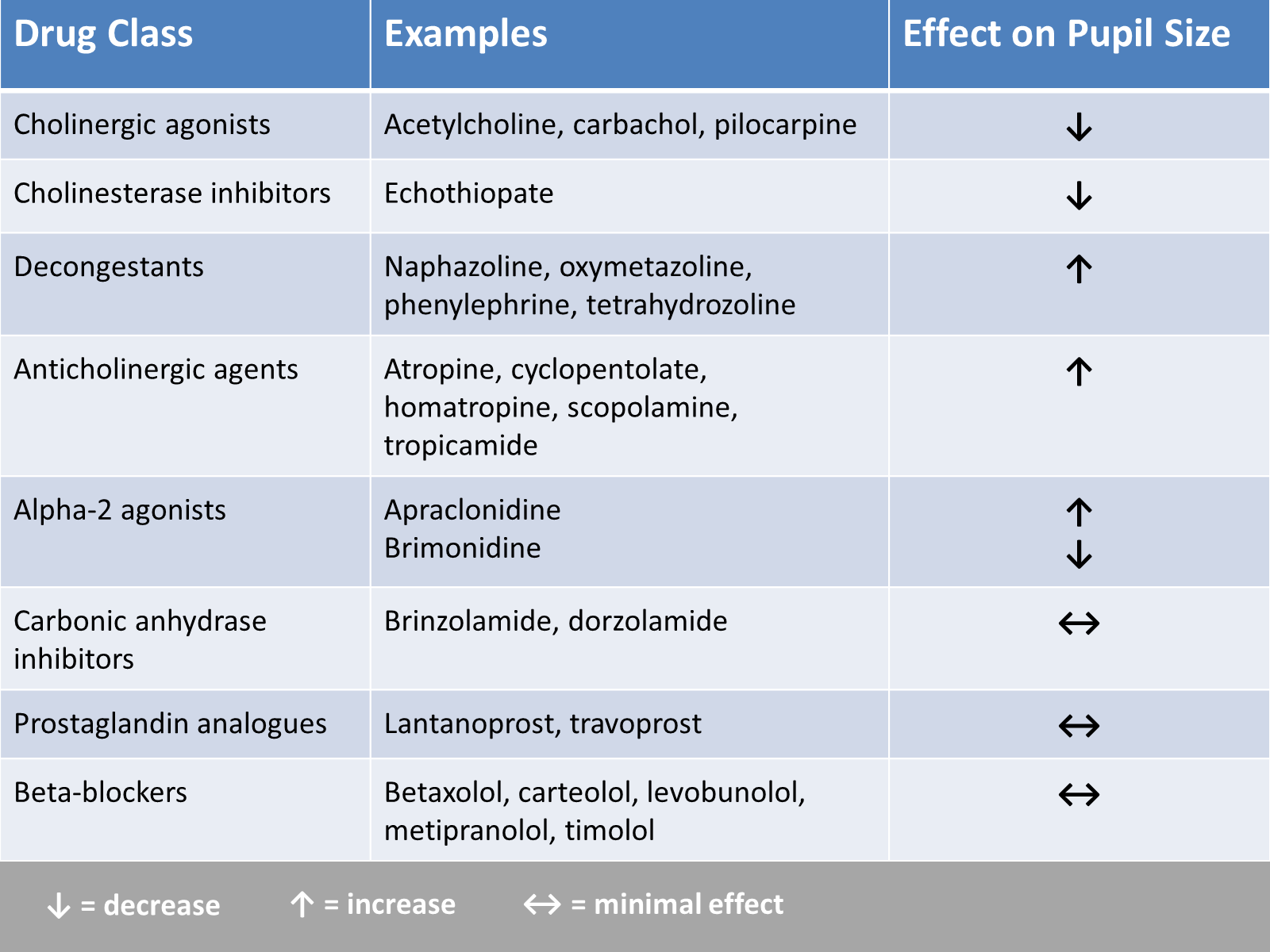
In the evaluation of ED patients, it may be important to understand the effect on pupil size from the ophthalmic medications they use. Here is a summary chart of common eye drops and their effect on pupil size.