University of Maryland School of Medicine logo
Emergency Medicine
All Departments
UMSOM Assistant

UMEM Educational Pearls

  • Home
  • Departments
  • Emergency Medicine
  • CME
  • UMEM Educational Pearls
  • CME
  • Courses and Conferences
  • Free Open Access Medical Education
  • UMEM Educational Pearls

61-80 of 217 results with category "Trauma"

Previous  |  1 |  2 |  3 |  4 |  5 |  6 |  7 |  8 |  9 |  ... |  11 |  Next

Title: BIG for kids

Category: Trauma

Keywords: Head injury, BIG, pediatric (PubMed Search)

Posted: 6/23/2025 by Robert Flint, MD (Updated: 8/19/2026)

Brain injury guidelines were designed to decrease transfers and neurosurgical consults for adults with head injuries. 
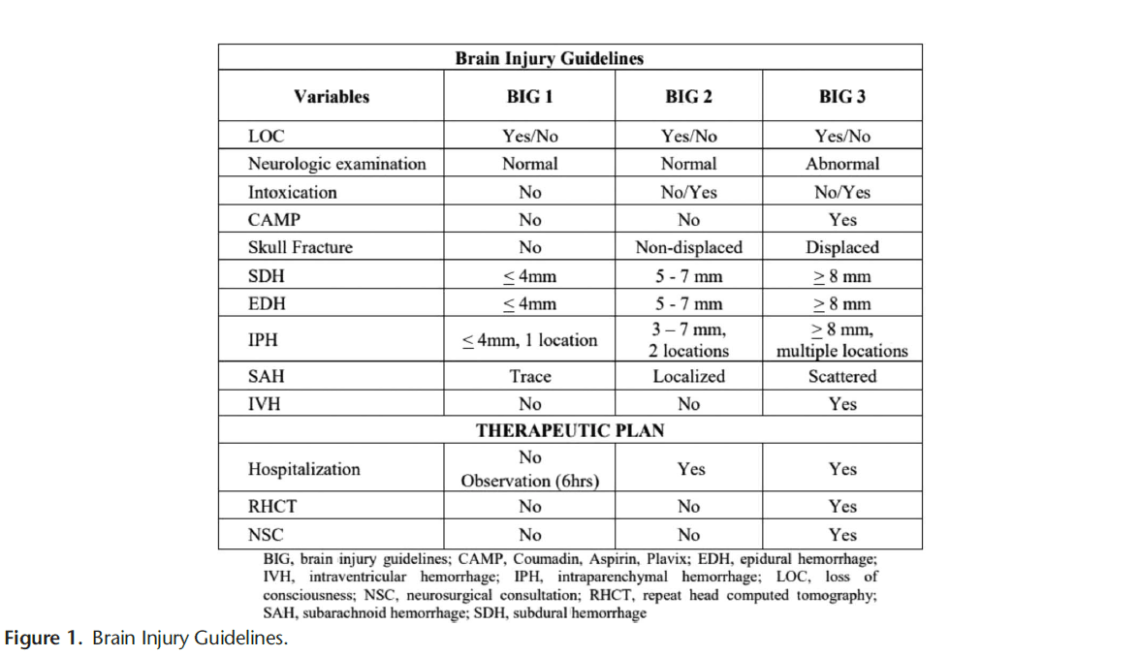
A new retrospective study suggests that modified  guidelines may be feasible in the pediatric population as well. More data is needed but this is an important step in assuring safe resource utilization in pediatric head injury patients.

Show References

1. https://first10em.com/the-brain-injury-guidelines-can-we-avoid-talking-to-neurosurgeons/

2. Kay AB, Glasgow SL, Kahan AM, Swendiman RA, Kastenberg ZJ, Roach CM, Wan HY, Bollo RJ, Iyer RR, Ravindra VM, Morris DS, Yorkgitis BK, Joseph B, Russell KW. Small Change, BIG Impact: Proposal of the Brain Injury Guidelines for kids (kBIG). J Pediatr Surg. 2025 May 17;60(8):162372.


Title: Mortality of ED vs. OR intubation for trauma patients.

Category: Trauma

Keywords: Intubation, trauma, mortality, operating room, Ed (PubMed Search)

Posted: 6/15/2025 by Robert Flint, MD (Updated: 8/19/2026)

In this Israeli study comparing mortality for trauma patients intubated in the emergency department vs the operating room, in hospital mortality was higher for the ED group before controlling for injury severity score and shock. After controlling for injury severity and shock, there was no difference in In hospital mortality. Coupled with previous research, if intubation can wait until after resuscitation and in the OR, that is ideal. And sometimes it just has to happen in the ED and we should be prepared for rapid resuscitation.

Show References

Talmy T, Radomislensky I, Brzezinski Sinai I, Shaylor R, Katorza E, Gendler S; Israel Trauma Group Collaborators. Intubation Setting and Mortality in Trauma Patients Undergoing Hemorrhage Control Surgery: A Propensity Score-Matched Analysis. Anesth Analg. 2025 May 16. doi: 10.1213/ANE.0000000000007542. Epub ahead of print. PMID: 40378073.


Title: How to: resuscitative hysterotomy

Category: Trauma

Keywords: Hysterotomy (PubMed Search)

Posted: 6/8/2025 by Robert Flint, MD (Updated: 8/19/2026)

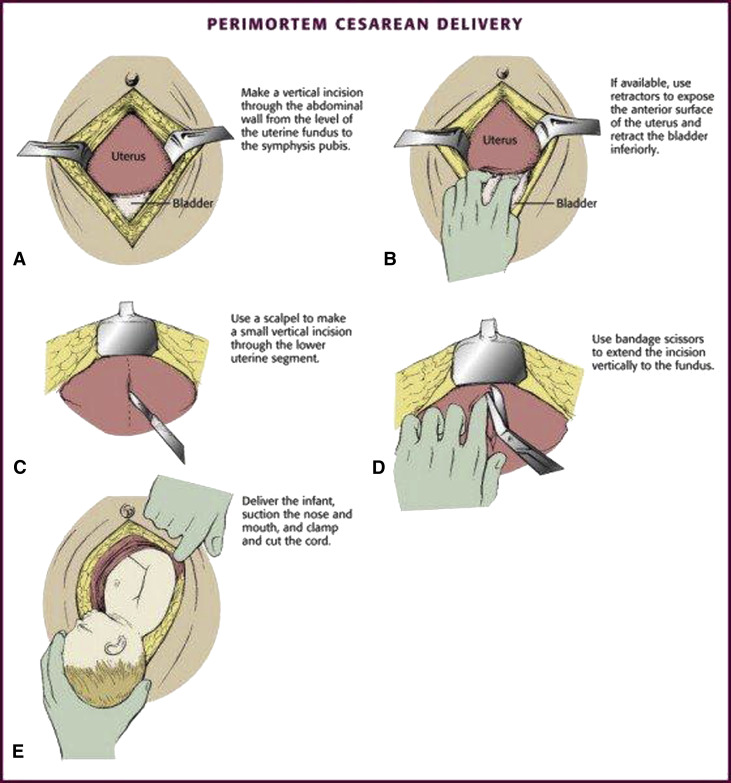
Another case series of 3 resuscitative hysterotomies, all performed by obstetricians, reported 33% maternal and 67% neonate survival.(1). 
The mechanics of the procedure are:

  • “Duration should not exceed 5 minutes!
  • Incise from pubic symphysis to at least umbilicus with a large scalpel along linea nigra into peritoneal cavity. Layers: skin, subcutaneous tissue, fascia between the rectus muscles, peritoneum.
  • Retract abdominal wall laterally
  • Reflect bladder inferiorly and empty by aspiration
  • Make a small incision (~5cm) vertically into the inferior presenting part of the uterus until amniotic fluid comes or through endometrium
  • Insert 2 fingers and lift up uterus from foetus
  • Extend uterine incision up to fundus with safety scissors curved away from foetus
  • Deliver the foetus. May need to disengage the presenting part from the pelvis.
  • Clamp the cord twice and cut between clamps
  • Give the neonate to the neonatal resuscitation team” (2)
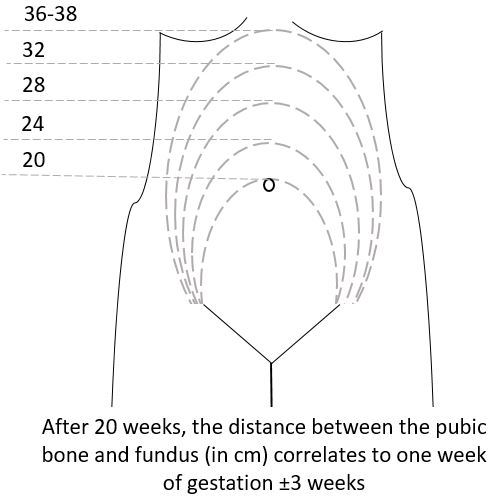
(3)

Show References

  1. Case Series of Resuscitative Hysterotomy in Pregnant Trauma Patients Performed in the Emergency Department of a Level One Major Trauma ServiceThomas A. G. Shanahan, Jason Gabriel-Anyassor, Stefan C. Kane, Kellie Gumm, David J. Read, Elyssia Bourke  Emergency Medicine AustralasiaVolume 37, Issue 3 e70078 First published: 03 June 2025 https://doi.org/10.1111/1742-6723.70078
  2. Perimortem Caesarean section Life in the Fast Lane. Matthew Quo and Chris Nickson May 23, 2024 https://litfl.com/perimortem-caesarean-section/
  3. Trauma in Pregnancy Posted on March 20, 2023 by Julissa De La Cruz https://sinaiem.org/foam/trauma-in-pregnancy/


Title: Out of hospital cardiac arrest and resuscitative hysterotomy

Category: Trauma

Posted: 6/7/2025 by Robert Flint, MD (Updated: 8/19/2026)

A literature search revealed very little evidence, however in 66 women and 68 neonates who underwent resuscitative hysterotomy for out of hospital cardiac arrest 4.5% of women and 45% of neonates survived to discharge. The longest down time was 29 minutes and 47 minutes for women and neonates respectively. While more evidence is needed, it appears this procedure should be performed as early as possible and may lead to some survival benefit.

Show References

Leech C, Nutbeam T, Chu J, Knight M, Hinshaw K, Appleyard TL, Cowan S, Couper K, Yeung J. Maternal and neonatal outcomes following resuscitative hysterotomy for out of hospital cardiac arrest: A systematic review. Resuscitation. 2025 Feb;207:110479. doi: 10.1016/j.resuscitation.2024.110479. Epub 2024 Dec 29. PMID: 39736393.


Title: Prehospital femur fracture management.

Category: Trauma

Keywords: Femur fracture, splint (PubMed Search)

Posted: 6/6/2025 by Robert Flint, MD (Updated: 8/19/2026)

The National Association of Emergency Medical Service Physicians reminds us that femur fractures rarely cause enough blood loss to cause hemodynamic instability (look for other sources),  often have concomitant injuries in the pelvis or distal extremity, and can be effectively  splinted either static or with traction (which has contraindications, complications, and technical hurdles).

Show References

John W. Lyng, Joshua G. Corsa, Philip S. Nawrocki, Brad D. Raetzke, Josh

Nackenson & Nichole Bosson (07 May 2025): Prehospital Trauma Compendium: Management

of Suspected Femoral Shaft Fractures – A position statement and resource document of

NAEMSP, Prehospital Emergency Care, DOI: 10.1080/10903127.2025.2493846

To link to this article: https://doi.org/10.1080/10903127.2025.2493846


Title: Nail gun injuries: surgery and antibiotics?

Category: Trauma

Keywords: Nail gun injury, surgery, antibiotics (PubMed Search)

Posted: 6/1/2025 by Robert Flint, MD (Updated: 6/1/2025)

An Australian retrospective study of 158 patients treated for nail gun injuries found those treated with operative debridement or with prophylactic antibiotics had no different 30 day infection rates compared to patients receiving no antibiotics.

Show References

Slater S, Vasudeva M, Mitra B, Sreedharan S. Penetrating nail gun injuries: Role of antibiotics and surgical management. Trauma. 2025;0(0). doi:10.1177/14604086251320524


Title: Do whole body Ct scans lead to better outcomes in geriatric trauma?

Category: Trauma

Keywords: geriatric, trauma, CT scan (PubMed Search)

Posted: 5/29/2025 by Robert Flint, MD (Updated: 8/19/2026)

This literature search from 1946-2023 looking at comparing selective use of CT scans vs whole body scans in geriatric trauma found no benefit of whole body CT in mortality, hospital length of stay or ED discharge. This study only included 15,000 pts over that very long time line. More robust, current work needs to be done on this important topic.

Show References

Tang P, Elkington O, Stevens S. Whole body CT-scan vs. selective CT-scan in geriatric trauma: Systematic review and meta-analysis. Trauma. 2025;0(0). doi:10.1177/14604086241304629


Title: Incarcerated Trauma Patients

Category: Trauma

Keywords: Incarcerated, trauma, mortality, disparity (PubMed Search)

Posted: 5/11/2025 by Robert Flint, MD (Updated: 8/19/2026)

Looking at a year’s worth of data from the National Trauma Databank, the authors found incarcerated trauma patients were more likely to be stabbed, male, persons of color and have a higher adjusted mortality rate. 
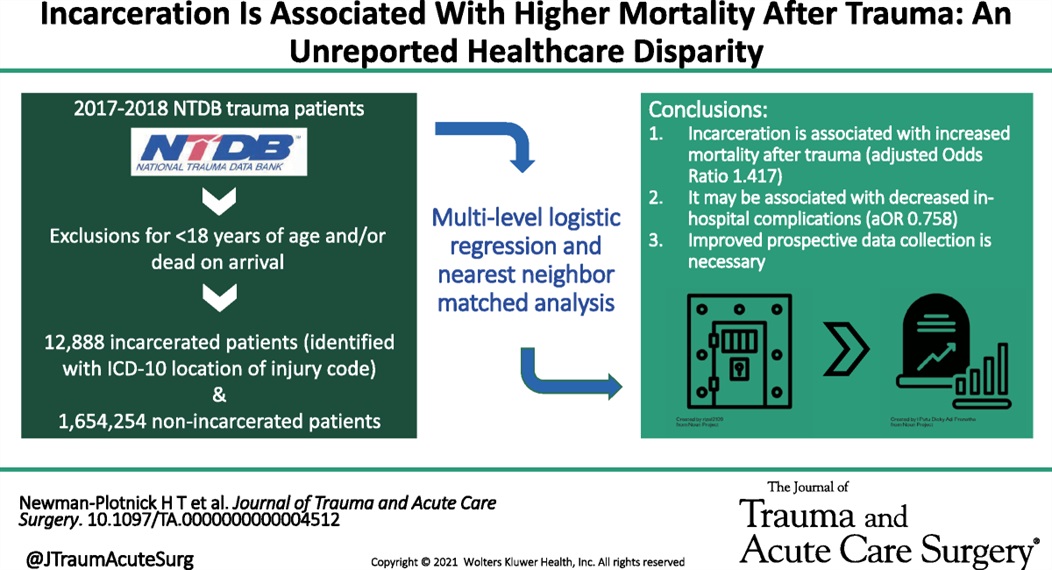
 

Show References

Incarceration is associated with higher mortality after trauma: An unreported health care disparity

Newman-Plotnick, Harry MD, MPH; Byrne, James P. MD, PhD; Haut, Elliott Richard MD, PhD, FACS; Hultman, Charles Scott MD, MBA, FACS

Journal of Trauma and Acute Care Surgery 98(5):p 785-793, May 2025. | DOI: 10.1097/TA.0000000000004512


Title: Exposure to gun violence is associated with mental health problems

Category: Trauma

Keywords: Gun violence, mental health, suicide (PubMed Search)

Posted: 4/28/2025 by Robert Flint, MD (Updated: 8/19/2026)

This study looked at exposure to gun violence and found increased use of mental health resources, depression and suicide risk even with a single exposure. Repetitive exposure increased suicide risk as well as mental health service utilization, depression and overall health service utilization. While further work is needed, screening our patients for gun violence exposure could undercover mental health needs.

Show References

Daniel C. Semenza, Allison E. Bond, Devon Ziminski, Michael D. Anestis,
Frequency, recency, and variety of gun violence exposure: Implications for mental health and suicide among US adults,
Social Science & Medicine,
Volume 366,
2025,
117672,
ISSN 0277-9536,
https://doi.org/10.1016/j.socscimed.2025.117672.
(https://www.sciencedirect.com/science/article/pii/S0277953625000012


Title: Rural trauma care

Category: Trauma

Keywords: Rural trauma care (PubMed Search)

Posted: 4/20/2025 by Robert Flint, MD (Updated: 4/20/2025)

This study looking at the type of facility that cared for rural injured patients reminds us that the majority of trauma care for rural patients occurs in non-trauma centers.  This included some of the most severely injured and for many definitive care was received at these centers. 
This may lead to lack of inclusion in trauma registries and under valuing the care being delivered by non-trauma centers. Protocols to facilitate transfers, air medical protocols and availability along with tele-health all are important in rural trauma care. Non-trauma designated centers are a critical part of the trauma network for rural residents and their value can not be ignored.

Show References

The Contribution of Rural Non-trauma Hospitals to Trauma Care

Kaufman, Elinore J. MD, MSHP*; Prentice, Carter MD†; Williams, Devin BA‡; Song, Jamie MPH§; Haddad, Diane N. MD, MPH§; Brown, Joshua B. MD, MSc?; Chen, Xinwei MS¶; Colling, Kristin MD#; Chatterjee, Paula MD, MPH¶

Author Information

Annals of Surgery 281(4):p 533-539, April 2025. | DOI: 10.1097/SLA.0000000000006540


Title: Peri-traumatic mental health symptoms are associated with poor financial and health conditions post trauma

Category: Trauma

Keywords: Mental health, trauma, intervention, blunt injury (PubMed Search)

Posted: 4/13/2025 by Robert Flint, MD

This study looked at pre-trauma mental health diagnosis (from medical records) and post-trauma mental health symptoms as assessed by survey. The majority of patients suffered blunt trauma and mean age was 67. Having pre/traumatic mental health diagnosis and particularly post-traumatic symptoms lead to worse health outcomes and financial conditions.  Further work needs to be done to assess how to improve mental health symptoms post-traumatic injury.

Show References

Association of pre- and postinjury mental health with long-term clinical and financial outcomes

Johnson, Patrick L. MD, MPH; Hemmila, Mark R. MD; Mullens, Cody L. MD, MPH; Oliphant, Bryant W. MD, MBA, MSc; Monahan, Janessa R. MS; Kelm, Julia D. BS; Jakubus, Jill L. PA-C, MHSA, MS; Curtiss, William J. MD; Mosher, Benjamin D. MD; Kieninger, Alicia N. MD; Scott, John W. MD, MPH

Author Information

Journal of Trauma and Acute Care Surgery 98(3):p 425-434, March 2025. | DOI: 10.1097/TA.0000000000004521


Title: Using ASA score to predict outcomes in moderate/severe head injury patients.

Category: Trauma

Keywords: ASA score, trauma, head injury, prognostication (PubMed Search)

Posted: 3/29/2025 by Robert Flint, MD

The American Society of Anesthesia score was an independent predictor of 90-day mortality as
well as low functional status at one year in 720 patients presenting to a single center with
moderate to severe brain injury. When used in conjunction with other prognosticating tools such
as the Trauma and Injury Severity Score, it increased the prognostic value of these scales.

ASA Score – Department of Radiology

Show References

1. Kiwanuka, O., Lassarén, P., Fletcher-Sandersjöö, A. et al. ASA score is an independent
predictor of 1-year outcome after moderate-to-severe traumatic brain injury. Scand J Trauma
Resusc Emerg Med 33, 25 (2025). https://doi.org/10.1186/s13049-025-01338-x

2.Statement on ?ASA Physical Status Classification System.   

https://www.asahq.org/standards-and-practice-parameters/statement-on-asa-physical-status-classification-system


Title: Multimodal pain control in rib fractures

Category: Trauma

Keywords: Trauma, rib fracture, multimodal (PubMed Search)

Posted: 3/23/2025 by Robert Flint, MD (Updated: 8/19/2026)

Controlling pain from rib fractures impacts morbidity and mortality. Over the past decade there has been a focus on decreasing opiate use and approaching this painful condition in a multimodal way. “The multimodal approach utilizes a combination of delivery methods including oral, parenteral, and regional single-shot or catheter-based techniques. Oral medications include opioids, non-steroidal anti-inflammatory drugs (NSAIDs), acetaminophen, skeletal muscle relaxants, alpha-2 agonists, mood stabilizers, and neuropathic pain medications. Parenteral medications encompass most of the oral options in addition to ketamine and lidocaine. Regional anesthesia includes epidural analgesia (EA), paravertebral blocks, intercostal blocks, and myofascial plane blocks.”

This study is a single center in Canada looking at medication used for patients admitted over 10 years with rib fractures along with demographics, injury severity and outcomes. The authors concluded:

“Although multimodal pain management strategies have improved over time, a large proportion of patients, even among those with flail chest, still do not receive multimodal pain management. Elderly patients, at highest risk of adverse outcomes, were less likely to receive multimodal pain management strategies and should be the target of performance improvement initiatives.”

Show References

Naveed A, Adams-McGavin RC, Ladha K, et al. A 10-year review of pain management practices for rib fractures at a lead trauma hospital: Are we adopting all multimodal pain management strategies? Trauma. 2025;27(1):18-23. doi:10.1177/14604086231198764


Title: Another benefit of whole blood vs component therapy transfusions in critically ill trauma patients.

Category: Trauma

Keywords: Whole blood, trauma (PubMed Search)

Posted: 3/22/2025 by Robert Flint, MD (Updated: 8/19/2026)

Achieving faster homeostasis in trauma patients leads to lower mortality, less coagulopathy, and lower total blood volume transfusion requirements. This study looked at time to achieving homeostasis as defined by transfusion requirements as well as laboratory measurements in critically ill trauma patients who either received whole blood or component therapy transfusion as part of their resuscitation.  Those receiving whole blood achieved statistically significant faster homeostasis.

Show References

Chipman, Amanda M. MD; Luther, James F. MA; Guyette, Francis X. MD, MPH; Cotton, Bryan A. MD; Cannon, Jeremy W. MD; Schreiber, Martin A. MD; Moore, Ernest E. MD; Namias, Nicholas MD, MBA; Minei, Joseph P. MD; Yazer, Mark H. MD; Vincent, Laura MS, RN; Cotton, Abigail L. BS, MPH; Agarwal, Vikas MD; Brown, Joshua B. MD, MSc; Leeper, Christine M. MD; Neal, Matthew D. MD; Forsythe, Raquel M. MD; Wisniewski, Stephen R. PhD; Sperry, Jason L. MD, MPH;  the SWAT Study Group. Early achievement of hemostasis defined by transfusion velocity: A possible mechanism for whole blood survival benefit. Journal of Trauma and Acute Care Surgery 98(3):p 393-401, March 2025. | DOI: 10.1097/TA.0000000000004507


Title: Kidney injury grading scale

Category: Trauma

Keywords: kidney trauma, grading, (PubMed Search)

Posted: 3/16/2025 by Robert Flint, MD (Updated: 8/19/2026)

Unless a patient is unstable, renal injuries are managed non-operatively or endovascularly. Here is the
2025 Kidney Injury Grading Scale from AAST.
 

AAST          AIS

Grade   Severity                                            Imaging Criteria
I                    2                                         –Subcapsular hematoma <3.5 cm without active bleeding

                                                                 – Parenchymal contusion without laceration
 

II                   2                                        – Parenchymal laceration length <2.5 cm
                                                                 – HRD <3.5 cm without active bleeding
 

III                  3                                          – Parenchymal laceration length ?2.5 cm
                                                                  – HRD ?3.5 cm without active bleeding
                                                                  – Partial kidney infarction
                                                                  – Vascular injuries without active bleeding
                                                                  – Laceration extending into urinary collecting system and/or urinary extravasation

IV                  4                                             – Active bleeding from kidney
                                                                    – Pararenal extension of hematoma
                                                                    – Complete/near-complete kidney infarction without active bleeding
                                                                    – MFK without active bleeding
                                                                     – Complete/near-complete ureteropelvic junction disruption

V                    5                                           – Main renal artery or vein laceration or transection with active bleeding
                                                                    – Complete/near-complete kidney infarction with active bleeding
                                                                   – MFK with active bleeding

Show References

Keihani, Sorena MD, MSCI; Tominaga, Gail T. MD; Matta, Rano MD; Gross, Joel A. MD; Cribari, Chris
MD; Kaups, Krista L. MD, MSc; Crandall, Marie MD, MPH, FACS; Kozar, Rosemary A. MD; Werner,
Nicole L. MD, MS; Zarzaur, Ben L. MD; Coburn, Michael MD, FACS; Myers, Jeremy B. MD, FACS. Kidney
organ injury scaling: 2025 update. Journal of Trauma and Acute Care Surgery 98(3):p 448-451, March
2025. | DOI: 10.1097/TA.0000000000004509


Title: Sarcopenia as a marker of frailty in trauma patients?

Category: Trauma

Keywords: Sarcopenia, trauma, ct scan (PubMed Search)

Posted: 3/9/2025 by Robert Flint, MD (Updated: 8/19/2026)

Having a readily measurable variable to identify frailty on admission for critically injured patients would help prognosticate morbidity, mortality, and discharge destination. Sarcopenia has been used to prognosticate length of stay, discharge destination, and physical function recovery in oncology and general surgery patients. Sarcopenia is defined as “age-related progressive loss of muscle mass and strength. The main symptom of the condition is muscle weakness. Sarcopenia is a type of muscle atrophy primarily caused by the natural aging process. Scientists believe being physically inactive and eating an unhealthy diet can contribute to the disease.” 1. This study looked at admission CT scan psoas muscle sarcopenia in 197 critically injured patients. The authors concluded:

“For trauma critical care patients, sarcopenia on admission CT was associated with dependent discharge destination and therefore is unfavourable. Defining sarcopenia early in a trauma patient’s critical care admission may help to identify those at risk of poor outcomes.” 2

Show References

1. Sarcopenia (Muscle Loss): Symptoms & Causes

2. Badminton R, Christie R, Brohi K, Cole E. Pre-injury sarcopenia and the association with discharge destination in critical care trauma patients. Trauma. 2025;27(1):57-64. doi:10.1177/14604086231214878


Title: Trauma outcome differences between males and females

Category: Trauma

Keywords: Male. Female, outcome, trauma (PubMed Search)

Posted: 3/6/2025 by Robert Flint, MD (Updated: 8/19/2026)

The Pan-Asia Trauma Outcomes Study database was reviewed for differences in in-hospital mortality and functional capacity at discharge between male and female trauma patients. There were 76,000 trauma patients from 12 Asian countries in this study. The authors concluded: “This study indicates no difference in the general trauma outcomes in the Asia Pacific between females and males. Although younger females with less severe injuries had better functional outcomes, this advantage disappeared in severe injuries and those over 50 years.” There were several differences in mechanism of injury and age of presentation. “With females more frequently represented in the ??50 age group (60.13%) compared to males (44.87%) (p?<?0.001). Trauma type also varied between sexes; 95.51% of females experienced blunt trauma compared to 93.65% of males (p?<?0.001). Anatomically, males predominantly sustained injuries to the head, face, thorax, abdomen, and upper extremities, whereas females more frequently suffered injuries to the lower extremities and spine (p?<?0.001).” This is similar toEuropean and North American data

Show References

Bin Kunji Mohamad, M., Jamaluddin, S.F., Ahmad, N. et al. Trauma outcomes differences in females: a prospective analysis of 76 000 trauma patients in the Asia-Pacific region and the contributing factors. Scand J Trauma Resusc Emerg Med 33, 34 (2025). https://doi.org/10.1186/s13049-025-01342-1


Title: ALS vs BLS level of care and trauma outcomes

Category: Trauma

Keywords: EMS, AlS, trauma, Bls, outcome (PubMed Search)

Posted: 3/5/2025 by Robert Flint, MD (Updated: 8/19/2026)

Large retrospective propensity matching study looking at mortality in trauma patients based on ALS vs.  BLS transport crew found lower mortality in those attended by ALS crews. The matching was “based on patient age, sex, year, ICD-10-CM based injury severity score, mechanism of injury, AIS based body region of injury, EMS characteristics including time with patient and prehospital interventions performed, prehospital vital signs, and trauma center designation.”
This is different than other studies which showed limited difference. other studies have shown improved survival with police “scooping and running” with penetrating trauma patients. 


Show References

Harrison, Julia MD; Bhardwaj, Akshay MS; Houck, Olivia MPH; Sather, Kristiana MD; Sekiya, Ayako MPH; Knack, Sarah MD; Saarunya Clarke, Geetha PhD; Puskarich, Michael A. MD, MSCR; Tignanelli, Chris MD, MSc; Rogers, Lisa MPH; Marmor, Schelomo PhD; Beilman, Greg MD. Emergency medical services level of training is associated with mortality in trauma patients: A combined prehospital and in hospital database analysis. Journal of Trauma and Acute Care Surgery 98(3):p 402-409, March 2025. | DOI: 10.1097/TA.0000000000004540


Title: Geriatric Trauma: Rib and Pelvic Fracture Pain Management

Category: Trauma

Keywords: Trauma, geriatric, fall, pain management, fracture, rib, pelvis (PubMed Search)

Posted: 3/2/2025 by Robert Flint, MD (Updated: 3/2/2025)

Rib and pelvic fractures are common findings in geriatric trauma patients, even in low impact trauma such as falls from standing. Pain management is vital for improving morbidity and mortality. The IFEM White Paper suggests:

“Use multimodal pain management strategies, including regional anesthesia and non-opioid analgesics, to control pain without compromising recovery.
Monitor closely for complications such as pneumonia or hemodynamic instability, intervening promptly to mitigate risks.
Collaborate with physiotherapists to implement early mobility programs, reducing the risk of deconditioning and promoting recovery.”

A multidisciplinary team proficient in geriatric trauma care leads to better outcomes. This may require transfer to a trauma center.

Show References

Trauma in Older Adults: Evidence-Based Guidelines for Optimized Care White Paper
 Trauma Special Interest Group and Geriatric Emergency Medicine Special Interest Group
https://assets.nationbuilder.com/ifem/pages/1768/attachments/original/1740084007/IFEM_Trauma_in_Older_Adults_Evidence-Based_Guidelines_for_Optimized_Care_White_Paper_December_2024.pdf?1740084007
Published: December 2024


Title: Geriatric Trauma: Frailty

Category: Trauma

Keywords: Trauma, geriatrics, frailty (PubMed Search)

Posted: 3/1/2025 by Robert Flint, MD (Updated: 8/19/2026)

This white paper reminds us that age is just a number; frailty is a better predictor of morbidity and mortality after trauma. 
“Frailty, characterized by reduced physiological reserve and increased vulnerability to stressors, is a significant factor influencing recovery from trauma. Individuals with frailty may experience slower healing, higher rates of complications, and longer hospital stays. Tools such as the Clinical Frailty Scale (CFS) and the Trauma-Specific Frailty Index (TSFI) have been developed to assess frailty systematically, enabling clinicians to predict outcomes and guide treatment decisions.”

Show References

Trauma in Older Adults: Evidence-Based Guidelines for Optimized Care White Paper
 Trauma Special Interest Group and Geriatric Emergency Medicine Special Interest Group
https://assets.nationbuilder.com/ifem/pages/1768/attachments/original/1740084007/IFEM_Trauma_in_Older_Adults_Evidence-Based_Guidelines_for_Optimized_Care_White_Paper_December_2024.pdf?1740084007
Published: December 2024


Previous  |  1 |  2 |  3 |  4 |  5 |  6 |  7 |  8 |  9 |  ... |  11 |  Next
University of Maryland School of Medicine logo
  • Departments
  • Programs
  • Research Centers
  • Institutes
  • Graduate Education
  • CIBR Cores
  • Offices of the Dean
    • University of Maryland, Baltimore
    • University of Maryland Medical Center
    • Medical Alumni Association of the University of Maryland
    • Health Sciences and Human Services Library
University of Maryland School of Medicine
655 W. Baltimore Street
Baltimore, MD 21201
Contact Us

© University of Maryland School of Medicine

    • Webmaster
    • Web Accessibility
    • Site Index
    • UMB Hotline
    • Employment
    • Map