
Search
Subscribe to daily UMEM Pearls (FREE!) via:
1-20 of 84 results with category "Administration"
The emergency department may be the only point of access to the health care system for migrants. As emergency physicians, we face the challenge of balancing our ethical obligations to our patients with our responsibilities to employers, the government, and/or law enforcement. In consideration of the mandate of EMTALA and this complex role within an evolving political landscape, this publication offers four principles to guide best practices when caring for migration-affected patients in the ED.
Click the link to review these four principles which focus on ensuring equitable care for all migration-affected patients.
Show Additional Information
Show References
This small qualitative study demonstrated that representation and hearing from other URiM residents is an important factor in recruitment during EM residency application.
Show Additional Information
What is diagnostic excellence in the Emergency Department?
Based on a modified Delphi panel of 11 experts, these authors developed this definition:
“[T]he use of optimal, evidence-based practice to attain an accurate and timely explanation about a patient’s condition based on the information available at the time and communicate that explanation to the patient/family. Diagnostic excellence is patient-centered and equitable. Diagnostic excellence includes avoidance of divergent practices. It leads to better choices in management, prevents missed opportunities, and reduces the risk of preventable patient harm.”
Click below to find the definition of missed diagnostic opportunity. Go to the article https://www.annemergmed.com/article/S0196-0644(26)00247-7/fulltext to read more about the work.
Show Additional Information
Show References
…Which we knew already, but in case you need help convincing your patients, this meta-analysis came out just a few months ago and looked at 43 different studies in a systematic review (17 in a meta-analysis) totaling >300000 patients evaluated and showed that there is NO association between acetaminophen/paracetamol in pregnancy and autism/ADHD/intellectual disabilities.
Show References
This single center study at an academic center compared pre and post provider in triage implementation radiology ordering rate. They found higher CT utilization and lower positive CT findings in the post implementation period. Further work is needed, however is provider in triage good medicine or good for metric numbers?
Show References
This single center study asked patients about barriers to health carrier after ED discharge (example transportation, lack of PCP, inability afford medications, trouble with ADLs) and then surveyed EM residents about those same patients' barriers. Resident physicians way under perceived barriers to care in their patients. ("20.4% of patients reported they had no primary care physician (PCP) and 9.8% of residents reported their patient had no PCP . Limited health literacy was identified in 59.0% of patients and reported by 37.6% of residents . Abnormal cognition was present in 53.6% of adults age ??65 and reported by 16.7% of residents .")
Another example of if you do not ask, you will not know. Be careful of assumptions.
Show References
The common teaching that “the key to diagnosis is in the HPI” holds true for many of the patients we care for in the ED.
But, what if ChatGPT was tasked with obtaining the initial HPI rather than the provider? How accurate/reliable can a ChatGPT-driven history prove to the physician, or seem to the patient?
Researchers in the field of AI applications are beginning to tackle these questions as emergency departments pilot AI-driven history platforms to leverage time spent in the waiting room with a goal of improving efficiency and provider workload. What do you think?
Click the link to see a summary of some interesting findings in this pilot study conducted in a large urban pediatric ED waiting room.
Show Additional Information
Show References
This study looked at rate of administration and time difference between male and female patients presenting with cardiac chest pain receiving morphine.
While initially they found no difference, several confounders painted a different picture:
significant differences in door-to-doc times, higher vs lower triage level and decision to admit all had women at a disadvantage and after adjusting for those, also found a gender based difference , with men receiving morphine more frequently.
Another example of unconscious bias and gender bias we should all be more mindful of
Show Additional Information
The first step toward developing a healthy ED is to develop a vision of the way emergency medicine should be practiced. The second is to analyze the way it is practiced within a physician group or department. The third is to generate a plan for transitioning from the way it is to the way it ought to be.
A robust department begins with principled physician and nursing leadership.
- Laura Pimentel, The Healthy Emergency Department, in Croskerry P, Cosby KS, Schenkel SM, Wears RL (editors), Patient Safety in Emergency Medicine, Wolters Kluwer, Philadelphia, PA, 2009; 41-44.
A mentor, a colleague, a leader, and a friend, Dr. Laura Pimentel died on June 23, 2026. She led the Emergency Departments at Bon Secours (1993-94), Mercy Medical Center (1995-2007), and Upper Chesapeake Medical Center (2007-08). She was Vice President and then CEO of the Maryland Emergency Medicine Network and, from 2011-2013, President of Maryland ACEP. She will be greatly missed. Her legacy of caring and clarity live on.
This study found that of all 283 EM residencies in the US, only 4% listed pronouns on resident webpages, 3% had LGBT+ dedicated sections of their website, and only 31% had DEI sections of the website at all.
In the post COVID era of residency interviews, the programs' websites become a vital source of information for the applicants. There is still a large gap in the visibility of the LGBTQIA+ population in the majority of program websites.
Show Additional Information
This single center prospective study asked residents to determine if their patient had barriers to post ED discharge health care such as having a PCP, transportation issues, affording medications, and need for assistance with activities of daily living. They then compared the physicians’ answers to patient’s answers and found: “Physicians had poor sensitivity for accurate identification of patient barriers.”
Some of our discharged patients are struggling more than we realize.
Show References
A recently published commentary highlights the importance of looking beyond the numbers and remembering the core mission of emergency practice. It warns against “gaming” the system to create processes that give better metrics using the example of rates of patients who leave without being seen (LWBS). In the author’s words, efforts aimed at improving this metric create strategies that “raise concerns about distributive justice, beneficence, and professional integrity.” See link for key take home points.
Show Additional Information
Show References
This is a small qualitative study that focused on barriers to care and how to overcome them when dealing with patients with dementia, who are primarily Spanish speaking. The authors found to big themes that patients and caretakers thought would improve their care:
1- use of a certified translator, either telephonically or in person, eased social dynamics in communication
2- those same translators tended to only be used in an episodic manner- during HPI, exlaining results or discharge planning. But the patients and caretakers would prefer to have access to them in the “in between” periods so that it would be a more patient centered experience
Show Additional Information
Ambient Artificial Intelligence based scribes that create visit notes based on the conversation in the room during patient evaluation may save documentation time and reduce total time in the health record but may not perform as well as human scribes in some circumstances, at least for pediatric patient charts.
Show Additional Information
Show References
Multiple past studies have shown that Black and female patients tend to be prescribed fewer opioids than White and male patients. This study looked at the rates of opioid usage post RSI.
They found that while Black patients received opioids at a higher rate, they were given lower doses than white patients. Older patients were less likely to receive opioids post RSI than younger patients. They did not find a difference in rates of opioid usage between genders, but female patients received lower doses of opioids overall.
Show Additional Information
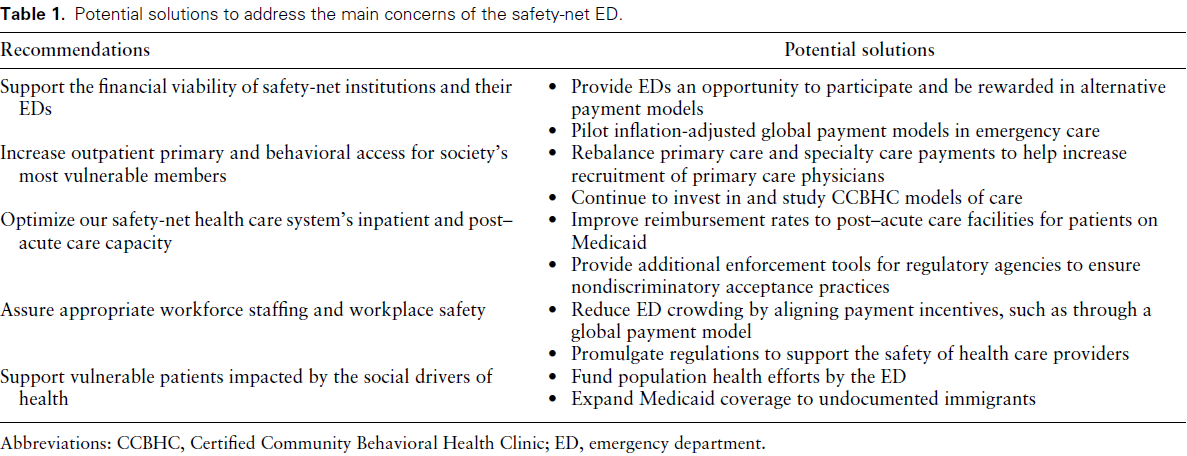
Bottom Line: Safety-net hospitals are those that see a substantial share of uninsured, Medicaid, or low-income Medicare patients. Their emergency departments (EDs) deliver disproportionally more undercompensated and uncompensated care, yet have similar operating costs as other EDs. Authors convened a group of 15 administrators of academic safety net EDs to identify and
develop a consensus understanding of barriers to delivering optimal care. See the link for details of their conclusions.
Show Additional Information
Show References
Educational Pearls for the ED:
Many Muslim patients with diabetes will fast despite medical advice. Studies show a significant number continue fasting even when they are considered high risk.
Key medical risks during Ramadan fasting include:
- Hypoglycemia
- Hyperglycemia and diabetic ketoacidosis
- Dehydration
- Medication nonadherence or altered dosing schedules
Show Additional Information
Show References
BOTTOM LINE: ED Boarding is now publicly reported in one state (Connecticut). Public reporting of boarding data may encourage new approaches to remedy the problem.
Show Additional Information
Bottom line: Good news! In 2022 and 2023, at ACEP, SAEM and AAEM, invited speakers were evenly split 50/50 women and men (with a small percentage nonbinary) showing no significant gender bias toward speaker invitation.
Show References
How well does your ED care team communicate? For some high yield strategies and reasons for improvement, read on…
To explore effective and ineffective communication in the ED and its impact of patient care, physician and nurses from several academic EDs completed an online anonymous survey, then attended focus group sessions. Responses highlighted the following themes:
1: Situations, built physical environment, and medium of communications all impact quality of communication.
- Face-to-face communication was most appreciated
- Common work areas facilitate communication
- Electronic communications had highest risk of misinterpretation and being ignored/missed
2: Core elements of desired professional communication include respect, closed-loop communication, and attention, often conveyed through non-verbal behaviors.
- Making eye contact
- Turning toward a speaker
- Nodding at appropriate moments
- Acknowledging active listening
3: Poor communication begets poor communication in later interactions
- ENs may hesitate to share important information if there has been a prior negative interaction with that EP
4: Effective communication is seen as fundamental to patient care but also has impacts beyond patient care
- Creates a shared understanding of the patient’s clinical status and care plan
- Guides clinical actions
- Affects the team’s ability to communicate with patients and families
- Has spillover effects, impacting care beyond any single case, as it affects the “feeling” of the entire department
5: Clinician gender and gender dyads influence communication dynamics, age and experience dyads did not.
- Greatest communication conflict (noted by both disciplines) involved communication in female/female physician/nurse dyads
Do any of these themes resonate with you? What can you do within your department to improve physician-nurse communication and the care you provide?