Search
Subscribe to daily UMEM Pearls (FREE!) via:
261-280 of 335 results by Robert Flint
This commentary offers another reminder that there is significant bias in which trauma patients receive alcohol testing when that decision is made on a case by case basis. Age, sex, socioeconomic, race, injury pattern, all have been shown to influence provider ordering. Trauma systems should have pre-defined ordering criteria to eliminate this bias. The importance of gathering this testing information is to provide intervention and treatment to those in need. First we have to identify all patients in need.
Show References
Here are three good resources to learn about a soft tissue injury seen in high velocity blunt trauma patients called Morel-Lavallee lessions.
“Morel Lavallee lesions are soft tissue injuries seen in high-velocity trauma and are usually associated with underlying fractures of the pelvis, acetabulum, or proximal femur. Often these injuries are not immediately diagnosed due to the distracting concomitant bony injuries. However, identification of such injuries is important as they may pose as an independent risk factor for surgical site infection. The clinical findings include soft tissue swelling, bruise/ ecchymosis, fluctuance, and compressibility in the swelling. The diagnosis is usually established on physical examination, however, radiological investigations including ultrasonography and CT might help. The management options include nonoperative treatment, percutaneous aspiration, and open debridement.” 1
“Morel-Lavallée lesions are often the result of skin and subcutaneous tissue quickly tearing away from the underlying fascia. This allows a range of fluids to fill the space in the form of hemolymphatic masses. The two most common sites are the prepatellar plate of the knee and the lateral fascia of the hip.” 2
“ML lesion is often undiagnosed during initial presentation of a trauma patient, and emergency physicians and trauma surgeons should be aware of the possibility of occurrence of this injury. MRI is the imaging modality of choice, and the presence or absence of a capsule is an important imaging finding that guides appropriate therapy. Early diagnosis and management will help prevent long-term morbidity and complications in these patients.”3
Show References
A retrospective study of 2 years of data from 24 trauma centers looking at end tidal CO2 as a predictor of mortality in trauma patients found:
"A total of 1,324 patients were enrolled. ETCO2 was better in predicting mortality than shock index (SI) and systolic blood pressure (SBP). Prehospital lowest ETCO2 , SBP , and SI were all predictive of Mass Transfusion."
Another data point to consider when setting up trauma triage protocols and looking for patients who will require intensive interventions early.
Show References
A chart review of 1300 patients over age 65 admitted to the trauma service, arrived as a trauma activation, or had an injury severity score over 12 over a 6 year period looking at 30 day mortality found:
"five factors associated with increased 30-day mortality in older trauma patients: GCS < 15, ISS > 15, age ≥ 85 years, anticoagulation, and multimorbidity."
Fall from standing was the leading cause of trauma
Again, fragility is the index we should be using, not age alone. This study is limited in its retrospective chart review nature. Prospective research in the area of geriatric trauma is needed. Until then, assess those over age 65 for risk factors associated with fragility and treat accordingly.
Show References
This retrospective study looked at trauma patients over age 65 and divided them into age ranges 65-80 (geriatric) and 80 plus (super-geriatric). They then looked at mechanusm of injury, mortality, interventions,etc. What they found was ages 65-80 were more likely to be injured in motor vehicle crashes vs. falls for those over 80. Those over 80 received less interventions including hemmorhage control surgery and had much higher levels of withdrawal of care.
This study highlights that the geriatric population is not as a monolithic group over age 65, but more nuanced by various age ranges over 65. Research going forward should be adjusted to these nuanced age ranges. Out treatment approaches should be adjusted in geriatric vs. super-geriatric patients as well.
Show References
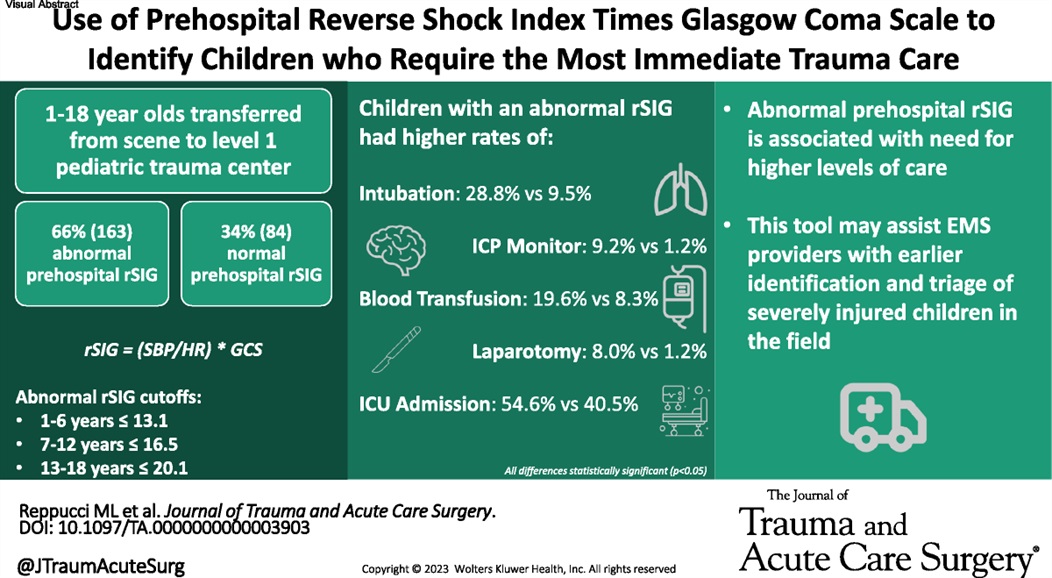
This small study suggests using reverse shock index times the Glasgow Comma Scake score may give a prognostication on pediatric trauma severity and resource utilization.
Show References
This pediatric ICU study measured ICP during and after ketamine infusion. There was no increase in ICP associated with the ketamine infusion. This small study adds to the data that ketamine is safe in pediatric brain injured patients.
Show References
This systematic review and analysis found in 1822 trauma patients treated with ECMO:
-Overall 66% survival to discharge
-VV ECMO was significantly superior to VA ECMO
-Mean age was 35 years. Typical of ECMO use in trauma is younger healthier patients are chosen to receive ECMO
“ECMO is not a routine life-saving intervention following trauma, but rather a salvage therapy that effectively replaces conventional treatment for young, healthy patients when conventional methods fail. Its complexity requires a multidisciplinary healthcare team and sufficient resources for optimal implementation.”
Show References
This large UK and US study looked at the addition of high dose cryoprecipitate to mass transfusion protocols and found: “Among patients with trauma and bleeding who required activation of a major hemorrhage protocol, the addition of early and empirical high-dose cryoprecipitate to standard care did not improve all cause 28-day mortality.”
Show References
This excellent review article discussing damage control resuscitation in traumatically injured children highlights several points including:
-”Damage-control resuscitation (DCR) consists of rapid control of bleeding, avoidance of hemodilution, acidosis, and hypothermia; early empiric balanced transfusions with red blood cells, plasma and platelets, or whole blood when available, and the use of intravenous or mechanical hemostatic adjuncts when indicated.”
-”he 30-day mortality in children with traumatic hemorrhagic shock is estimated to be 36% to 50% compared with the 25% reported mortality in similar adults. The early stages of hemorrhagic shock after injury in children can be more challenging to recognize because of their remarkable compensatory mechanisms. In children unlike adults, blood pressure alone is an insensitive indicator of hemorrhagic shock as hypotension is a late sign often not occurring until blood volume is reduced by >40%.”
-”Based on the current literature, the challenges health care providers must focus on are the early recognition of shock in the pediatric patient, moving the hemostatic resuscitation forward to the prehospital phase when feasible, improvement in times to first blood product, balanced resuscitation and efficiency of massive transfusion protocols (MTPs).”
Show References
This UK study randomized 90 trauma patients suspected of having major life threatening torso hemorrhage to receive standard resuscitative care vs. standard care plus resuscitative endovascular occlusion of the aorta (REBOA). Mortality was 54% in the REBOA group and 42% in the standard care group. This calls into question the routine use of REBOA in trauma resuscitations.
Show References
This article reminds us that using a small bore chest tube to drain traumatic hemothorax is supported by small studies and the Easterm Society for the Surgery in Trauma.
Show References
"The main findings were the following: (1) there was no evidence of an effect of HTS compared with other agents (mainly mannitol) on long-term neurological outcome in patients with raised ICP; (2) similarly, there was no evidence of a beneficial effect of HTS on all-cause mortality, uncontrolled ICP, length of hospital or ICU stay, and ICP reduction; and (3) HTS may be associated with increased risk of adverse hypernatremia.”
Show References
This Scandinavian study from the Lancet says yes. They randomized 1800 patients over age 18 to appendectomy either within 8 hours or 24 hours and found no difference in perforation rate or other complications.
Show References
For rural emergency departments, the decision to transfer a trauma patient to a level one center involves multiple factors including the patient’s hemodynamic stability. Harwell et al. looked at 47 trauma patients transferred from a rural hospital to a level one center. They found: “Overall mortality was significantly different between patients who had damage control laparotomy at a rural hospital (14.3%), were unstable transfer patients (75.0%), and stable transfer patients (3.3%; P < 0.001).” They concluded: “Rural damage control laparotomy may be used as a means of stabilization prior to transfer to a Level 1 center, and in appropriate patients may be life-saving.”
Preplanning with emergency medicine, surgery, radiology, anesthesia, nursing, and the receiving trauma center on how to manage these patients is critical.
Show References
In a study looking at 80 blunt trauma patients that died within 1 hour of arrival to a trauma center who underwent a noncontrast post mortem CT scan the following injuries were identified:
-40% traumatic brain injury
-25% long bone fracture
-22.5% hemoperitoneum
-25% cervical spine injury
- 18.8% moderate/large pneumothorax
-5% esophageal intubation
Blunt trauma arrest patients deserve decompression of the chest (preferred method is open with finger sweep). Intubation should be verified with end tidal CO2. Verification on arrival at the trauma center is also prudent.
Show References
The authors of this paper suggest the following changes, supported by evidence, to the management of traumatic cardiac arrest:
1. Epinephrine, bicarbonate and calcium have limited if no role in traumatic cardiac arrest.
2. CPR may be harmful in traumatic cardiac arrest. Hypovolemia is the cause of death for most trauma patients and CPR cannot correct this.
3. Blood is the resuscitative fluid to be given and all other fluids do not have a role in traumatic cardiac arrest.
4. Correct hypoxia immediately.
5. Finger thoracostomy to decompress penumothoracies, not needles.
6. Utilize termination of resuscitation protocols to end resuscitations in the field.
Show References
In this small propensity matching study looking at prehospital blood transfusion vs. emergency department blood transfusion in trauma patients aged 0-17 these authors found a better 24 and in-hospital mortality for patients who received prehospital blood transfusion compared to those receiving blood on arrival to the emergency department.
“The number needed to transfuse in the prehospital setting to save 1 child's life was 5 (95% CI, 3-10).”
Show References
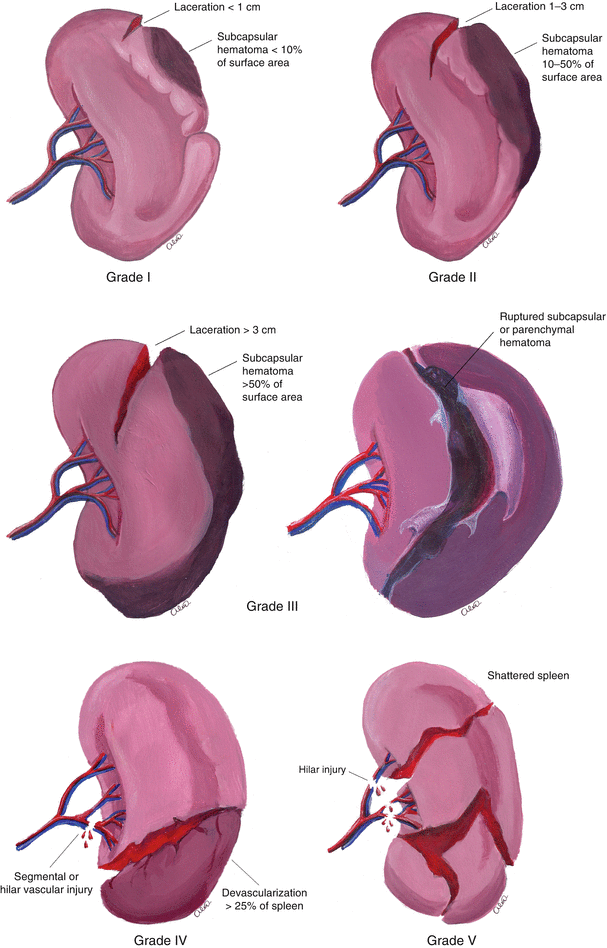
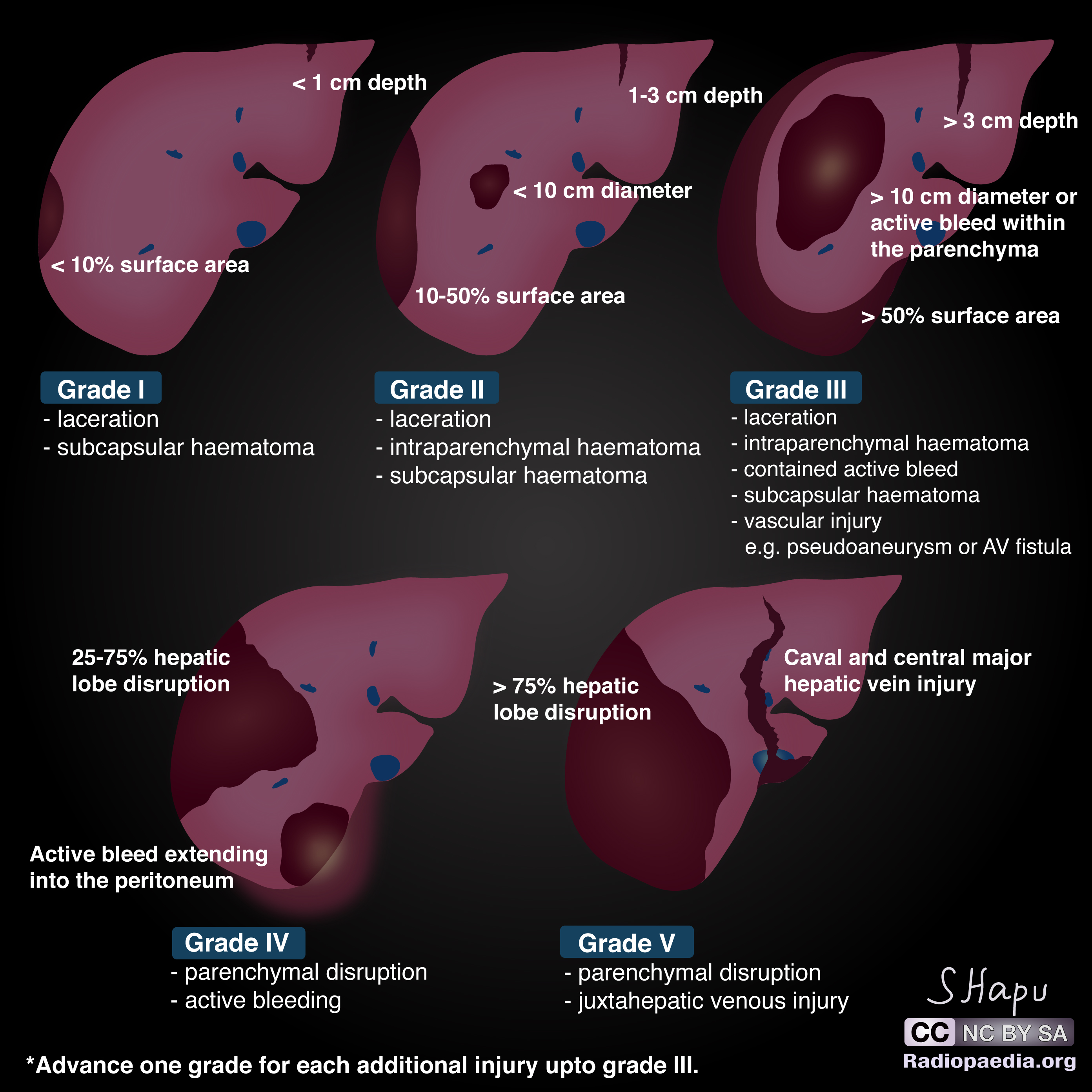
Splenic injury treatment depends on the grade of injury. In general, grades 1 and 2 are non-operatively managed. Grades 4 and 5 tend to be managed operatively. Interventional radiology is used commonly for grade 3 and grades 1 and 2 if active contrast extravasation is seen. Below is a refresher on splenic injury grading.
Table 1
Adaptation of AAST Organ Injury Scale for Spleen
| Grade | Injury type | Description of injury |
|---|---|---|
| I | Hematoma | Subcapsular, <10% surface area |
| II | Hematoma | Subcapsular, 10% to 50% surface area |
| Laceration | Capsular tear, 1 cm to 3 cm parenchymal depth that does not involve a trabecular vessel | |
| III | Hematoma | Subcapsular, >50% surface are or expanding: ruptured subcapsular or parenchymal hematoma: intraparenchymal hematoma_>5 cm or expanding |
| IV | Laceration | Laceration involving segmental or hilar vessels producing major devascularization (>25% of spleen) |
| V | Laceration | Completely shattered spleen |
- Adapted from American Association for the Surgery of Trauma organ injury scale for spleen.