
Search
Subscribe to daily UMEM Pearls (FREE!) via:
141-160 of 558 results with category "Toxicology"
- Most poisonous substance known to man
- LD50 oral dose 1 mcg/kg
- Heat labile single polypeptide chain undergoes proteolytic clevage irreverisibly binds and blocks cholinergic transmission causing a deadly neuroparalytic syndrome
- Rx: Botulin antitoxin (equine derived against Clostriduim botulinum A,B,E)
- Highly toxic, restricted availability is rapidly absorbed and metabolized to methylmercury crosses CNS
- LD50 of 50 mcg/kg means a dose as little as 0.1ml can result in severe poisoning
- Death of Darmouth inorganic chemist Karen Wetterhahn who spilled a few drops on back of her latex gloved hand, quickly permeated, and absorbed causing severe neurotoxocity and death 10 months later
- Rx: Chelation
VX ("venomous agent X")
- Organophosphate nerve agent has been used as chemical weapon
- Colorless, odorless, low volatility, and high lipophilicity
- LD50 of 0.04mg/kg (10 mg). Death can occur within 15 minutes after absorption
- Blocks acetylcholinesterase enzyme causing excess accumulation of acetylcholine at the neurojunction and cholinergic poisoning
- Rx: Decontamination, Atropine, 2-PAM
- 100 fresh and salt water varieties (pufferlike fish/blue ringed octopus, frogs)
- Heat stable, water soluble found in fish skin, liver, ovaries,intestine, and muscle
- 25 mg (0.000881 oz) expected to be lethal to a 75 kg person
- Neurotoxicity by inhibition of Na-K pump and blockade neuromuscular transmission
- Rx: Supportive measures
LD50 expresses the dose at which 50% of exposed population will die as a result of exposure.
Show References
Full cohort analysis idarucizumab for dabigatran associated bleeding was recently published in NEJM.
This study evaluated the laboratory correction of elevated ecarin clotting time or diluted thrombin time induced by dabigatran and time to either cessation of bleeding (Group A: patients with GI bleeding, traumatic bleeding, or ICH) or time to surgery (Group B: patients requiring surgical intervention within 8 hours).
Findings
Group A (n=301): Median time to the cessation of bleeding was 2.5 hours in 134 patients.
HOWEVER:
- Bleeding cessation could not be determined in 67 patients
- Cessation of bleeding could not be assess in 98 patients with ICH
- Bleeding stopped spontaneously in 2 patients.
Group B (n=202): Median time to intended surgery after infusion of idarucizumab was 1.6 hours.
- Normal hemostasis in 184 patients (93.4%), mildly abnormal in 10, and moderately abnormal in 3.
- Many received PRBC and other blood products during surgery
Laboratory markers:
100% reversal of abnormal ecarin clotting time or diluted thrombin time within 4 hours after the administration
Mortality
- 5 Day: Group A: 6.3% vs. Group B: 12.6%
- 30 Day: Group A: 13.5% vs. Group B: 12.6%
- 90 Day: Group A: 18.8% vs. Group B: 18.9%
Conclusion
Authors concluded thate idaurcizumab is an "effective" reversal agent for dabigatran.
Overall, the findings are more promising compared to the interim analysis that was published in 2015.
Show Additional Information
Show References
Patients with severe salicylate poisoning may require endotracheal intubation due to fatigue from hyperventilation or mental status change.
A previously published study (Stolbach et al. 2008) showed that mechanical ventilation increases the risk of acidemia and clinical deterioration.
A small retrospective study investigated the impact of hemodialysis (HD) in intubated patients with salicylate poisoning.
Findings:
53 cases with overall survival rate of 73.2%
In patients with salicylate level > 50 mg/dL
- No HD: 56% survival (14/25)
- HD: 83.9% survival (0/9)
If salicylate level > 80 mg/dL
- No HD: 0% survival (26/31)
- HD: 83.3% survival (15/18)
Bottom Line:
There is moratality benefit of HD in intubated salicylate-poisoned patient.
Show References
Vaginal douching is a common and potentially dangerous practice. Women engage in this practice predominately for personal hygiene reasons but also with the false belief it will prevent or treat infections and for contraception. Numerous public health agencies and medical societies discourage douching as it has been associated with many adverse outcomes including pelvic inflammatory disease, bacterial vaginosis, cervical cancer, low birth weight, preterm birth, human immunodeficiency virus transmission, sexually transmitted diseases, ectopic pregnancy, recurrent vulvovaginal candidiasis, and infertility.
An increasing fad is the use of intravaginal detox products. Claiming to enhance female health by removing toxins, these mesh cloth-covered balls containing herbs such as mothersworth, osthol, angelica, borneol, and rhizoma, not FDA-approved, are inserted into the vagina for 3 days. Clinical experience demonstrates these products decompose into numerous pieces which become scattered retained intravaginal foreign bodies, cause mucosal irritation, and thereotically could serve as a nidus for serious infections.
Show Additional Information

Show References
Hydrogen peroxide (H2O2) is a common household liquid that is used for wound irrigation/antiseptic and cosmetic purposes. The concentration of household product is 3% to 5% and is considered to be relatively safe except in large volume ingestion.
High-concentration H2O2 (>10%) is commercially available as “food grade” (35%) that is diluted for household use or for alternative medicine therapy (i.e. hyperoxygenation).
Ingestion of high-concentration of H2O2 can result in caustic injury as well as ischemic injury from gas embolism.
Ingestion of 1 mL of 3% H2O2 produces 10 mL of O2 gas while 1 mL of 35% H2O2 produces 115 mL of O2 gas.
Common symptoms/findings of H2O2 ingestions includes:
- Nausea/vomiting
- Abdominal pain due to gas in portal venous system
- Caustic injury of GI track (ingestion of > 10% H2O2)
- Arterialization of O2 gas result in end-organ injury (e.g. CVA)
A retrospective review of >10% H2O2 ingestion from National Poison Data System showed:
- 13.9% developed gas embolic event
- 6.8% experienced permanent disability, including 5 deaths.
Management
- Minor symptoms: primary supportive
- CT ABD/Pelvis should be considerd if abdominal pain is present
- If significant gas is present in portal vein or evidence of end-organ injury (i.e. CVA), HBO therapy is recommended (limited evidence).
- Endoscopy should be considered in concentrated H2O2 ingestion to evaluate for caustic injury.
Show References
Show References
Black widow spiders belong to the genus Latro dectus which include 31 species of widow spiders found throughout world. Approximately 1500-2500 black widow bites are reported to American poison control centers annually. A black widow can be identified by their hourglass pattern (red or orange) on the ventral aspect of their shiny globular abdomen. Fortunately, envenomation is rare but when it does occur it causes severe pain, muscle cramping, abdominal (may mimic acute abdomen) often refractory to traditional analgesics and antivenom (Antivenin Latrodectus mactans) is available and effective . Alpha-latrotoxin is the potent toxin causing presynaptic cation channels to open (calcium) and release of neurotransmitters such acetycholine. The neurological signs and symptoms caused by predominantly autonomic and include tachycardia and hypertension. The antivenom is equine based and infused over 20-30 minutes with pain relief in 20 minutes.
Show References
Attachments
Street names for illicit substance are diverse and unique. Knowing what your patient used prior to ED presentation can help with the management of their intoxication.
DEA recently released 7 page list of common street names for drugs of abuse.
https://ndews.umd.edu/sites/ndews.umd.edu/files/dea-drug-slang-code-words-may2017.pdf
But keep in mind that what our patients purchase and use may not actually contain the drug that they intended to purchase (e.g. fentanyl being sold as heroin).
Attachments
Botulism is a rare neurologic condition characterized by GI symptoms that progressed to cranial nerve dysfunction and symmetric descending paralysis. Foodborne botulism is due to ingestion of botulinum toxin that is produced by clostridium botulinum, an ubiquitous bacterium in our environment.
Bottom line:
- Foodborne botulism presents with GI symptoms that is followed by symmetric descending flaccid paralysis.
- Botulinum antitoxin prevents further progression of neurologic deficit; it does not reverse the neurologic deficit that is present prior to administration.
- Contact your local poison center, and state health department & CDC regarding management and access to botulinum antitoxin.
Maryland Department of Health and Mental Hygiene
- During business hours: 410-767-6700
- After hours: 410-795-7365
CDC Emergency Operations Center: 770-488-7100
Show Additional Information
Show References
- Coricidin Cough & Cold medicine also known by street name 'Triple C" is the most commonly reported abused dextromethorphan-containing product.
- Dextromethorphan at high doses acts as a dissociative general anesthetic and hallucinogen similar to Ketamine and Phencyclidine (PCP) by antagonizing the NMDA receptor in a dose dependent manner.
- Detromethorphan-containing products are appealing to teens as they are easily available (OTC), legal, inexpensive, and preceived as safe.
- Street names for dextromethorphan products include DXM, CCC, Trile C, Skittles, Robo, Poor Man's PCP,. Abuse of Robitussin products is referred to as "Robotripping"
- Additional toxicity can occur from the coingredients (pseudoephedrine, acetaminophen, and antihistamines such as Chlorpheniramine) is a serious concern of taking large amounts of OTC cough and cold medications for the Dextromethorphan content. Chlorpheneriamine is a first generation H1-histamine receptor antagonist with potent antimuscarinic properties.
- Dextromethorphan is not detected by basic drug screens and should be considered when evaluating patients with a dissociative toxidrome. Acetaminophen levels should be obtained.
- No specific antidote exists for dextromethorphan toxicity. Benzodiazepines should be administered for seizures and aggressive cooling measures for hyperthermia. Naloxone can be considered for use in patients in a coma or with respiratory depression but variable results are reported.
Show Additional Information

Show References
Lactic acids are often elevated in critical care patients (e.g. septic shock). It can be also elevated in setting of drug overdose or less frequently in therapeutic use due to interference of oxidative phosphorylation. Some of the agents include:
- Carbon monoxide
- Cyanide
- Propofol
- Metformin
- Propylene glycol
- Salicylates
- Beta-2 agonists
- Thiamine deficiency/alcoholic ketoacidosis
- Ethylene glycol/toxic alcohols
- Nucleoside reverse-transcriptase inhibitors
Bottom line:
- Although elevated lactic acid levels are often associated with underlying medical conditions, it is important to recognize drug-induced etiologies of lactic acidosis.
Show References
FDA announced a shortage of sodium bicarbonate on 3/01/17. Sodium bicarbonate is frequently used in acid-base disorder as well as in poisoning (cardiac toxicity from Na-channel blockade, e.g. TCA & bupropion, and salicylate poisoning).
Acetate is a conjugate base of acetic acid where acetate anion forms acetyl CoA and enters Kreb cycle after IV administration. Final metabolic products of acetate are CO2 and H2O, which are in equilibrium with bicarbonate via carbonic anhydrase activity.
Administration of sodium acetate increases the strong ion difference by net increase in cations, as acetate is metabolize, and leads to alkalemia.
Adverse events from sodium acetate infusion have been associated with its use as dialysate buffer: myocardial depression, hypotension, hypopnea leading to hypoxemia and hyperpyrexia. However, such adverse events have not been reported in toxicologic application.
Bottom line:
Sodium acetate can be administered safely in place of sodium bicarbonate if sodium bicarbonate is not available due to shortage.
Sodium acetate dose:
- Bolus: 1 mEq/kg over 15 – 20 min
- Infusion: 150 mEq in 1L D5%W @ twice maintenance rate
Show References
Children less than 5 years of age account for the majority of poisoning exposures in the United States. As expected, accessible household items are the most frequently reported exposures and include cosmetics and personal care products, household cleaning substances, medications, and foreign bodies. Opioids are responsible for the highest incidence of hospitalizations followed by benzodiazepines, sulfonylureas, and cardiovascular drugs (beta & calcium channel blockers, and centrally acting antiadrenergic agents). Rise in buprenorphine use has led to significant increases in pediatric exposures. The most common sources of prescription medications were pills found on the ground, in a purse or bag, night stand, or pillbox. The 2015 American Association of Poison Centers Annual report lists 28 fatalities in children less than 5 year of age. Fatalities occurred from exposures to the following: narcotics (9), disc and button batteries (5), carbon monoxide (4), and other substances (10).
Highlighted AAPC cases include:
- 20 month old with ingestion of 20 mm Lithuim disc battery with several previous ED visits for abdominal pain who developed an aorto-esophageal fistula
- 13 month old with ingestion of unknown amount of salicylate pills 4 hours earlier with nausea and vomiting
- 2 year old with ingestion of 5 tablets of 30mg Oxycodone ER seen in ED and discharged 7 hours later. EMS called next morning found patient unresponsive and apneic
- 11 month old with ingestion of 1 unknown strength methadone pill found unresponsive and apneic at home
Poison prevention education of patients prescribed opioids or other highly toxic "one pill killers" who have young children in their household is recommended and could be potentially life saving.
Show References
Clinical signs and symptoms of clonidine overdose include CNS depression, bradycardia, and miosis. Other effects include early hypertension, followed by hypotension and respiratory depression, especially in children.
Although clonidine overdose in children is well described, frequency of clinical signs/symptoms in adults is not well characterized.
Recently, a retrospective study was performed in a hospital in Australia looking at clonidine overdose in adults.
Among isolated clonidine overdose, patients experienced:
- GCS < 15: 55%
- GSS < 9: 5%
- Miosis: 25%
- Bradycardia (HR< 60): 68%
- Median HR: 48 (IQR: 40-62)
- Hypotension (SBP < 90 mmHg): 25%
- Median LOS: 21 hr (IQR: 11 – 27 hr)
- Intensive care: 23%
- No deaths
Bottom line:
- The most common symtom of clonidicine overdose was bradycardia
- Clonidine overdose results in non-life threatening but prolonged clinical effect in adult.
Show References
Phenytoin is a first line anticonvulsant agent for most seizure disorders with the exception of absence and toxin-induced seizures. It has erratic gastrointestinal absorption with peak serum levels occurring anywhere from 3-12 hours following a single oral dose. 90% of circulating phenytoin is bound to albumin but only the unbound free fraction is active to cross cell membranes and exert pharmacological effect. Measured serum phenytoin levels reflect the total serum concentration of both the free and protein bound portions. Therapeutic range is between 10-20 mg/L. Free phenytoin levels are not often measured but are normally between 1-2 mg/L. Individuals with decreased protein binding (elderly, malnourished, hypoalbuminemia, uremia, and competing drugs) may have clincial toxicity despite a normal total phenytoin level. Toxicity consists of predominantly ocular and neurologic manifestations involving the vestibular and cerebellar systems:
| Plasma level, µg/mL | Clinical manifestations |
| <10 | Usually none |
| 10-20 | Occasional mild nystagmus |
| 20-30 | Nystagmus |
| 30-40 | Ataxia, slurred speech, extrapyramindal effects |
| 40-50 | Lethargy, confusion |
| >50 | Coma, rare seizures |
Treatment of overdose is primarily supportive with serial drug level testing and neurologic exams. There is no evidence that gastrointestinal decontamination improves outcome. Routine cardiac monitoring is not necessary for overdose following oral ingestions. Cardiac toxicity is rarely seen and only with parenteral administration.
Show References
Excited delirium syndrome (EDS) is a life-threatening condition caused by a variety of factors including drug intoxication. EDS is defined as altered mental status, hyperadrenergic state, and combativeness or aggressiveness. It is characterized by tolerance to significant pain, tachypnea, diaphoresis, severe agitation, hyperthermia, non-compliance or poor awareness to direction from police or medical personnel, lack of fatigue, superhuman strength, and inappropriate clothing for the current environment. These patients are at high risk for sudden death. Toxins associated with this syndrome include:
- Lysergic acid diethylamide (LSD)
- Phencyclidine (PCP)
- 3,4-methylenedioxymethamphetamine (Ecstasy)
- Cocaine
- Methamphetamine
- Synthetic cathinones ("Bath salts") = Mephedrone, Methylone, Methylenedioxypyrovalerone (MDPV), designer drugs similar to amphetamine.
- Synthetic cannbinoids
Ketamine at 4mg/kg dose can be given by intramuscular route and has been demonstrated to be safe and effective treatment for EDS.
Show References
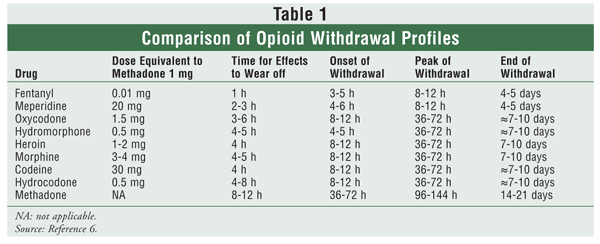
The current opioid epidemic is considered the worst drug crisis in American history responsible for 50,000 deaths per year in the US from overdose of heroin and opioid prescription drugs. A 200% increase in the rate of overdose deaths involving opioids occurred between 2000 and 2014. The continued rise in opioid related deaths calls for an urgent need for treatment. Three types of medication-assisted therapies (MATs) are available for treating patients with opioid addiction:methadone, buprenorphine, and naltrexone. Suboxone a combination of buprenorphine and naloxone, is emerging as one of the best choices for the following reasons:
- Buprenorphine is a partial agonist that suppresses opioid withdrawal and cravings.
- Binds opioid receptors with high affinity but low intrinsic activity.
- Lasts 24 hours. Binds opioid receptors to prevent full opioid agonists such as heroin or prescription opioids from binding.
- Less risk for dependency as increasing doses does not result in full opioid effect.
- Less respiratory depression in overdose due to partial effect.
- Naloxone, an opioid antagonist is poorly absorbed by oral route and is added to discourage injecting or snorting of suboxone as it can precipitate severe withdrawal.
- Precipitated withdrawal can occur if other opioids are present with administration of Suboxone. This is particularly important with long acting opioids such as methadone.
- Can be prescribed in the primary care setting and does not require a specialized clinic.
- Comes in 2 or 8 mg tablet or sublingual film.
Show Additional Information
Show References
Methadone overdose produces classic signs and symptoms of opioid intoxication - CNS and respiratory depression with pinpoint pupils. However, methadone overdose has also been associated with hypoglycemia – a relatively uncommon adverse effect.
Bottom line:
- Methadone-induced hypoglycemia can occur, although rare, in an acute overdose.
Show Additional Information
Show References
Urine drug screens are most commonly performed by immunoassay technology utilizing monoclonal antibodies that recognizes a structural feature of a drug or its metabolites. They are simple to perform. provide rapid screening, and qualitative results on up to 10 distinct drug classes with good sensitivity but imperfect specificity. This can lead to false positive results and the need for confirmatory testing. UDS does not detect synthetic opiates or cannabinoids, bath salts (synthetic cathinones), and gamma-hydroybutyrate. Most common drug classes detected are the following:
- Opiates
- Methadone
- Benzodiazepines (not all)
- Amphetamines
- Cocaine
- THC metabolites
- Barbituates
- LSD
- PCP
- MDMA (Ecstasy)
Show References
A small retrospective study of an acute poisoning cohort attempted to identify risk factors for severe outcome in salicylate poisoning.
Severe outcomes were defined as
- Acidemia pH < 7.3 or bicarbonate < 16 mEq/L
- Hemodialysis
- Death
A multivariate analysis of 48 patients showed that older age and increased respiratory rate were independent predictors of severe outcomes when adjusted for salicylate level.
Initial salicylate acid level was not predictive of severe outcome.
Elevated lactic acid level was also a good predictor of severe outcome in univariate analysis but not in multivariate analysis.
Limitations
- Small sample size with single center study
- Retrospective study design
- Validation study of these predictors is needed.
Bottom line
- Older age and increases respiratory rate is associated with severe outcome (acidemia, hemodialysis or/and death) in this study.
- Data must be interpreted with caution due to small sample and retrospective study design.